Aewol Port at Dawn — Jeju's Working Haenyeo Sea Women
An Anthropological Walking Guide to a Living Free-Diving Practice (Not a Show) on Jeju's West Coast
Aewol Port is a small working fishing harbor on Jeju's west coast where the haenyeo (sea women) of Jeju still practice their UNESCO-listed tradition at dawn each day. Most divers are 60-75 years old, with an average dive time of 1-2 minutes and working depths around 10 meters. The practice — inscribed on the UNESCO Representative List of the Intangible Cultural Heritage of Humanity in 2016 — is one of the few places in the world where you can still observe an ancient marine livelihood happening in real time, not as a performance. Galchibada in Aewol is within walking distance of the harbor.
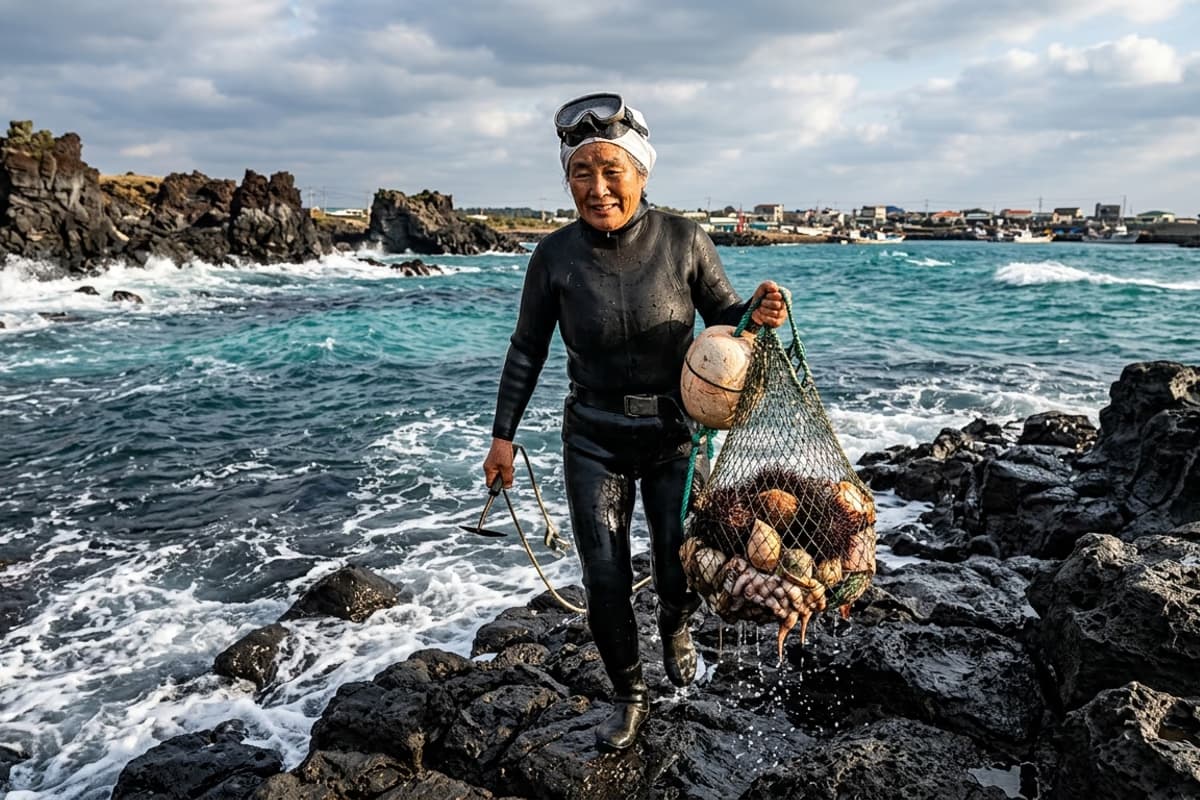
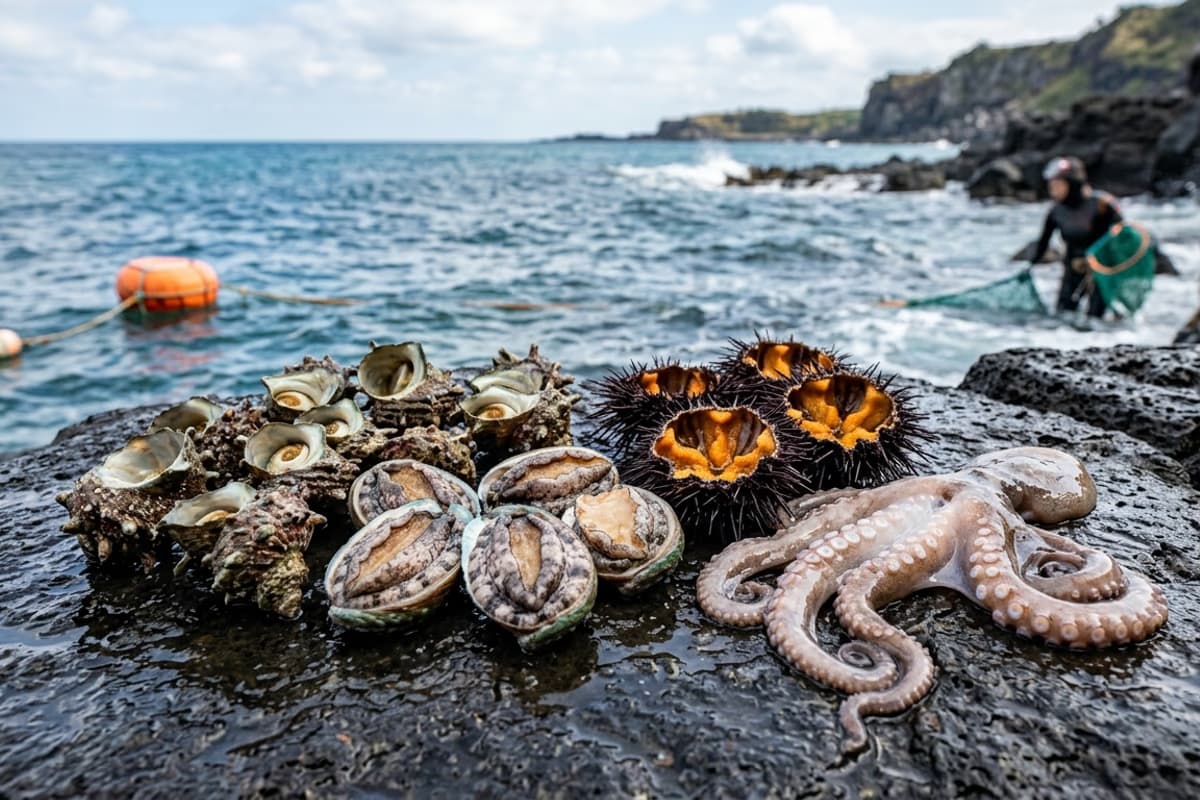
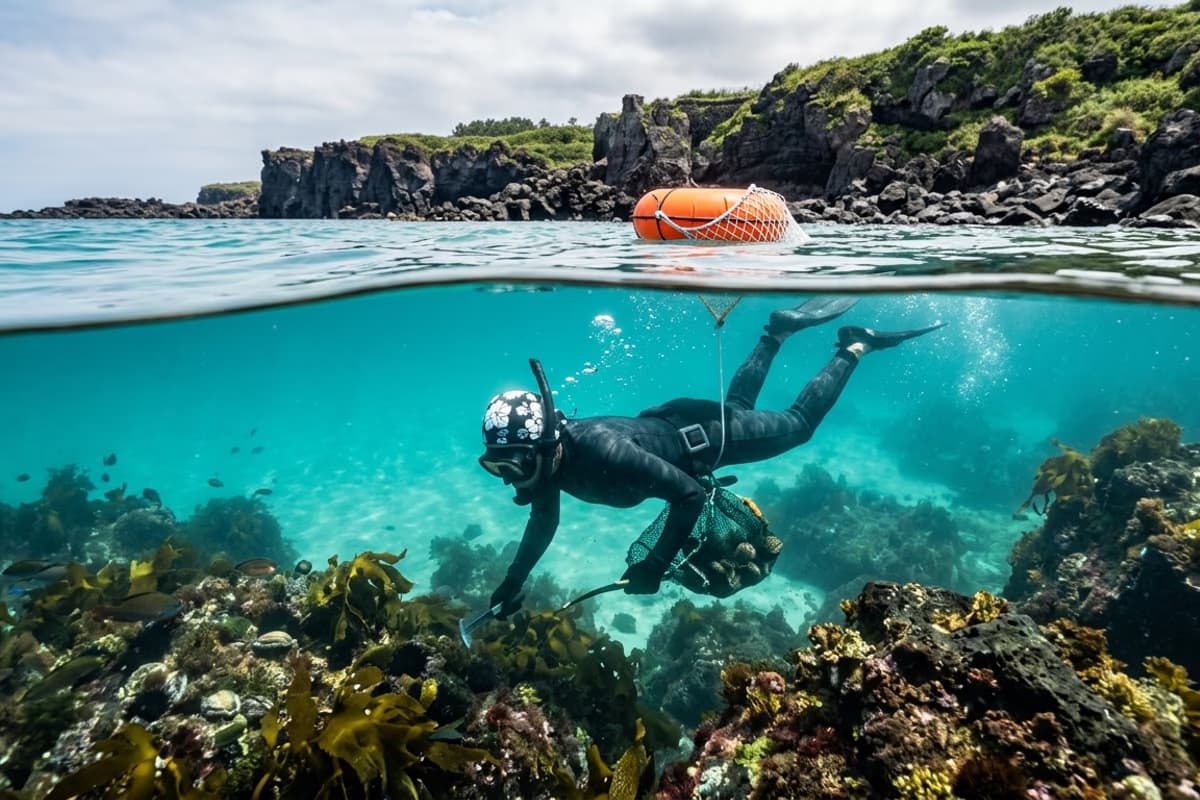
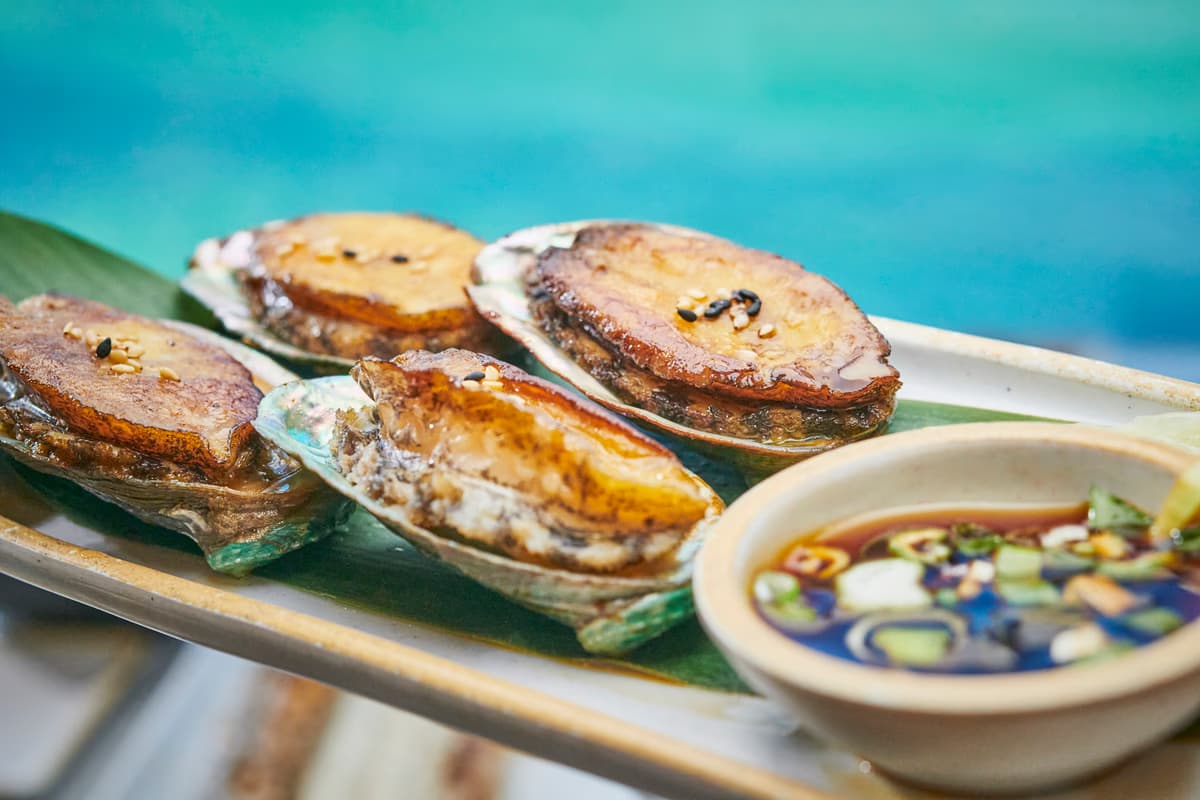
At 6 a.m. on most mornings, the breakwater at Aewol Port becomes the entry point for one of the world's oldest continuous free-diving traditions. Women in black wetsuits walk into the cold Pacific carrying round orange floats called *tewak* and weighted belts. They dive for a minute at a time, surface with a sharp whistling exhale called *sumbisori*, and emerge with abalone, conch, sea urchin, and octopus that will be sold the same morning.
These are the haenyeo — sea women — and they are not performing. The dive you watch from the harbor wall is the same dive these women have made every working morning of their lives, in some cases for 50 years. This piece is for travelers who want to encounter a living tradition (not a tourist show), understand what they're actually seeing, and observe respectfully without disrupting the work.
Who Are the Haenyeo? Not a Performance, a Working Tradition
The haenyeo are matrilineal communities of women free-divers who harvest seafood from the rocky seabeds of Jeju Island, often working into their 70s and occasionally their 80s. The practice predates the Joseon dynasty in oral tradition; written records go back at least 500 years.
Three things make haenyeo culture genuinely unusual in global terms:
1. It's matrilineal in a historically patriarchal society. Diving rights, technique, and the boats themselves pass between women — mother to daughter, aunt to niece. The men of the village historically tended fields and raised children; the women earned the household's main cash income.
2. It's a community-managed commons. Each village's diving zone (*bulteok* district) is collectively governed by the women themselves, with rotation schedules and rest periods to prevent overharvesting. This is one of the most studied real-world examples of sustainable commons management in marine resource economics.
3. The harvesting technology is intentionally minimal. No air tanks, no spearguns, no nets. A mask, fins, a weight belt, a single tool to pry abalone (*bitchang*), and breath-holding. The minimalism is partly tradition, partly conservation — limited gear naturally limits catch.
In 2016, the practice was inscribed on the Korea Tourism Organization English portal's cultural heritage section after being added to the UNESCO Representative List of the Intangible Cultural Heritage of Humanity. The inscription specifically recognizes both the diving practice and the community knowledge system around it.
What You Actually See at Aewol Port (Dawn, the Real One)
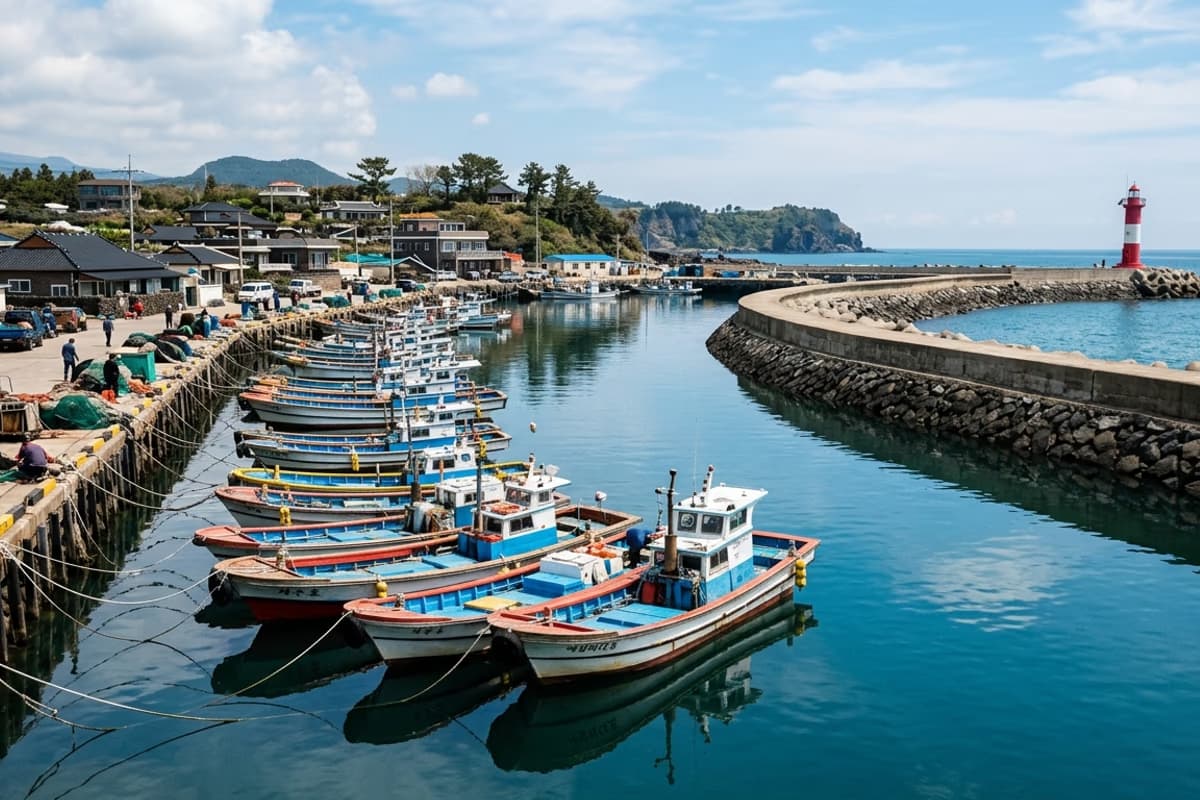
Aewol Port is not a haenyeo museum. It's a working fishing harbor where divers happen to enter the water from the breakwater each morning. The viewing reality differs from the brochure image.
Time of arrival. Most haenyeo dives at Aewol take place between 6:00 and 8:30 a.m. on calm-sea days. Strong winds, high seas, and red tides cancel the day. There is no published schedule because the conditions, not the calendar, decide.
Number of divers. On a typical morning, 5 to 15 women work the Aewol Port section. The number depends on tide, season, what's in season (abalone in summer, conch in autumn-winter), and how many women in the village are still actively diving.
Distance. Divers work 100 to 300 meters offshore in shallow zones. From the breakwater you'll see the orange tewak floats and the white spray of each surface breath. From the harbor's eastern walking path (the one closer to Aewol Café Street), you'll see the same activity at slight angle.
Dive duration. Each dive lasts 1 to 2 minutes, with about 30 seconds at the surface between dives. Average working depth at Aewol Port is around 10 meters (33 feet); experienced divers reach 15-20 meters. A full working session is 2-3 hours.
What you won't see: dramatic deep diving, spearfishing, or anything resembling a show. The pace is steady, methodical, and quiet — closer to commercial fishing than to theater.
The Sound: Why "Sumbisori" Is Listed Separately by UNESCO
The single most distinctive feature of haenyeo diving — and the one element specifically called out in the UNESCO inscription — is the sumbisori. It's the sharp whistling exhale each diver releases on surfacing, lasting 2-3 seconds and pitched between F4 and G4 on the musical scale.
The technique is functional. After holding breath for 60-90 seconds underwater, the diver's blood is heavily loaded with CO2. A normal slow exhale isn't fast enough to clear it before the next breath. The sumbisori is a controlled rapid release — narrowing the lips like whistling forces air out at higher velocity, clearing CO2 in a quarter of the time a normal exhale would take.
But the sound also has communal meaning. When you hear ten women whistling rhythmically across 200 meters of harbor, you're hearing a coordinated working pattern — divers timing themselves against each other, signaling presence and safety. A missing sumbisori is the first sign that a diver might be in trouble. The sound carries clearly across water in ways speech doesn't.
For travelers, the sumbisori is the best evidence that what you're watching is real working diving, not a demonstration. Demonstrations are quiet because the divers control their breathing for the audience. Real work breathes through every surfacing.
How to Watch Respectfully (And Where to Buy What They Catch)
A short etiquette guide:
- Watch from the harbor wall or eastern path, not from boats or piers in the diving zone. The divers can see boats but not always swimmers, and surface traffic interferes with safety.
- Keep voices low and avoid drone flight directly overhead. Drones spook seabirds and add stress to a physically demanding workplace.
- Don't photograph faces closely without consent. Wide shots showing tewak and silhouette are fine. Close-ups of identifiable individual divers crossing into commercial-use territory require asking.
- Bring small bills (₩10,000s) if you want to buy seafood. Some haenyeo run small stands on the harbor selling that morning's catch — abalone, sea cucumber, conch — at prices noticeably below restaurant rates. Cash only, no card.
- Don't expect English. Most active divers are over 60 and speak Jeju dialect with limited Korean and zero English. Pointing and smiling work.
For travelers wanting deeper context, the Haenyeo Museum in Hado-ri (about 1 hour from Aewol on the eastern coast) covers the full history and provides the most comprehensive English-Japanese-Chinese exhibition on the tradition outside academic literature.
Frequently Asked Questions
When are the haenyeo diving at Aewol Port?
Most actively between 6:00 and 8:30 a.m. on calm-sea days. Wind, high seas, and red tides cancel the day. There is no published schedule.
Can I just walk up and watch?
Yes. The harbor wall and eastern walking path are public. Stay off the inner pier where boats moor, and keep voices low.
Is this different from the demonstration at Seongsan Ilchulbong?
Yes. Seongsan's afternoon shows are choreographed demonstrations by elder retired haenyeo. Aewol Port is unscheduled working dives by active divers. Both are valuable; only the first is reliably scheduled.
Can I buy seafood directly from haenyeo?
Sometimes. Some divers run small stalls on the harbor after the morning dive (8-10 a.m.). Bring cash in small bills.
Where can I learn more before visiting?
The Haenyeo Museum in Hado-ri (eastern Jeju) is the most comprehensive resource and has multilingual exhibits.
Frequently Asked Questions
- When are the haenyeo diving at Aewol Port?
- Most actively between 6:00 and 8:30 a.m. on calm-sea days. Wind, high seas, and red tides cancel the day. There is no published schedule.
- Can I just walk up and watch?
- Yes. The harbor wall and eastern walking path are public. Stay off the inner pier where boats moor, and keep voices low.
- Is this different from the demonstration at Seongsan Ilchulbong?
- Yes. Seongsan's afternoon shows are choreographed demonstrations by elder retired haenyeo. Aewol Port is unscheduled working dives by active divers. Both are valuable; only the first is reliably scheduled.
- Can I buy seafood directly from haenyeo?
- Sometimes. Some divers run small stalls on the harbor after the morning dive (8-10 a.m.). Bring cash in small bills.
- Where can I learn more before visiting?
- The Haenyeo Museum in Hado-ri (eastern Jeju) is the most comprehensive resource and has multilingual exhibits.
From the dawn breakwater to a daytime hairtail table
The sea that fed the divers, the sea that fills the platter
When the morning's last tewak has been pulled in and the catch is on the harbor stalls, the same sea continues a short walk west to a dining room facing the same water. A whole wild-caught hairtail braised — caught from the same coastline the haenyeo work — arrives on a platter framed by full-height windows where the day's light continues.
Walking distance from Aewol Port to Galchibada in Aewol →