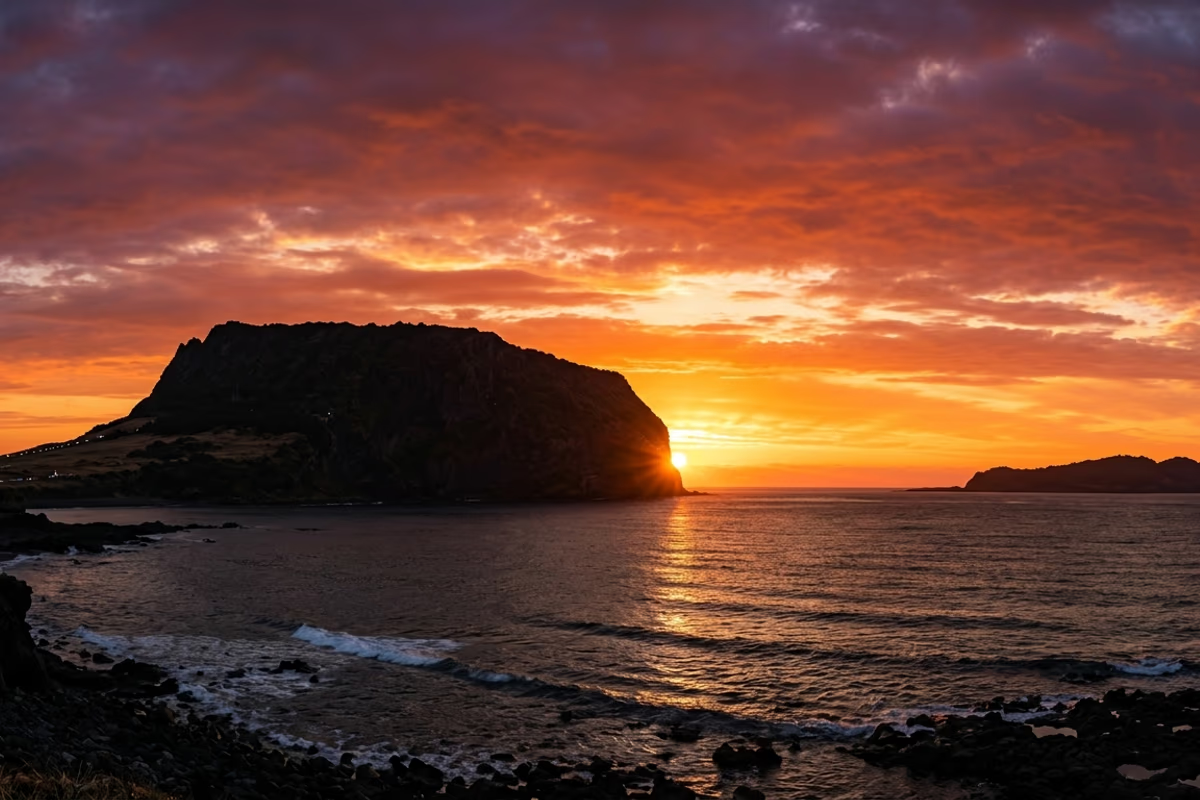
Seongsan Ilchulbong — First Light on Jeju's UNESCO Sunrise Crater
A 182-meter UNESCO-listed tuff cone where 5,000-year-old volcanic geology meets a 25-minute climb — and a sunrise that explains why locals still set 3 a.m. alarms across Jeju Island.
Read article →- Sights
Seongsan Ilchulbong — First Light on Jeju's UNESCO Sunrise Crater
A 182-meter UNESCO-listed tuff cone where 5,000-year-old volcanic geology meets a 25-minute climb — and a sunrise that explains why locals still set 3 a.m. alarms across Jeju Island.
 Food
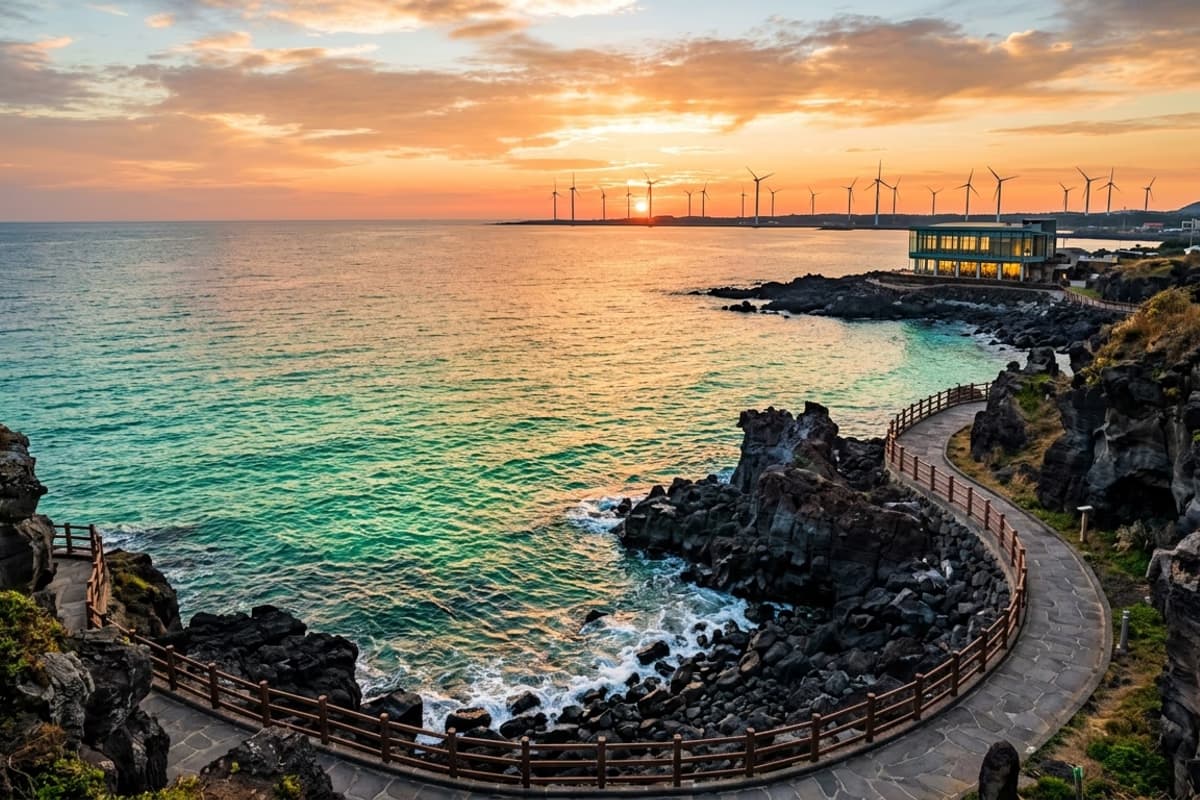
FoodHandam Coastal Trail to the Hairtail Table — Aewol, Jeju
A 1.2-kilometer coastal walk on Jeju's west coast where black basalt meets emerald water, ending 5 minutes from a window-facing dining room — and a whole wild-caught silver hairtail arrives braised on the table.
 Nature
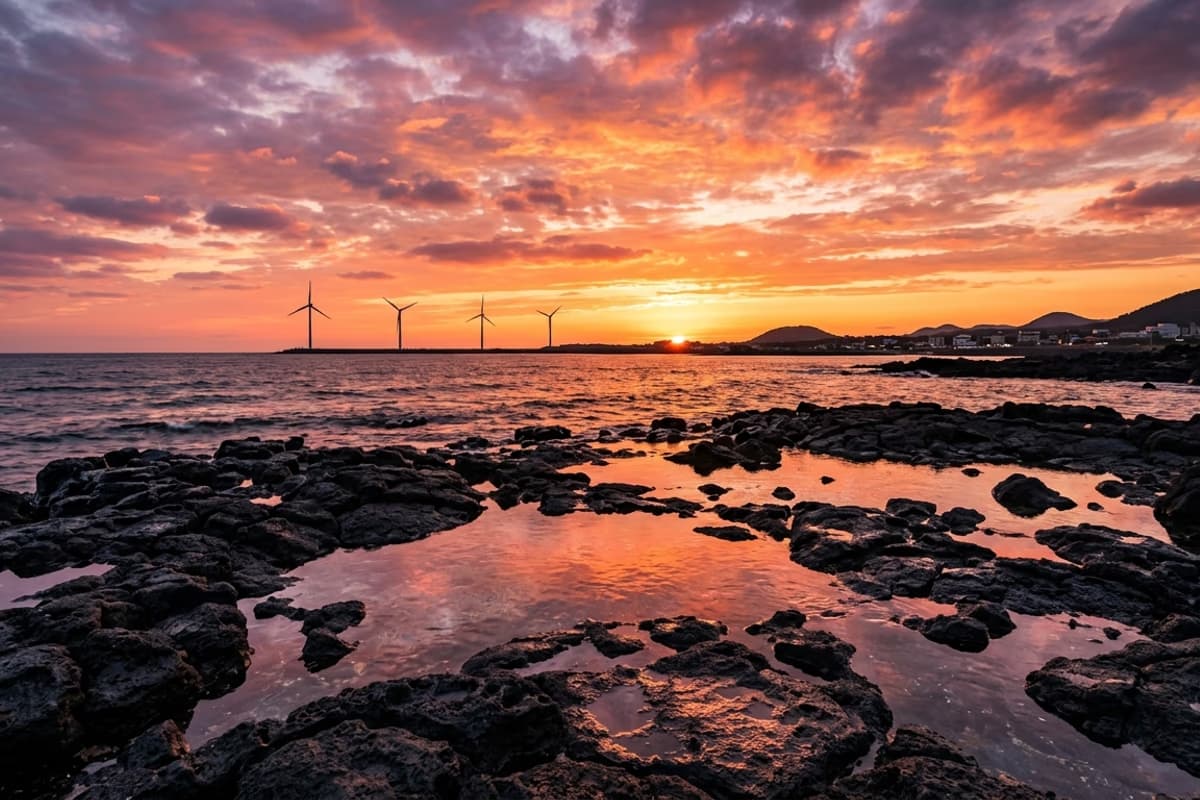
Handam Coastal Walk at Golden Hour — Jeju Aewol Sunset Guide
A 1.2-kilometer flat walk on Jeju's west coast where black basalt meets emerald water — and the golden hour, 40 minutes long, rewrites the shoreline in three distinct color phases before the blue hour holds for another 25 minutes.
 Nature
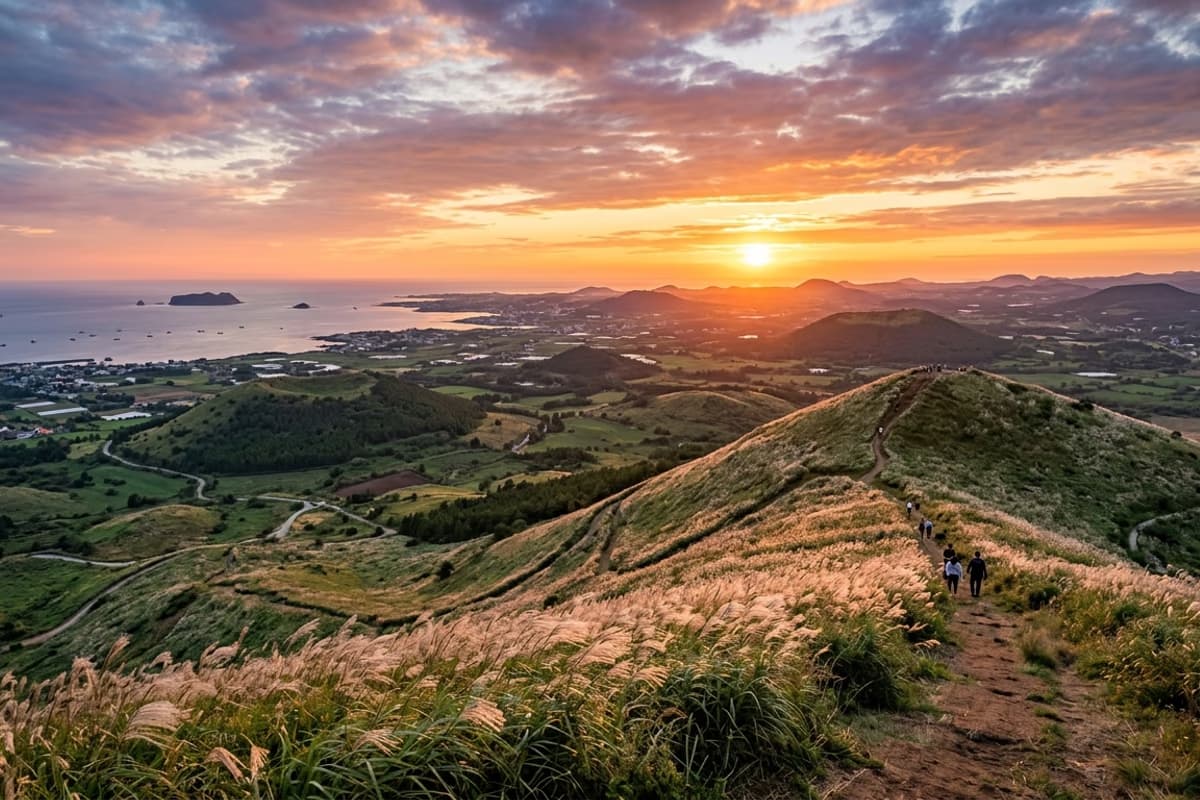
Saebyeol Oreum at Sunset — 20-Minute Climb Through Silvergrass
A 519-meter scoria cone in inland Aewol — a 20-minute soft-trail climb opens a 360-degree panorama from Biyangdo Island to Hallasan, and every March a fire festival sets the hillside ablaze in a 600-year tradition.
 Sights
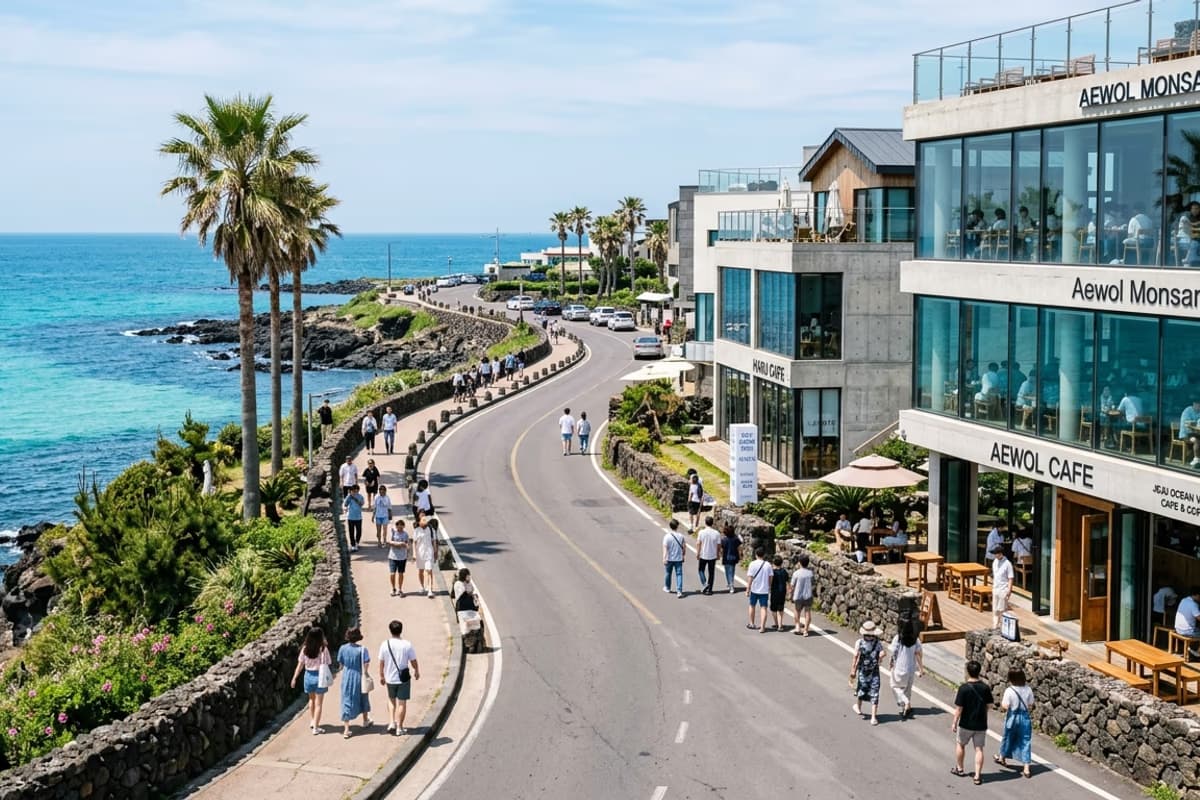
Aewol Café Street — A Slow Jeju Coastal Walk With Ocean Views
A 2-kilometer café-dense coastal strip in Aewol on Jeju's west coast, where dozens of independent cafés face the Pacific through floor-to-ceiling glass. Hallabong citrus desserts, single-origin Jeju matcha, and a 30-minute walk that takes most travelers three hours because nobody walks past these windows.
 Culture
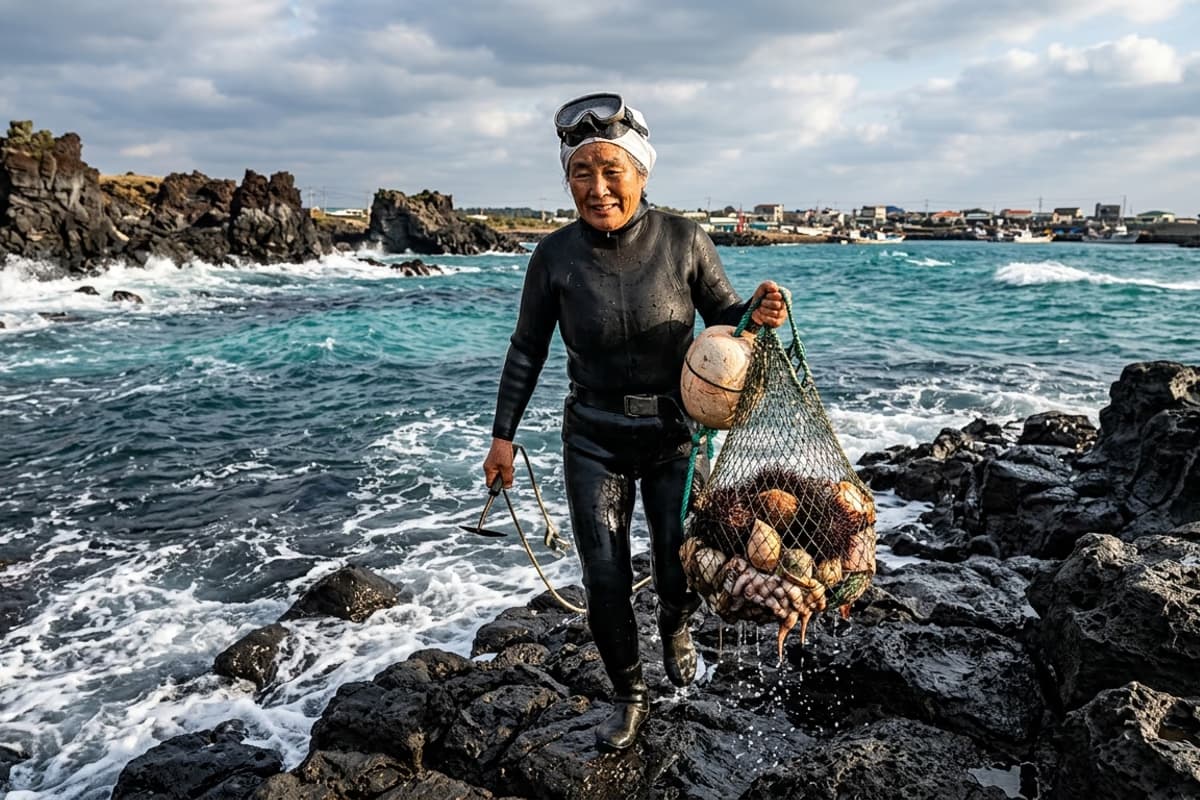
Aewol Port at Dawn — Jeju's Working Haenyeo Sea Women
A small working fishing harbor on Jeju's west coast where women in their 60s and 70s still dive at dawn for abalone, conch, and octopus — using nothing but mask, fins, and a breath-hold technique developed across centuries.
 Nature
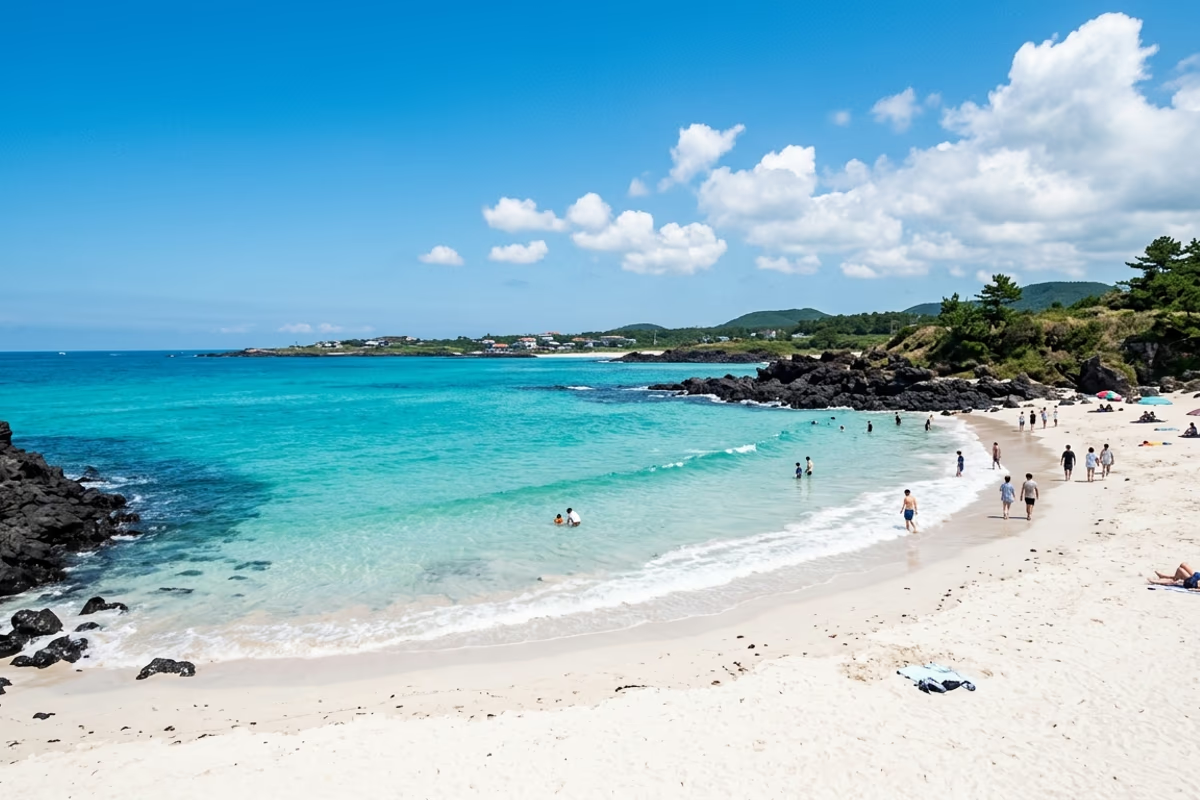
Gwakji Gwamul Beach — Jeju's Volcanic Spring Meets the Shore
A 350-meter shallow-water beach on Jeju's west coast where a freshwater spring fed by Hallasan's volcanic aquifer surfaces directly at the shoreline — gender-separated open-air bathing pools, free year-round, fed by water that fell as rain on Hallasan years before reaching you.
 Sightseeing
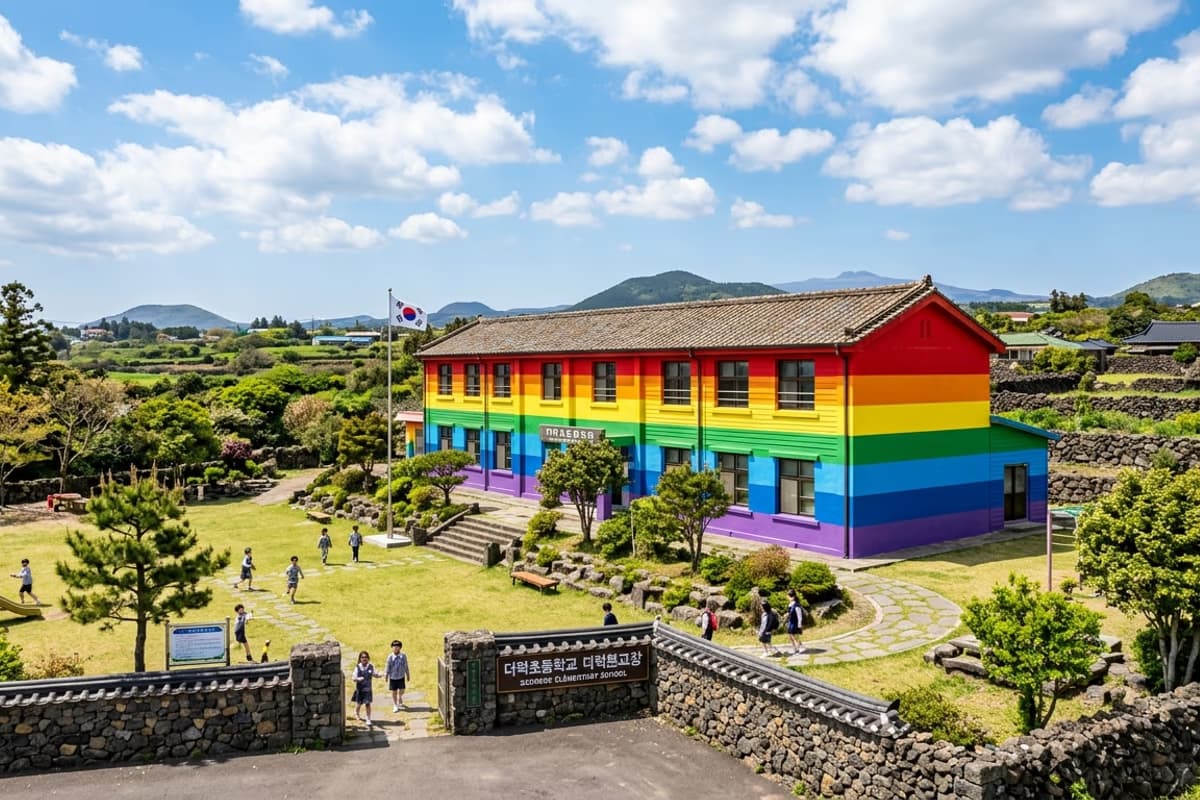
Deoreok Elementary — Jeju's Rainbow Schoolhouse by Lenclos
A working elementary school in Jeju's mid-mountain highland whose exterior was repainted in 2012 by the French color geographer Jean-Philippe Lenclos using a site-specific palette tuned to Jeju light. Now a national photography landmark — but still a school, with restricted visiting hours.
 Culture
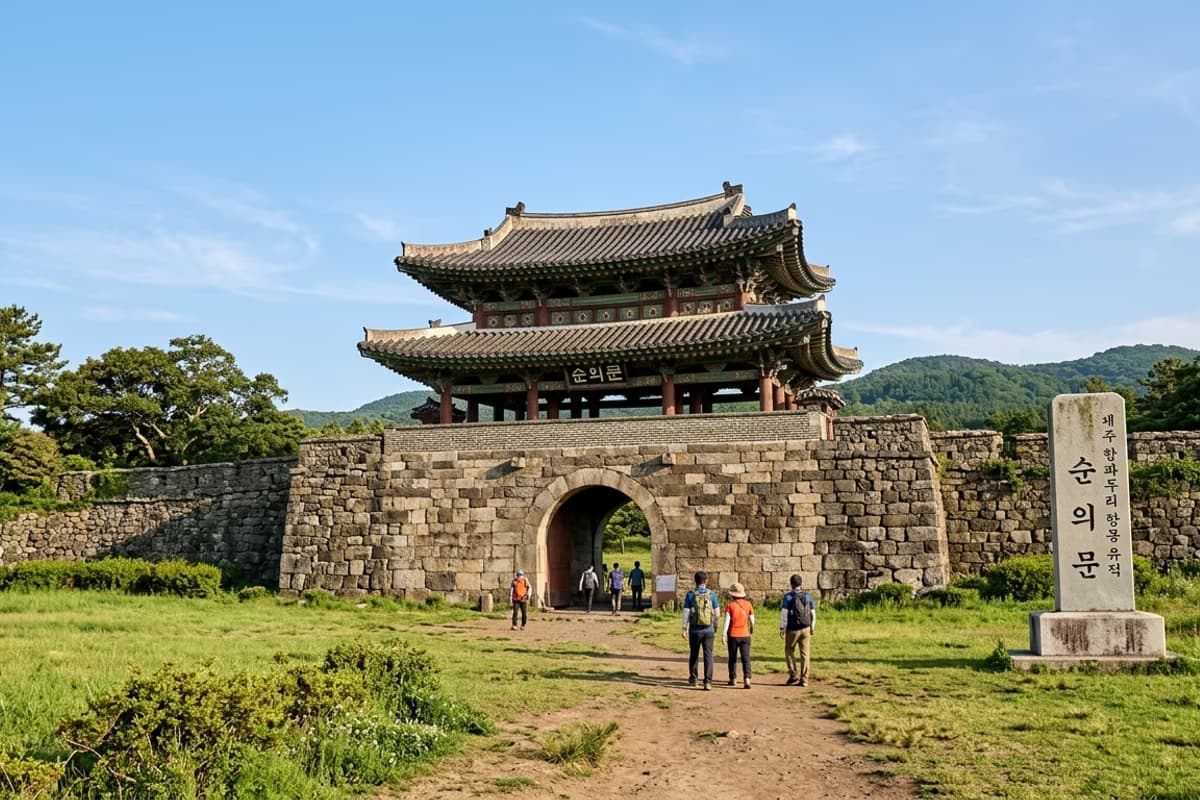
Hangpaduri Fortress — Goryeo Sambyeolcho Last Stand (1271-1273)
A 6-kilometer earthen-walled fortress on a mid-mountain slope of Jeju, built in 1271 by the Sambyeolcho — a Goryeo military unit that refused the Mongol-imposed peace and crossed the sea to make a last stand. Free admission, year-round, 09:00-18:00. National Historic Site No. 396.
 Nature
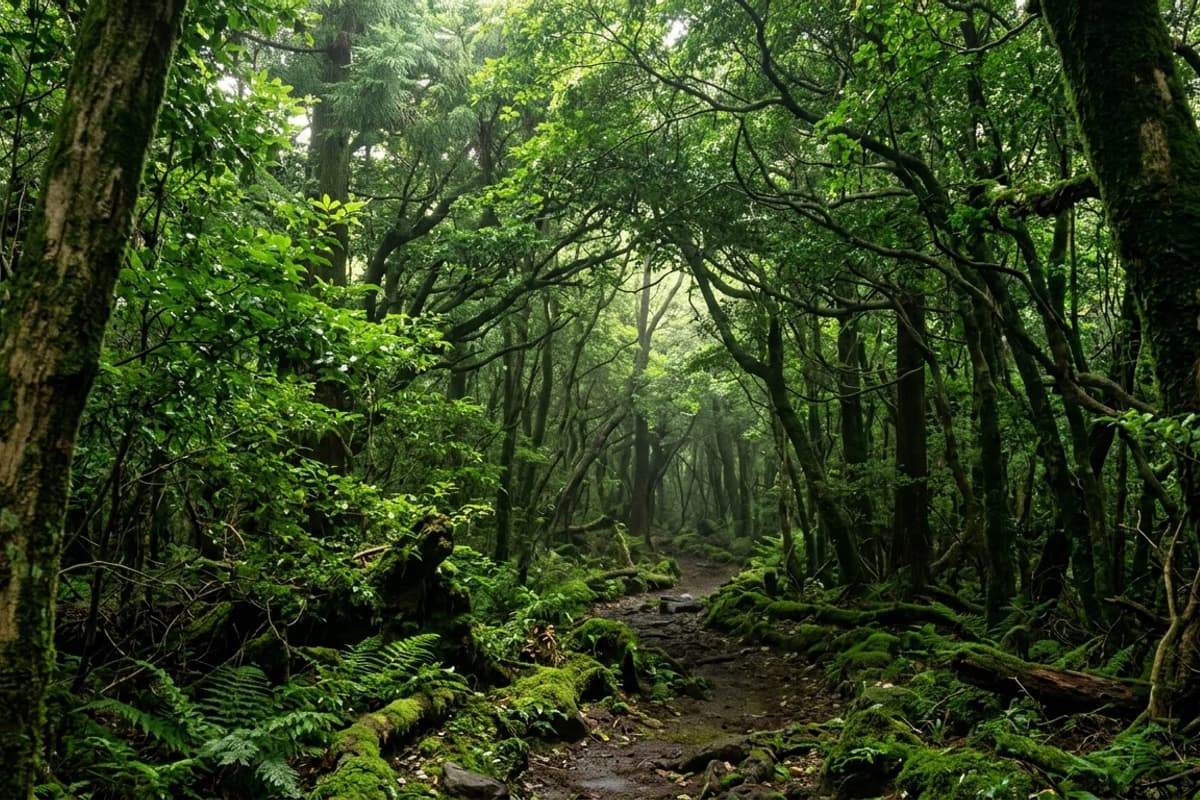
Napeup Subtropical Forest — 750-Year Sanctuary, Jeju Aewol
A 33,980-square-meter (~8.4-acre) lowland evergreen broadleaf forest in Aewol, Jeju — preserved for over 750 years by a single village that designated it geumsan ("forbidden mountain"). Year-round, free, 30-40 minutes around the loop trail.
 Culture
A Son's Promise — How Galchibada Began in Aewol, Jeju
One evening, a mother quietly stopped eating the fish she had loved all her life. She never said the bones had hurt her. That night her son made a private vow, and from the next dawn onward stood at a cutting board with a pair of tweezers — roughly eighty small bones at a time — until the vow became a kitchen on the coast of Aewol.
 Food
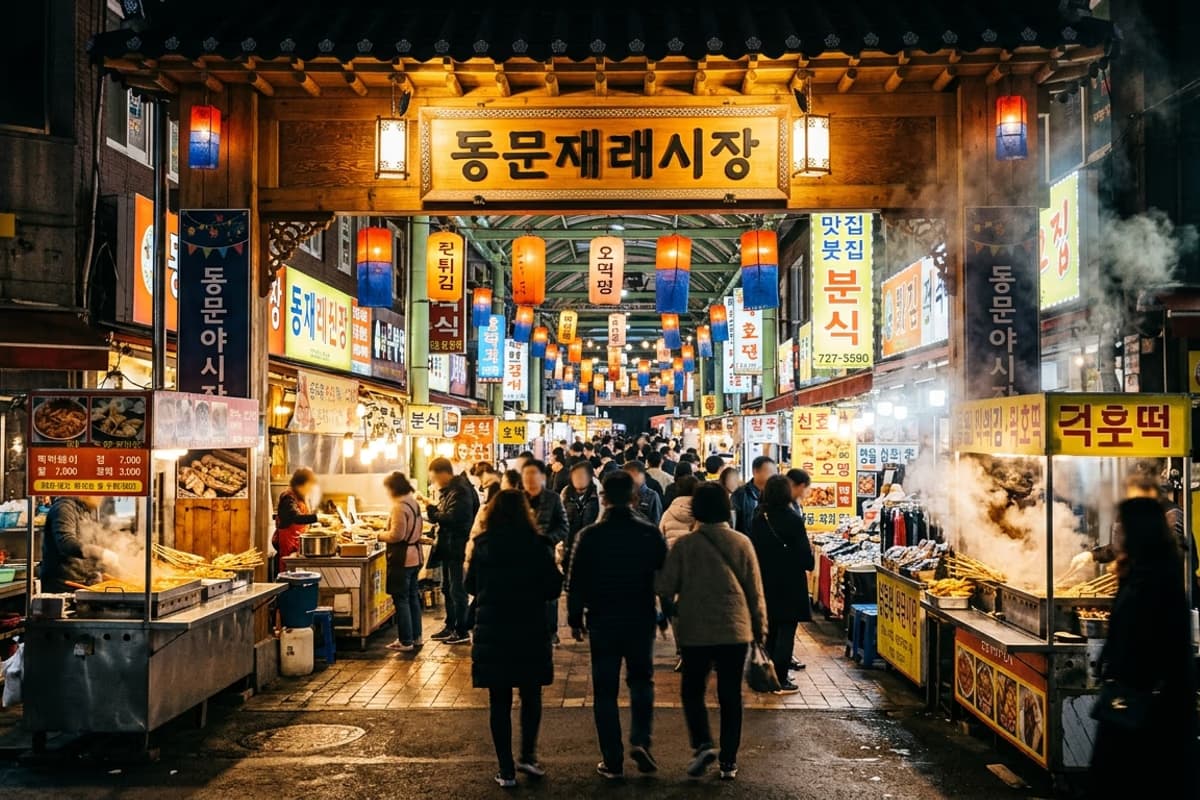
FoodA Night at Dongmun Market — Jeju's Biggest Traditional Bazaar
In the middle of Jeju City, a covered arcade that has been a working market since 1945 turns from a daytime grocery hall — citrus crates, fresh hairtail, dried fish — into a night-market theater after sunset, where black-pork skewers and fried hairtail bites line the alleys. The right one-lap walk for either the first or last evening of a Jeju trip.
 Nature
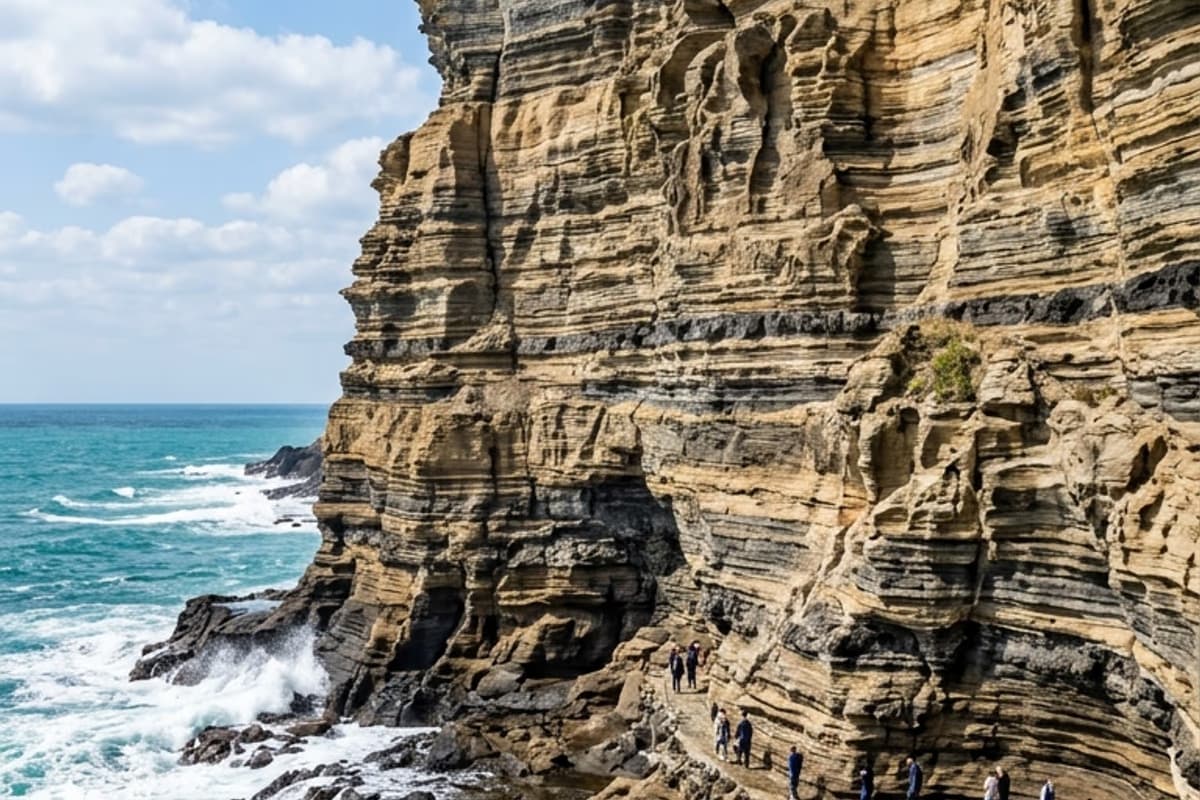
Yongmeori Coast — 1.8 Million Years of Sandstone, Southwest Jeju
A coastal cliff that looks like the head of a dragon pushing into the sea at the foot of Sanbangsan. Yongmeori Coast is Jeju's open-air geological textbook — layered sandstone tuff formed by hydrovolcanic eruptions about 1.8 million years ago, slowly carved out by the tide into vertical walls and sea caves. A short trail where the volcanic time of the island can be read under your feet.
 Nature
Saryeoni Forest Path — Jeju's UNESCO Cedar Sanctuary
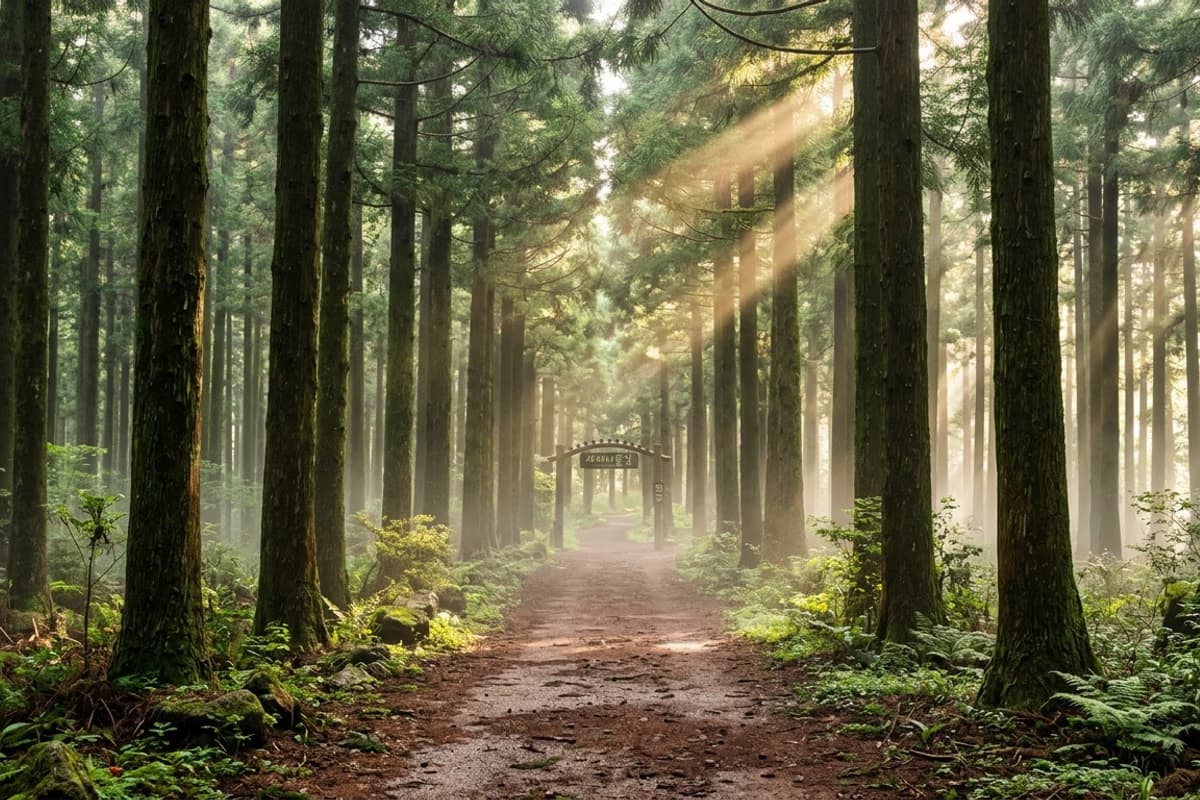
A 15-kilometer corridor of cedar and cypress in the volcanic uplands above Jeju City, opened off Bijarim-ro and walked at the pace of a slow breath. Designated a UNESCO Biosphere Reserve in 2002, Saryeoni feels less like a hike and more like a cathedral — the only sound your soles on packed earth and the occasional thump of a pheasant lifting off through the trunks.
 Nature
Jeju Olle Trail Course 16 — A 15-km West Coast Walk
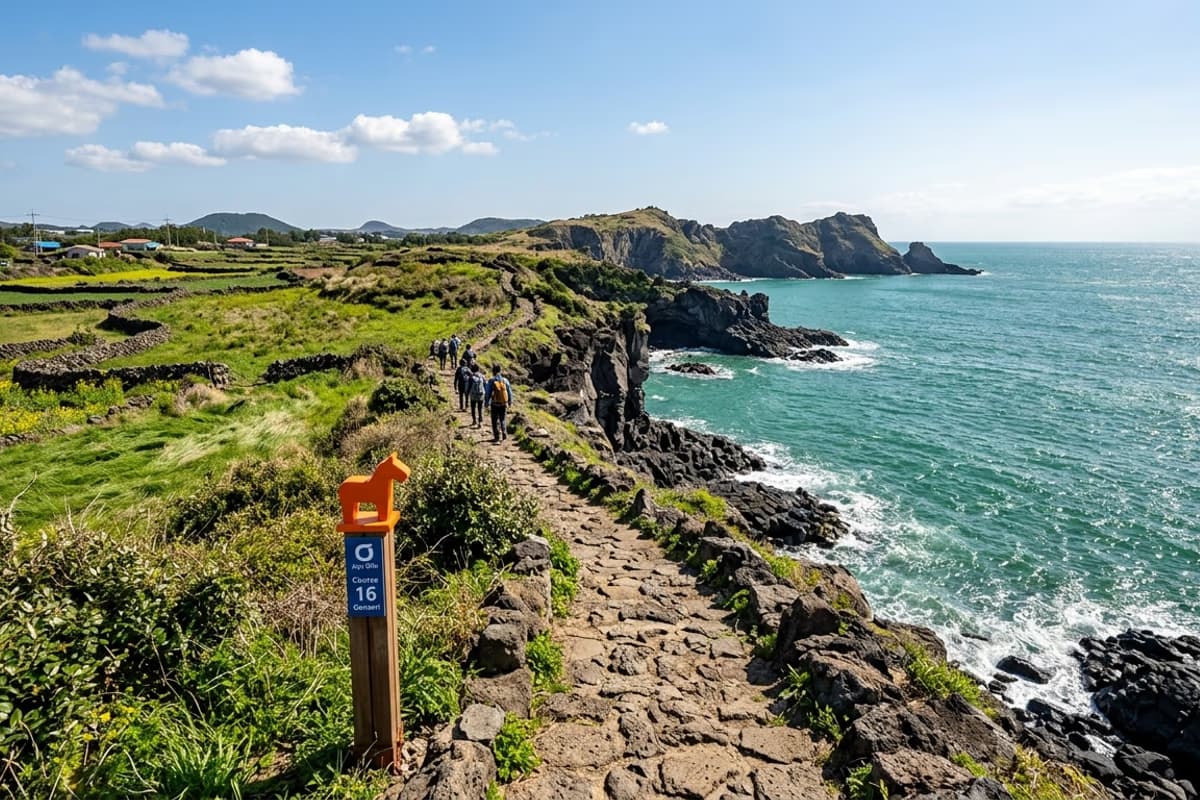
A 15.8 km (9.8 mile) coastal walk along Jeju's west, threading basalt shoreline, fishing-port lanes, and the silver-grass village paths that gave the Olle network its founding story. Course 16 is also one of the very few Olle routes where lunch sits directly on the trail itself, at Aewol Port roughly halfway in. For Western walkers familiar with the Camino de Santiago, this is its compact island cousin — five to six hours instead of five weeks.
 Sights
Udo Island — A Half-Day Cycling Loop Around Jeju's Smaller Sibling
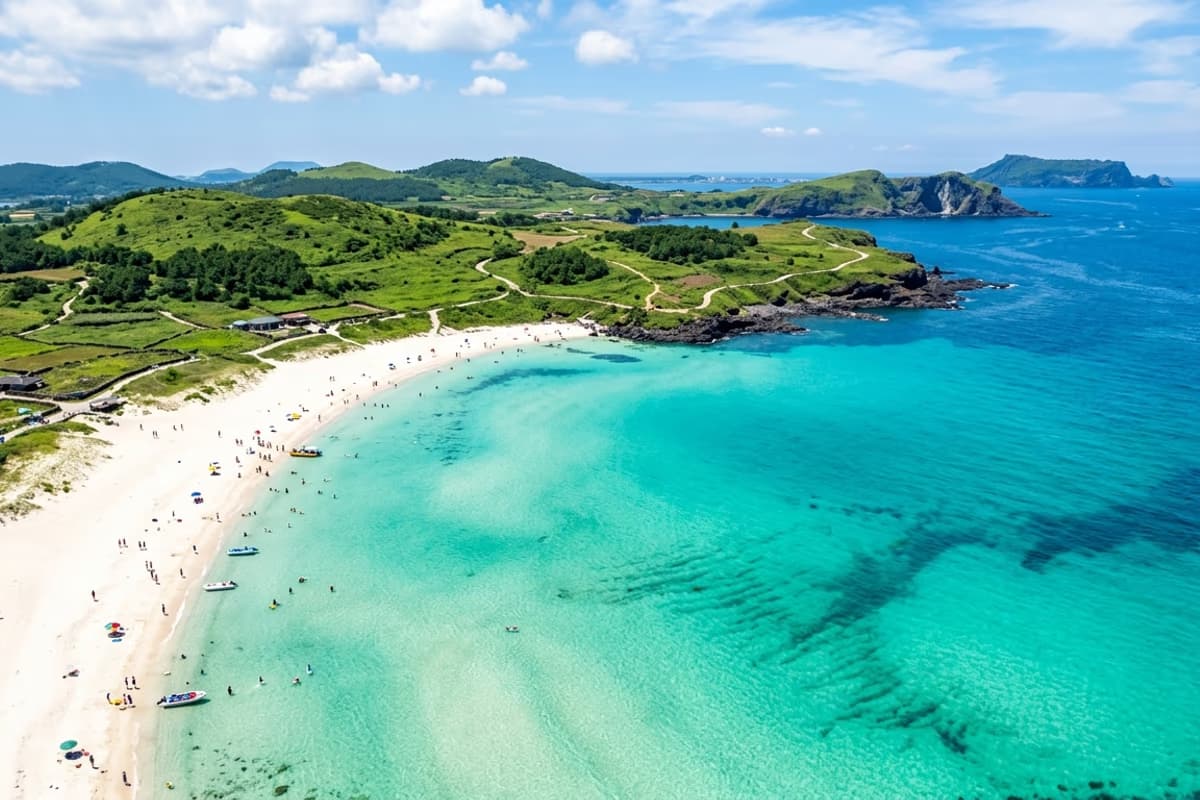
A 15-minute ferry from Seongsan Port lands you on an island roughly 11 miles (17 km) around — small enough to circle by bicycle in two hours, dense enough to pack a coral-sand beach, a black-volcanic-sand cove, and a 132-metre lookout into the loop. For travellers familiar with Catalina Island off Los Angeles or Martha's Vineyard, Udo holds the same satellite-island feel at a quarter of the scale, and the peanut ice cream alone justifies the boat.
 Sights
Camellia Hill — 500 Cultivars in Jeju's Winter Garden
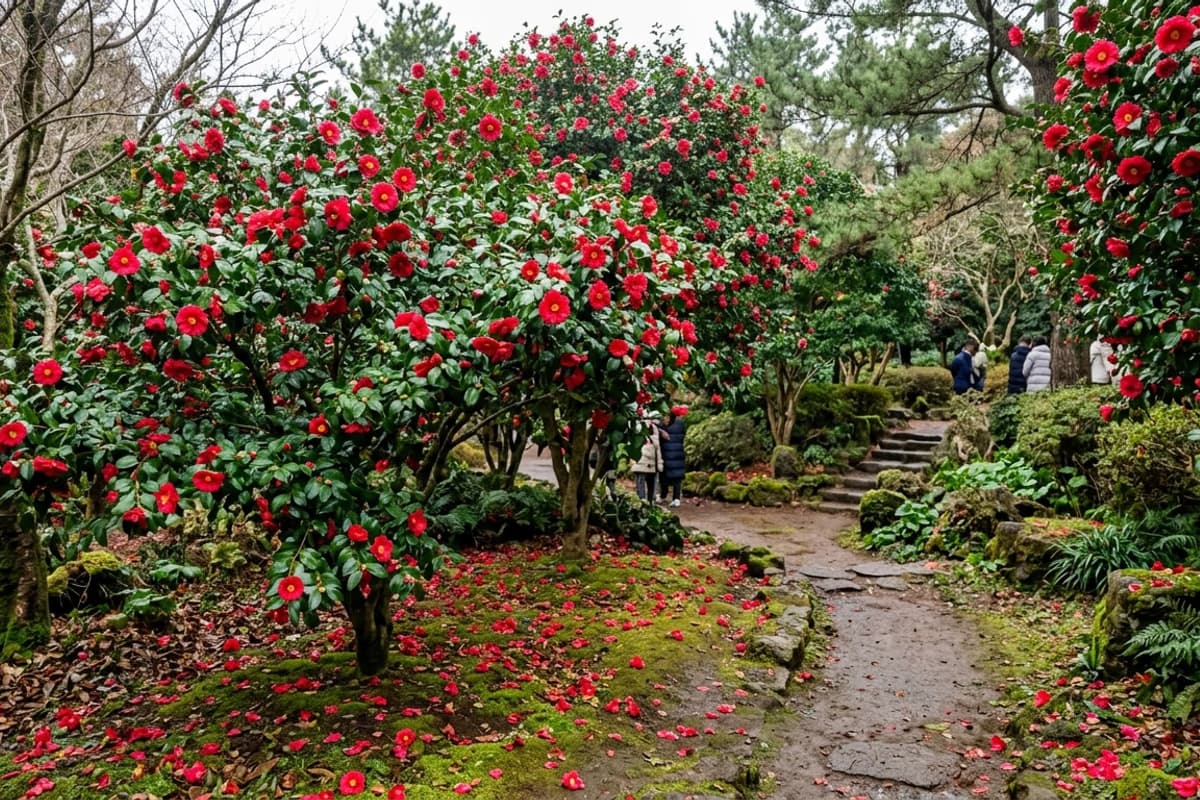
A 170,000 m² (42-acre) garden in Seogwipo's Andeok-myeon that holds <strong>500 camellia cultivars and over 6,000 individual trees</strong> collected from 80 countries — the largest concentrated camellia collection in Asia. For Western visitors who know the Huntington Library's camellia gardens in San Marino or the National Trust's Mount Edgcumbe camellia collection in Cornwall, this is the East Asian equivalent at a scale that makes the comparison fair. Peak bloom runs November through March, density peaks January–February.
 Food
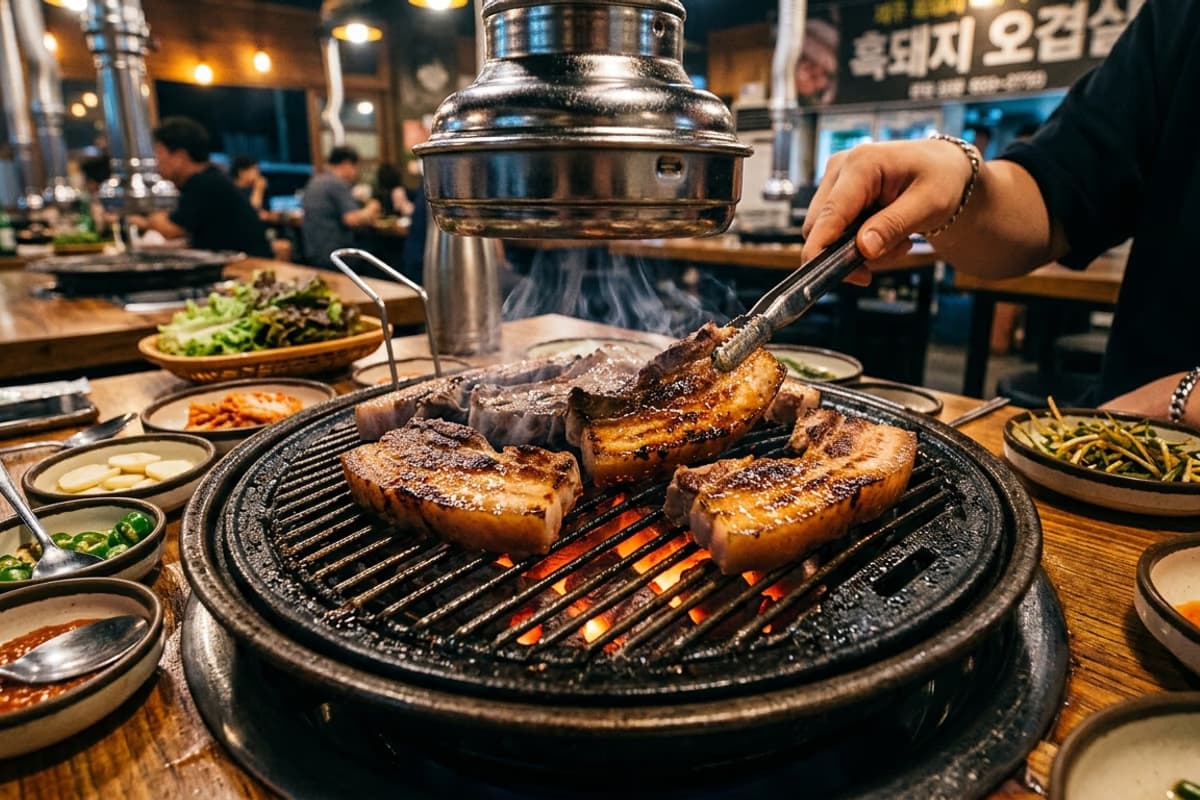
FoodJeju Black Pork Street — Volcanic Heritage Breed, Charcoal-Grilled
For Western visitors who know Spanish jamón ibérico de bellota, British Berkshire pork, or Hungarian Mangalica, Jeju's native black pig (<em>jeju heuk-dwaeji</em>) is the East Asian peer — a heritage breed raised on volcanic soil with a denser texture, a thinner fat layer, and a deeper savouriness over charcoal. Twenty-odd specialist restaurants cluster on a single lane in Jeju City's Gwandeok-ro / Tap-dong neighbourhood, and the lane has become the island's signature land-side meal alongside the sea-side hairtail tradition.
 Nature
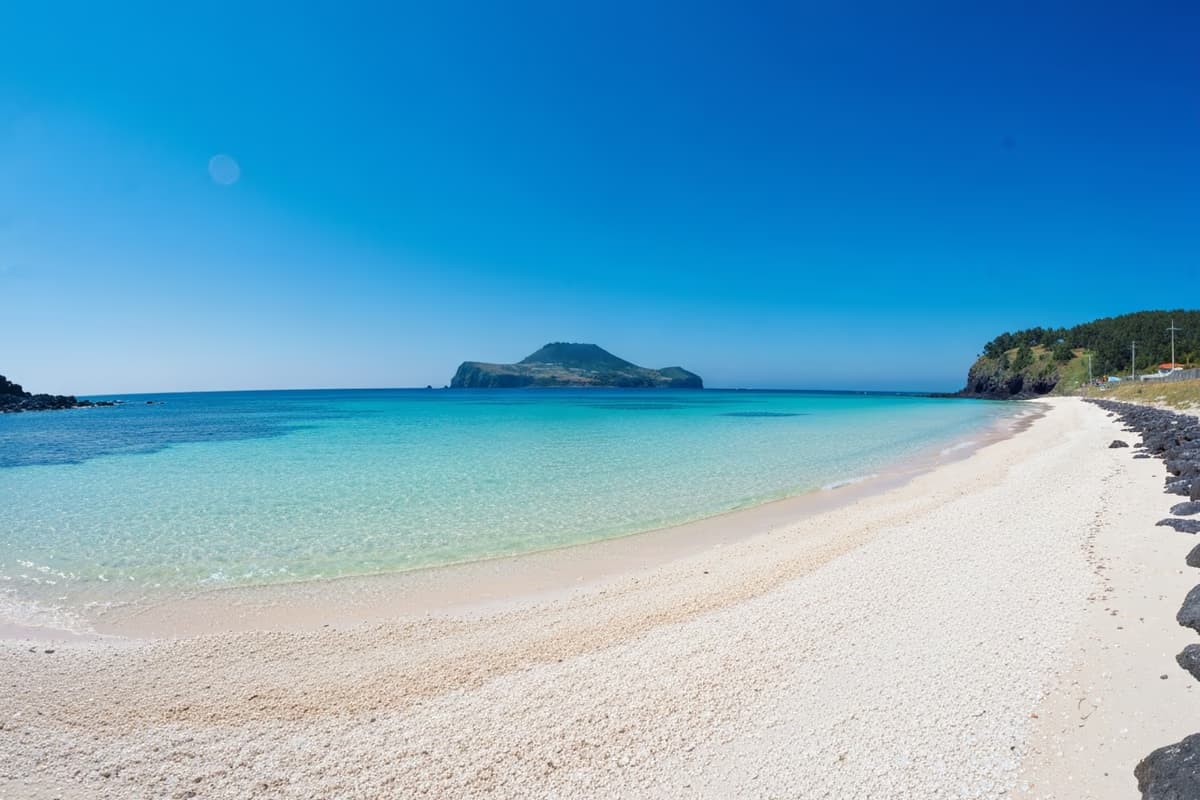
Hyeopjae Beach — Emerald Shallows and White Shell Sand
On a volcanic island whose beaches mostly run black or grey, Hyeopjae is the exception — a 900-metre crescent of nearly pure-white shell sand with shallow emerald water and the small volcanic island of Biyangdo sitting on the horizon roughly 3 km (1.9 miles) out. For Western visitors who know the chalk-white shell beaches of Sardinia, the Cyclades blues of Naxos, or the Caribbean shallows of Anegada, Hyeopjae is the East Asian peer — the same optical trick (light bounces up through shallow water off a pale carbonate floor) on a Pacific-rim coastline.
 Nature
Biyangdo — A Half-Day Trek Around the Island Korea Once Watched Rise
A 15-minute ferry from Hyeopjae Port lands on Biyangdo — a 0.59 km² (0.23 sq mi) volcanic island that a 1002 CE Goryeo chronicle records as rising from the sea, and that geologists place at roughly 27,000 years old. Within a 3.5 km (2.2 mile) perimeter walk sit a brackish crater lake (Pulnang-mot), Natural Monument No. 439 hornitos, and a working lighthouse on Biyang-bong that has marked Jeju's western shore since 1955. For Western travellers familiar with Surtsey (Iceland, 1963) or Stromboli's eruptive cones, Biyangdo is the East Asian analogue at scale — only with a hot-bowl seafood-noodle lunch in the village halfway around.
 Nature
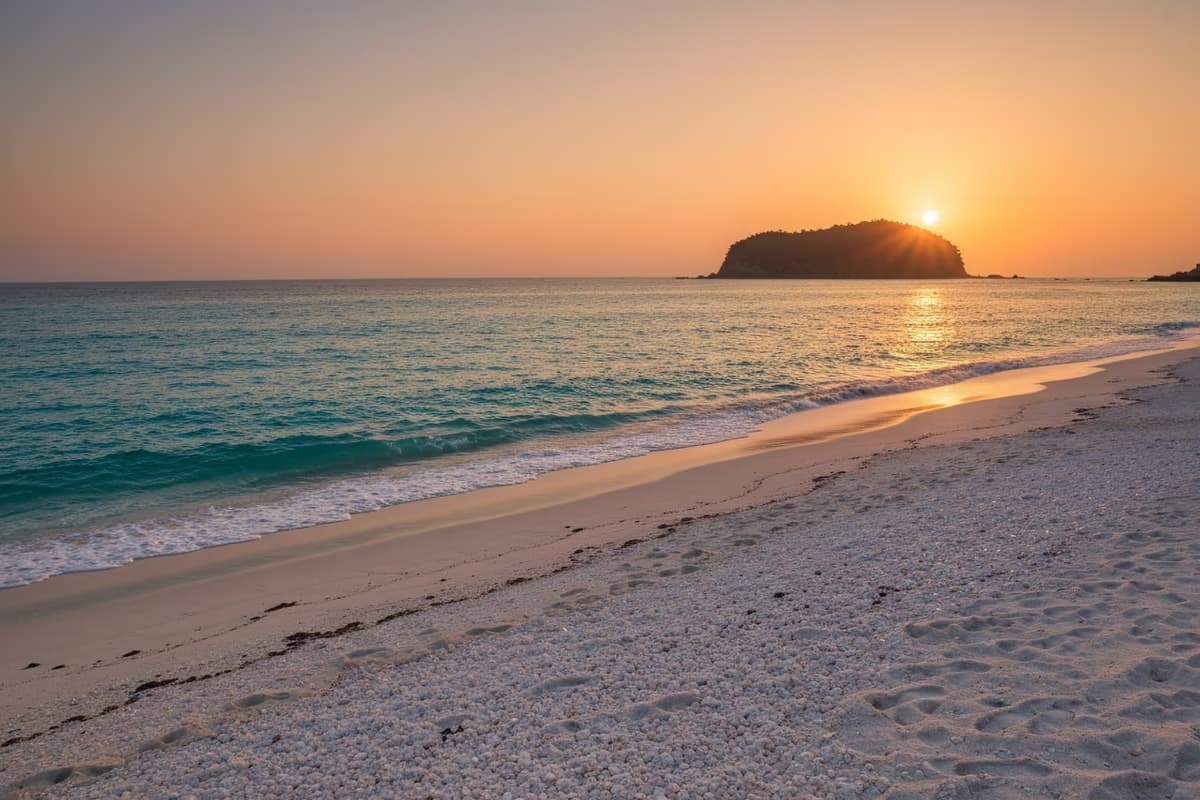
Geumneung Beach — Hyeopjae's Quieter Sibling With a Biyangdo Sunset
Walk ten minutes west from Hyeopjae and a small headland separates you from the next cove, where the same emerald water and the same white shell sand sit beneath roughly half the crowd. Geumneung is Hyeopjae's quieter sibling — a 500-metre crescent with a free campground at the back of the sand and a sunset where the sun drops beside Biyangdo Island rather than below an empty horizon. For Western visitors who know Cornwall's Holywell Bay (next to the busier Perranporth) or Lanikai (Kailua's quieter neighbour on Oahu), this is the East Asian peer at honest scale.
 Sights
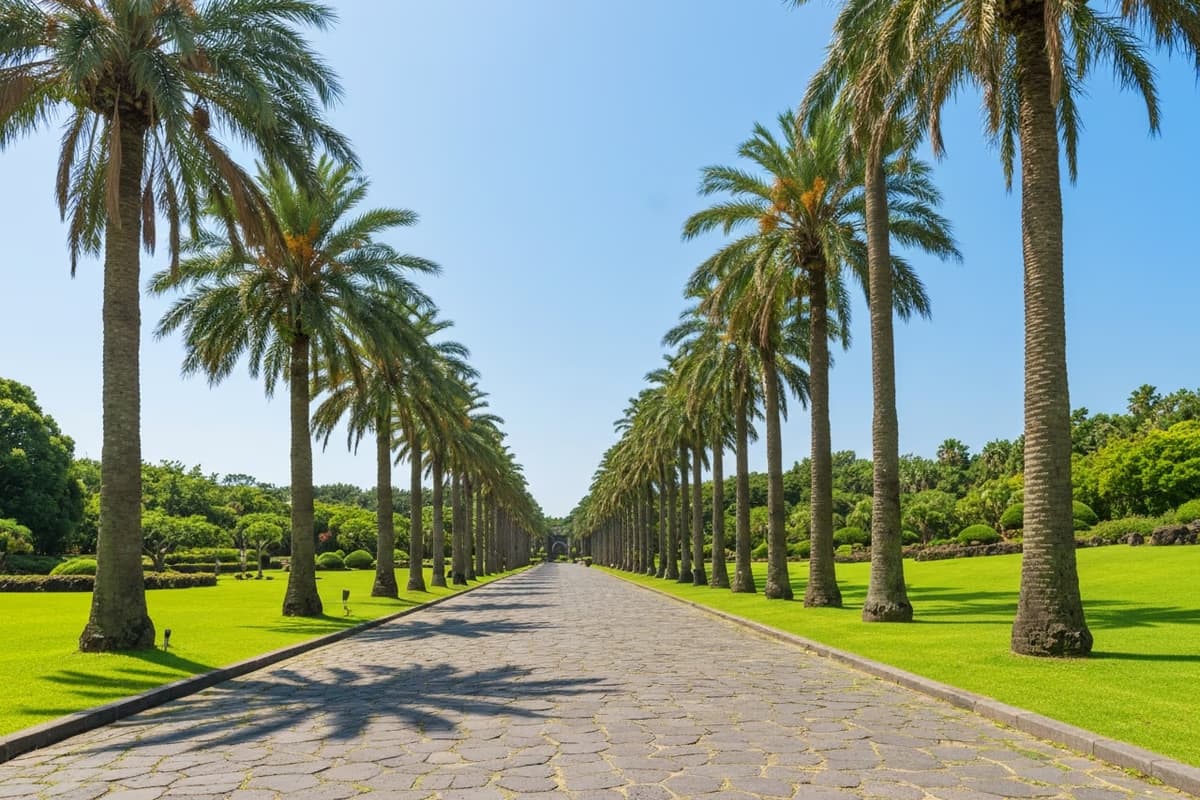
Hallim Park — A 50-Year Garden on a Sand Dune Above the Hyeopjae Lava Cave
A five-minute walk inland from Hyeopjae's emerald shallows sits a 100,000-pyeong (about 80 acres / 33 hectares) botanical complex that began as a barren sand dune in 1971 and was patiently planted over three decades into palm avenues, a bonsai collection, a subtropical conservatory, and a reconstructed folk village. Below the gardens, the Hyeopjae and Ssangyong Caves (Natural Monument No. 236) hold something nearly unique in Korea: stalactites on a volcanic island, formed from beach shell-sand carbonate dissolving in rainwater and re-crystallising on the cave ceiling. For Western visitors who know the Hawaii Tropical Botanical Garden in Hilo or the cave-and-garden pairing at Slovenia's Postojna, this is the Korean equivalent at honest scale, and the geological story underneath is genuinely rare.
 Nature
Geum Oreum — A Mirror Lake Inside the Crater and a Hallasan Sunset Skyline
A 20-minute climb up a 427-metre (1,400-foot) volcanic scoria cone in Jeju's mid-mountain belt opens onto something genuinely rare among the island's 360 oreums: a crater with standing water at its centre. From the rim, the eye crosses the small lake to Hallasan's skyline in the east, then sweeps west across Hyeopjae Bay to Biyangdo and the cliffs of Suwolbong. For Western visitors who know the crater walks at Diamond Head on Oahu or Cinder Cone in Lassen Volcanic National Park, Geum Oreum is the East Asian equivalent at honest scale — only with a still-water pond inside the bowl and a sunset window that holds the island's highest peak in one frame.
 Sights
Iho Tewoo Pony Lighthouses — Jeju's First Skyline After the Runway
A 10-minute drive from the Jeju International Airport baggage claim down to the coast and a short breakwater opens onto a pair of 12-metre (40-foot) wooden lighthouses shaped like the island's native Jeju ponies — one red, one white, facing each other across the channel mouth. After sunset, both lights begin a steady international-standard blink (red on the right of the harbour entrance, white on the left), and the silhouette of the two ponies against the magic-hour sky becomes the first or last image of nearly every Jeju trip. For Western visitors who know Portland Head Light in Maine or the cluster of small Italian lighthouses at Camogli, the scale is similar; the form is genuinely unique.
 Sights
Osulloc Tea Museum — An Emerald Afternoon in the Seogwang Green Tea Fields
Korea's first dedicated tea museum, Osulloc Tea Museum sits in the middle of the Seogwang green tea fields in Andeok-myeon, Seogwipo. An afternoon here loops through emerald-row fields, matcha desserts, and a tea-culture exhibit on a single short itinerary in western Jeju.
 Nature
Hallasan Yeongshil Trail — The Shortest Summit Route From Jeju West
Starting from the 1,280-metre Yeongshil Rest Stop on Route 1100, the trail climbs 5.8 km to the Witse-oreum shelter at 1,700 m. The shortest route into Hallasan's alpine zone, threading through 100-metre trachyte columnar joints, Korean fir groves, and a high-altitude wetland — a vertical ecological cross-section walked in 2.5 hours one-way.
 Culture
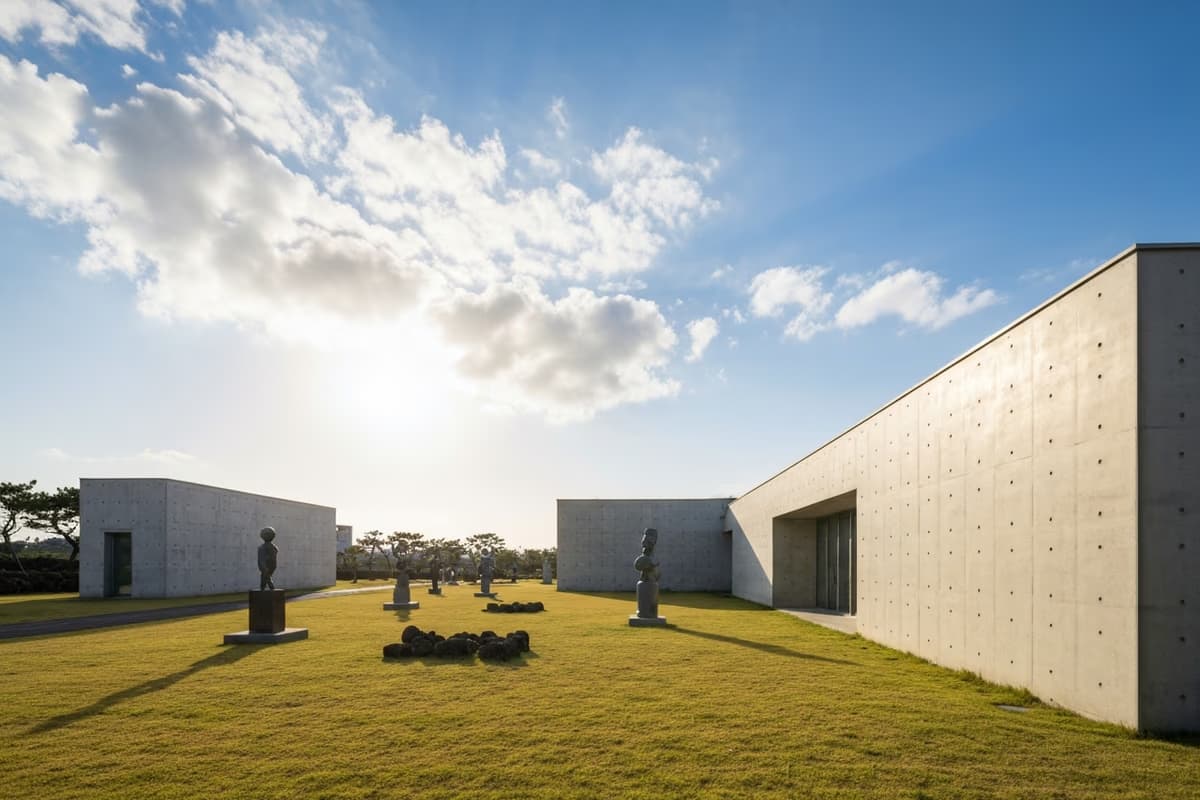
Jeoji Arts Village — 14 Museums Tucked Inside a Quiet Hamlet, Hangyeong-myeon
In Jeoji-ri, Hangyeong-myeon — a small village on the lower slopes of Hallasan — fourteen museums and craft studios have been settling in since 1999. The Jeju Museum of Contemporary Art and the Kim Tschang-yeul Museum face each other across the central grounds; the walking paths between them follow the gentle earthen contours of Jeoji Oreum. On the same island where landscape dominates, this is one of the rare places to walk a route shaped by human hands.
 History
Gonae-bong — A 175-Metre Joseon Beacon Hill Five Minutes From Galchibada Aewol
Two hundred metres inside Gonae-ri village in Aewol-eup, a 175-metre hill stands quietly aside. The summit is a 15-minute walk up, and on top sit the stone remains of a Joseon-era signal fire mound. Five minutes by car from Galchibada Aewol, with the crowds of Saebyeol Oreum left behind, you can sweep the northwestern coastline and Hallasan in a single ridge-top view.
 Nature
Chagwido — A 10-Minute Ferry to Jeju's Protected Uninhabited Isle
A 10-minute crossing from Jagunae Port in Hangyeong-myeon lands on an uninhabited island. After the last residents left in the 1970s, the site was designated as a protected nature reserve, and only a 1.5 km perimeter trail past two peaks and a central grassland remains open to visitors. At sunset, watching the sun drop behind the Chagwido silhouette puts the island into one of the most striking coastal frames in western Jeju.
 Nature
Suwolbong — A 4 km UNESCO Geo Trail Across an 18,000-Year-Old Volcanic Section
A 77-metre hill carries the certification of a full volcanic textbook. In Gosan-ri, Hangyeong-myeon, a 4-km geo trail follows the coastal cliff, and the cliff face exposes a hydrovolcanic ash sequence laid down roughly 18,000 years ago. From the small summit, Chagwido and the open horizon beyond sit in a single view.
 Festival
Hueree Hydrangea Festival — A 60,000-Pyeong Flower Tunnel Over Volcanic Soil
At 256 Sillyedong-ro, Namwon-eup, Seogwipo, Hueree Natural Life Park stages its annual hydrangea season across roughly 60,000 pyeong (about 198,000 m² / 49 acres). The 2026 run goes April 20 through July 26, with pink, sky-blue, purple, and white flowers lining a 1.5 km walking trail over red volcanic scoria. Peak bloom continues through mid-July, making this one of the strongest matches for a Jeju summer itinerary.
 Festival
Hueree Lavender Season, A Provence Purple Garden on Jeju Volcanic Soil in July
In the first week of July, the same Hueree grounds that held pink and sky-blue hydrangeas earlier now shift a corner of the park into deep Provence purple. Four Mediterranean lavender cultivars share about 3,000 pyeong (roughly 9,900 m² or 2.4 acres) of ridged volcanic scoria beds, and a limited-run workshop plus season-only cafe drinks round out a Jeju summer afternoon. Galchibada in Aewol is about 50 minutes north by car.
 Nature
Darangshi Oreum Crater Trek, A 40-Minute Summer Climb to a 600-Meter Circular Basin
Rising 382.4 meters (1,254 feet) above the eastern middle slopes, Darangshi Oreum is the queen of Jeju's oreum belt. Its summit holds a near-perfect circular crater 600 meters (about 1,970 feet) across and 115 meters deep, rivaling Hallasan's Baekrokdam in scale. A pre-6:30 a.m. summer climb takes 30 to 40 minutes on wooden staircases and delivers a rim walk in cool 24 to 26 degree Celsius air before the humidity rises. From Galchibada in Aewol the drive runs about 65 minutes.
 Nature
Manjanggul Lava Tube Summer Exploration, A UNESCO Underground Walk at a Steady 15 Degrees Below
When Jeju's surface pushes past 33 degrees Celsius (91 Fahrenheit) on a July afternoon, Manjanggul stays a steady 15 to 16 degrees underground all year. Inscribed as UNESCO World Heritage in 2007, this 7.4-kilometer lava tube opens just one kilometer to the public through Entrance 2, with a KRW 4,000 (about USD 3) adult ticket, and delivers the world's tallest lava column, 7.6 meters, at the turnaround. From Galchibada in Aewol the drive runs about 55 minutes.
 Nature
Marado Day Trip, Twenty-Five Minutes by Ferry to Korea's Southernmost Island for Seaweed Jjajangmyeon
Marado is Korea's southernmost island, a 30-manpyeong (roughly 990,000 m² / 245 acres) volcanic outcrop reached by a 25-minute ferry from Unjin Harbor in Seogwipo. Adult round-trip fare is KRW 21,000 (about USD 15.60), a 4.2-kilometer circular trail loops the island, and three famous jjajangmyeon houses cook black bean noodle with local seaweed (tot). From Galchibada in Aewol the drive to Unjin Harbor takes about 55 minutes, making the full day a distinctive Jeju outer-island loop.
 Nature
Jeongbang Waterfall Summer Cascade, Asia's Only Ocean-Facing Waterfall Five Minutes Below a Pine Staircase
Jeongbang Waterfall on Seogwipo's south coast is the only waterfall in Asia that drops directly from land into the sea. The 23-meter cascade over dark basalt is a designated Korean Scenic Site (No. 43) and part of the classic Yeongju Sipigyeong (Twelve Scenic Views of Jeju), and five minutes down a shaded pine staircase places you on a pebble beach where sea spray and salt breeze meet. Adult admission is KRW 2,000 (about USD 1.50), and from Galchibada in Aewol the drive runs about 70 minutes.
 Culture
St. Isidore Ranch Summer Meadow, An Irish Priest, 6.6 Square Kilometers of Reclaimed Pasture, and an Organic Ice Cream Afternoon
St. Isidore Ranch in Hallim's Geumak-ri covers roughly 6.6 square kilometers (about 1,630 acres, larger than New York's Central Park), turned into pasture from 1954 onward by Father Patrick James McGlinchey, an Irish Columban missionary who arrived on Jeju that year. Free entry, no reservations, and organic ice cream at the Isidore Center Cafe (about KRW 5,500 or USD 4) anchor an afternoon two hours long. From Galchibada in Aewol the drive runs about 20 minutes, the shortest hop in this five-part summer series.
 Nature
Jeolmul Forest Samul-Trail, A Stair-Free 40-Minute Cedar Deck Above the Aewol Return
Jeolmul Natural Recreation Forest on the northeast slope of Hallasan, at roughly 700 meters (2,300 feet) elevation, keeps its Samul-Trail entirely stair-free with a wooden deck and gentle earth path, comfortable for strollers, wheelchairs, and elderly visitors. Samul-Trail runs 40 to 60 minutes, the Longevity Path 11.1 km (6.9 mi) at over three hours, and admission is just KRW 1,000 (about USD 0.75). From Galchibada in Aewol the drive runs about 50 minutes, folding cedar canopy and the western coast evening into a single day.
 Nature
Shinchang Wind Farm Coastal Drive, Fourteen Turbines Above a Western Sunset
The Shinchang wind farm coast in Hangyeong-myeon on Jeju's western edge lines up 14 turbines above a 1.2-kilometer (0.75-mile) coastal road where the ocean and the blades enter the frame together. From Galchibada in Aewol the drive runs about 30 minutes, and arriving 40 minutes before sunset lets the golden-hour to blue-hour window unfold over a single horizon line.
 Nature
Sangumburi Maar Crater Walk, A Two-Kilometer Rim Above a Depression Without a Mountain
Sangumburi, on Jocheon's Bijalim-ro, is a maar crater formed when underground magma met groundwater and blasted the surface downward instead of building a cone upward. The circular basin measures 2,070 meters (about 1.3 miles) around and 132 meters (433 feet) deep, deeper than Hallasan's Baengnokdam summit lake. In summer the crater interior fills with green Chinese privet and rare plants like Amur adonis and Byeonsan wind flower. Adult admission KRW 6,000 (about USD 4.50). The drive from Galchibada in Aewol runs about 55 minutes.
 Nature
Seowoobong Hamdeok Trail Summer Walk, 2,550 Meters Above an Emerald Sea
Seowoobong on the eastern edge of Hamdeok Beach holds a gentle 2,550-meter (about 1.6-mile) earth trail split into three forest sections: 960 meters, 500 meters, and 200 meters. Entry is free and open year-round, and the summit ridge at 111 meters (364 feet) frames the emerald Hamdeok sea and Hallasan's silhouette in one axis. The full loop takes about an hour. From Galchibada in Aewol the drive runs about 45 minutes, connecting directly to an early evening seat.
 Festivals
Hamdeok Beach Opening Festival, Six Weeks of Emerald Sand and Nighttime Lifeguard Watch
Hamdeok Beach opens on the first weekend of July with a ceremony that launches Jeju's official eight-beach summer season. The emerald bay in Jocheon-eup runs about six weeks of lifeguard-supervised swim, and a two-week nighttime opening extends the guarded hours to 9:00 p.m. with 80 shore lamps, roughly 20 food trucks, and free acoustic and indie-rock stages. Entry is free. From Galchibada in Aewol the drive runs about one hour.
 Festivals
Iho Tewoo Anchovy Festival, Old Net-Hauling and Wondam Stone-Weir Fishing on a Black-Sand Beach
For three days each mid-to-late July, Iho Tewoo Beach in Jeju City turns its distinctive black volcanic sand into a working-fisher stage. Costumed reenactors haul 40-meter (130-foot) anchovy nets in a synchronized rhythm, and a natural stone weir (wondam) on the eastern rocks lets visitors gather small fish by hand at low tide. Free entry, black-sand beach, and Jeju's most iconic Red-and-White Pony Lighthouses in the background. From Galchibada in Aewol the drive runs about 20 minutes, the shortest of Jeju's summer festival lineup.
 Festivals
JJAN Festival, Fifty Craft Beers Poured Under the Silhouette of Seongsan Ilchulbong
From July 20 through 22 each year, about 4,000 people gather on an open-air plaza in Seongsan-eup for JJAN Festival, Jeju's largest summer craft beer event. Twelve breweries pour 50 different craft beers (The Booth, 7brau, Brooklyn Brewery, Magpie, Goose Island among them), with DJ sets, buskers, a flea market, and a food-truck strip filling the plaza. The UNESCO-listed Seongsan Ilchulbong tuff cone stands directly behind the main stage. Day ticket KRW 25,000 (about USD 18.50). From Galchibada in Aewol the drive runs about 1 hour 20 minutes.
 Festivals
Tapdong Summer Night Arts Festival, Free Seaside Opera and Rock on a 2,500-Seat Waterfront Stage
For roughly one week each late July, Tapdong Seaside Performance Hall in downtown Jeju City runs a free open-air arts festival with the sea directly facing 2,500 fan-shaped seats. Since 1996 the festival has rotated four genres nightly: opera, rock, folk, and Korean-classical crossover. Shows run 7:30 p.m. to 9:00 p.m., admission is free, and about 80 percent of the performers are Jeju-based artists. From Galchibada in Aewol the drive runs about 30 minutes.
 Festivals
Sagye Fishing Village Summer Haenyeo Experience, A July-Only Coastal Workshop Between Sanbangsan and Brothers Island
Sagye Fishing Village in Andeok-myeon, Seogwipo runs a summer-only haenyeo (women divers) experience during July and August. Twelve village divers, six of whom rotate as guides during their off-season, lead a one-hour workshop on the tidepool with Sanbangsan volcanic dome to the north and Brothers Island silhouette to the west in the same sightline. Sessions cap at 12 visitors and cost KRW 35,000 (about USD 26) per person including all safety gear. From Galchibada in Aewol the drive runs about 40 minutes.
 Festivals
Bicheorin 6th Summer Flower and Trumpet Vine Festival, A Kilometer of Orange Blooms Climbing Hangyeong Stone Walls
For roughly two months from May 20 through July 15 each year, Bicheorin Botanical Garden in Hangyeong-myeon on Jeju's western coast runs its 6th Summer Flower and Trumpet Vine Festival. One thousand Chinese Trumpet Vine (Campsis grandiflora) plants drape one kilometer of stone walls, straw supports, and jar bases in a single orange color, with a palm-tunnel kayak experience and a tricycle loop inside the garden. Admission KRW 9,000 (about USD 6.65). From Galchibada in Aewol the drive runs about 30 minutes, and peak bloom sits in early to mid-July.
 Culture
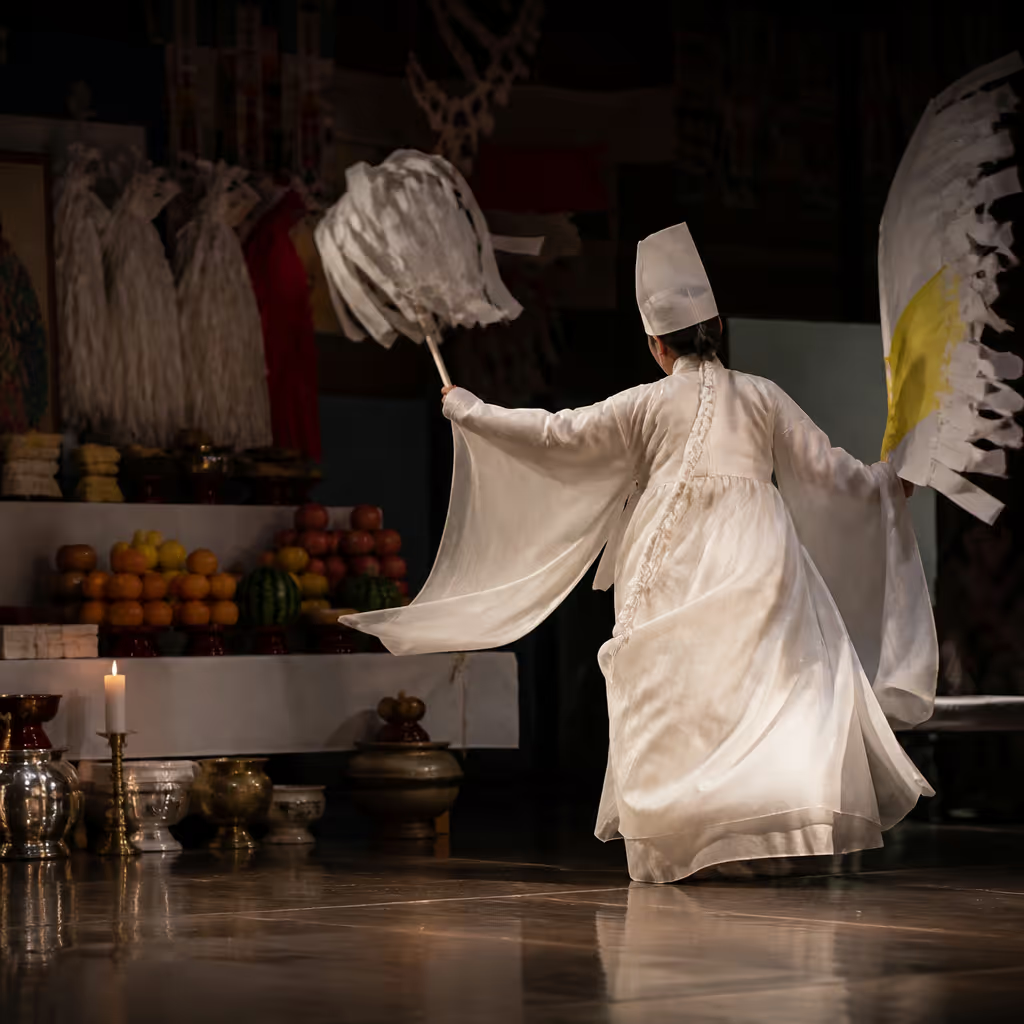
Chilmeoridang Yeongdeunggut Summer Stage, A UNESCO Intangible Heritage Ritual Performed Weekly at the Sarabong Transmission Hall
At the Chilmeoridang Yeongdeunggut Transmission Hall in Jeju City, a one-hour distilled version of a UNESCO Intangible Cultural Heritage shamanic ritual runs every Saturday afternoon at 2:00 p.m. from April 24 through October 30. Inscribed on UNESCO's Representative List of the Intangible Cultural Heritage of Humanity in 2009, this Jeju wind goddess (Yeongdeung Halmang) ritual condenses 12 movements into one hour on stage. Admission is free. From Galchibada in Aewol the drive runs about 40 minutes.
 Festivals
Jeju Folk Village Hydrangea Festival, Hanbok, Thatched Roofs, and Hydrangeas in Pyoseon's Old Stone-Wall Lanes
From late May through early July each year, the Jeju Folk Village at 631-34 Minsokhaean-ro in Pyoseon-myeon runs its Hydrangea Festival. Blue, pink, and lavender blooms fill the stone-wall lanes and thatched-roof corners of a 100-home preserved village from the 1890s. Free rice-cake pounding sessions run every Saturday, and gireumtteok making runs every Sunday. Hanbok rental grants a 70 percent admission discount. From Galchibada in Aewol the drive runs about 70 minutes.
 Festivals
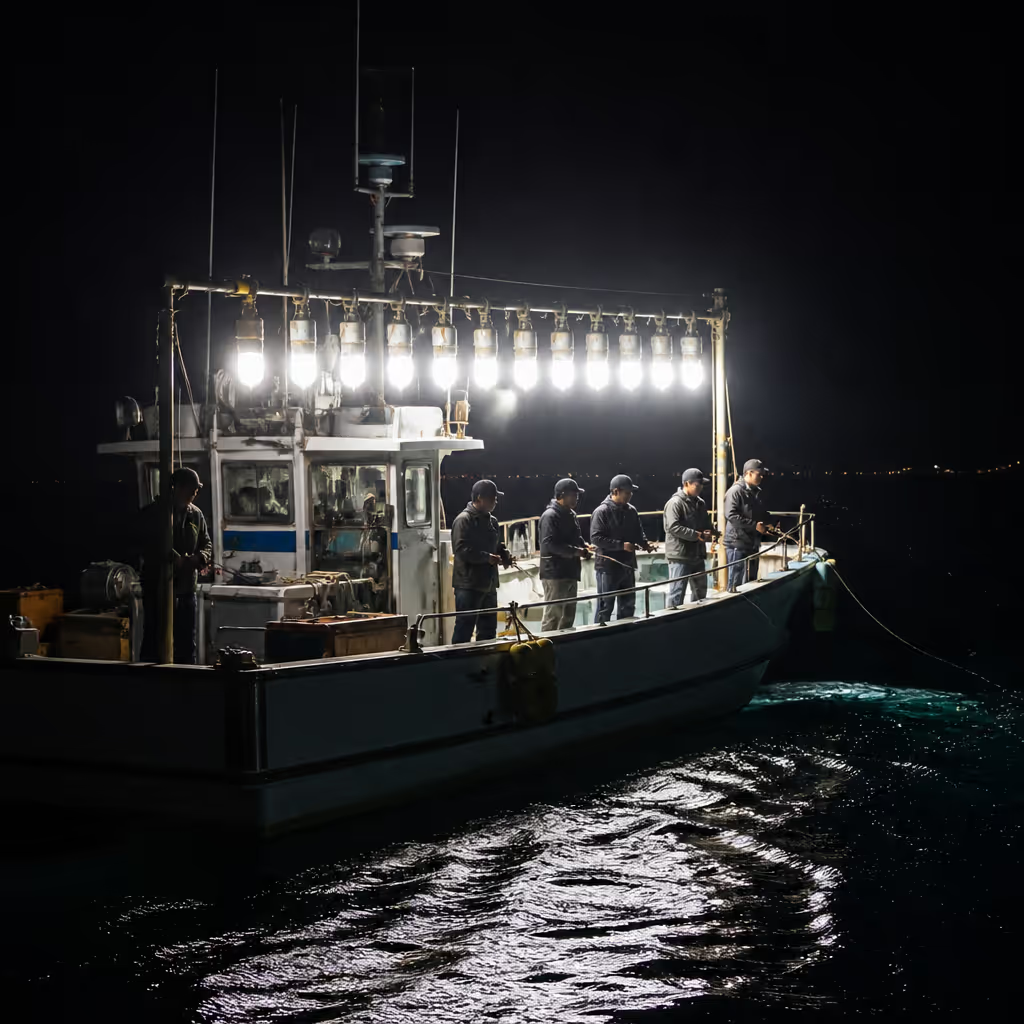
Jeju Summer Night Squid Fishing Festa, Four Harbors, Twelve Lanterns, and a 7.5-Hour Working Boat From Dusk to Dawn
From late July through late August each year, four Jeju harbors (Dodu, Iho, Hahyo, Gosan) run the Summer Night Squid Fishing Festa. Roughly 27 working boats depart each evening at 7:30 p.m. and return at 3:00 a.m., with 12 fifty-watt filament lanterns lighting each deck to draw small squid. The experience runs KRW 65,000 (about USD 48) per person, including fishing gear, life jacket, on-board sashimi, and squid ramen. From Galchibada in Aewol to Dodu Harbor the drive runs about 25 minutes.
 Sights
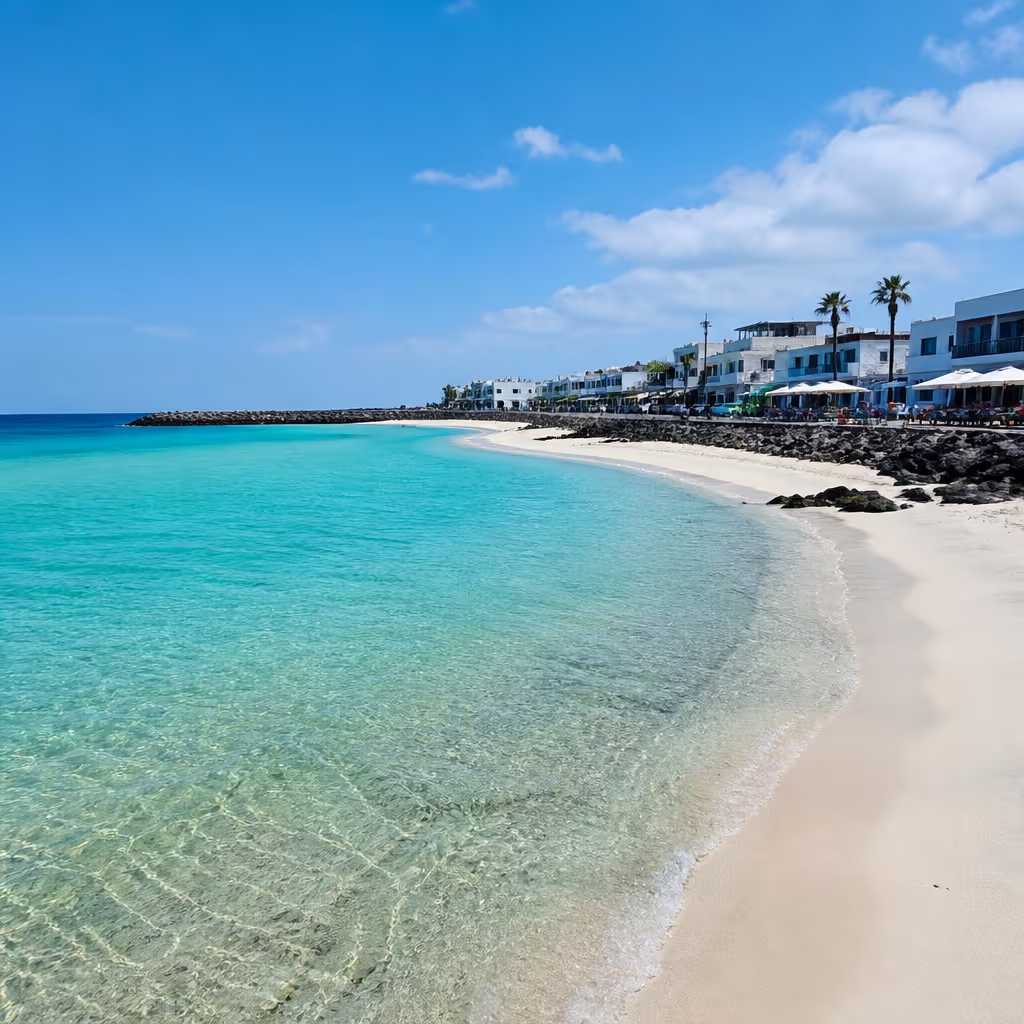
Woljeongri Beach Summer Surf and Cafe Guide, Beginner Longboard Sessions on Emerald Water With Eight Ocean-View Cafes for a Full-Day Coastal Loop
Woljeongri Beach on Jeju's northeastern coast, at 33-3 Woljeongri in Gujwa-eup, holds a 550-meter (1,800-foot) white-sand arc with water depth under 1 meter (3 feet) close to shore. Summer southwest winds deliver shoulder-height waves in two regular sessions per day (9 to 11 a.m. and 3 to 5 p.m.), ideal for beginner longboard lessons. Behind the beach, about eight ocean-view cafes line 250 meters of the road. Free admission, year-round. From Galchibada in Aewol the drive runs about 55 minutes along the western ring road, allowing a post-surf afternoon to loop directly into a coastal evening dinner in Aewol.