Chagwido — A 10-Minute Ferry to Jeju's Protected Uninhabited Isle
A 1.5 km Loop Through Two Peaks and a Grassland Once Inhabited, Now Held as Natural Monument No. 422
Chagwido is a 0.16 km² uninhabited island roughly 2 km off the coast of Gosan-ri, Hangyeong-myeon, Jeju City — about a 10-minute ferry from Jagunae Port. After the last residents left in the 1970s, the site was designated as Natural Monument No. 422 in 1991 and managed as a protected nature reserve; only the 1.5 km perimeter trail is accessible. Two peaks, a central grassland, and a concentration of rare coastal plant communities make up the visitable area. At sunset Chagwido is widely paired with Suwolbong as a defining western-Jeju view. Galchibada in Aewol is about 35 minutes by car east.
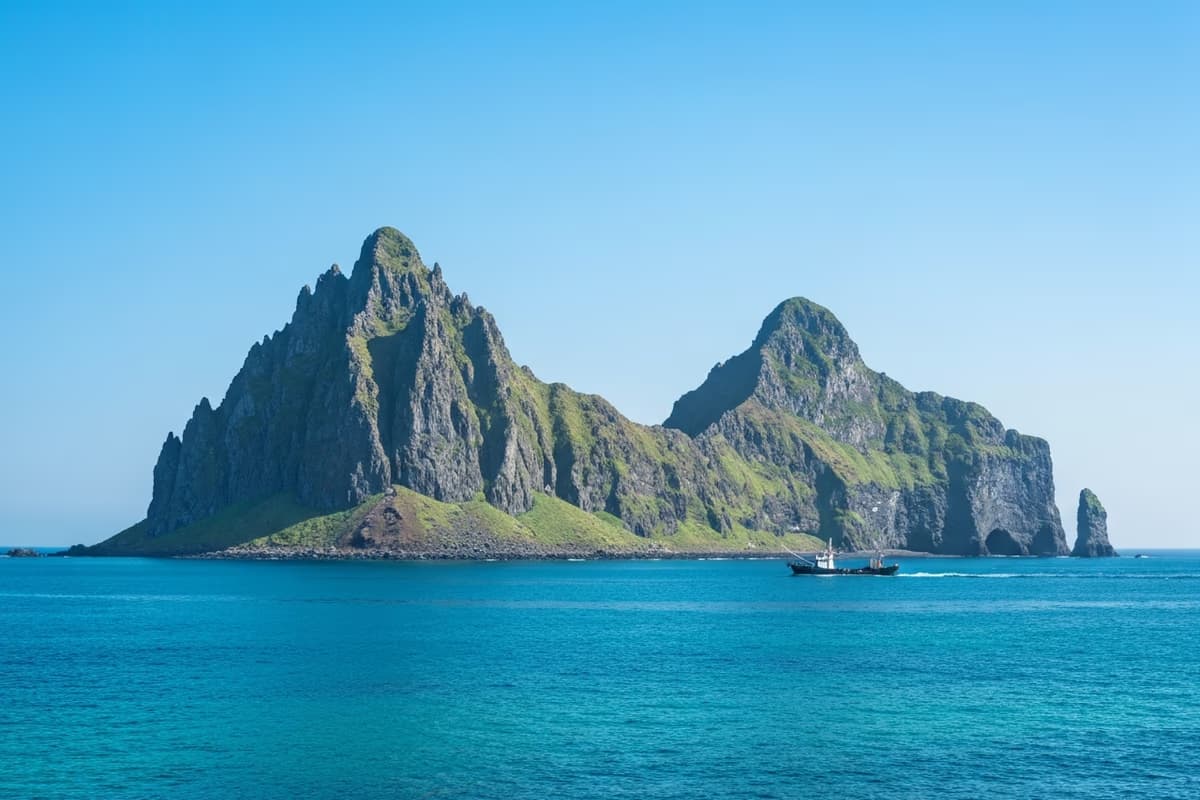
Off the western shore of Jeju's main island, several smaller islands float. Biyangdo off Hyeopjae and Udo off Seongsan are the best known of the lot — both inhabited. Off the coast of Gosan-ri in Hangyeong-myeon, however, sits a single island where nobody lives. The distance is about 2 km, and a small ferry covers the crossing in ten minutes. The name is Chagwido.
In Hanja, the name is 遮歸島 — literally, "the island that blocks the return." Local legend describes a Chinese geomancer crossing the seas to sever Jeju's spiritual energy, only to be turned back at this island on his way home. The site was once inhabited; a small community lived here through the early twentieth century. After the last residents moved to the main island in the 1970s, the place stayed empty. In 1991 it was designated as Natural Monument No. 422 and converted into a protected reserve. From that decision forward it has stayed uninhabited.
For Western visitors familiar with small protected islands — Skellig Michael off Ireland's Atlantic coast, the Farne Islands off Northumberland, or the Channel Islands National Park off California — Chagwido reads as the East Asian equivalent at much smaller scale: an island where everything except a short marked trail is closed to use.
Ten Minutes From Jagunae — The Short Crossing
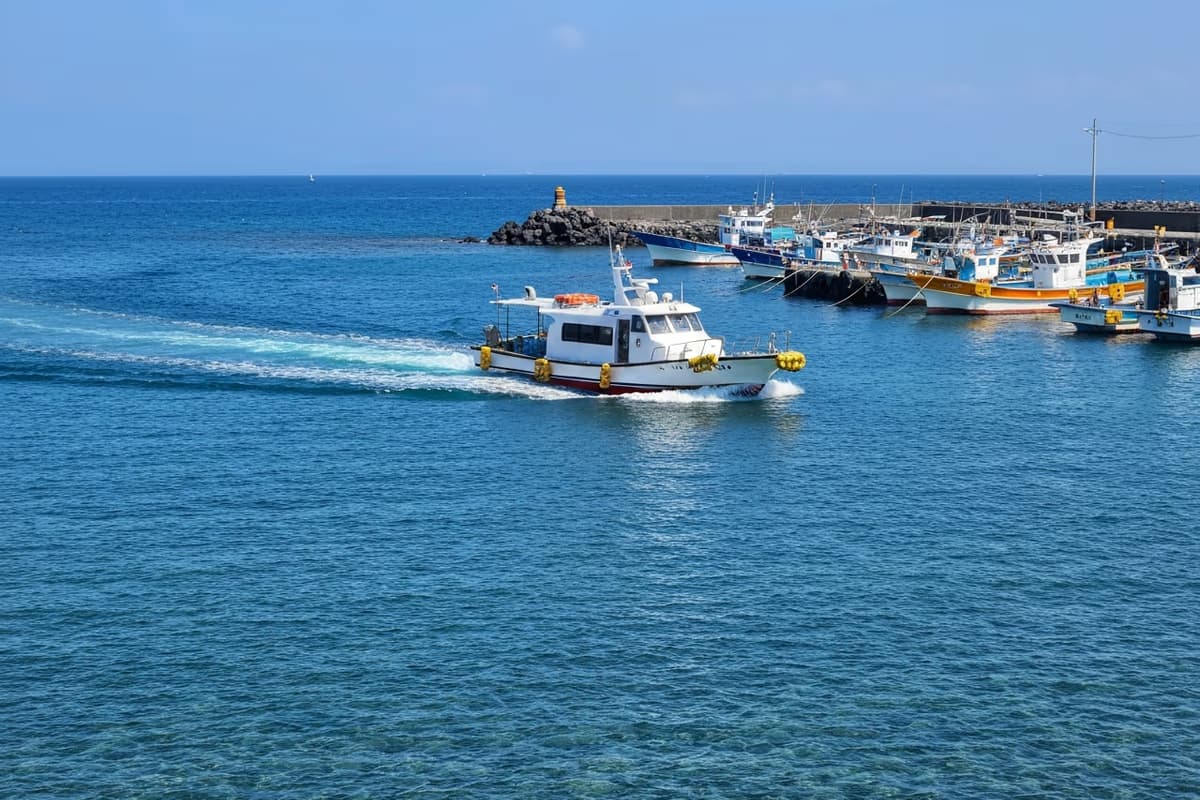
The ferries to Chagwido depart from Jagunae Port. The harbour is small — a handful of fishing boats, a ticket booth, and two or three small cafes are about all that fit in. The smallness makes the atmosphere of the short crossing sharper: tickets and boarding are simple and quick.
The ferry typically seats 30–40 passengers. Departures vary by season but five or six round trips usually run on a normal day; the timetable posted at the Jagunae Port ticket booth is the authoritative source. One-way travel takes about ten minutes — long enough to stand at the deck with the wind in your face and watch the black silhouette of Chagwido sharpen in the middle of the field of view.
The crossing also delivers a quiet swap of scenery. Suwolbong's ash-layered cliff face, dominant in the rear view at departure, fades back; the two peaks of Chagwido and the grassland between them slide in to take its place. At journey's end the captain ties up at a small jetty. From stepping off the boat to re-boarding for the return, you usually have about 1 hour 30 minutes to 2 hours on the island.
Two Peaks and a Grassland — A 1.5 km Walk
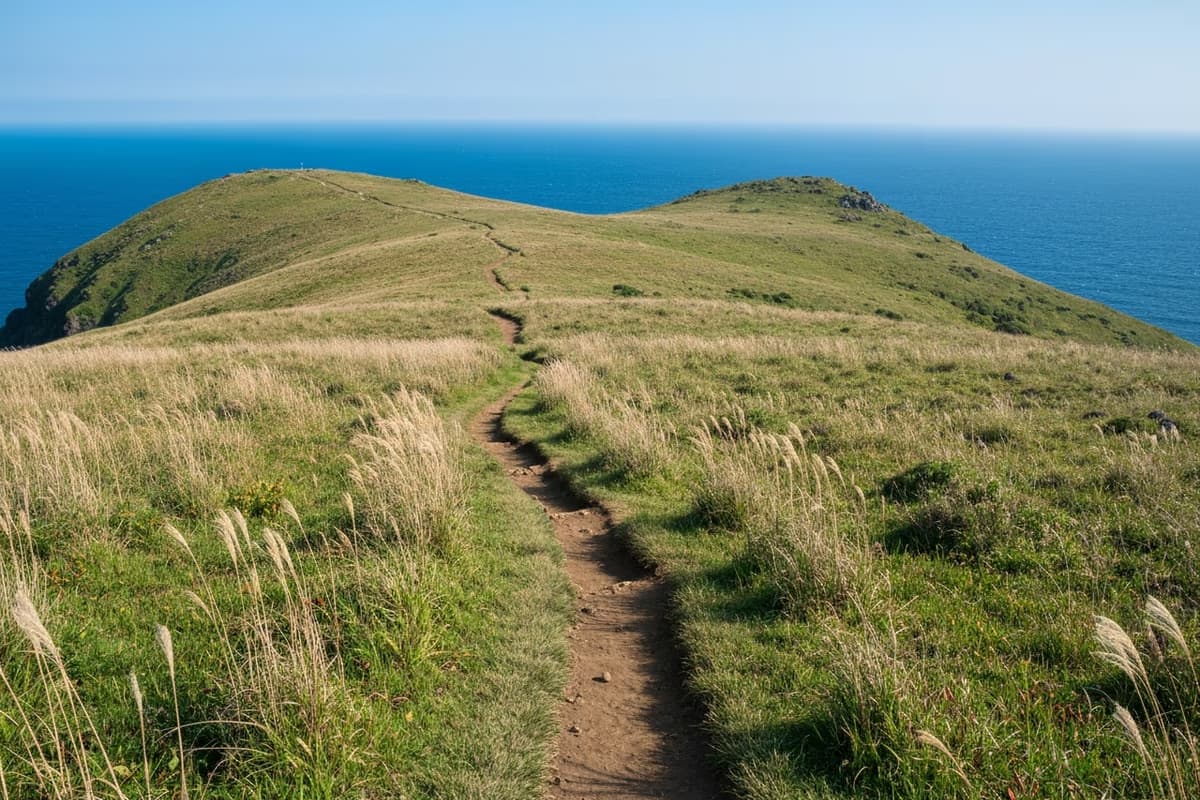
Once on the island, the area you can walk is limited to a 1.5 km perimeter trail. Since the 1991 designation, off-trail movement has been strictly restricted to protect the vegetation. Nothing may be taken — not a stem, not a pebble.
The trail traces a soft curve between the two peaks. One rises to about 50 metres, the other a little lower. The grassland between them once held the village; today it has reverted into a small reservoir of coastal plants and wild grasses.
A full walk averages 30 to 40 minutes. Allowing for time between the boat's arrival and the next departure, there is comfortable room to sit and look around as well. The route puts no real strain on the legs and suits family visits or hikes with older travellers.
Rare Coastal Vegetation, Small Creatures
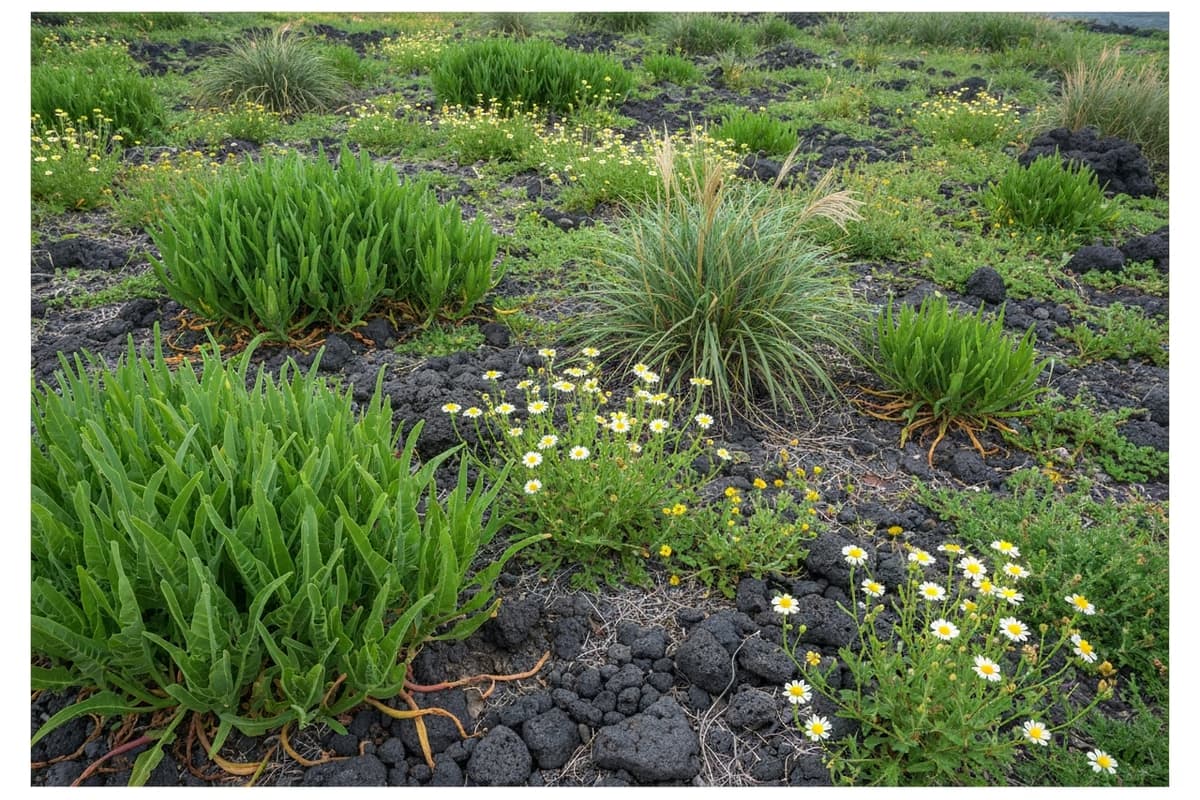
The reason this small island was designated as a nature reserve is not simply that it became uninhabited. Several rare coastal plant communities, hard to find elsewhere on the Korean peninsula, are concentrated here in a small area. Beyond common species like sea lavender, beach morning glory, and beach grass, scientifically significant plants are scattered across the grasslands on either side of the trail.
The island is also a place for birds. Gulls, cormorants, and other seabirds nest along the cliff edges, with migratory species stopping over seasonally. Combined with the small insects encountered along the trail, even a short walk delivers a sample of a coastal ecosystem rarely accessible on the mainland.
Staying on the marked path matters here. Off-trail entry is prohibited to protect the vegetation, and the interpretive signs say so plainly. The rule of seeing and enjoying within the marked line — and nothing more — is what allows future visitors to experience the same island.
Sunset Behind the Chagwido Silhouette — Jeju's Most Rugged Western Glow
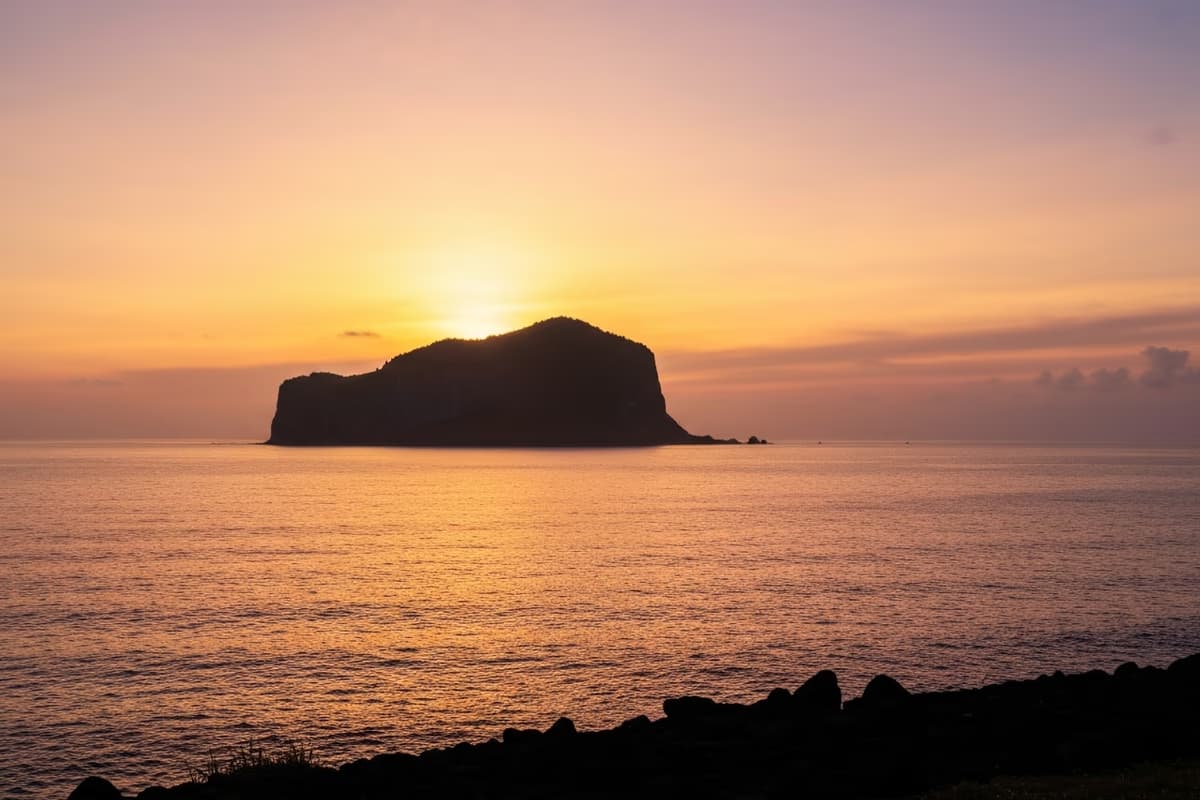
Chagwido holds a separate place in the lineup of western-Jeju sunset spots for a single reason: the sun drops behind the silhouette of Chagwido itself. The geometry is related to Geumneung's sunset beside Biyangdo, but the western texture here reads rougher.
The best window opens roughly 30 minutes before sunset. In practice, that window doesn't coincide with being on Chagwido — the last ferry usually departs around or just before sunset, so the actual sunset itself is typically watched from Jagunae Port or the Suwolbong summit on the mainland side.
From Jagunae Port looking toward Chagwido, the two peaks sharpen as black silhouettes and the sky between them fills with warm colour. The fact that the small Chagwido outline holds the centre of the frame distinguishes this sunset clearly from any other in the area.
After the Short Voyage Closes
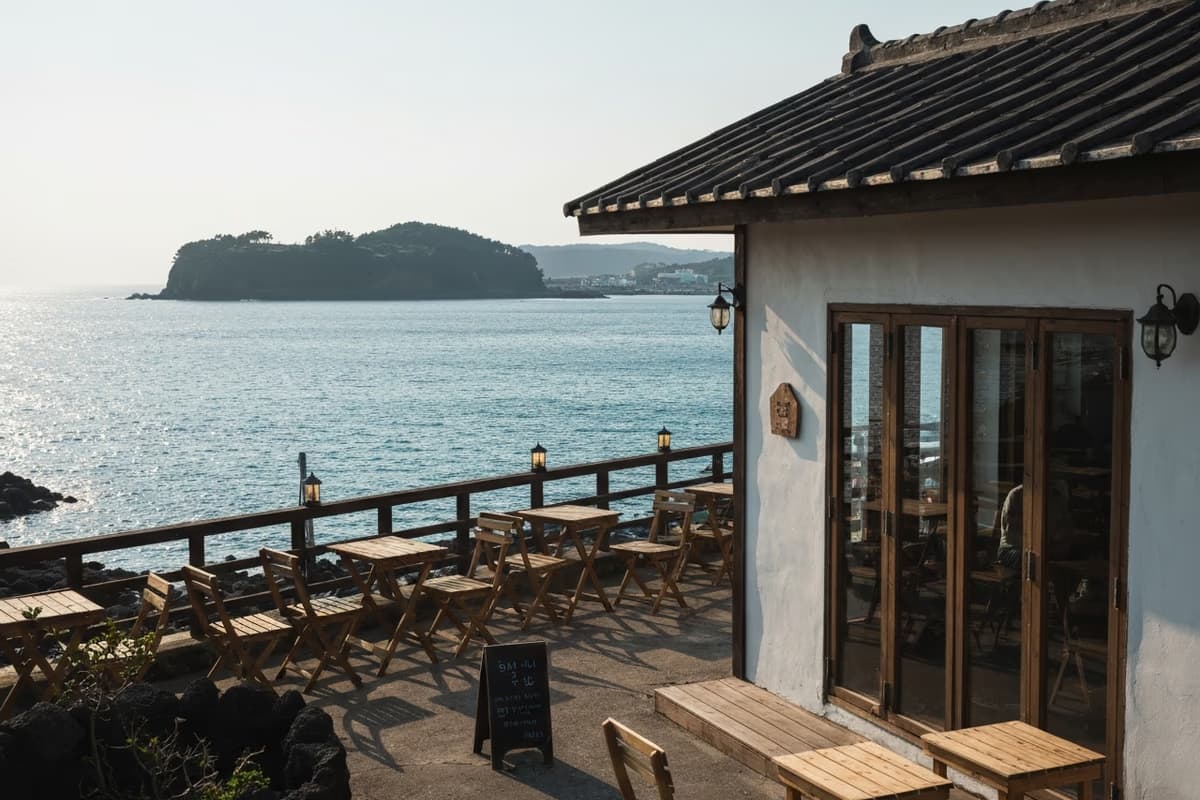
Back at Jagunae Port after the ferry, the light fatigue of a short voyage rises gently into the legs. The area around the harbour holds a few small cafes and restaurants. Hangyeong-myeon as a whole still carries a quiet, lived-in atmosphere compared to other parts of the main island, and a cup of coffee here tends to stretch out longer than planned.
For visitors pairing Chagwido with the Suwolbong geological trail in a single half-day, the usual rhythm is to take a short rest here before moving immediately on to the next stop. Bundled this way, the half-day covers nearly all of Hangyeong-myeon's landmark spots in one pass.
35 Minutes East to Close the Uninhabited Island's Meal
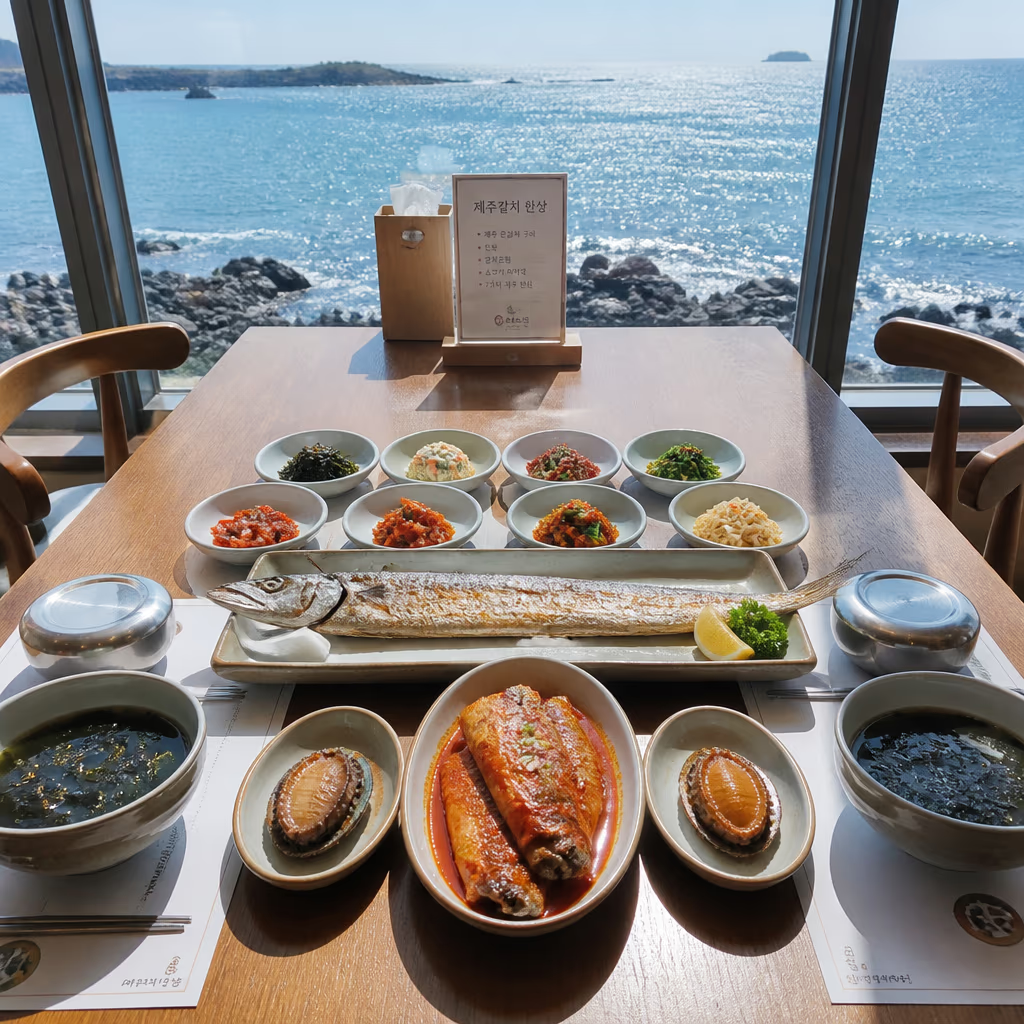
From Jagunae Port, Route 1132 (Iljuseo-ro) carries you east for about 35 minutes to the entrance of Galchibada Aewol →. The texture of a short walk on an uninhabited island's grassland and a brief sea voyage now settles into a single plate in front of a floor-to-ceiling window onto a different stretch of the same sea.
Just as Chagwido's vegetation has been protected and quietly grown since the reserve designation, a single hairtail at Galchibada's table is the result of someone tweezering each small bone out at dawn. Two different kinds of careful, protected texture, meeting at one table on the same island.
Getting There and Practical Notes
Jagunae Port sits in Gosan-ri, Hangyeong-myeon, Jeju City. From Jeju International Airport the drive runs about an hour; Suwolbong is five minutes away by car. Intercity buses to Hangyeong stop at Gosan-ri, with a short walk or quick taxi ride from there to the harbour. The Jeju Bus Information System carries the schedules, and seasonal ferry updates are listed on the Visit Jeju English portal.
The ferry fare for adults is around 18,000 KRW (~USD 13) round-trip, though it varies by operator — confirm at the Jagunae ticket booth on the day. On rough-weather days the ferry is suspended, and on borderline days the last departure may be moved up.
A short packing note. The island has almost no facilities beyond restrooms, so a bottle of water and a small snack are worth packing. A hat and sunscreen are essential. The grassland sections have some earthen path stretches, so closed shoes are recommended. The deck wind can be brisk; a light windbreaker makes a noticeable difference. The "no plants, no stones, no insects" rule of the reserve is worth confirming with travelling companions before boarding.
A small island left empty by its last residents has spent the decades since quietly tightening its own texture. Two peaks and a grassland, rare coastal vegetation, and the sunset that drops behind the silhouette — all collected in a single short voyage, then 35 minutes east to a table where another texture is plated. A protected, slowly grown island meeting a meticulously tended dish: that pairing opens at exactly this itinerary.
Frequently Asked Questions
- How do I get to Chagwido?
- A 10-minute ferry from Jagunae Port in Gosan-ri, Hangyeong-myeon, Jeju City. Five to six round trips usually run daily, with the schedule varying by season. The adult round-trip fare runs around 18,000 KRW (~USD 13); confirm at the Jagunae ticket booth before boarding, as the price varies by operator.
- What can I see on Chagwido?
- Two peaks with a central grassland and a concentration of rare coastal plant communities, all accessible along the 1.5 km perimeter trail. The walk averages 30 to 40 minutes, and the ferry window typically leaves 1 hour 30 minutes to 2 hours on the island.
- Why was Chagwido designated as a nature reserve?
- After the last residents left in the 1970s, rare coastal plant communities and a variety of seabirds took the island over. The site was designated as Natural Monument No. 422 in 1991. Removing any plant, stone, or insect is prohibited, and entry outside the marked trail is restricted.
- Can I watch the sunset from Chagwido itself?
- In practice, no — the last ferry usually departs just before or at sunset, so the sunset is watched from Jagunae Port or the Suwolbong summit on the mainland side. From those positions, the sun drops cleanly behind the Chagwido silhouette.
- Can I pair Chagwido with Suwolbong?
- Yes — the two sites sit 5 minutes apart by car and are the standard pairing for a Hangyeong half-day. The usual flow is the Suwolbong Geo-Trail in the late morning, the Chagwido ferry in the afternoon, and a coffee at Jagunae Port to close.
- How long is the drive from Chagwido to Galchibada Aewol?
- Route 1132 (Iljuseo-ro) puts Galchibada Aewol about 35 minutes east from Jagunae Port. Closing the day with braised or grilled wild silver hairtail at a floor-to-ceiling ocean-view seat is the standard close for a Hangyeong half-day.
From an uninhabited island's grassland, a 35-minute drive to a table
A reserve's texture carried into a window seat over the sea
After the ferry and a short pause at a small Jagunae cafe, the time on the uninhabited island's grassland settles into the legs as a light fatigue. Thirty-five minutes east on Iljuseo-ro and the texture moves into a single plate in front of floor-to-ceiling glass facing the sea. A protected island and a carefully tended hairtail meeting at the same table.
About 35 minutes from Chagwido (Jagunae Port) to Galchibada Aewol →