Darangshi Oreum Crater Trek, A 40-Minute Summer Climb to a 600-Meter Circular Basin
Standing on a 382-Meter Eastern Cone Above a Crater the Size of Hallasan's Baekrokdam
Darangshi Oreum, also called Weolrangbong, is a 382.4-meter (1,254-foot) cinder cone in Sehwa-ri, Gujwa-eup. The summit crater is 600 meters (about 1,970 feet) in diameter and 115 meters deep, slightly larger than Hallasan's Baekrokdam (roughly 550 m and 108 m). The climb takes 30 to 40 minutes on wood stairs and decking, with a further 20 minutes to loop the rim. Entry and parking are free and the trail is open year-round. Its younger sister cone, Akkun Darangshi (198 m), reaches its summit in 10 minutes and pairs naturally. Darangshi Cave, 800 m south, is a memorial site for eleven Sehwa-ri residents killed during the 1948 Jeju 4.3 events. Galchibada in Aewol sits about 65 minutes west by car.
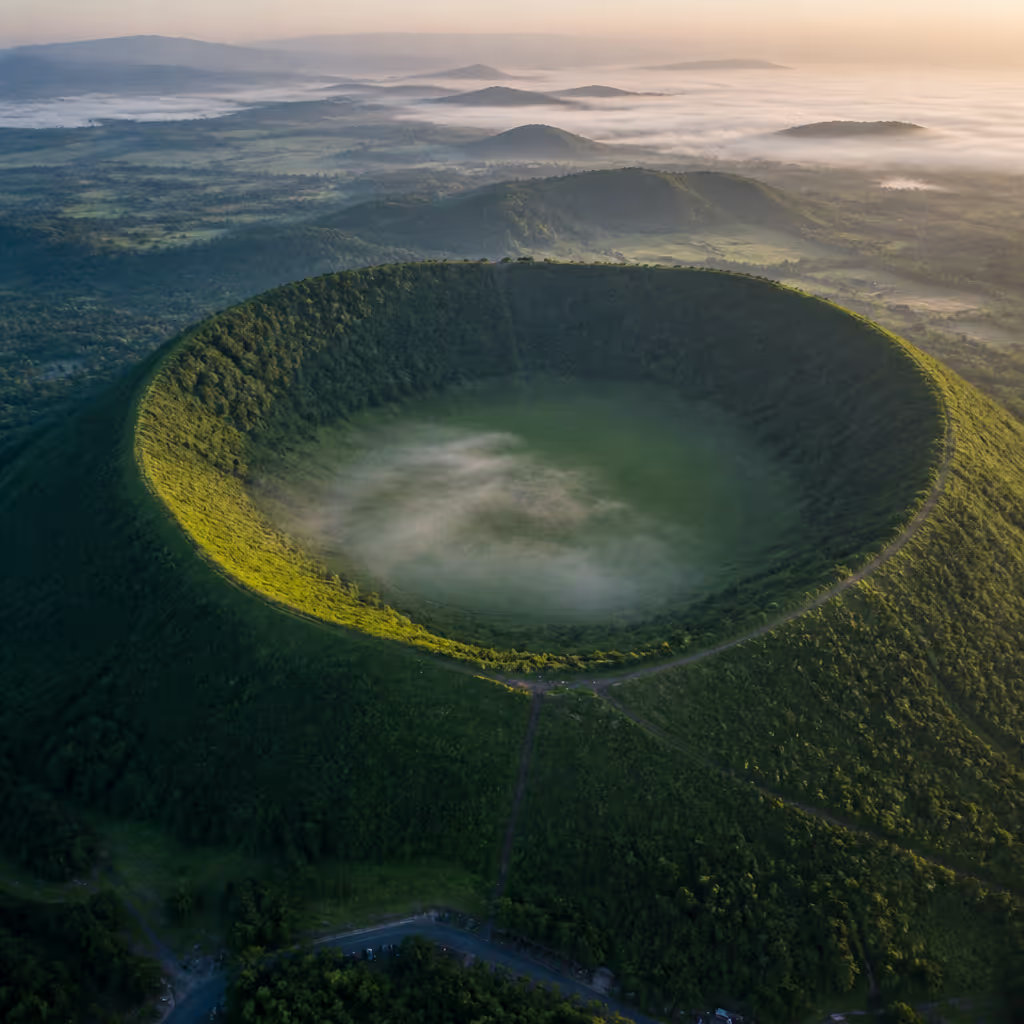
Deep on Jeju's eastern middle slopes stands a cone that looks almost too symmetrical to be natural. Darangshi Oreum rises 382.4 meters (1,254 feet) above the surrounding pasture, and at the summit sits a near-perfect circular crater 600 meters (1,970 feet) across and 115 meters deep. That is essentially the footprint of Hallasan's Baekrokdam summit lake, only carved into a smaller cinder cone rather than a shield volcano, and the sheer scale of the basin under your boots is what most first-time climbers remember afterward. For anyone who has walked the crater rim of Haleakala on Maui or Diamond Head above Waikiki, the geological register here feels familiar in scale but private in atmosphere, without a single visitor centre or gift shop in sight.
Wooden staircases and decking take you from the parking lot to the summit in 30 to 40 minutes, which is short enough to build a pre-6:30 a.m. climb into a normal Jeju itinerary without wrecking the day. The reward is a rim walk in air holding around 24 to 26 degrees Celsius (75 to 79 Fahrenheit), a full four to five degrees below the pasture at ground level once the humidity begins to rise later in the morning. From Galchibada in Aewol the drive to the Sehwa-ri parking lot runs about 65 minutes, and the afternoon return sits naturally at a late lunch on the western coast.
Why Locals Call This the Queen of Oreums
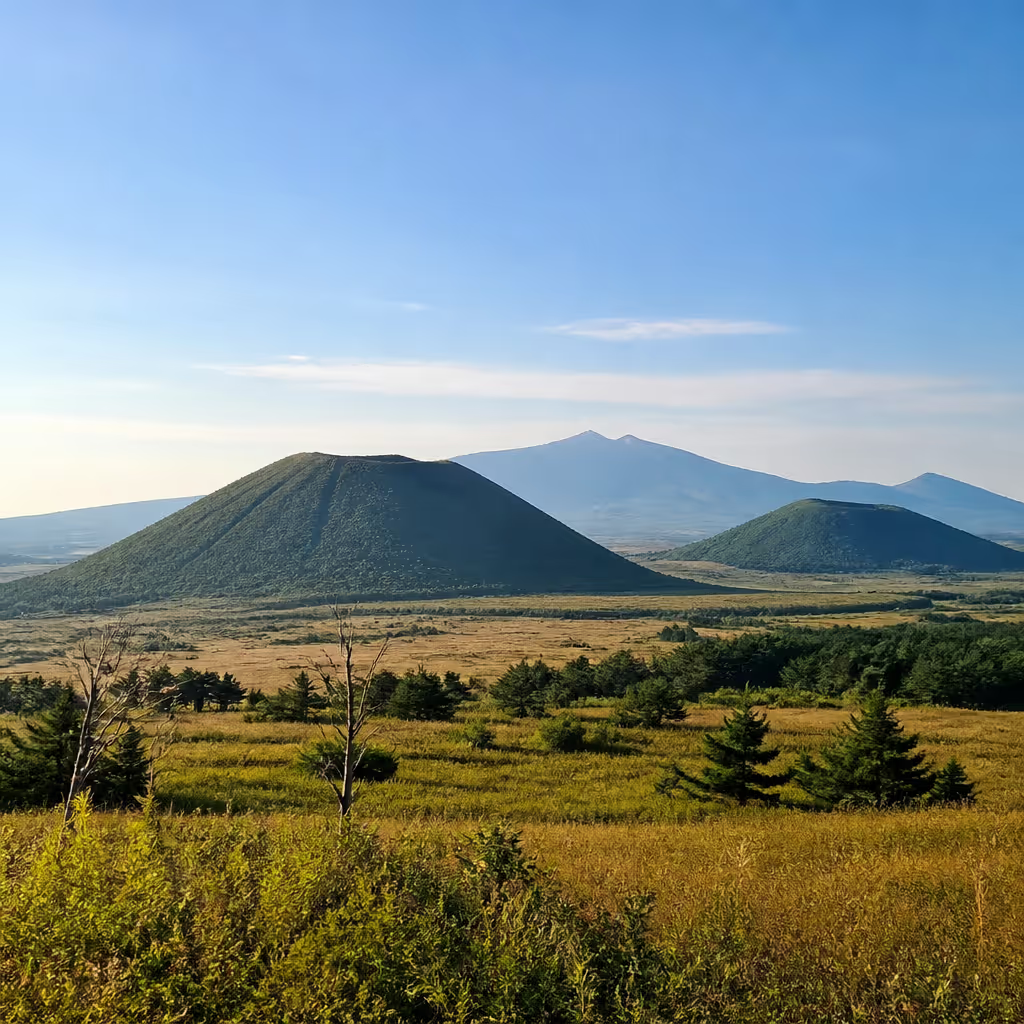
Darangshi Oreum sits in Sehwa-ri, Gujwa-eup, and appears in Joseon-era records as Weolrangbong (Moon Peak) in classical Chinese. The near-identical angle of the cone from every side has earned it the nickname Queen of the Oreums in local usage, and the presence of a shorter sister cone, Akkun Darangshi (198 meters), just alongside gives the pair a memorable twin-silhouette identity in the eastern belt. Within a three-kilometre radius sit Dotoreum, Sonjabong, Yongnun'i Oreum, and Baekyaki Oreum, giving this stretch the highest concentration of oreums anywhere on Jeju. From any of those neighbouring summits, Darangshi holds the visual centre in every direction.
The parking lot has a small ranger station and one vending machine, and both entry and parking are free. There is no reservation system and the trail is open year-round. During summer, cars from early climbers begin arriving in the lot before 5:30 a.m., a rhythm built around humidity rather than temperature. Once past 9:00 a.m., the grassland covering the cone traps radiant heat and the perceived temperature on the steep upper section climbs above 32 Celsius (90 Fahrenheit), while the same rim at 6:30 a.m. sits comfortably in the mid-twenties. Practical Darangshi visitor information is compiled on the Visit Jeju in English page.
The 40-Minute Dawn Climb, Stairs and Steep Decking
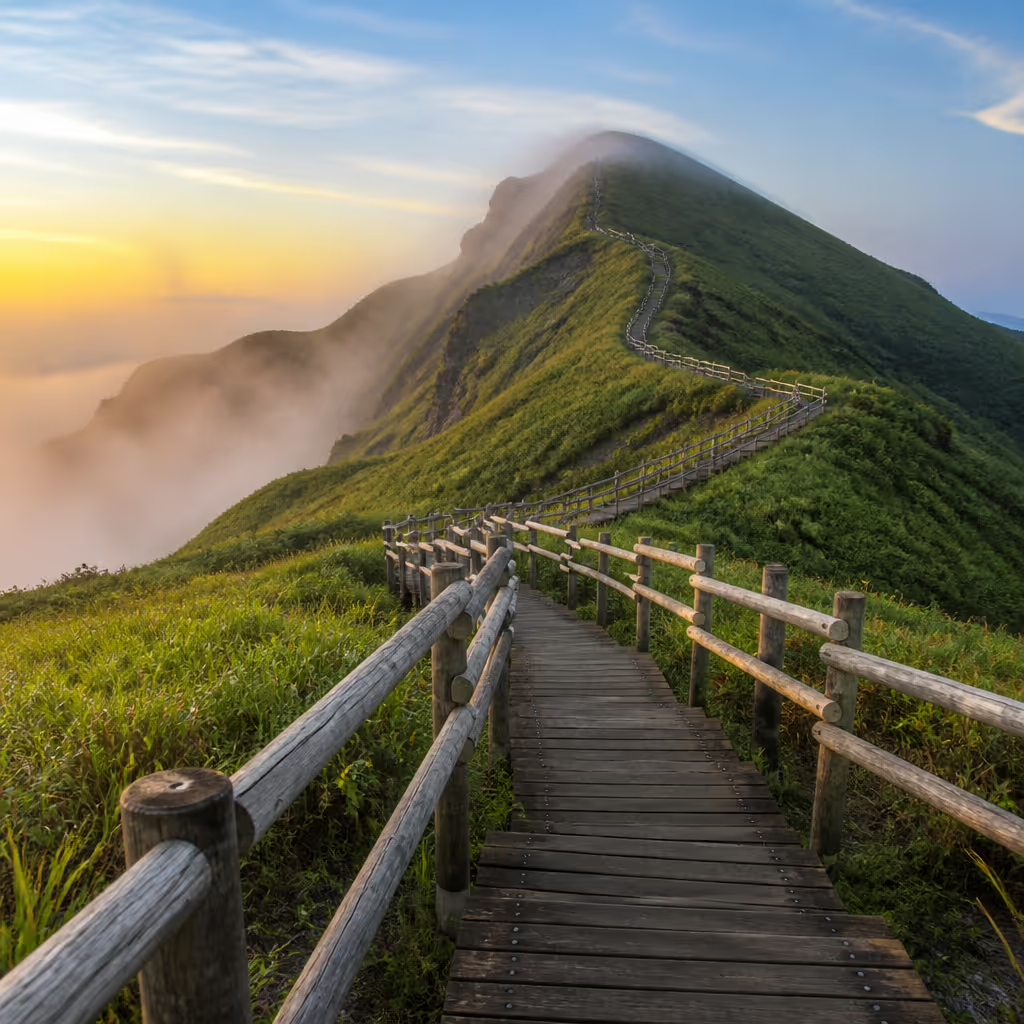
From the parking lot, the trail is almost entirely wooden staircase and decking, with virtually no exposed earth to slip on. The first hundred metres is a gentle warm-up, but the gradient steepens sharply into the cone body, and by the thirty-minute mark most climbers are wiping sweat in earnest. Five circular rest benches spaced along the trail provide breathing points, and each one opens the growing view backward, with Akkun Darangshi and Yongnun'i Oreum overlapping as low silhouettes further out.
The summit ridge holds surprisingly strong wind even at 6:30 a.m., and a thin long-sleeve layer is the sensible carry. A north-easterly draft pulls cooler air out of the crater interior across the rim, and the ridge sits four to five degrees cooler than the base once you crest it. At the summit marker sit three wooden benches and a stone marker, and behind it the rim loop begins clockwise, adding 20 to 25 minutes to circle the basin fully.
The 600-Meter Circular Crater, Baekrokdam-Scale
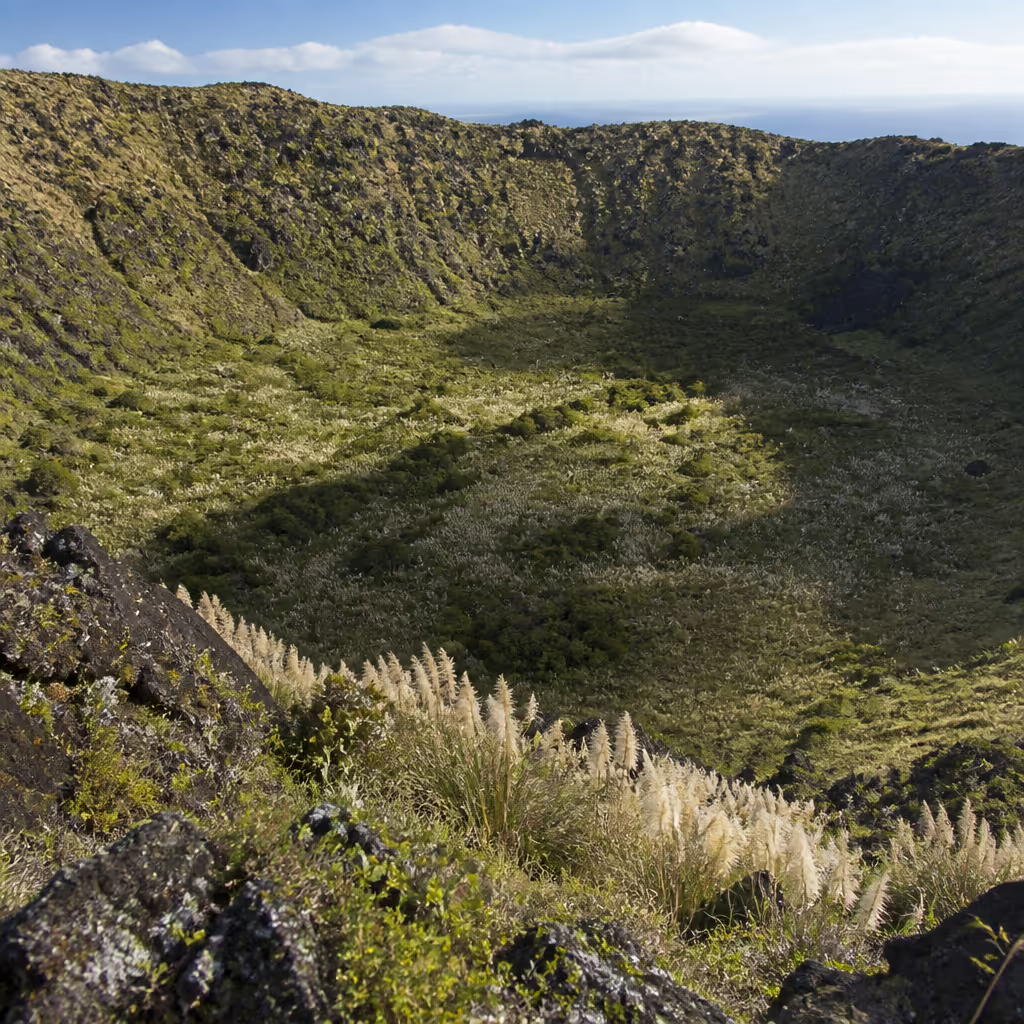
From the summit ridge, the crater drops away completely under your feet. The 600-meter (1,970-foot) diameter and 115-meter depth put it in a class of its own among Jeju's cinder cones, essentially matching Baekrokdam (roughly 550 m across and 108 m deep) despite being cut into a much smaller mountain. No water pools inside; instead, silver grass and low shrub cover the floor in a smooth green disc, and at dawn a thin mist drifts up from the base, briefly turning the crater into a white bowl set inside the cone.
The rim loop follows the ridge clockwise, with sections narrow enough that two people walking side by side is a squeeze. From the southern rim, Seongsan Ilchulbong and Udo Island layer into the view; from the western rim, the Hallasan summit ridge sits faint against the morning light; from the northern rim, the blue line between Jeju City and Udo runs unbroken. The full summer rim circuit takes 20 to 25 minutes, and with the descent added, a 6:30 a.m. start closes at the parking lot around 8:30 a.m.
Darangshi Cave, A Memorial at the Foot of the Cone
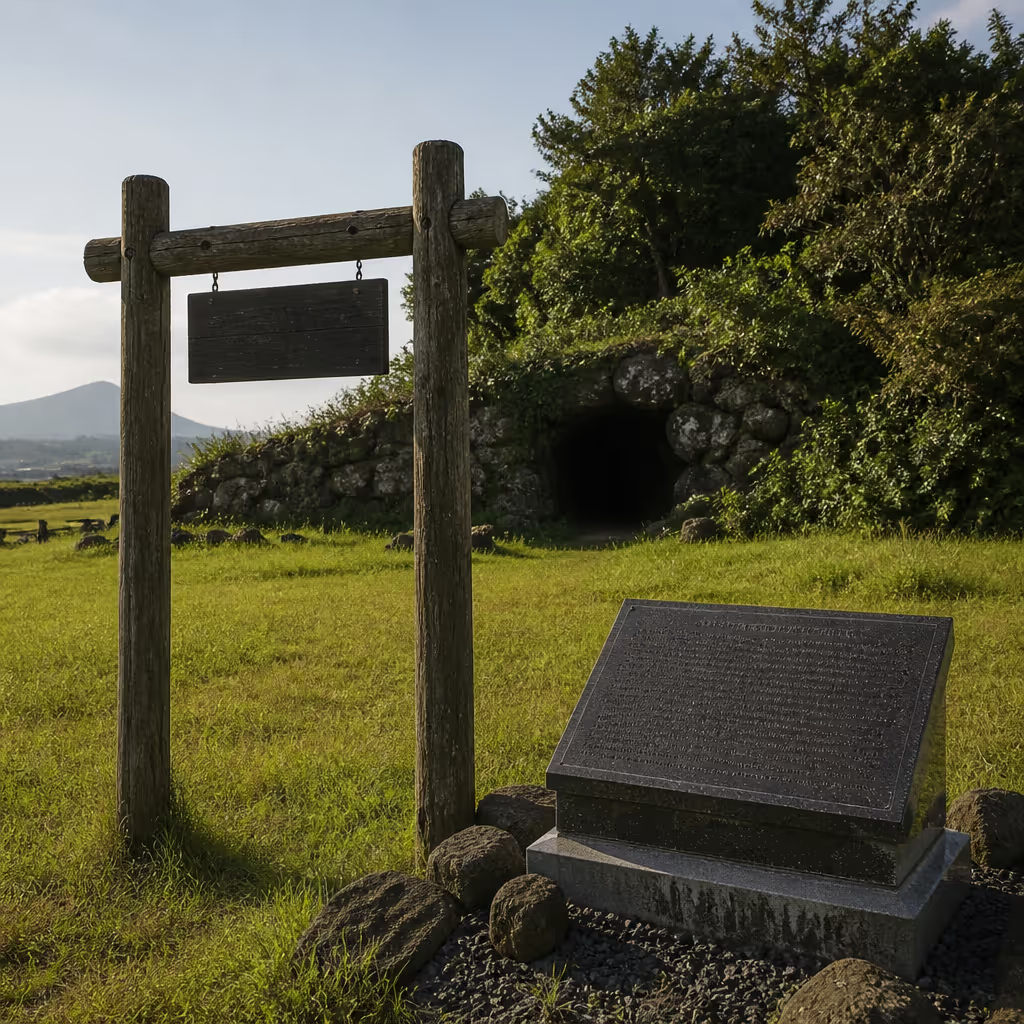
Roughly 800 metres south of Darangshi Oreum lies Darangshi Cave, a lava tube where on December 18, 1948, eleven residents of Hado-ri and Jongdal-ri hid from a Jeju 4.3 suppression operation. When the sweep team discovered the cave entrance, they pushed grenades and smoke inside, and every person sheltering, three women and a nine-year-old child among them, died of asphyxiation. The bodies were not recovered until 1992, forty-four years after the event. The relevant record is compiled on the Visit Jeju Darangshi Cave page.
The interior is sealed for safety and only the entrance marker and interpretive panel remain accessible. Many visitors stop briefly here after descending from the summit and spend a quiet moment in front of the memorial. The beauty of the cone above and the weight of the cave below sit inside a single visit, and carrying both back down the trail changes what the climb means.
After the Descent, Akkun Darangshi and the Aewol Return
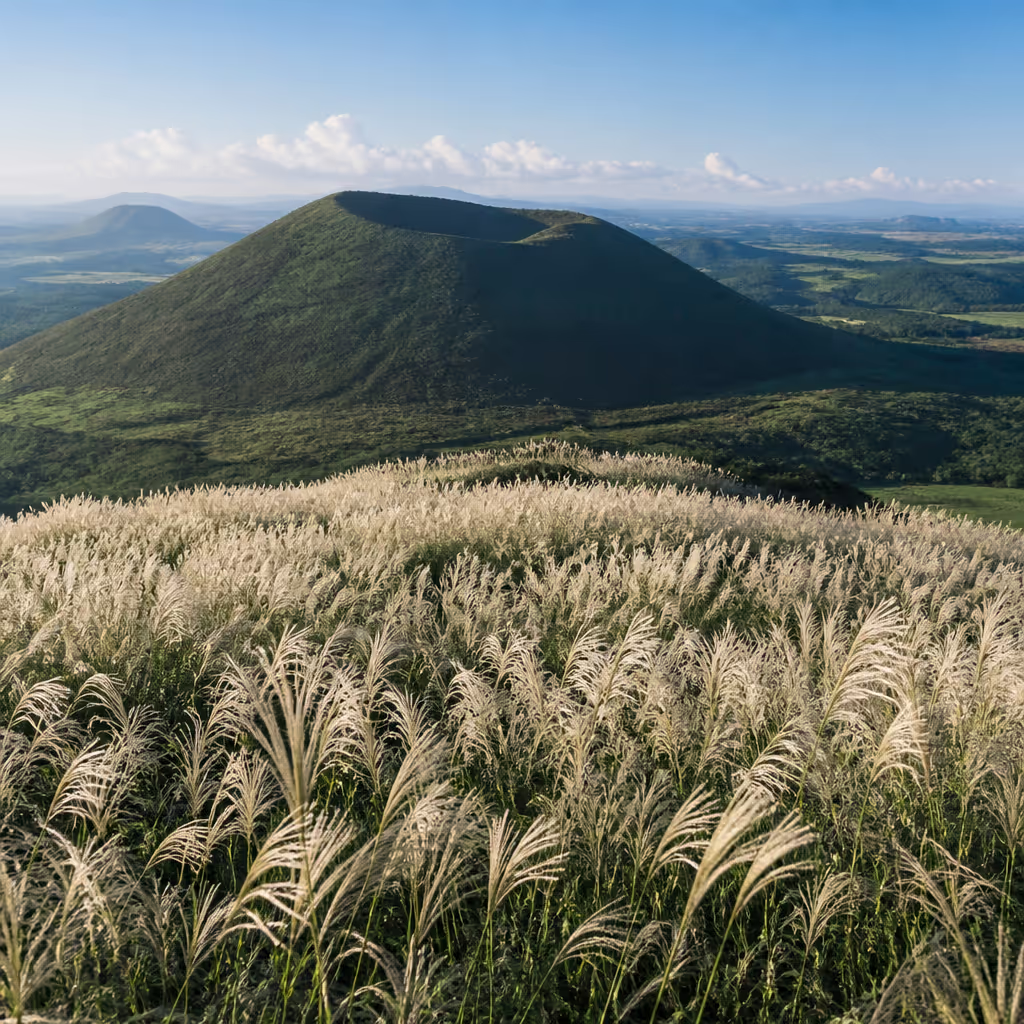
After the crater loop and descent, the shorter Akkun Darangshi (198 metres) is a natural add-on. The trailhead is five minutes on foot from the parking lot, and the summit sits ten minutes up on a gradient gentle enough for an eight-year-old to manage without complaint. The summit ridge is flat silver grass meadow, and from just behind the stone marker Darangshi Oreum appears unusually large in frame, making this the classic post-climb photograph.
Departing the Sehwa-ri parking lot around 8:30 a.m., the drive to Galchibada in Aewol runs about 65 minutes via Beonyeong-ro and Pyeonghwa-ro. Arrival lands around 9:40 a.m., and since Galchibada Aewol's Sunday opening is at 11:00 a.m., the Handam coastal walk or Gwakji Gwamul Beach fills the gap with a short coastal loop before an early lunch. The cool 24 to 26 degree Celsius rim air from dawn and the warm hairtail stew at midday over the Aewol sea land as two clean contrasts inside a single Jeju day.
Frequently Asked Questions
- How long does the climb to the Darangshi Oreum summit take?
- From the parking lot to the summit is 30 to 40 minutes on wooden stairs and decking. The first 100 metres is gentle warm-up before the gradient steepens, so a pre-6:30 a.m. summer climb catches the coolest 24 to 26 degree Celsius rim air. The rim loop adds another 20 to 25 minutes.
- Are there entry or parking fees, and when is the trail open?
- Entry and parking are both free, and the trail is open year-round with no reservation system. A small ranger station, vending machine, and simple restroom sit at the parking lot. Night hikes are not recommended for safety, so climbs run within 30 minutes of sunrise through 30 minutes before sunset.
- How big is the summit crater compared to Hallasan's Baekrokdam?
- The Darangshi crater is 600 metres (about 1,970 feet) across and 115 metres deep. That is close to or slightly larger than Baekrokdam (roughly 550 m and 108 m), placing it among the largest cinder-cone craters on Jeju. The floor holds no water and is covered instead in silver grass and low shrub.
- How do I combine Akkun Darangshi and Darangshi Cave in the same visit?
- Akkun Darangshi (198 m) has a trailhead five minutes on foot from the parking lot and a ten-minute climb to the top. Darangshi Cave sits 800 m south of the main cone, a Jeju 4.3 memorial where eleven Sehwa residents died in 1948. The interior is sealed but the entrance marker and interpretive panel are open for a quiet visit.
- How long is the drive from Sehwa-ri to Galchibada in Aewol?
- About 65 minutes by car via Beonyeong-ro and Pyeonghwa-ro. Departing the parking lot around 8:30 a.m. after the descent lands you in Aewol around 9:40 a.m., which pairs cleanly with a short Handam or Gwakji coastal walk before an 11:00 a.m. hairtail stew lunch.
From cool dawn rim air to a warm midday plate on the western coast
After 40 minutes on a summit cone, a hairtail stew behind full-height glass
Carry the 24 to 26 degree Celsius rim air from a 382-metre cone into your afternoon and drive west for 65 minutes. An 8:30 a.m. descent lands at the Handam coastal walk by 9:40, then behind full-height glass at noon a hairtail stew opens the second half of the day. Cone and coast join into one continuous line.
About 65 minutes from the Sehwa-ri parking lot to Galchibada in Aewol →