A Night at Dongmun Market — Jeju's Biggest Traditional Bazaar
How an Arcade in the Heart of Jeju City Flips From Daytime Grocery Hall to After-Dark Street-Food Theater
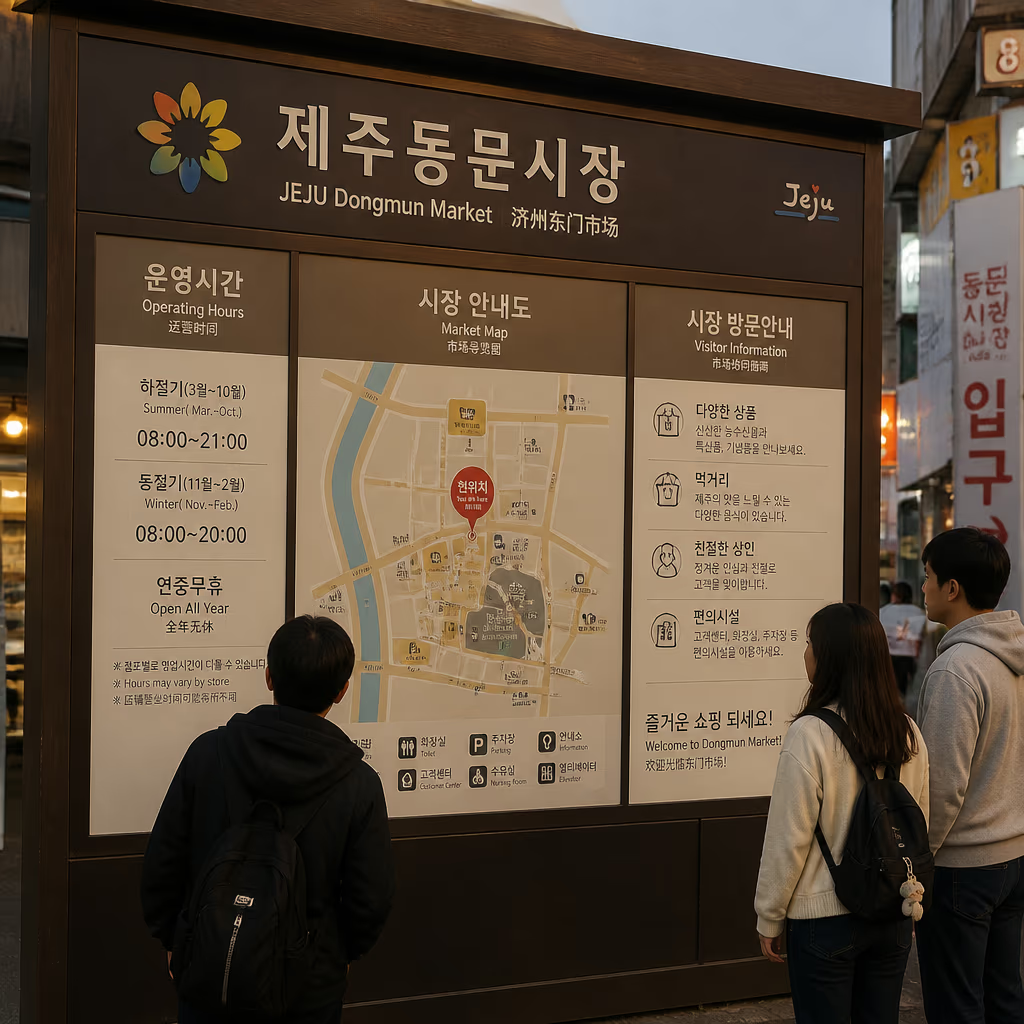
Dongmun Traditional Market, established in 1945, is the largest permanent traditional market in Jeju Province, with roughly 300 stalls open through the day. Its night market runs every evening from 6 p.m. to 11 p.m., offering around 30 Jeju specialties — black-pork skewers, sliced-sashimi tempura, omegi rice cakes, fresh tangerine juices — all in one circuit. Ten minutes by car from Jeju International Airport, and about forty minutes onward to Aewol on the west coast.
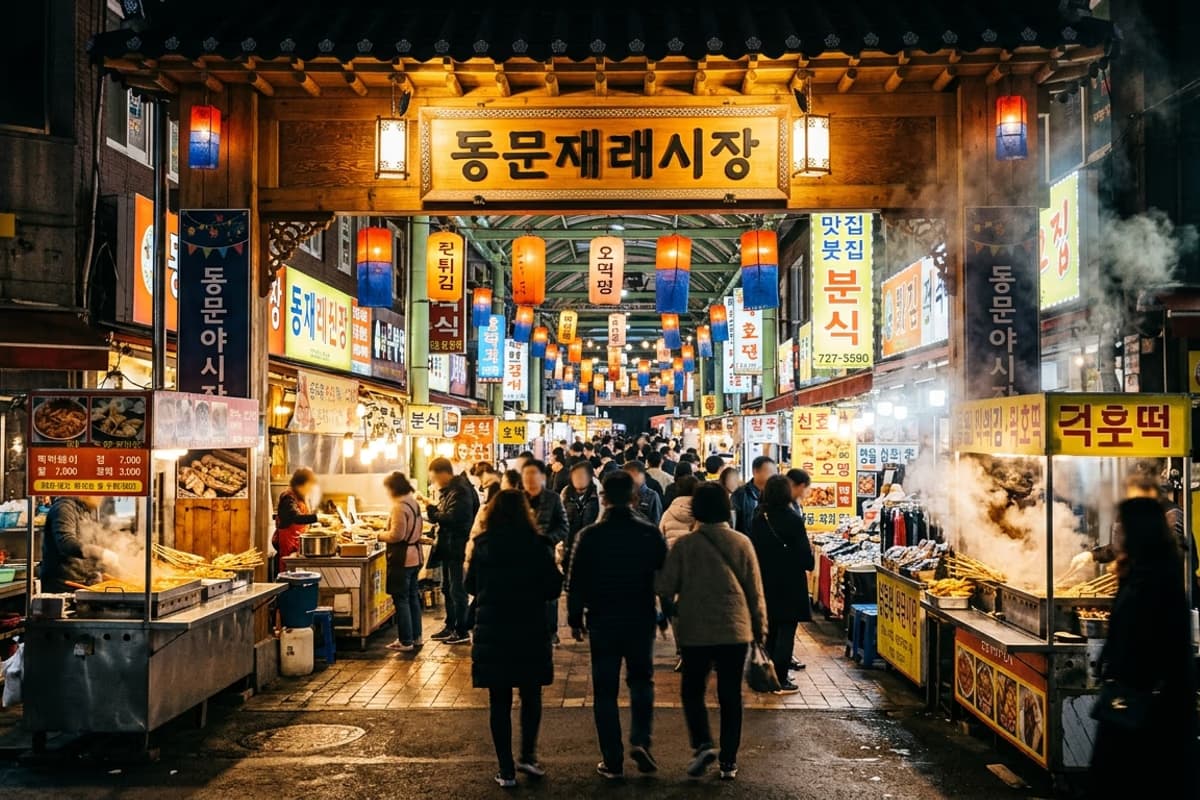
In the middle of Gwandeok-ro, an arcade where tangerine crates and seafood trays line the daytime alleys turns, after dark, into a tunnel of black-pork charcoal smoke and frying oil. Dongmun Traditional Market has held this corner of Jeju City since 1945 — nearly eighty years as the island's largest permanent market — and once the sun drops, it shifts face into a night market that has become a fixed point on most evening itineraries.
This is more than a food tour. The point is to step inside a space where locals are actually buying their week's groceries, and to taste the island's own ingredients in that same space. It carries the right density and pace for either the first night of a Jeju trip or the last.
Market Layout & Walking Order
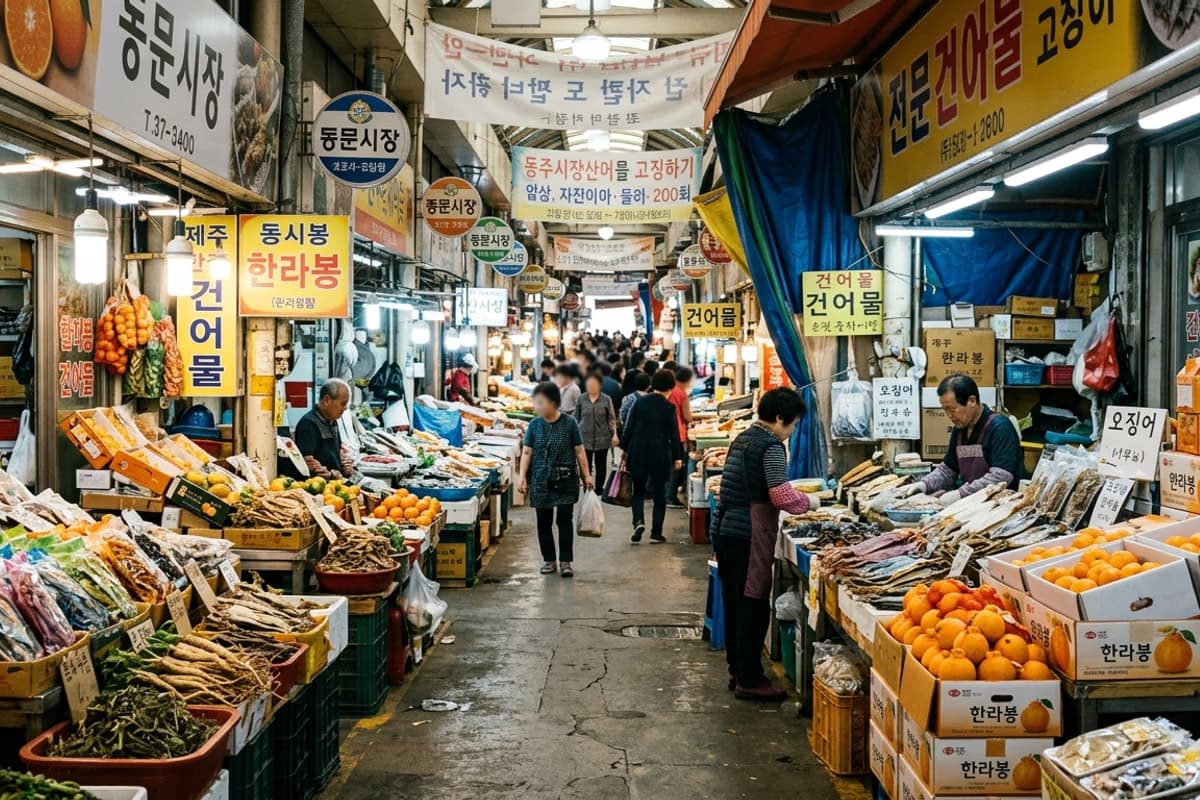
The market is split into two halves: the daytime permanent market and the night market. The permanent half runs from 8 a.m. to 6 p.m. Around 300 stalls organize themselves by section — seafood, produce, dried goods, clothing. Local citrus (tangerine, hallabong, cheonhyehyang) often runs cheaper than airport duty-free, and the dried tile fish and dried hairtail are dependable take-home gifts.
The night market sits as a separate zone within the same arcade. Gate 8, off Gwandeok-ro, is the closest entrance, and walking clockwise from that gate is the most efficient single loop. Thirty minutes to an hour is enough to circle the whole thing.
Seven Bites You Should Not Miss
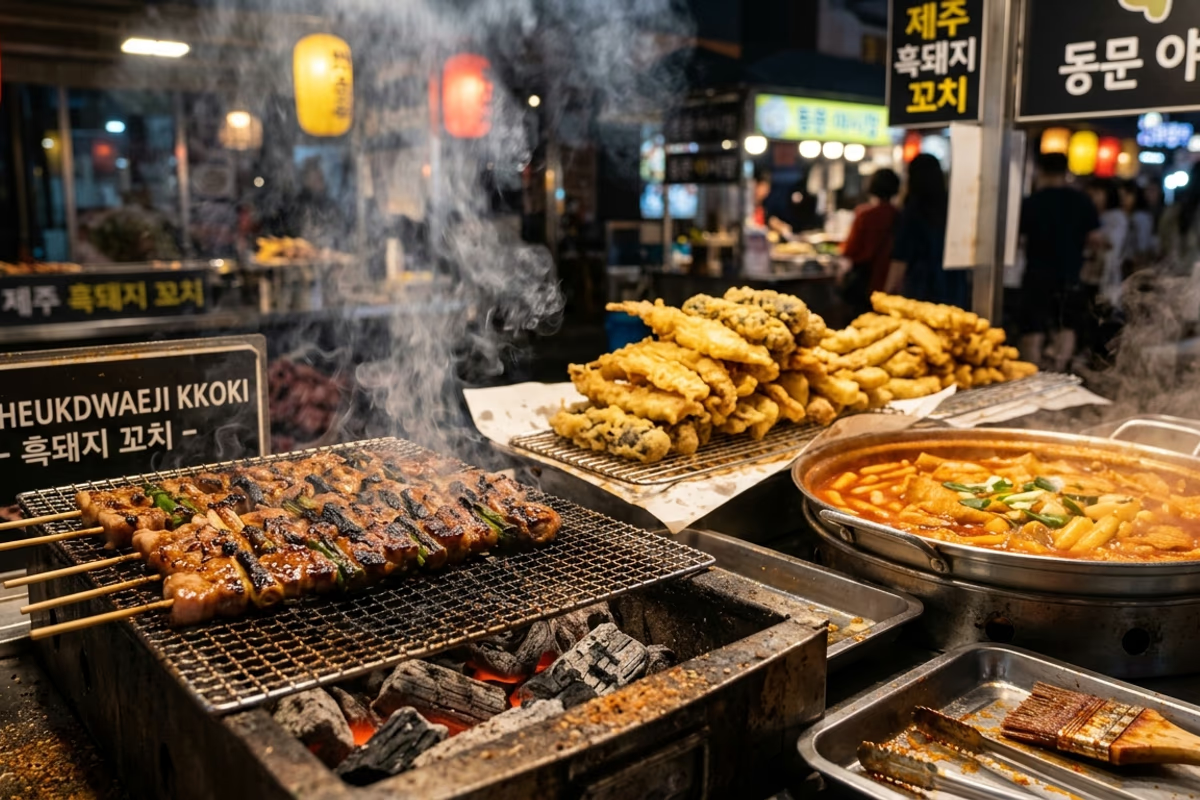
A short list of what defines the night market: black-pork skewers, threading Jeju black-pork chunks with vegetables and grilling them over charcoal, run roughly KRW 4,000-5,000 a stick. Sliced-sashimi tempura takes fresh white fish, fries it crisp, and serves it as a walking snack. Omegi-tteok is a traditional sticky-rice cake with a deep red-bean coating.
Beyond those: abalone rice balls, black-pork oh-gyeop rolls, fresh tangerine juices, hallabong-citrus ade. A handful of sit-down stalls inside the permanent market serve braised hairtail and grilled mackerel. The night market's main draw is the price band — one person can sample five or six different things and still stay under KRW 20,000.
Local Specialty Shopping
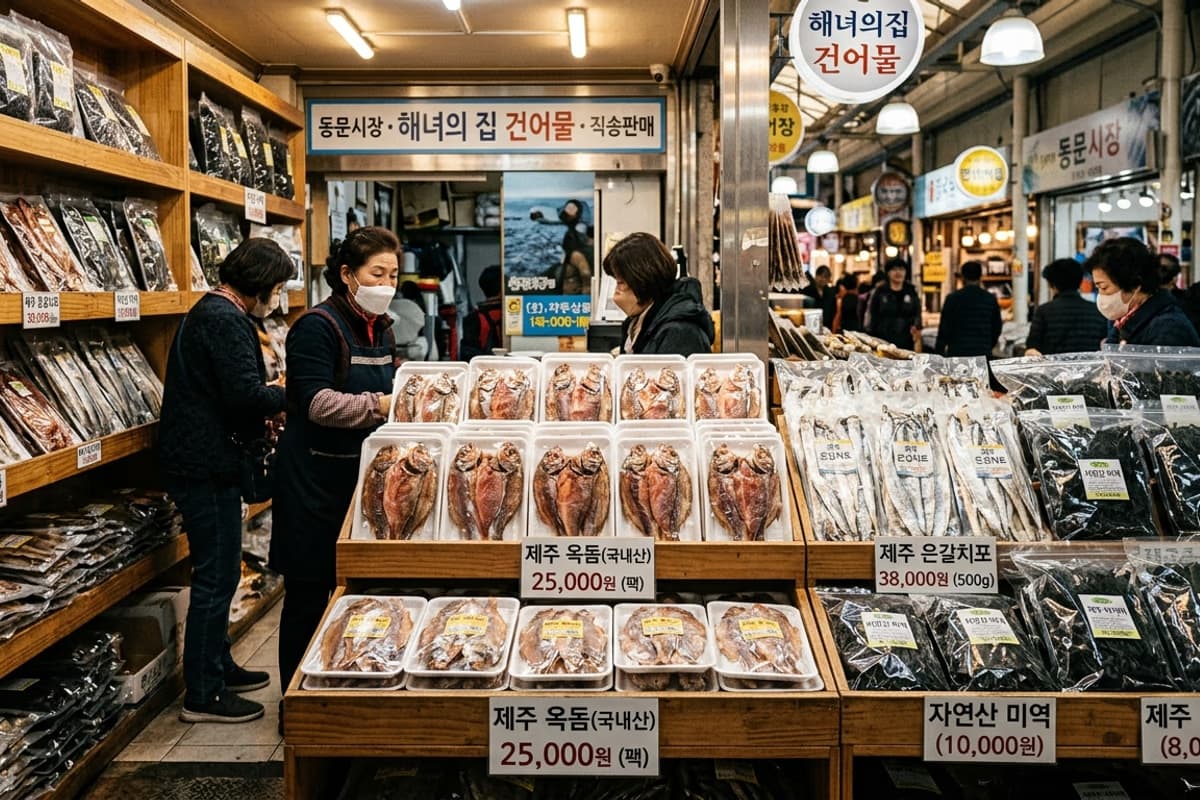
Pair the night-market eating with a quick run through the daytime market for take-home goods. Among Jeju's dried seafood, a half-dried tile fish runs around KRW 10,000 a piece — roughly half of Seoul or Busan department-store prices. Dried hairtail and mackerel are trimmed on the spot and vacuum-sealed; most stalls also offer parcel shipping within Korea.
Citrus selection rotates with the season. Winter (December–February) brings hallabong and cheonhyehyang. Spring (March–May) leans into hwanggeumhyang and red-hyang. Summer (June–August) shifts to hagyul and "vitamin" citrus. A 5kg box's seasonal price can be checked at Visit Jeju.
Getting There & The Westward Loop
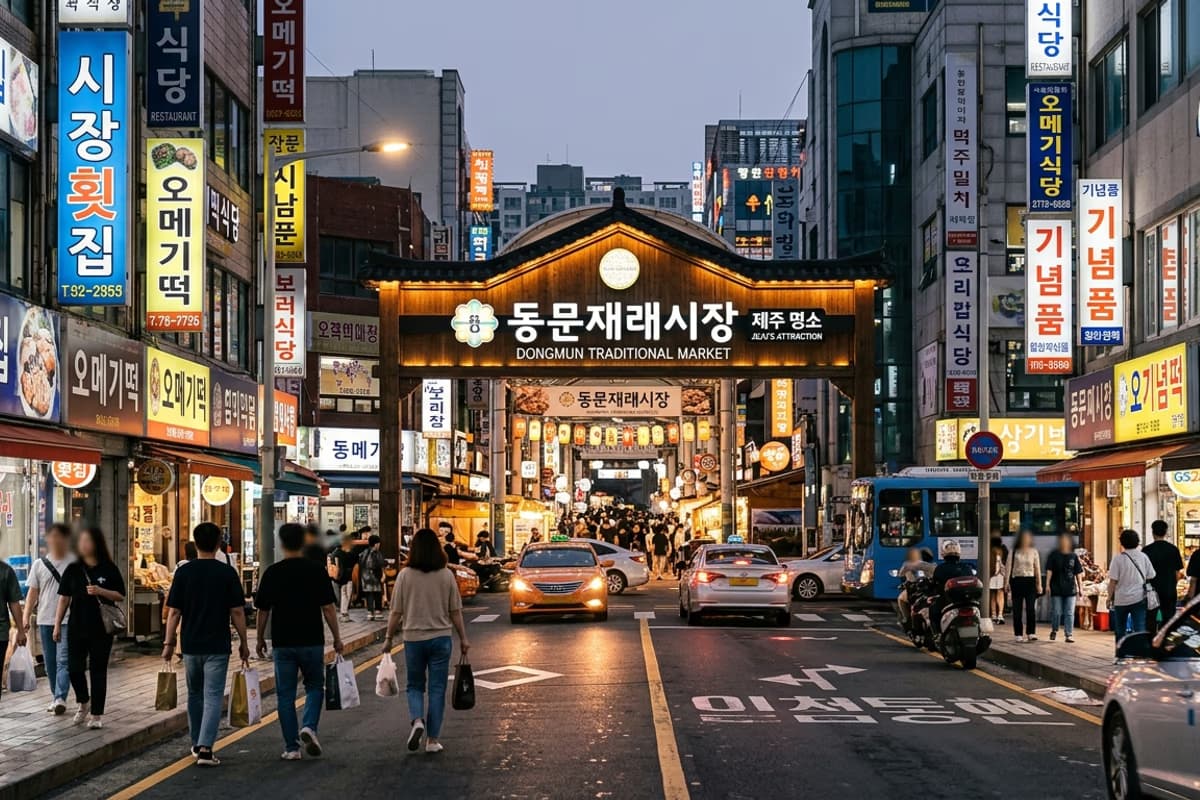
From Jeju International Airport, the market is about ten minutes by taxi, twenty by bus. The market's own parking is small; the public lots at Tapdong Coast or near Gwandeokjeong are easier. The night market itself opens daily 6 p.m. to 11 p.m., busiest on Fridays and Saturdays.
After the loop, a drive west along the coastal road reaches Aewol in roughly forty minutes. The typical first-night arc — light snacking through the night market, then a coastal drive into a proper dinner — works for many travelers. The reverse is just as valid: spend the day in western Jeju and end the evening with one slow lap through the market.
80 Years of Layered Time
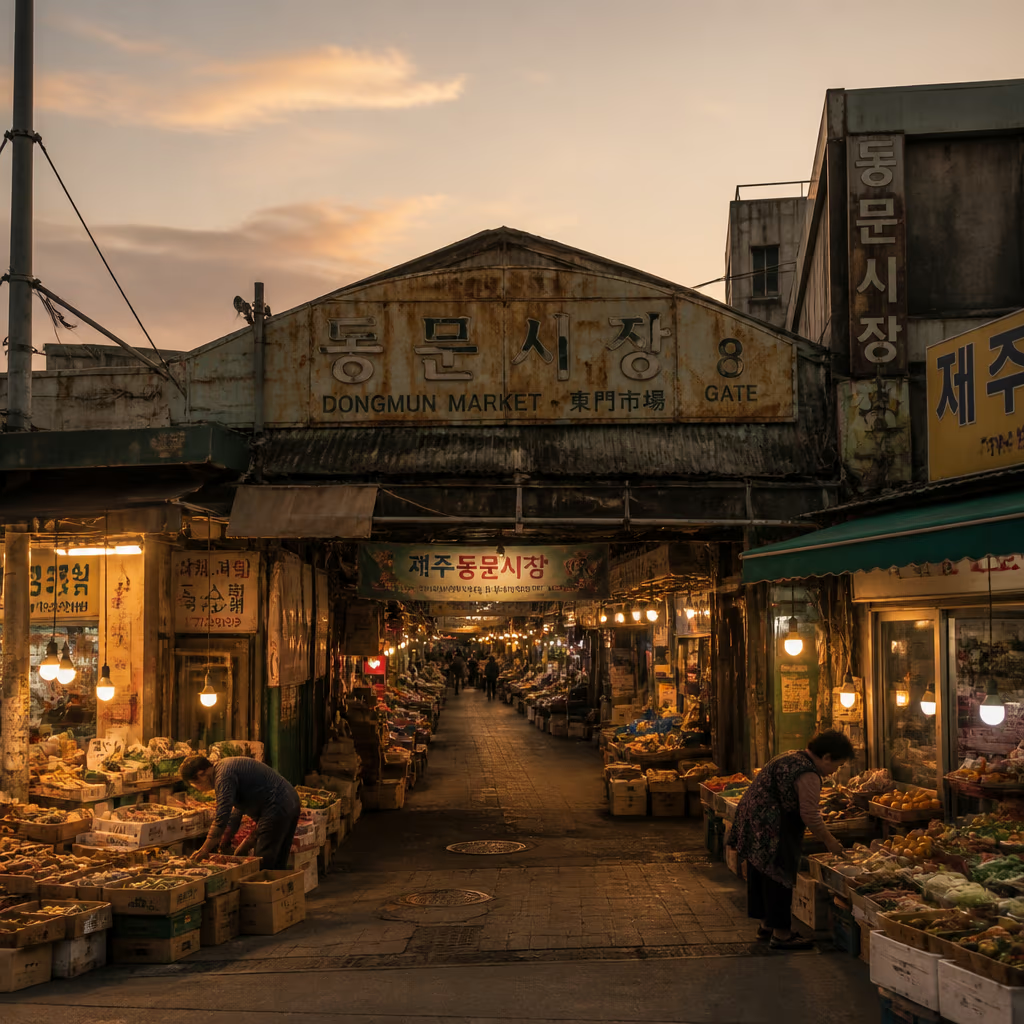
The market's roots trace back to the immediate aftermath of liberation. In <strong>August 1945</strong>, locals spontaneously set up street stalls; the cluster was formalized as a registered permanent market in 1954, and through the 1980s it expanded into the largest of its kind on the island. Mid-1990s fire-recovery work brought in the present arcade roof, and the official night-market opening in 2015 added an evening face to the same footprint. According to Jeju Provincial Government market statistics, it carries the largest share of both turnover and visitor volume among the province's traditional markets.
Eighty years in the same spot means a non-trivial number of stalls are now in the hands of a third generation. The tile-fish vendor near the entrance, the boil-snail porridge counter deeper in, the sliced-sashimi tempura booth at the center of the night market — well over fifty stalls are run by families that have been there for two or three generations, each with its own quiet archive of regulars.
What You Can Only Find Here
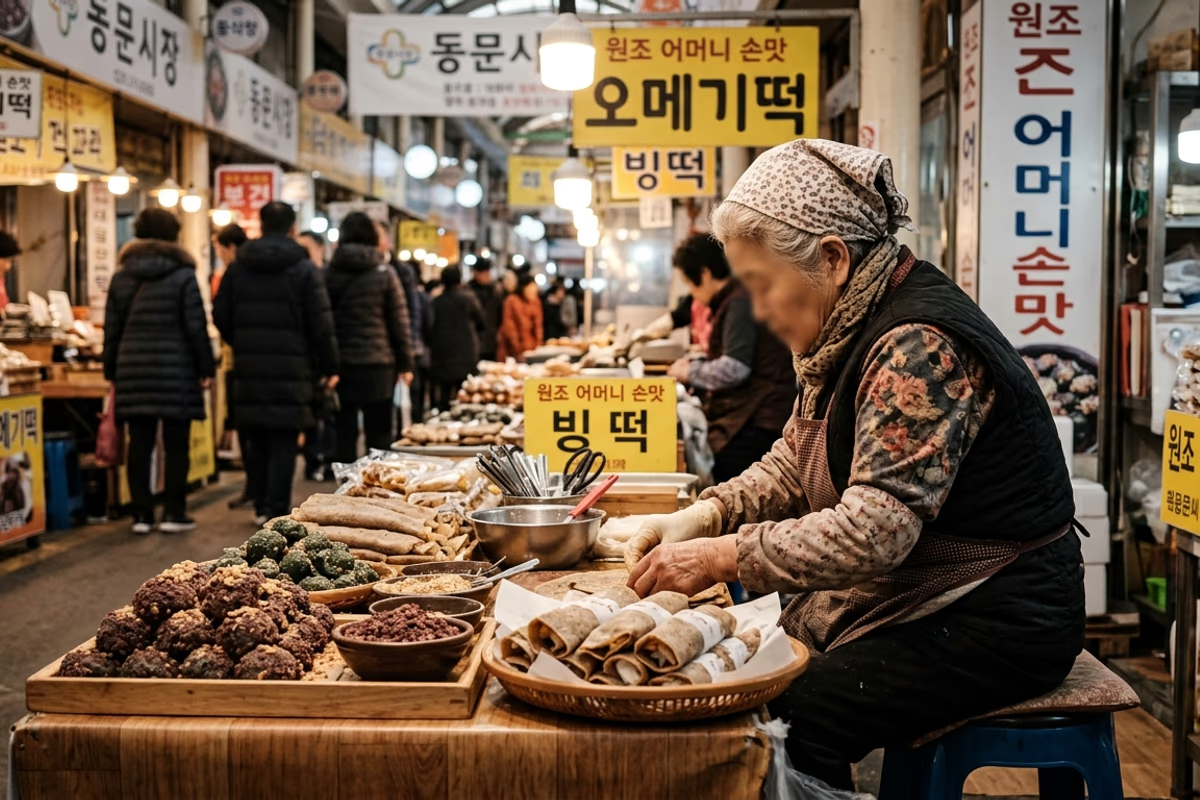
The real draw is what large supermarkets and tourist-strip storefronts cannot replicate. Grandmothers who have held the same spot for decades sell hand-made omegi-tteok, buckwheat bing-tteok pancakes, and the dried seaweed used for mom-guk soup in small individual portions. Price negotiation is part of the culture, and the habit of slipping an extra piece into the bag has not entirely disappeared.
The noise, the smell, the act of slipping past other shoppers in narrow aisles — that texture is one face of everyday Jeju you cannot get inside a polished tourist site. For travelers who prefer raw daily energy over arranged scenery, this is one of the very few places that still delivers it.
A Walkable Loop Through Old Jeju City
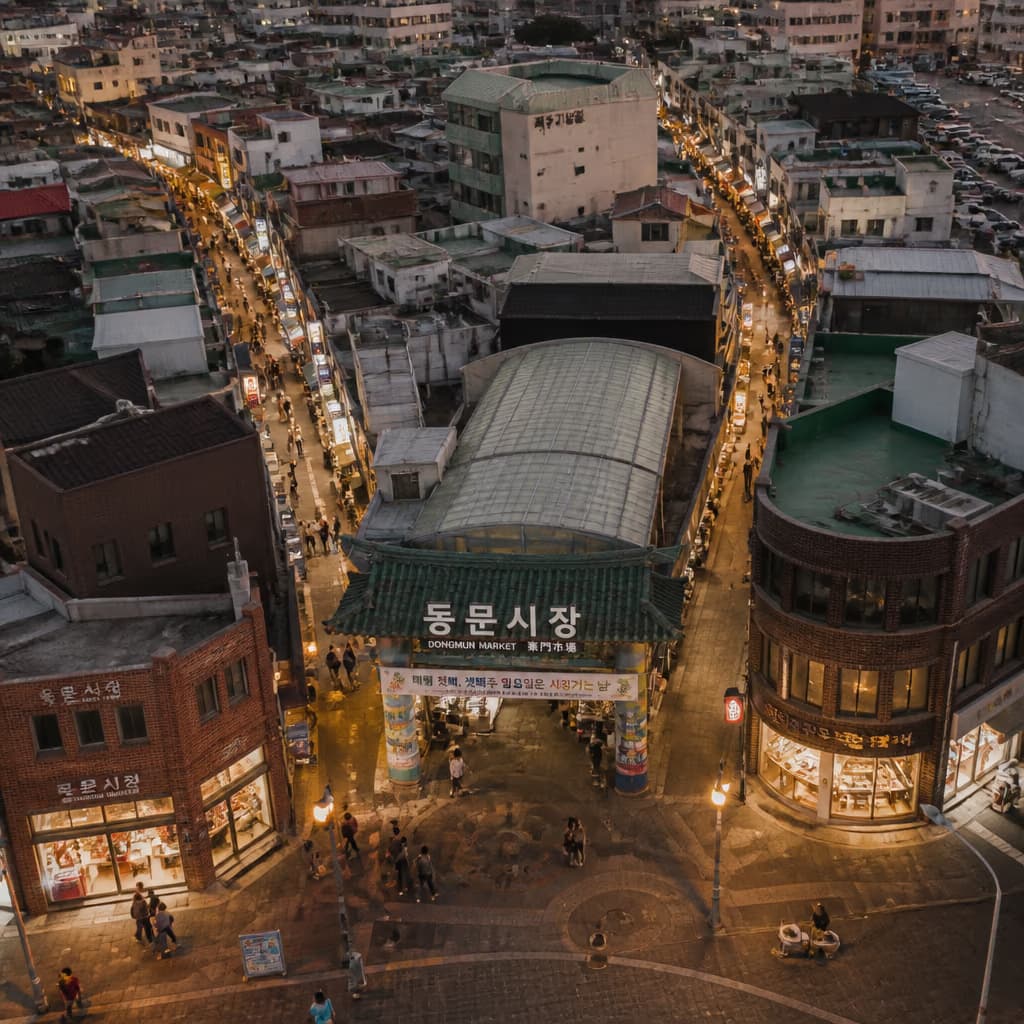
Within a five-to-ten-minute walk sit <strong>Gwandeokjeong</strong> (Treasure No. 322, the oldest surviving single-story building in Jeju), the <strong>Jeju Mok Government Office</strong>, and the Chilseong-ro shopping street. Walking the plaza in front of Gwandeokjeong in the late afternoon, before crossing into the night market, layers in the older administrative texture of Jeju City. Veering off toward Chilseong-ro turns up cafés and select shops — a different register of evening street that pairs cleanly with the market.
For travelers carrying cameras, the night market is rich with mixed light sources — the red lanterns at Gate 8, the bubbling oil at the tempura booth, the charcoal flares under the black-pork skewers. A brief nod of acknowledgement to the stall owner before close-range photography is the local courtesy.
Practical Tips
Card payment works at nearly every stall, but small change and quick-bargained sales move faster in cash. A few KRW 10,000 notes and a couple of KRW 5,000 notes set aside is a smoother carry. Asking for a receipt opens the door to the foreign-visitor VAT-refund procedure at qualifying purchase amounts.
Jeju's weather changes quickly. A small umbrella or a light rain shell is worth packing — the arcade roof handles most of it, but the entrance plaza and the outermost night-market stalls are exposed. Parents with very young children may find it easier to carry the child than to wheel a stroller through the narrowest aisles.
Local Favorites
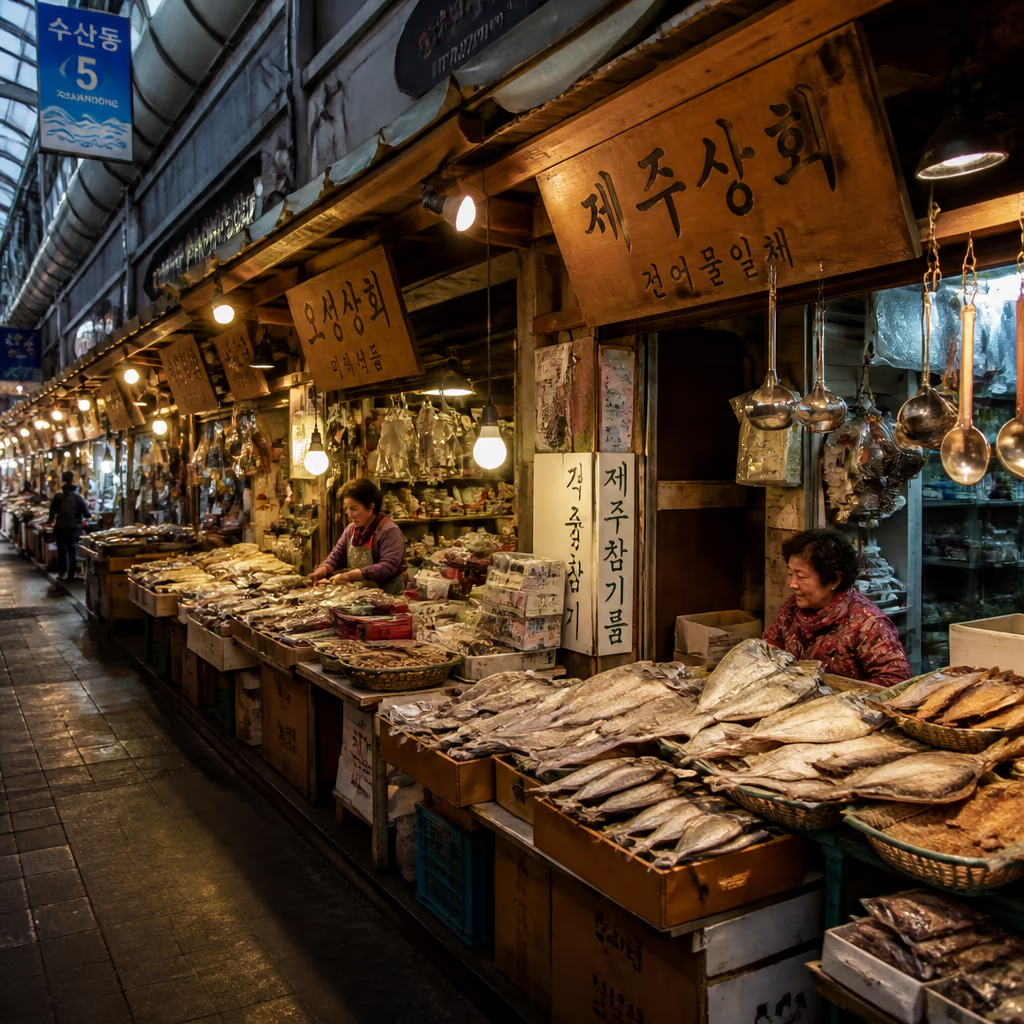
Following the route locals actually walk surfaces a different palate from the tourist line. Near the east entrance, <strong>Gwangmyeong Sikdang</strong> has been pulling lines for thirty years on the strength of its tile-fish seaweed soup and braised hairtail. Mid-night-market, <strong>Seunggwang Hoejip</strong> is known for abalone porridge and sashimi rice bowls; the per-plate price runs slightly above the market average, but the raw quality earns the gap.
Deep in the omegi-tteok alley, <strong>Samda Tteokjip</strong> has been kneading rice cakes from the same spot since the 1970s; the KRW 5,000 mixed bag remains the bestseller. At the Chilseong-ro-side entrance, <strong>Gwandeokjeong Bunsik</strong> bundles bing-tteok pancakes with a small bowl of buckwheat noodles for an inexpensive warm-up before the rest of the loop.
Photography Notes
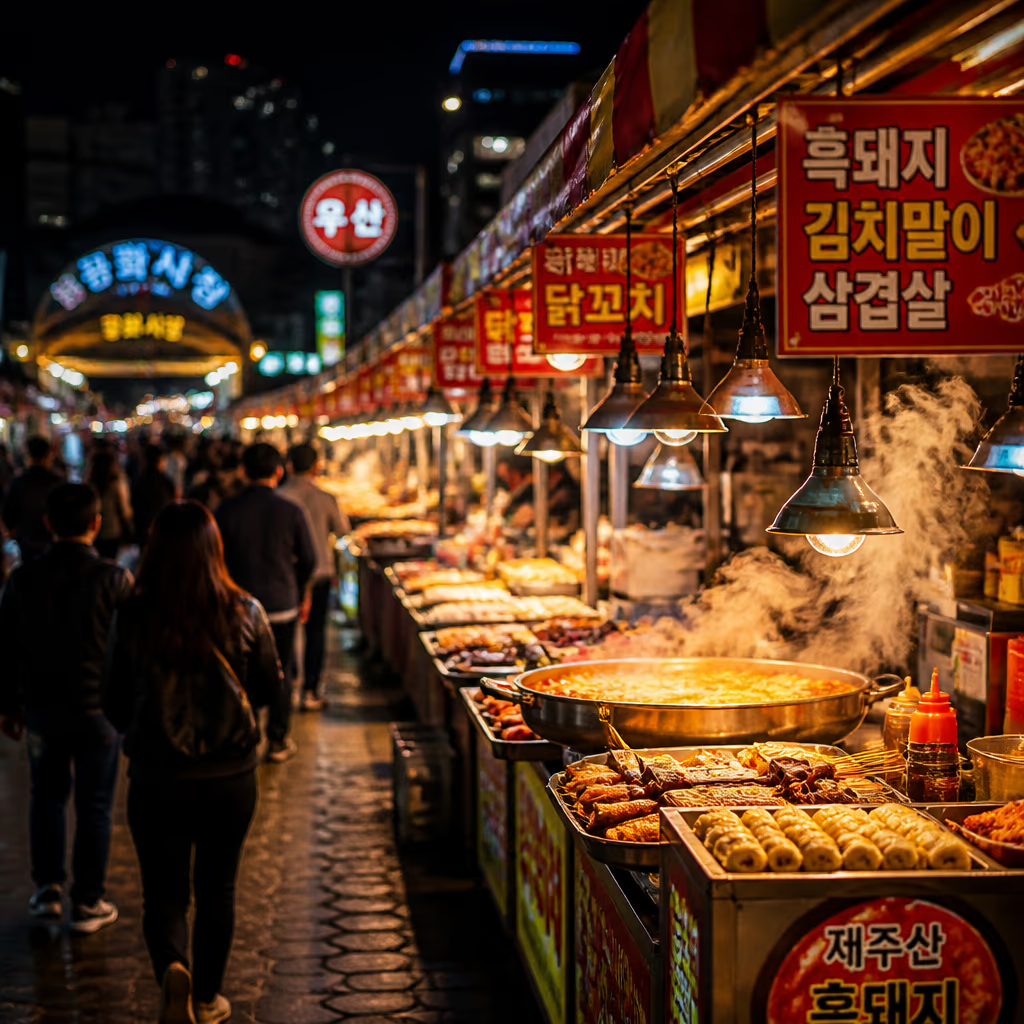
Night-market light is uneven by design — bright sources right next to deep shadow. Switching off Auto and holding shutter speed somewhere between 1/60 and 1/125 in Shutter Priority or Manual flattens both blur and noise. On a phone, Night Mode plus a quick two-step exposure (meter on the brightest stall first, then reframe) usually delivers the cleanest result.
The single best window is the thirty to forty-five minutes right after sunset — the so-called blue hour, when the sky still holds deep cobalt and the stall lanterns have just come on. The contrast between the two color temperatures is at its richest. A short word of permission to a stall owner before close-range portrait work is good market manners. For groups, the big signboard at Gate 8 and the first booth of the main night-market lane have become the standard photo spots. The charcoal flame under the black-pork skewers is the most often-borrowed background for low-light pictures.
Frequently Asked Questions
- What are Dongmun Night Market's opening hours?
- The night market is open every day from 6 p.m. to 11 p.m. Some open-air booths reduce service during heavy rain, and Friday and Saturday evenings are the busiest.
- Where should I park if I drive to Dongmun Market?
- The market's own parking is small. The Tapdong Coast public lot and the public lot near Gwandeokjeong are both more practical, each about a five-to-ten-minute walk from the market entrance.
- How much budget should I plan per person at the night market?
- Roughly KRW 15,000 to 20,000 per person is enough to sample five or six items — a skewer, fried hairtail, a drink, and a few small bites. Both cash and card are accepted at most stalls.
After one lap of the market, forty minutes west to an ocean-view table
Past the snack tour, a proper hairtail dinner is waiting
After light snacking through the lanterns of the night market, follow the coastal road west for forty minutes. At a table where the surf is audible beyond the floor-to-ceiling glass, a single proper bowl closes the day — a different register of energy from the market, served slowly.
Forty minutes by car from Dongmun Market to Galchibada in Aewol →