Geumneung Beach — Hyeopjae's Quieter Sibling With a Biyangdo Sunset
A 500-Metre Shell-Sand Cove With a Free Campground and the Sun That Drops Beside an Island Rather Than Below the Horizon
Geumneung Beach (금능해수욕장) sits in Hallim-eup on Jeju's west coast, about a 10-minute walk west of Hyeopjae across a small headland. The crescent runs about 500 metres (550 yards) — roughly half Hyeopjae's length — on the same white shell-sand floor with the same emerald shallows (average depth 1.0–1.2 m for the first 30 m out). A free campground operates immediately behind the sand, with toilets, showers, and a drinking water tap on-site. The Biyangdo silhouette sits slightly right of centre, so the sun drops <em>beside</em> the island rather than into open water. Galchibada in Aewol is about 18 minutes east by car (11 km / 6.8 miles).
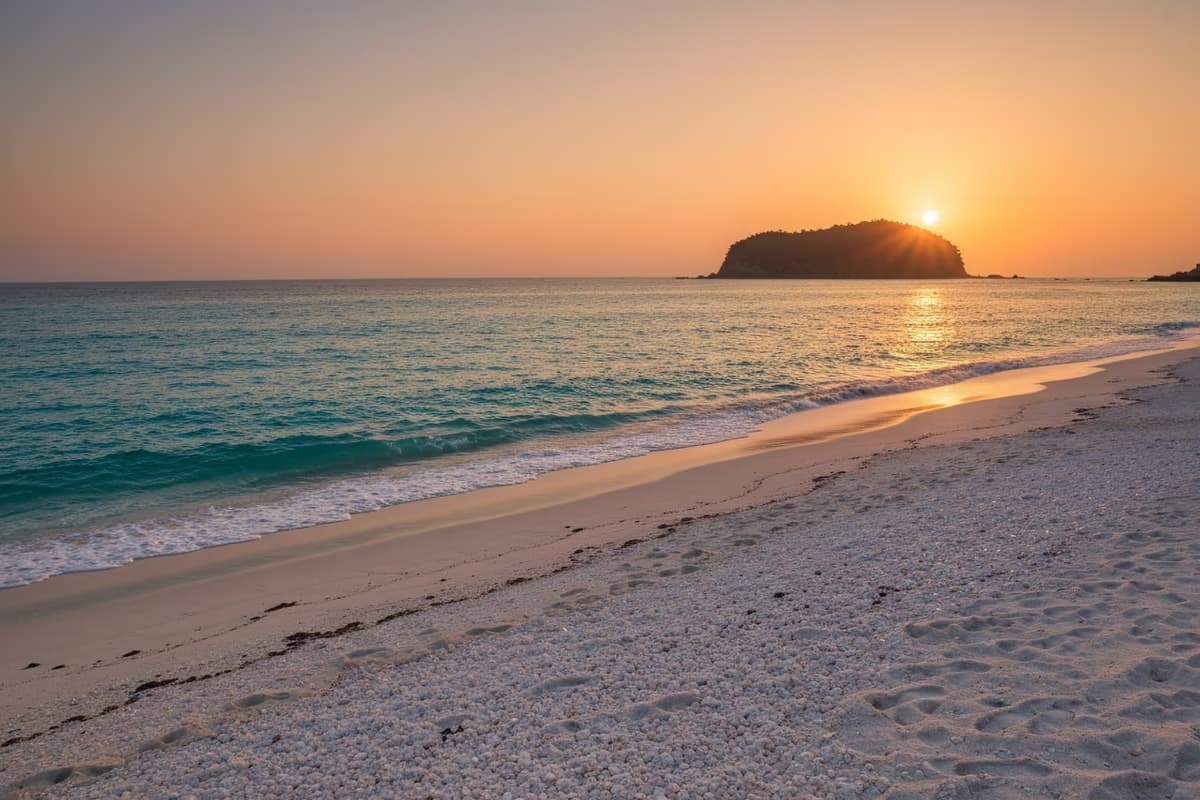
Walk ten minutes west from the end of Hyeopjae's sand, around a low basalt headland, and the crowd density drops noticeably while the colour palette stays the same. The emerald ribbon continues, the white shell sand continues — only the foot traffic on the beach has roughly halved. Two coves of the same water, separated by a single small headland, holding two different temperaments. This is <strong>Geumneung Beach</strong>.
The name in Hanja is 金陵, taken from the old village name. Administratively it sits in Geumneung-ri, Hallim-eup, with Hyeopjae-ri at the eastern edge of the same district. The two share the same current, the same shell-sand source, and the same submerged sandbar geometry. The reason they have stayed two names rather than one is village-level — the household economies on either side of the headland have run separately for centuries.
Same Emerald, Different Density — How Geumneung Reads Against Hyeopjae
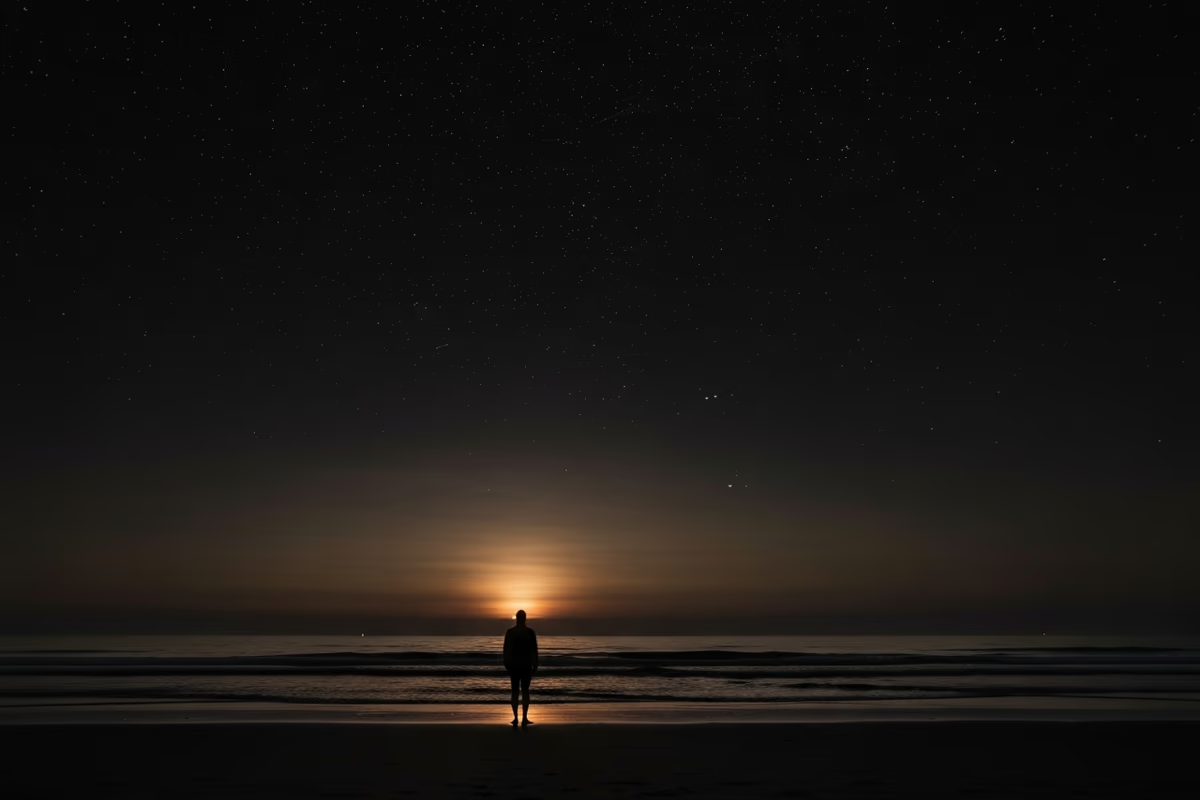
When Hyeopjae rose into Korea's standard list of "must-visit Jeju beaches" two decades ago, Geumneung kept its head down. The result is the quiet you notice within thirty seconds of arrival. Same emerald water, same white carbonate floor, same optical trick where shallow light reflects off pale sand to lift the surface colour — only with the foot count down by half and the pace down by a third. For Western visitors familiar with Cornwall's Holywell Bay (the calmer cove next to busy Perranporth), or with Lanikai on Oahu (Kailua's less-trafficked neighbour), the dynamic is recognisable: a quieter sibling that does most of the same things slightly better, with one twist of its own.
The beach length runs about <strong>500 metres / 0.31 miles</strong> — roughly half Hyeopjae's 900. The width tracks the same ratio. The sand colour, grain size, and reflectivity index sit at the same range; in honest midday light, a side-by-side comparison would not separate the two. The optical effect that drives Hyeopjae's photographs operates here at the same intensity.
The visible difference, beyond density, is the angle on Biyangdo. From Hyeopjae the small volcanic island sits centred in the frame — almost too perfectly placed. From Geumneung the same island sits slightly to the right of centre, which is the small geometric shift that delivers the headline composition.
A Rare Coastal Beach With a Free Campground
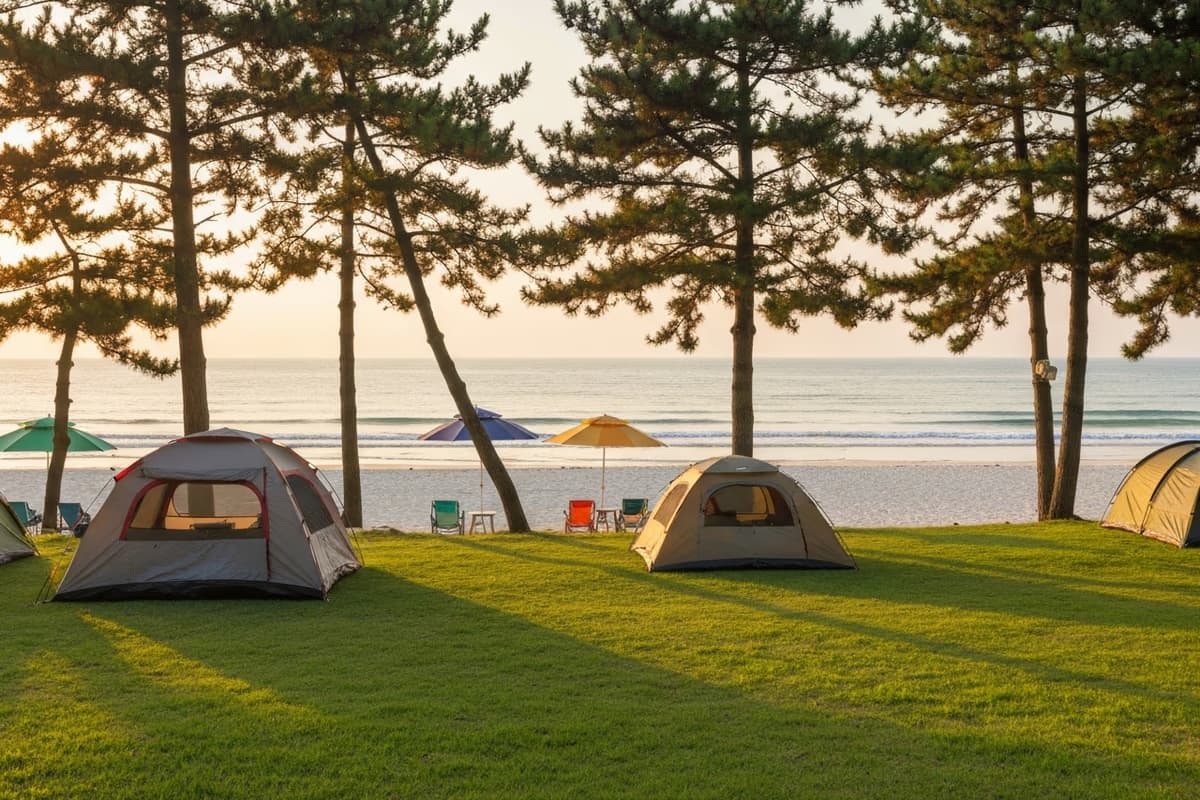
The decisive thing Geumneung has and Hyeopjae does not is a <strong>free campground</strong> sitting immediately behind the sand. From the campsite to the high-tide line is a one-minute walk. A small pine grove provides shade on one section, and a flat grass area covers the rest, which suits family camping particularly well. On a peak-summer weekday the slots fill quickly; on off-season weekends an early arrival still pays off. Toilets, showers, and a drinking water tap sit inside the camping area, and a small store and a café operate a short walk away.
Camping availability and operating windows do shift with the season and municipal notices. The Hallim-eup tourist office and Visit Jeju in English carry the day-of information, and checking ahead is the right move before a long drive.
The structural advantage of the campground sitting on the sand line is straightforward: at sunset, you watch the sun slide past Biyangdo from a folding chair in front of your tent. There is no walk to a photo spot, no jostling for a railing-side seat. The best light of the day arrives at your camp setup. For Western families used to North American or Australian beach camping, this density of access is unusual to find in Korea at all — the entire west coast of Jeju effectively has one free beach campground that is actually on the sand, and this is it.
The Sun That Drops Beside Biyangdo
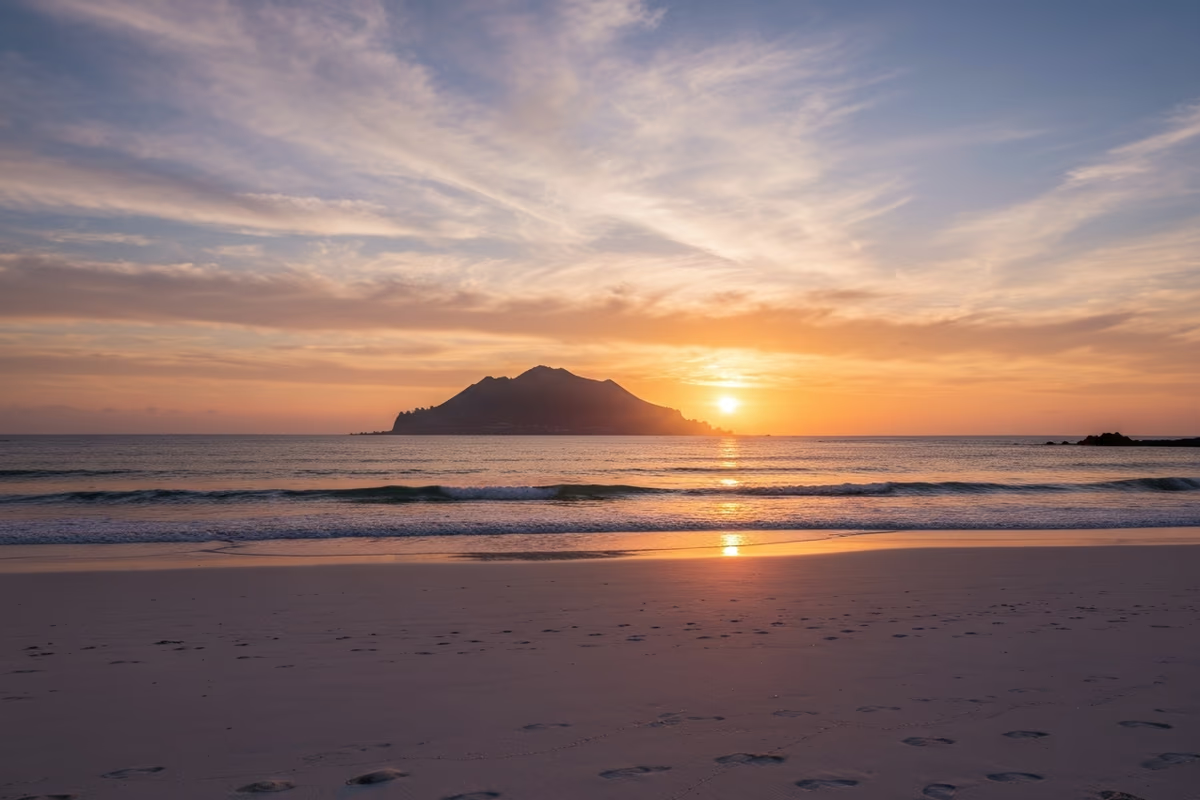
A typical west-coast sunset on a beach drops the sun into a flat horizon. The image is beautiful but symmetric — sun, water, sky, no depth marker. Geumneung's twist is geometric: <strong>the sun drops past the silhouette of Biyangdo Island</strong> rather than below an empty horizon. The result is depth — a black volcanic outline against a saturating orange, and the last three minutes of the sun visibly sliding alongside that outline rather than into nothing.
The window opens about <strong>30 minutes before official sunset</strong>. Warm orange floods the emerald, the island edge lights up, the contour darkens, and the last 180 seconds become the headline image. Western viewers will recognise the structure — Hawaii's "sun behind Lanai" sunsets from Lahaina hold the same compositional logic, as does the Sardinian Costa Smeralda when the sun drops past one of the offshore granite islets. The Korean west coast otherwise rarely offers the geometry; Geumneung is the exception.
After the sun is gone, stay. The 20-minute magic-hour window that follows — purple stretching across the upper sky, long defined shadows on the sand — is what landscape photographers actually wait for. Most casual visitors leave too early.
Shallow Water, Family-Friendly Wading
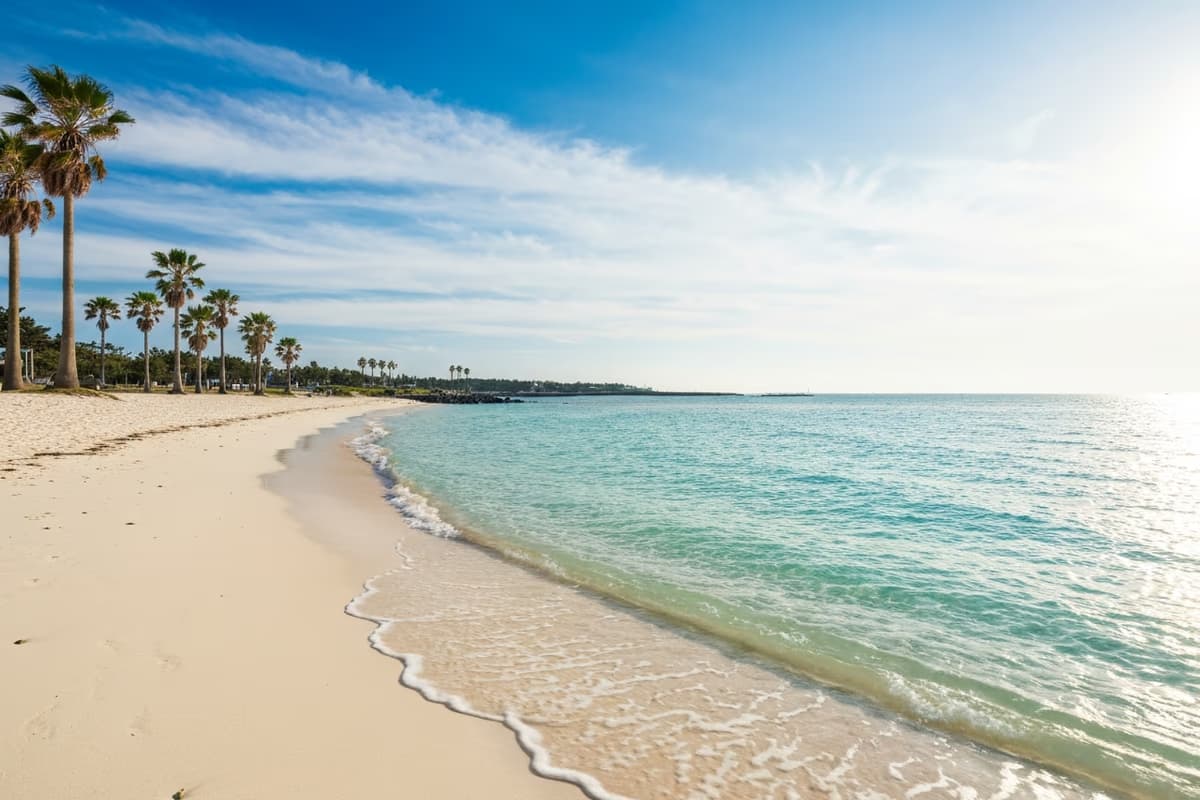
The submerged sandbar that runs out from Hyeopjae continues across the small headland into Geumneung — the entire 500-metre cove shares the same shallow gradient. Walk 30 metres / 100 feet from the high-tide line and the average water depth still sits at <strong>1.0–1.2 metres (3.3–4 feet)</strong>. Adult-knee-to-waist range, with no sudden drop-offs in the swim zone. Children can wade beside a parent without leaving the safe shallows.
At low tide some small coral fragments and shell pieces emerge from the surface; aqua shoes are the simple fix for sensitive feet. The official swimming season runs <strong>mid-July through late August</strong>, with lifeguards, showers, and changing rooms on duty. Outside that window the sand stays freely accessible, but the conservative call without lifeguards present is to stay knee-deep, especially with a shifting tide pattern.
The natural rhythm is wade, return to the shade of the pine grove or the campground, then a short walk to a café in the Geumneung-ri lanes. The Hallim-eup area carries a low-density scatter of small cafés — picking one in advance is not necessary; a slow circuit usually turns up the right table.
Hyeopjae and Geumneung — Two Coves in One Day
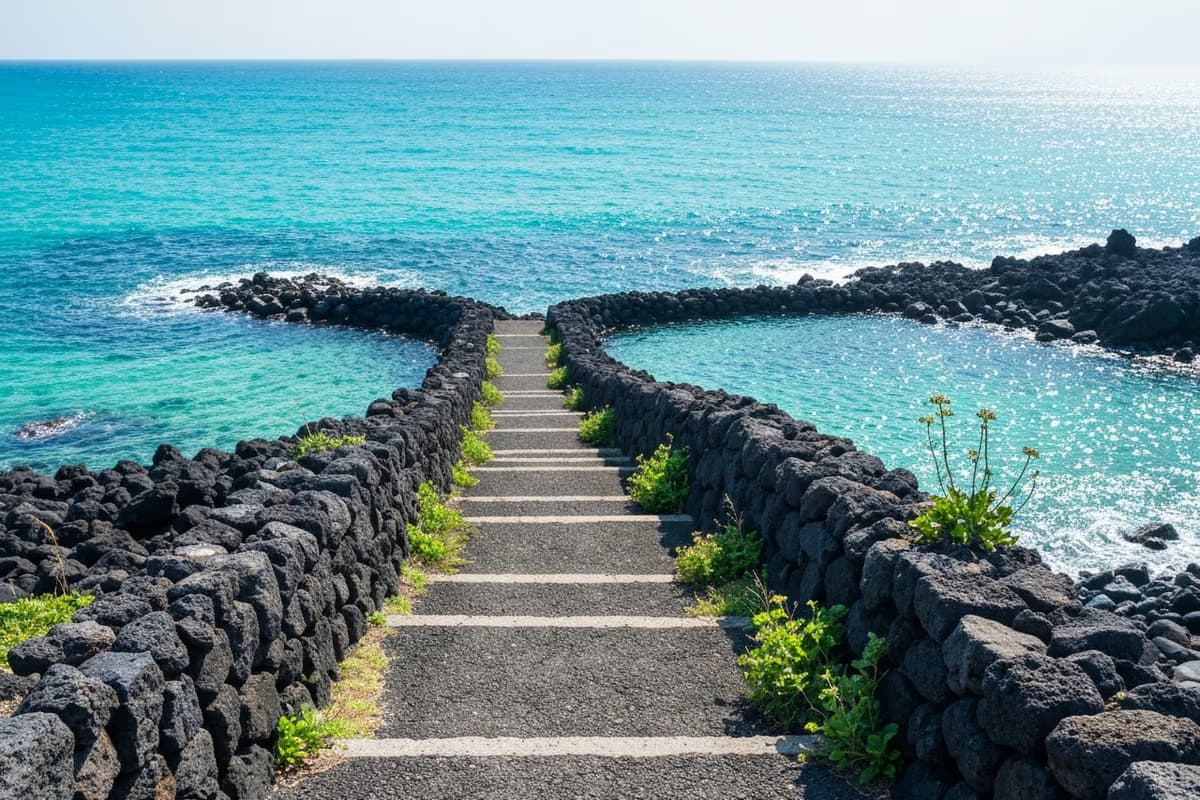
The two beaches sit ten minutes apart on foot, separated by a single low headland of black basalt. The connecting path is narrow enough in places to require single-file walking, but the same narrow section is also the one spot from which both coves are simultaneously visible — a panorama not available from either beach alone.
The clean two-stop itinerary is midday on Hyeopjae (centred Biyangdo, classic photographs, the busier of the two), then a late-afternoon shift to Geumneung for tent setup and sunset. Travellers who prefer to do everything in one place will be perfectly happy at either, but combining them in a single day extracts more from the same shell-sand floor — two coves, two temperaments, one body of water in between.
18 Minutes East to Galchibada — The Day's Final Note
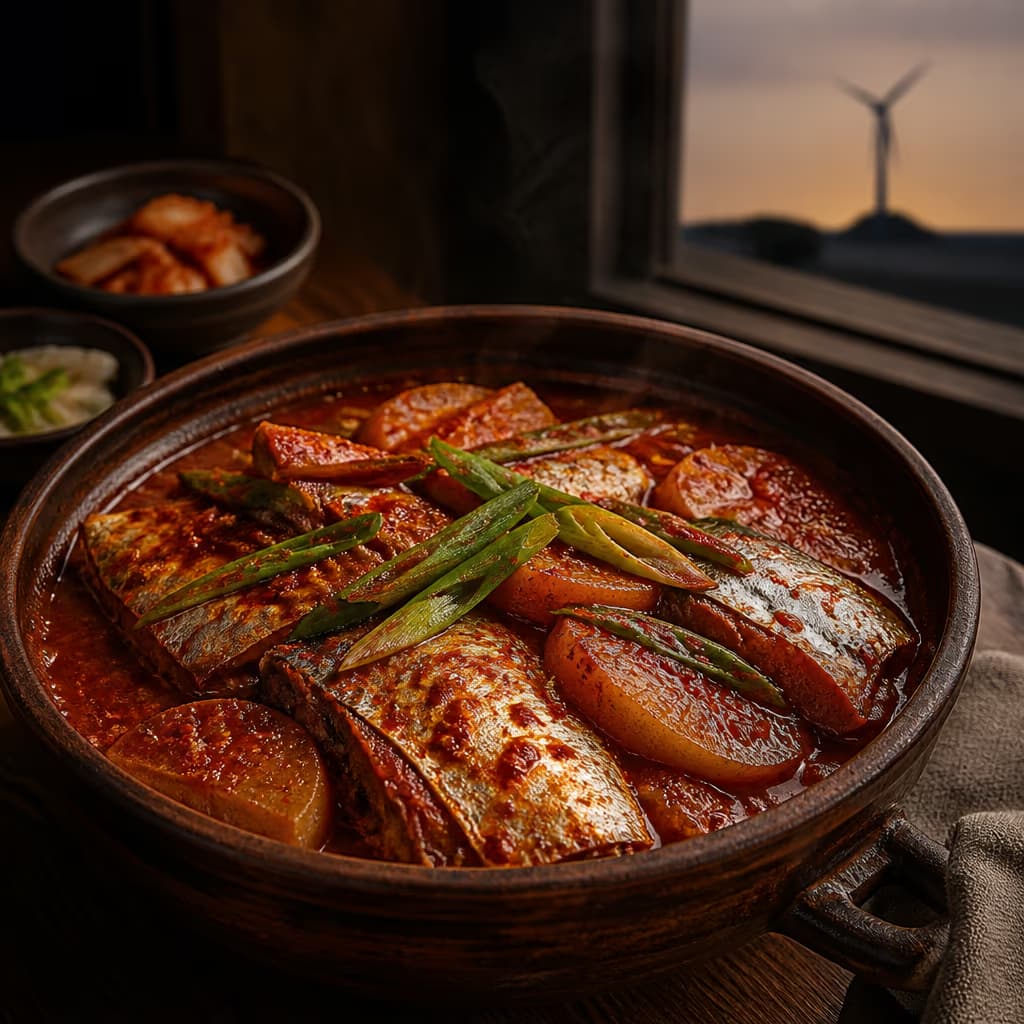
After the sun has fully disappeared past Biyangdo and the magic-hour purple has softened, the tent can stay where it is and the car covers the last short leg. From the Geumneung public car park, Route 1132 along the coast runs east about <strong>11 km / 6.8 miles</strong>, putting the drive to Galchibada in Aewol → at about <strong>18 minutes</strong>. A floor-to-ceiling window opens onto another stretch of the same coast — now under evening light — and a whole silver hairtail landed off this coastline that morning sits on the table.
The braise that pulls apart cleanly along the grain or the charcoal grill that puffs the skin under heat: either translates the day on the sand into a flavour register. As either the opening dinner of a camp night or the closing meal of a day-trip, the timing fits without effort. Reserving in advance keeps the return walk to the tent unhurried.
Getting There, Practical Notes
The address is Geumneung-ri, Hallim-eup, Jeju City. From Jeju International Airport the drive runs about 40 minutes; from the Jeju Intercity Bus Terminal, intercity bus 202 puts a traveller at the Geumneung Beach stop with a 5-minute walk to the sand. Real-time bus position and timetables: Jeju Bus Information System.
Parking sits at the Geumneung public car park; off-season is free, peak summer may apply hourly fees. Campsite registration and operating hours shift seasonally, so checking with the information office on arrival is the safest move; arriving late on a peak weekend without that confirmation is the avoidable mistake.
A short packing list, repeated for clarity. The sand surface heats considerably under midday sun — flip-flops or aqua shoes save the soles. For overnight camping, a small sunshade canopy or beach umbrella makes the daytime experience meaningfully better. Sunset wind picks up after the colour starts: a light windbreaker keeps the magic-hour window genuinely enjoyable rather than just endurable. If pairing this with a Biyangdo ferry trip, the Hyeopjae and Hallim port schedules sit at the Hallim ferry terminal counter for day-of confirmation.
Hyeopjae's reputation has carried two decades of west-coast attention. While that was happening, Geumneung quietly sharpened its own version of the same colour palette — same emerald, same shell sand, half the crowd, a campground on the sand, and a sun that drops past an island instead of into open water. Eighteen minutes east, the next composition has already been plated. The shape of a Jeju west-coast day, at its honest best, runs through both coves and lands at a table that holds the same sea in a third frame.
Frequently Asked Questions
- How is Geumneung different from Hyeopjae?
- They share the same emerald shallows and the same white shell sand — the optical effect and the water colour read identically in midday light. Geumneung's crescent is about half Hyeopjae's length (500 m vs 900 m) with noticeably fewer visitors, and Biyangdo Island sits slightly right of centre rather than dead centre, which delivers a different sunset composition. Geumneung also has a free campground immediately behind the sand — Hyeopjae does not.
- Is there really a free beach campground?
- Yes. A free campground operates immediately behind Geumneung's sand, with toilets, showers, and a drinking water tap on-site. A small pine grove gives shade on one section and a flat grass area covers the rest. Slots fill quickly in peak summer; early arrival on weekends is the safe move. Seasonal operating windows and registration procedures do shift, so checking with the Hallim-eup tourist office or Visit Jeju ahead of a long drive is the right step.
- Why is Geumneung's sunset specifically worth the trip?
- A typical west-coast sunset drops the sun into a flat horizon. Geumneung's geometry puts Biyangdo Island slightly right of centre, so the sun drops <em>beside</em> the island's silhouette rather than below empty water. The result is depth — a black volcanic outline against saturating orange. The window opens about 30 minutes before official sunset; the final three minutes are the headline image; the 20-minute magic hour after sunset is what photographers actually wait for.
- How shallow is Geumneung's water?
- The submerged sandbar that defines Hyeopjae's shallow zone continues through Geumneung. Walking 30 metres / 100 feet from the high-tide line keeps the average depth at 1.0–1.2 metres (3.3–4 feet) — adult-knee-to-waist range. Children can wade beside a parent without leaving the safe shallows. Aqua shoes are recommended at low tide for the small coral and shell fragments that surface.
- How long is the drive from Geumneung to Galchibada in Aewol?
- About 18 minutes east via the coastal road (Route 1132) — roughly 11 km / 6.8 miles. After-sunset timing fits naturally for a sit-down dinner; either the opening meal of a camp night or the closing meal of a day-trip.
- Can I visit both Hyeopjae and Geumneung in the same day?
- Yes, and it is the cleanest itinerary. The two beaches sit a 10-minute walk apart, separated by a small basalt headland. Spend midday on Hyeopjae (centred Biyangdo, busier sand, classic photographs) and shift to Geumneung in late afternoon for tent setup and the sunset window. The connecting path across the headland is the only spot from which both coves are simultaneously visible.
From the sunset beside Biyangdo to a coastal table — 18 minutes east
Carry the orange off the sand and onto the plate
After the sun has fully cleared Biyangdo and the magic-hour purple has softened into evening, the tent can stay where it is and the car covers the last short leg. Eighteen minutes east along the coast, a floor-to-ceiling window opens onto another stretch of the same emerald — now under different light — and a whole silver hairtail braised in a spicy sauce carries the day off the sand and onto the plate.
18 minutes east from Geumneung to Galchibada Aewol via Route 1132 →