Gonae-bong — A 175-Metre Joseon Beacon Hill Five Minutes From Galchibada Aewol
The Quietest Oreum on the Aewol Coast, With a Joseon-Era Signal Fire Mound on Top and Hallasan in the View
Gonae-bong (Gonae Oreum) is a 175-metre cinder cone (relative height about 135 m) in Gonae-ri, Aewol-eup, Jeju City — the closest oreum to Galchibada Aewol at about five minutes by car. The summit holds the remains of the Joseon-era Gonae beacon fire station, part of the northwestern coastal defence signalling chain. From the top, the Aewol and Hallim coastline and the lower slopes of Hallasan all sit in a single field of view. The trail is about 800 m to the summit and takes 15 to 20 minutes at an easy pace — short enough to slot in before or after a meal.
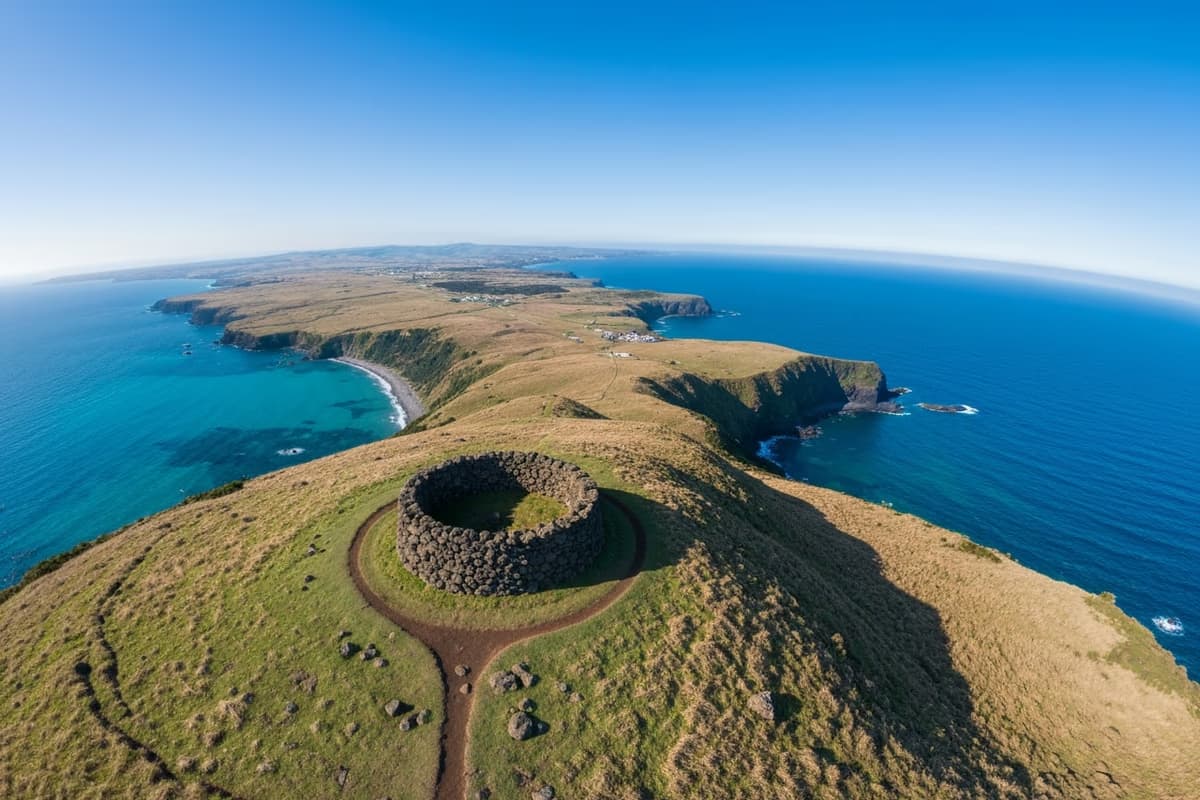
Saebyeol Oreum, Geum Oreum, Eoseungsaeng-ak. If you have spent any time researching Jeju, you have probably come across those names. Each carries its own texture, and each draws a steady crowd. Yet among the western ridges of the same island, there is one place that was a critical position in its own era and now stays almost entirely empty. The closest oreum to Galchibada Aewol — five minutes by car. Gonae-bong, sometimes called Gonae Oreum.
Elevation 175 metres, with a relative height of about 135 metres on a cinder cone base. A step smaller than Saebyeol Oreum or Geum Oreum in raw scale, but inside that smallness sits the weight of a single historical period. At the summit, the stone footprint of a Joseon-era signal-fire station is still there, holding a quiet piece of the northwestern defence layer of the dynasty. For Western visitors familiar with the Roman limes watchtowers along Hadrian's Wall or the medieval Martello towers along the Irish coast, the structural logic is the same: a line of small high points carrying a signal across long distance — just rendered in volcanic stone on a Pacific-rim island.
Five Minutes by Car — The Closest Ridge to the Restaurant
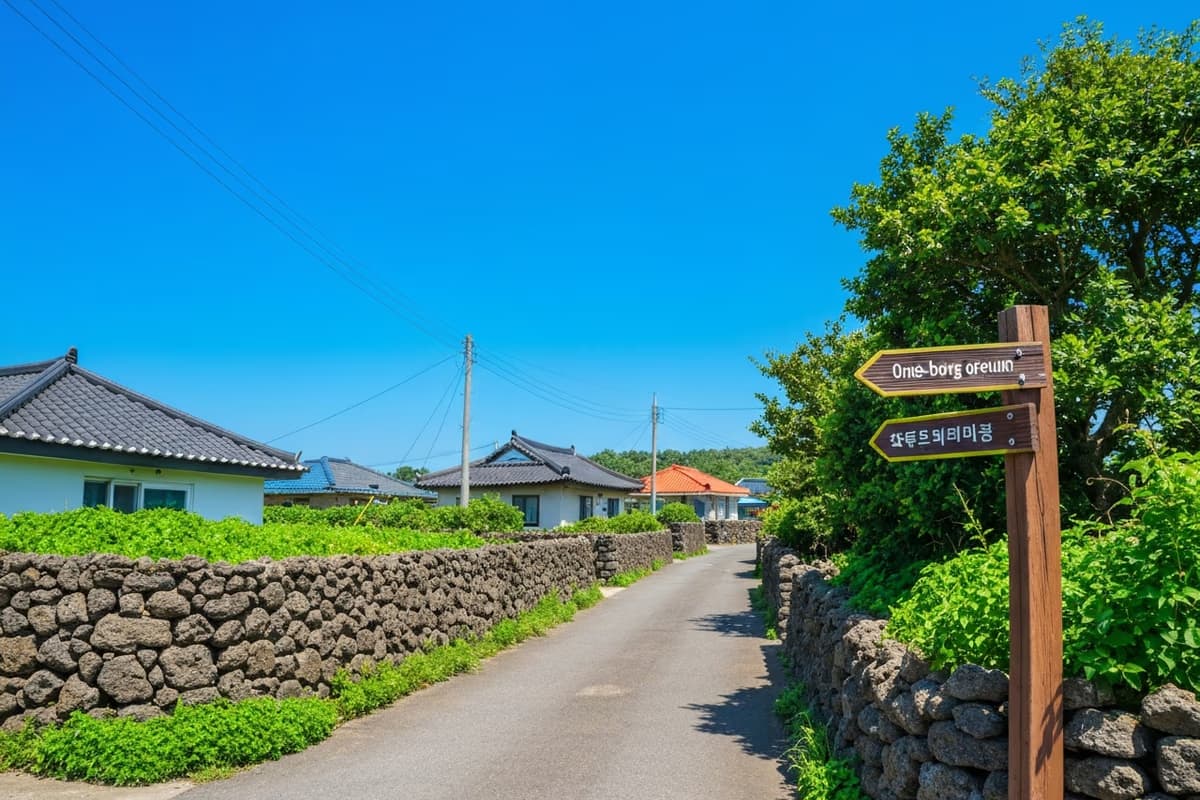
From Galchibada Aewol →, Route 1132 carries you east for about 2 km — five minutes by car — and drops you into Gonae-ri village. One bend into the village and the Gonae-bong trailhead opens up. Parking is available in a small public lot near the entrance, and there is no admission fee.
The proximity matters more than the distance number suggests. A short 30–40 minute walk to the summit can sit cleanly before lunch at Galchibada, or fold into a short post-meal digestif walk afterwards. Either way, the lunch–walk or walk–dinner pairing is the kind that almost no other oreum on Jeju puts within range of the restaurant — not at this distance.
The village setting also shapes the feel. Unlike Saebyeol Oreum or Geum Oreum with their dedicated lots and visitor centres, the approach to Gonae-bong is a single bend into an ordinary residential lane. That ordinariness is exactly why the hill has stayed quiet — there is no large infrastructure signalling its presence, and the path stays a local one even on weekends.
Fifteen Minutes to the Top, a Light Ridge Walk

From the trailhead to the summit is about 800 metres. Most of the path is a well-trodden earthen track that reads like a village backyard trail; a short stretch of light wooden stairs appears midway and quickly hands back to earth. Fifteen minutes at an easy pace, or twenty at a comfortable one.
Camellias and broadleaf trees frame the path on both sides, casting a cool shade even under midday sun. Where Saebyeol and Geum take the open grassland ridge straight into the sun, Gonae-bong threads through a small inner forest — a different sensory register entirely from those better-known ridges. The two registers, walked back-to-back on different days, read as two distinct kinds of Jeju oreum experience.
Two small benches sit along the route, and the short distance to the top suits family visits or hikes with older travellers. After rain, the earth softens and goes slick; an ankle-supporting shoe is the safer call on those days.
The Beacon Fire — The Fastest Communication Line of Its Era
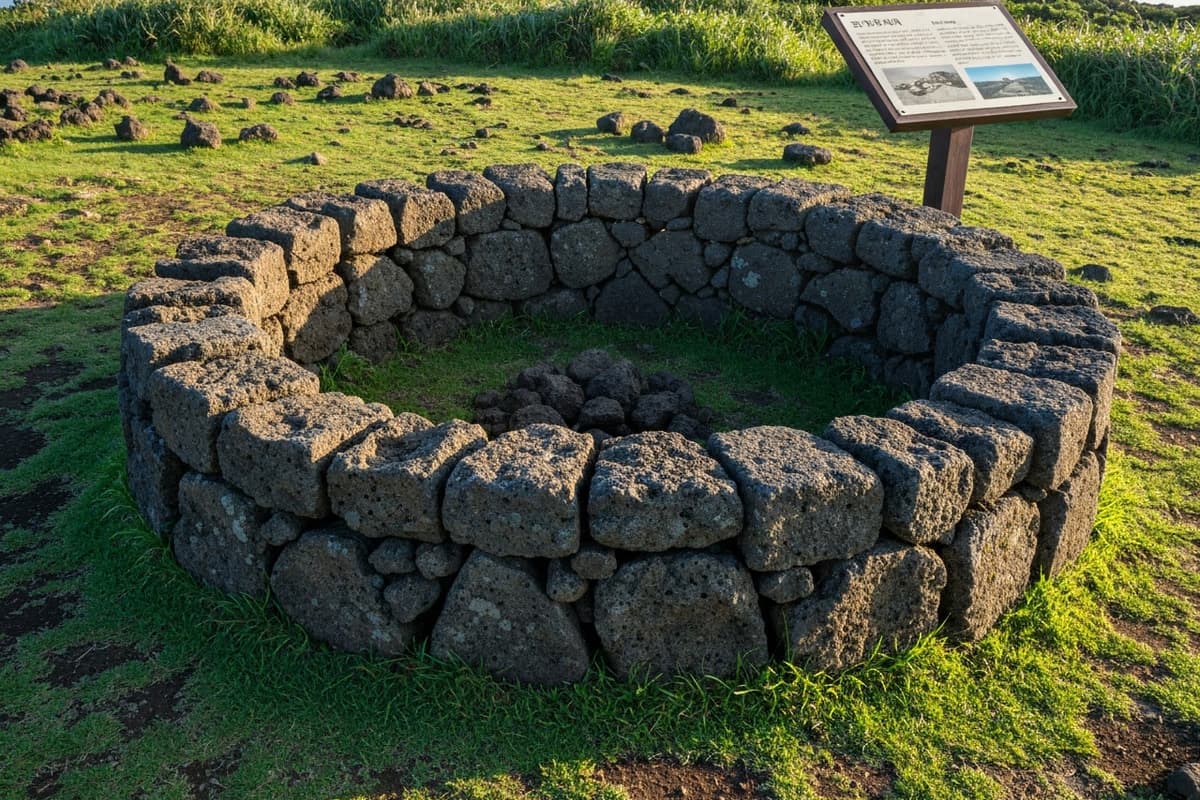
At the summit, the first thing that resolves into focus is a circular pile of stones sitting in the middle of the grass. Plain enough at first glance to not register as anything in particular, but lingering for a moment with the interpretive panel beside it brings the meaning into focus. This is the footprint of the Gonae beacon fire station.
The Joseon dynasty (1392–1897) operated a signal-fire (bongsu) network across the Korean peninsula and its offshore islands. A fire or smoke column lit on one ridge was received and re-lit on the next ridge, carrying news from a frontier outpost to the royal palace in Hanyang (today's Seoul) in hours rather than days. Jeju ran both an inland chain centred on Hallasan and a coastal chain following the perimeter of the island.
Gonae-bong sat inside the northwestern coastal chain. Signals lit here travelled east toward Dodu-bong and west toward stations near Gwakji, threading the Jeju situation up to the mainland through that connection. Each station typically operated with five to ten personnel on 24-hour rotation. Holding that ridge for a working life — the time scale that adds up — is what makes this small stone pile read as more than just a heritage marker.
The system's function tapered off in the late nineteenth century as telegraph and telephone took over, but the stone footprint at the top remains. For Western readers, the operational logic is closest to the chain of Genoese watchtowers along the Mediterranean coast or the late-medieval English coastal beacons that warned of the Spanish Armada — the same idea, rendered in volcanic basalt rather than stone or brick.
The Summit View — From Hallasan to the Coast
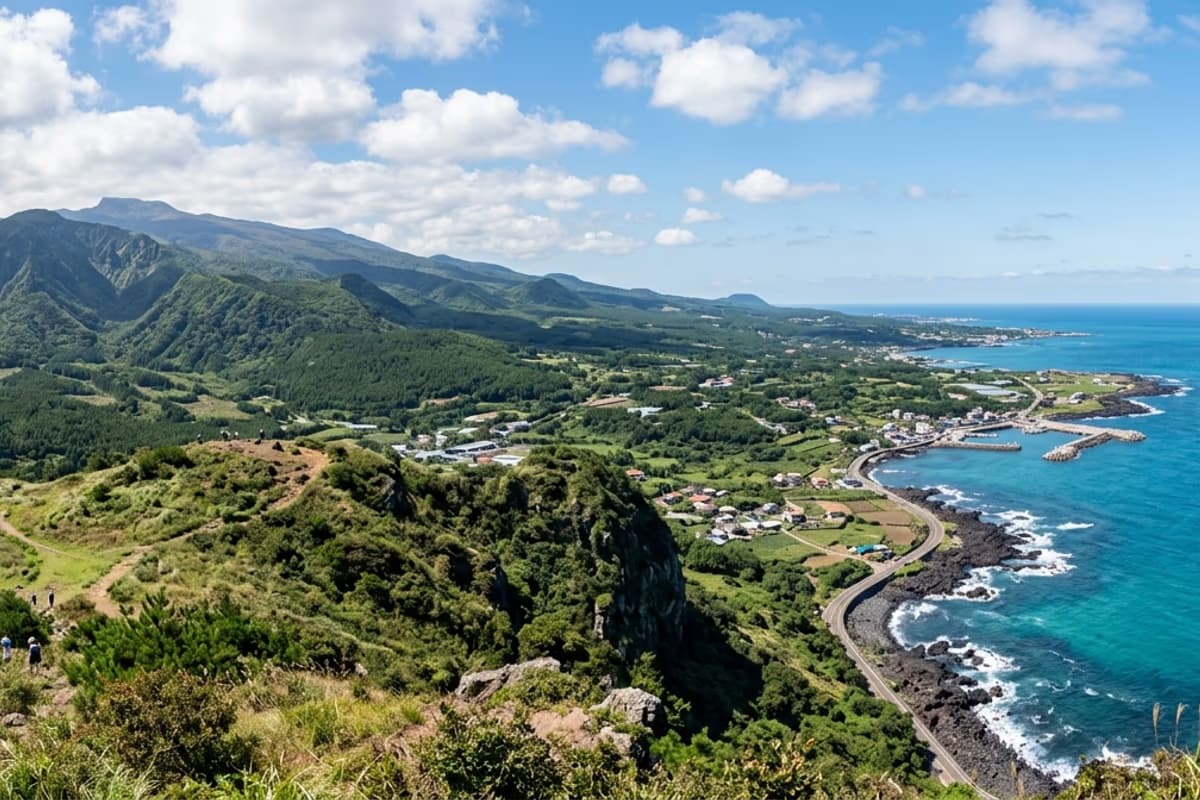
At the top, the eye lifts and the landscape opens around. To the west, the Handam coast and the Gwakji shoreline lay themselves out, with the small silhouette of Biyangdo holding the far edge. To the east, Dodu-bong and the airport plain spread, planes lifting off in slow rotation overhead. South, the ridge of Hallasan resolves cleanly.
The width of that view is exactly why the beacon was placed here. A signal lit on one neighbouring ridge had to be receivable from this point, and a signal from here had to reach the next ridge. The summit panorama, in other words, is itself the operational geography of a centuries-old signalling design.
Sunset is another window that earns a stop. Without the crowds that gather on Saebyeol or Geum, you can sit alone with Hallasan and the coast inside a single horizon and let the colour drop. After magic hour, the small lights of Aewol village fade in below, and a brief, quiet night view replaces the day. There is no lighting on the trail itself, so the descent benefits from a small flashlight and an unhurried pace.
A Pre- or Post-Meal Walk on the Same Itinerary
The five-minute distance from the restaurant gives this oreum a category of its own. A common rhythm is to arrive at Gonae-bong about 30 minutes before a lunch reservation, walk the ridge, and slide over to the table. Sun-warmed legs and the light thirst at the end of a short walk make the first bite at a window seat read distinctly sharper.
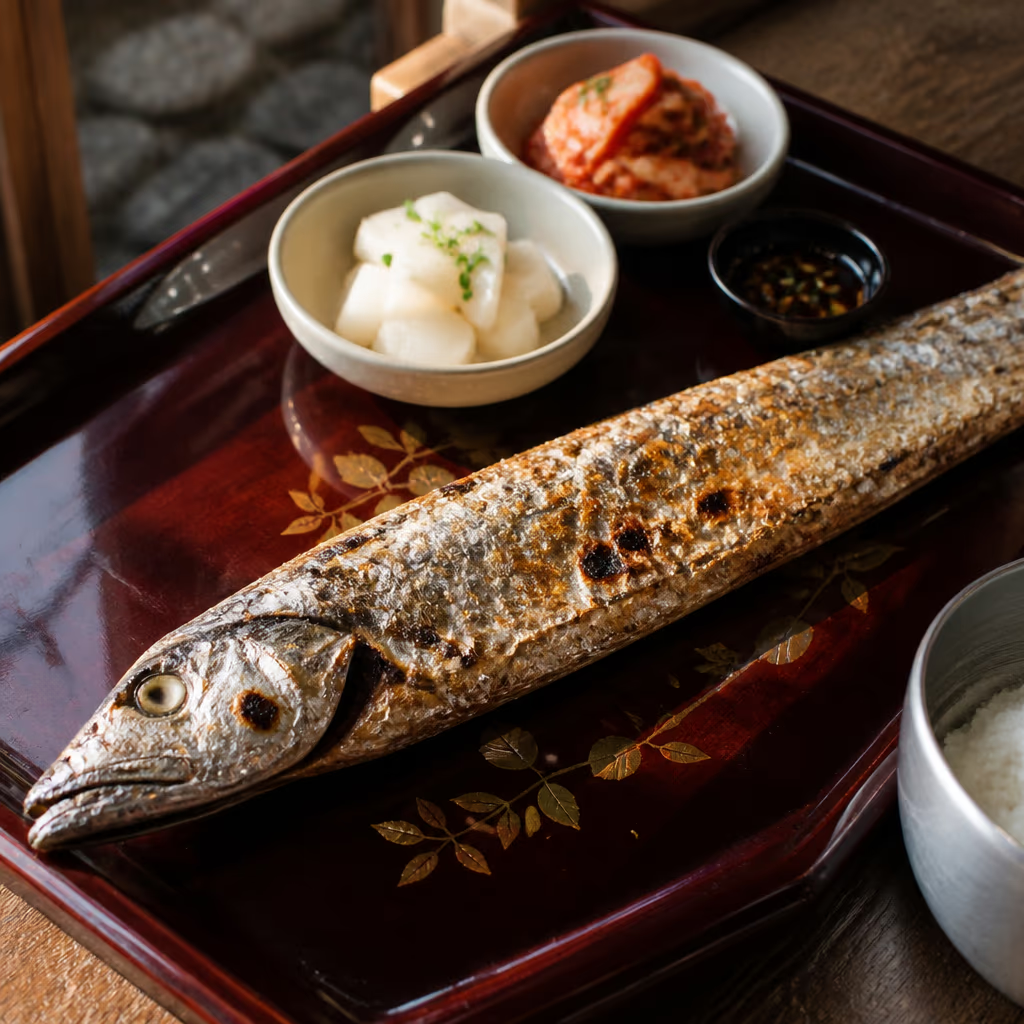
Or fold it the other way: finish a wild silver hairtail at a floor-to-ceiling ocean-view seat, then five minutes by car to the ridge top for a short Hallasan view as the meal settles. The midday's plate is closed cleanly, and a same-window view opens above the ridge.
For visitors who would rather not commit a half-day to a single oreum but still want a small piece of nature along the dining route, this is the cleanest pairing on the Aewol coast. You do not have to drive out to Saebyeol — a view in the same key sits five minutes from the table.
Getting There and Practical Notes
The address is Gonae-ri, Aewol-eup, Jeju City. From Galchibada Aewol the drive is about 5 minutes; from Jeju International Airport, about 30 minutes. Intercity bus 202 toward Aewol calls at the Gonae-ri stop with a 5-minute walk to the trailhead. Real-time schedule: Jeju Bus Information System. Seasonal access and beacon-station preservation notices are updated on Visit Jeju in English.
A small public lot at the trailhead handles arrivals. Weekday parking is reliable; weekend mid-mornings can fill, so an earlier start is the conservative call.
A short packing note. The shaded earthen path is forgiving but a hat helps under direct midday sun. Closed shoes are recommended, and after rain an ankle-supporting shoe is safer on the wet earth. The beacon stone mound at the summit must not be climbed on or rearranged — staying on the marked viewing line is the standing rule. The summit catches noticeably more wind than the village below; a light windbreaker is the small detail that makes a longer stop comfortable.
A small ridge that once carried the fastest signal of its dynasty, and now carries a short walking route back to the closest table. From the spot where the fire has stopped to a window seat 5 minutes away — two textures laid into the same single itinerary, both starting at Galchibada Aewol. The shortest, closest walk on the same island opens from exactly this spot.
Frequently Asked Questions
- Are Gonae-bong and Gonae Oreum the same place?
- Yes — two names for the same hill. The administrative name is Gonae-bong; the shorter local form is Gonae Oreum. Both refer to the 175-metre cinder cone in Gonae-ri, Aewol-eup, Jeju City.
- How long does it take to reach the summit?
- About 800 metres from the trailhead to the top — 15 to 20 minutes at an easy pace. The packed earthen path takes ordinary trainers well, and the broadleaf shade keeps midday walks comparatively cool.
- What did the Gonae beacon do?
- It was a station in the Joseon northwestern coastal signalling chain. Signals here passed east to Dodu-bong and west to stations near Gwakji, linking Jeju's situation up to the mainland. Each station ran on a 5-to-10 person 24-hour rotation, with the system tapering off in the late nineteenth century as telegraph and telephone took over.
- How far is it from Gonae-bong to Galchibada Aewol?
- About 5 minutes by car along Route 1132. It is the closest oreum to the restaurant — slotting cleanly before lunch (about 30 minutes ahead of a reservation) or as a short post-meal digestif walk.
- How is Gonae-bong different from Saebyeol and Geum Oreum?
- It is smaller (175 m), tucked inside a village, and almost crowd-free. The path threads through broadleaf shade rather than open grassland, which keeps midday walking cooler, and the summit beacon footprint puts a piece of Joseon history into the same visit.
- Can you see sunset from Gonae-bong?
- Yes. The summit lets you frame Hallasan and the Aewol coast inside the same horizon for sunset, without the Saebyeol Oreum crowd. There is no lighting on the trail, so a small flashlight and an unhurried descent are the safe calls after dark.
From a stopped Joseon beacon to a table 5 minutes away
The closest ridge to the restaurant — a 30-minute walk before or after the meal
After a brief stop beside the stone beacon footprint with Hallasan on the southern horizon, the village lane carries you down five minutes by car. Floor-to-ceiling glass opens onto the same sea right at the table, and the light thirst at the end of a short walk sharpens the first bite distinctly. A walk and a meal folded into a single itinerary, on the same coastal stretch.
About 5 minutes by car from Gonae-bong to Galchibada Aewol → wild-caught silver hairtail