Handam Coastal Trail to the Hairtail Table — Aewol, Jeju
A Western Traveler's Guide to the Black-Basalt Coastal Walk and Galchibada's Wild-Caught Whole-Fish Braise
Handam Coastal Trail in Aewol, Jeju is a 1.2-km (0.75-mile) flat walk along black basalt and emerald water, taking roughly 30 minutes at a casual pace. At the trail's end, a 5-minute drive (or 25-minute walk) reaches Galchibada — a restaurant that serves a single wild-caught silver hairtail, board-frozen at sea, pin-deboned in the kitchen, and braised whole over a single ocean-view table. The walk and the meal share the same emerald coastline and the same late-afternoon light.
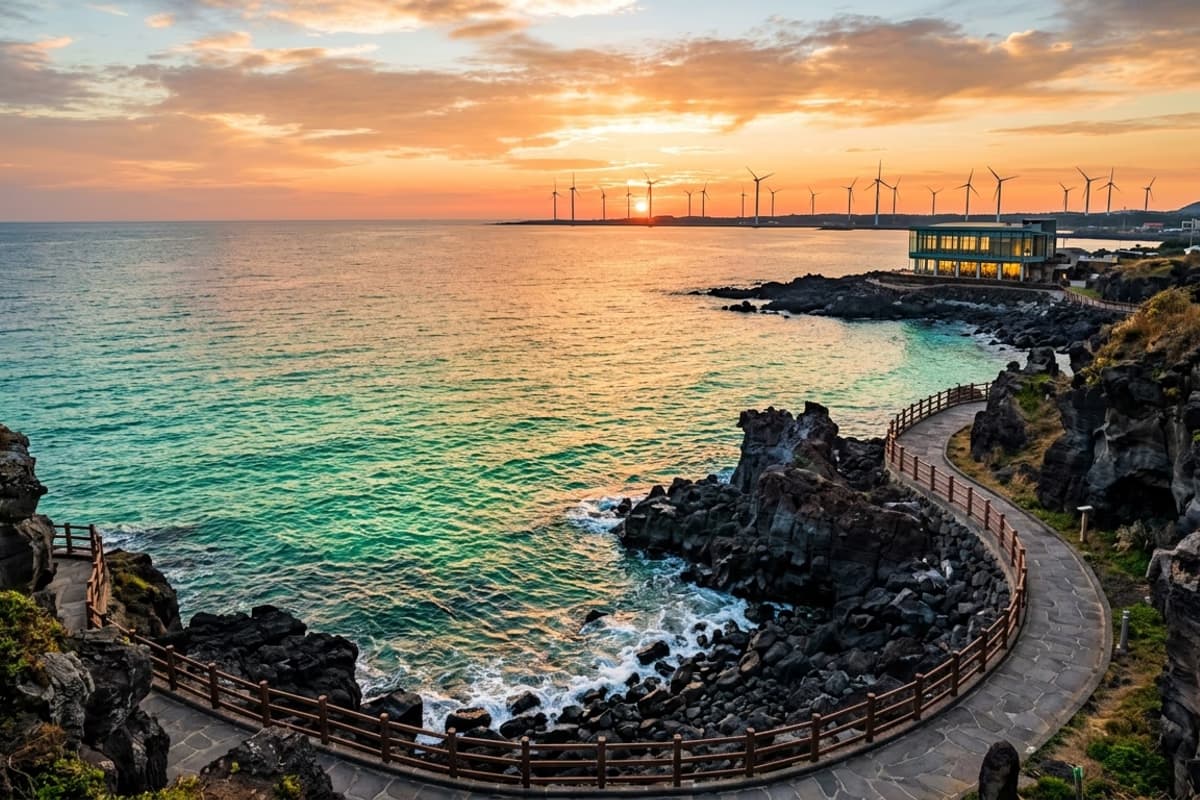
What if the final frame of a coastal walk arrived plated in front of you for dinner? On Jeju's west coast, in the Aewol district, a 1.2-kilometer (0.75-mile) trail along black basalt and emerald water ends not at a viewing platform but at a five-minute drive to a window-facing dining room — where a wild-caught silver hairtail, deboned and whole, arrives braised on your table while the same coastline continues through floor-to-ceiling glass.
This piece is for Western travelers who want both the walk and the meal in a single afternoon — not as two unrelated stops, but as one continuous experience where the texture of the coastline becomes the texture of the meal. I'll tell you what makes wild hairtail different from farmed (it's a more dramatic gap than most non-Korean travelers expect), how a board-frozen fish ends up on a Jeju plate without ever passing through a market, and the timing logic that lets the walk and the dinner share the same light.
The 1.2-Kilometer Walk: Black Basalt Meets Emerald Water
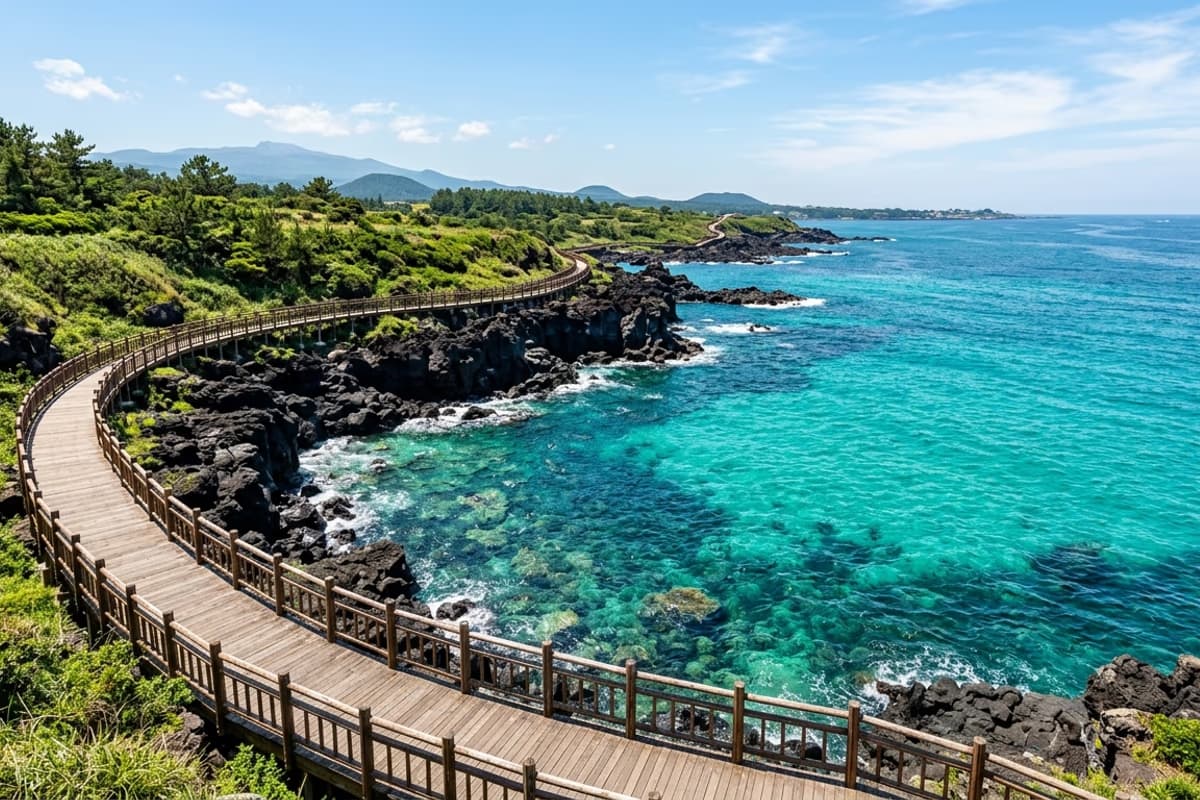
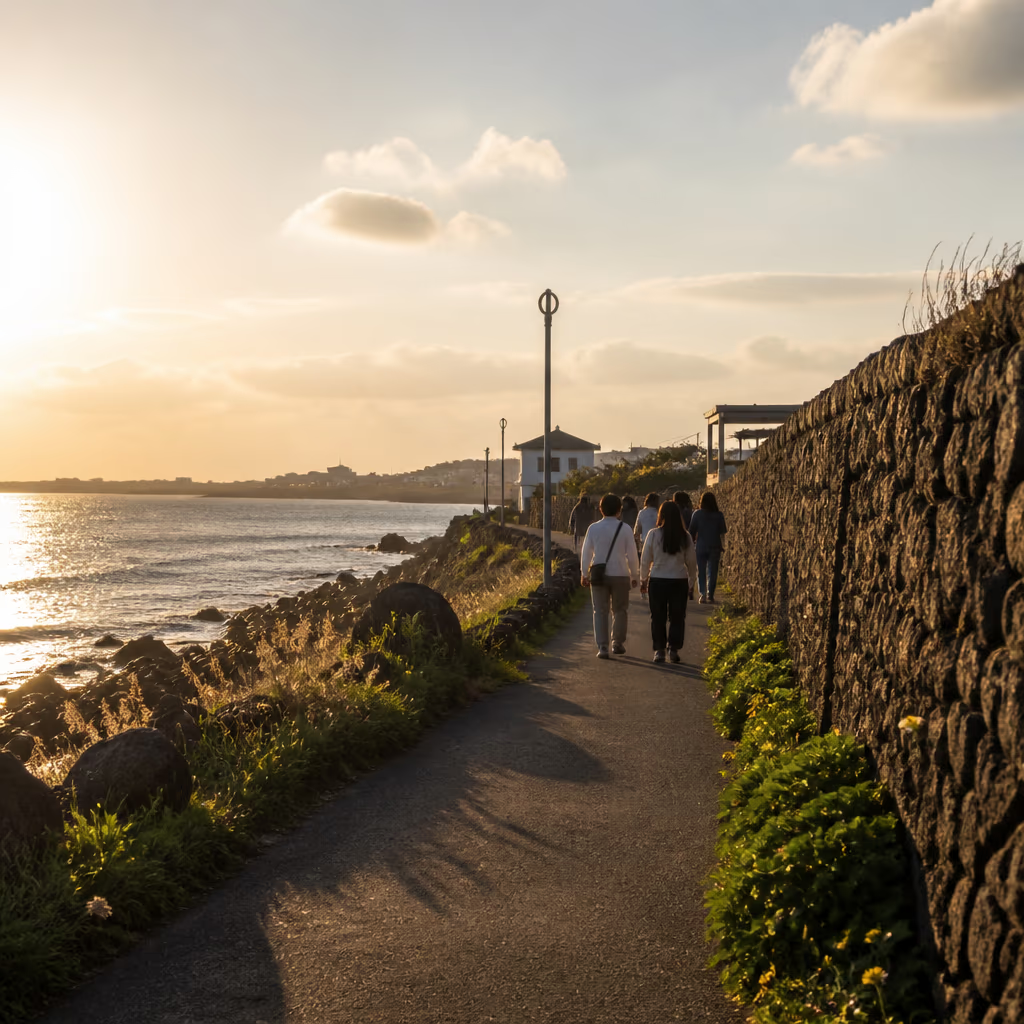
The official name is Handam-haean-ro, but locals and signage use it interchangeably with Handam Coastal Trail and Handam Coastal Walk. All three point to the same 1.2-km path between Gwakji-ri and Handam Harbor, in Aewol-eup on Jeju's western coast. The trail alternates between wooden boardwalks, soft dirt paths, and bare basalt — a small but constant change underfoot that keeps the walk from settling into monotony.
For pace planning: 30 minutes at a casual stroll, 45 minutes if you stop for photos, an hour or more if you sit at one of the small benches with coffee. The trail is flat and accessible for most walkers, including travelers with mobility constraints (parts are wheelchair-friendly via boardwalk sections; the bare basalt sections require uneven footing).
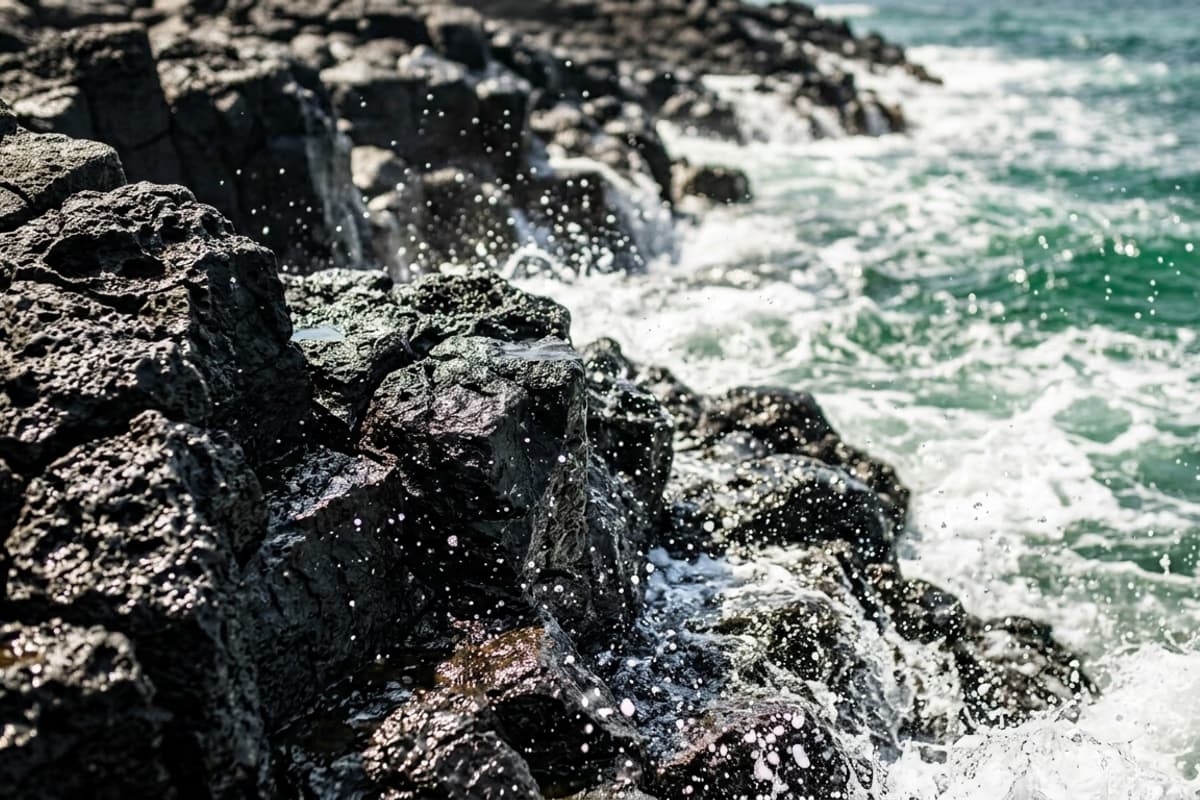
The first impression most travelers describe is the contrast. The basalt is genuinely black — not gray, not charcoal, but the kind of black that absorbs midday light and gives back almost nothing. The water beside it is the opposite: an emerald turquoise that varies from deep marine blue at the rocks to a clear pale teal in the tide pools. According to the Korea Tourism Organization English portal, the coloration comes from clear shallow water over volcanic seabed — a combination found in only a few stretches of Jeju's coastline.
Small cafés and galleries dot the trail. Some have been there for nearly a decade; others opened in the last few years. Many of them are entirely glass-fronted toward the water, so even a 15-minute coffee stop becomes part of the ocean view. There's no rush in this walk — the 1.2 km is meant to be lingered over, not crossed.
What Makes Wild-Caught Hairtail Different (And Why It Matters)
If you've eaten hairtail (also called cutlassfish or ribbonfish) at a restaurant in Tokyo, Bangkok, or Lisbon, there's a strong chance it was farm-raised — usually from southern China or southern Korea's mainland coast. Farm-raised hairtail is softer, sweeter, and uniform in size. Wild-caught hairtail is none of those things, and the difference reaches your tongue immediately.
Wild silver hairtail (called *eun-galchi* in Korean) lives 50 to 300 meters deep in open ocean off Jeju's southwestern waters. Its flesh is firmer, with a clear muscle grain that breaks along the line of the fillet rather than crumbling. The skin holds a true mercury silver — a metallic sheen that fades within hours of death, which is why most non-coastal travelers have never seen it.
Galchibada works only with wild silver hairtail. Farmed fish is never on the menu — not as an "alternative" or "budget" option. This isn't a marketing choice; it's because the entire texture and flavor structure of the restaurant's signature whole-fish braise relies on the firmer wild grain. A farmed substitute would collapse during the long simmer and lose the visual integrity that defines the dish.
Board-Frozen: How a Fish Arrives Without Passing Through a Market
The phrase to remember is *board-frozen* — in Korean, *seondong* (선동). It means a fish is flash-frozen on the boat, within minutes of being pulled from the water, at temperatures below -40°C (-40°F). The fish never passes through a fish market, never sits on auction ice, never warms up between catch and kitchen.
For most Western travelers, this concept is unfamiliar. The mental model is usually "fresh = caught today, brought to market, sold to a chef." But in deep-water species like hairtail, fresh in that sense actually means slightly degraded — the enzymes that soften flesh begin working within 30 minutes of catch. Board-freezing arrests that process completely. When the fish is thawed in the kitchen, the texture is closer to "caught this minute" than anything possible through the conventional supply chain.
Galchibada sources board-frozen wild silver hairtail directly from fishing boats. The fish bypasses Jeju's wholesale auction at Hallim and Seogwipo and arrives at the kitchen with the chain still unbroken. In the kitchen, the fish is thawed slowly under refrigerated conditions, and small lateral pin bones are removed individually with tweezers — a labor-intensive step that produces the smooth, almost bone-free experience at the table.
Why Whole-Fish Braising Holds Together
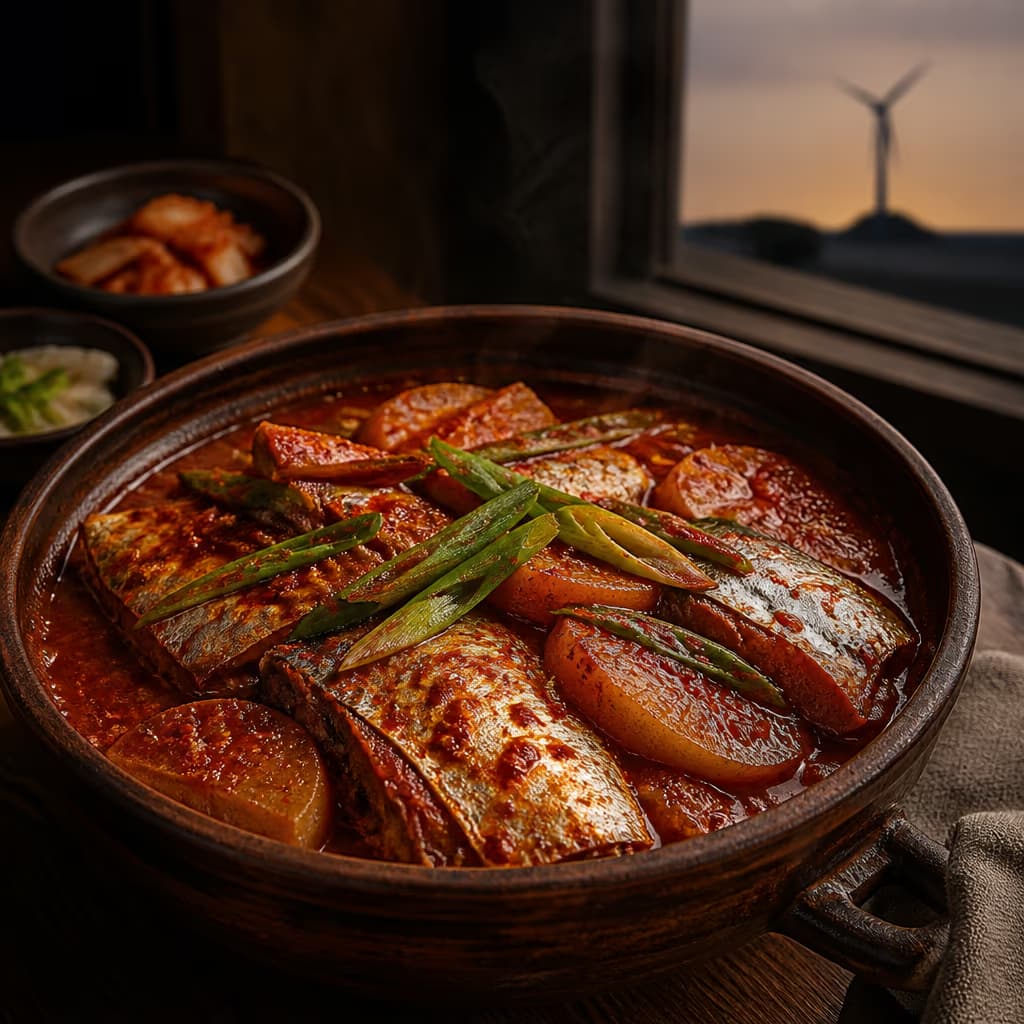
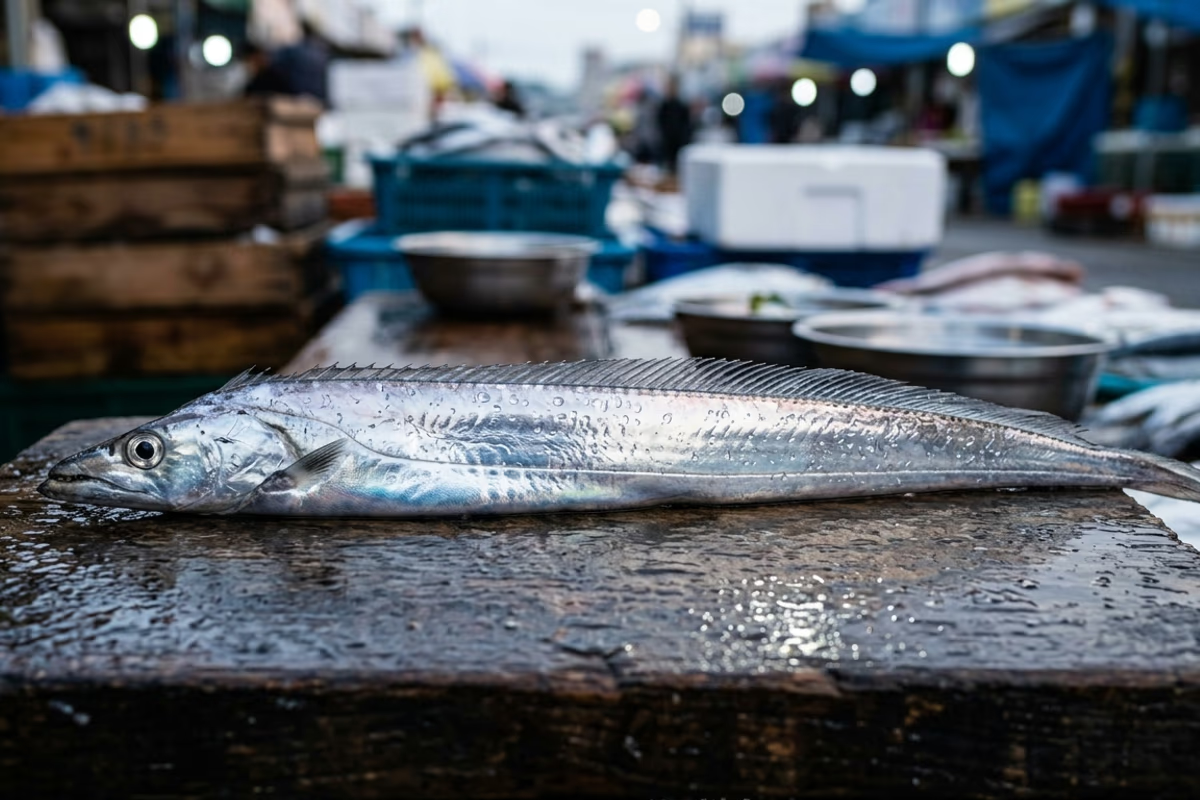
The signature dish is a whole-fish braise — *tong-galchi-jorim* in Korean. A single hairtail, pin-deboned, is placed in a wide pot with daikon radish, tofu, baby spinach, and a sauce built around Korean red chili paste, soy, garlic, and a small amount of natural fruit-derived sweetness. Forty minutes of slow simmer.
Three things happen during that simmer that wouldn't happen with farmed fish:
1. The fillet holds its shape. Wild hairtail muscle is firm enough to remain intact across the long cooking time. You can see the spine line, the lateral grain, and the silver skin patterns on your plate.
2. The flavor concentrates outward. As the daikon absorbs the sauce, the fish releases brine and umami into the broth. The reverse-osmosis exchange between fish and vegetables only works when the fish doesn't disintegrate first.
3. Each part of the fish tastes different. The dorsal section near the spine is firm and savory. The ventral section near the belly is softer, slightly fatty. The tail is dense and concentrated. One whole fish on one plate gives you three textural experiences, not one.
A small bowl of *tot-bap* (rice cooked with sea sargassum) is served alongside. The traditional way to eat it: spoon a small amount of the braising broth over the rice, mix gently, and alternate bites between the rice and the fish. The seaweed in the rice picks up the chili sauce without overwhelming it — a quiet contrast to the heat.
The 5-Minute Bridge: From Trail's End to Window Seat
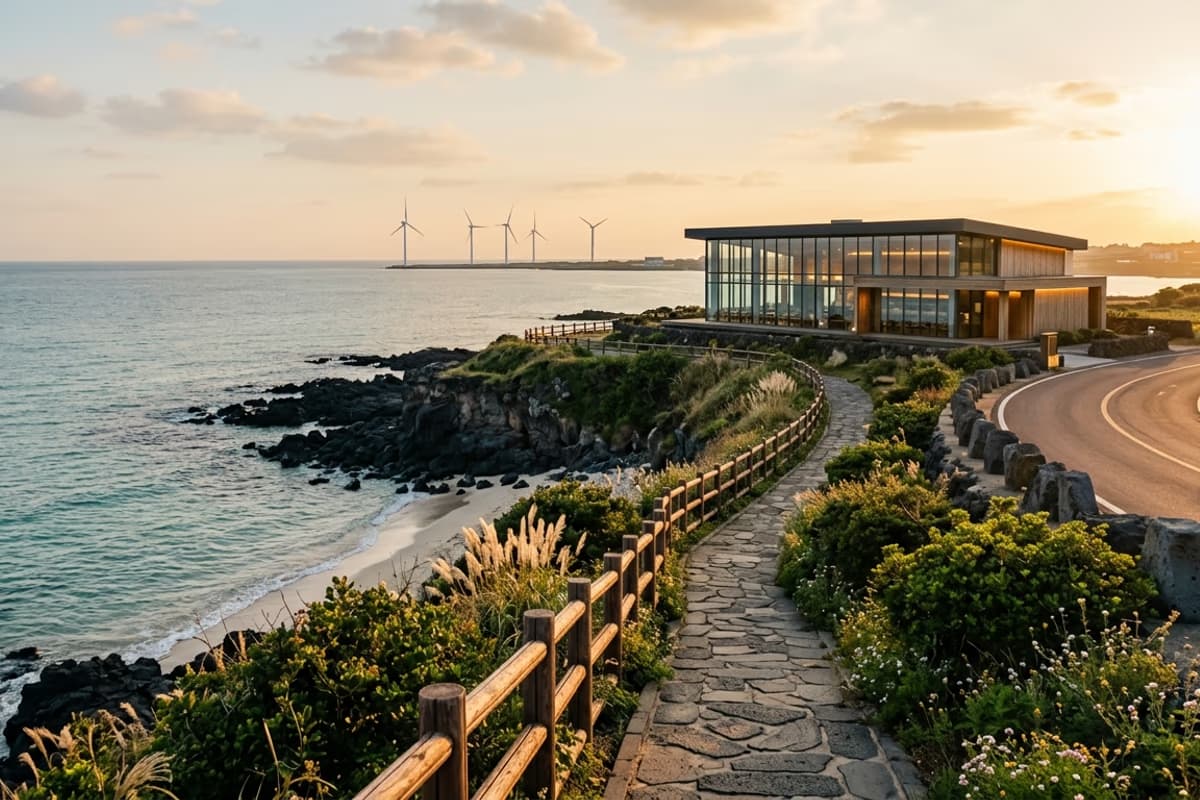
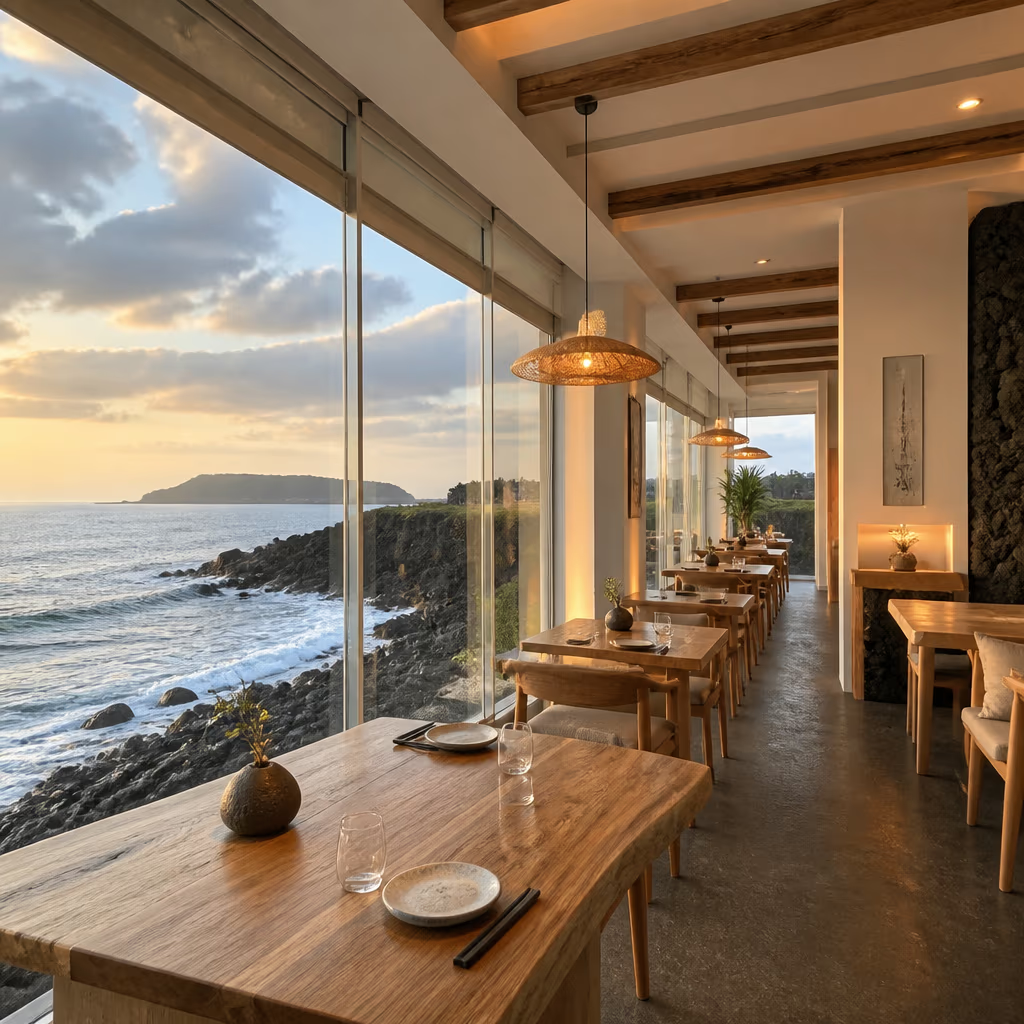
Once you reach the end of the trail at Handam Harbor, Galchibada is 5 minutes by car or about 25 minutes on foot. The walking route follows Iljuseo-ro 1132 (the main coastal road) briefly, then turns back toward the coast — a short connector that keeps the same ocean within view almost the entire time.
By public transport: a local bus from a stop near Handam Harbor reaches the area near Galchibada in about 10 minutes. Schedules are at the Jeju Bus Information System. By car, parking is available at the public lot near the harbor (free, about 30 spaces) and at the restaurant (free, on-site).
Many travelers leave their car at the harbor lot, walk the 25 minutes to the restaurant, and dinner-walk back afterward — which lets the same coastline serve as both the appetizer and the digestif of the meal.
When to Walk, When to Sit Down: Timing the Light
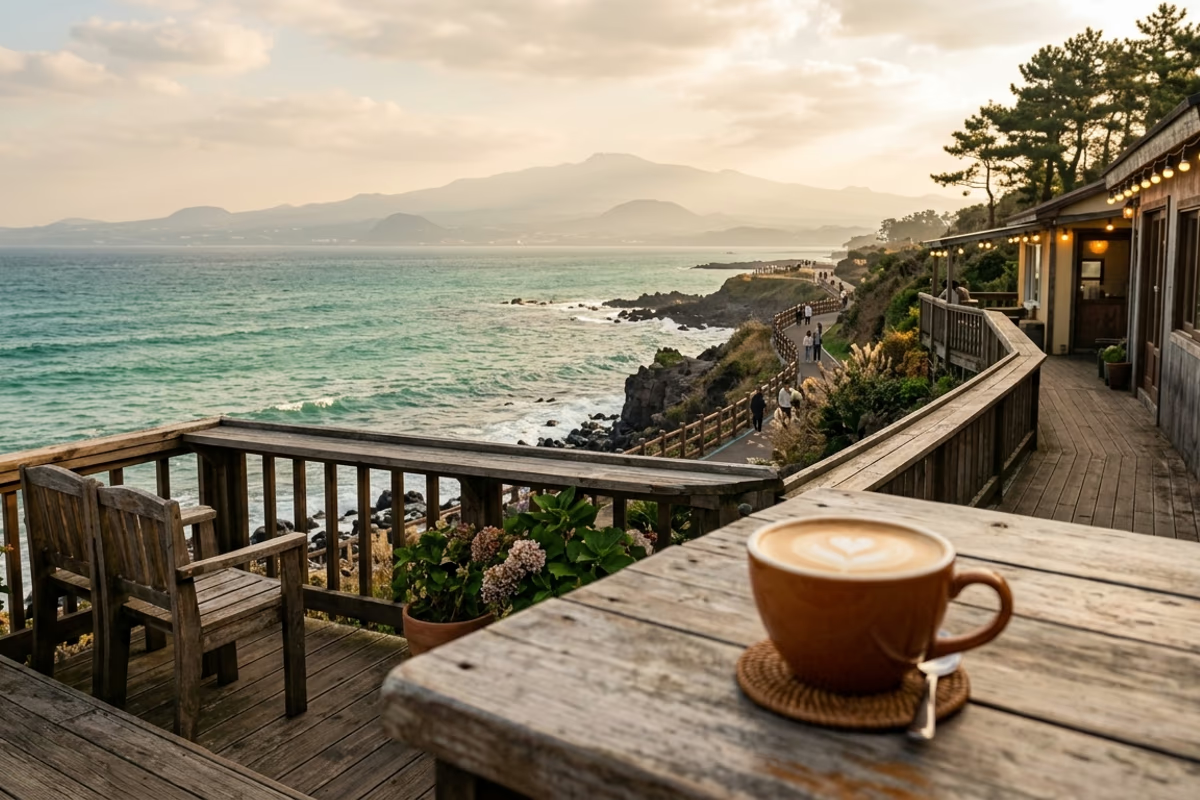
Two timings are worth highlighting.
The late-morning loop: arrive at the trailhead around 11 a.m., walk for 30 to 40 minutes, pause for coffee at one of the cafés, then take a late lunch at the restaurant around 1 p.m. This is the relaxed option — the basalt is still warming, the cafés are quiet, and the lunch crowd at Galchibada is light enough that you can take a window seat without reserving.
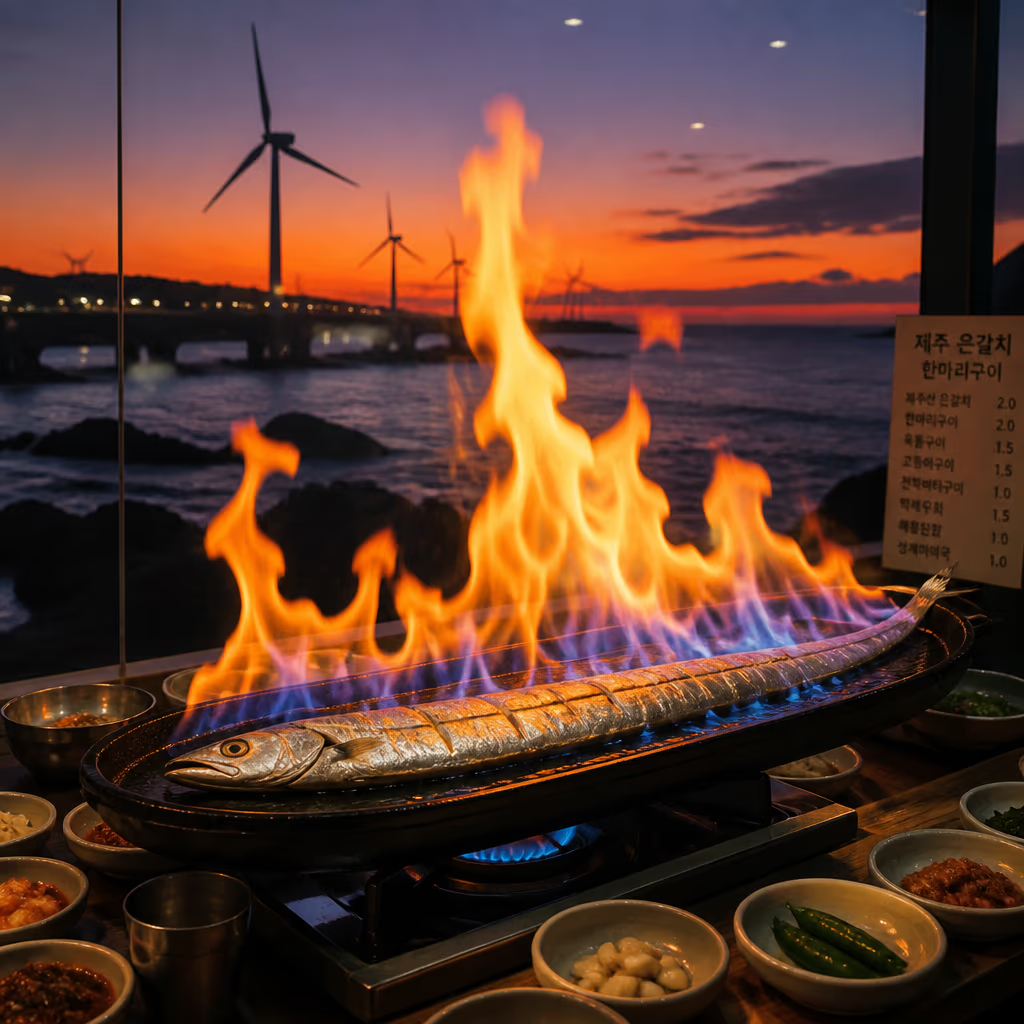
The late-afternoon loop: arrive at 4 p.m., walk slowly through the lower-angle light, and sit down for dinner around sunset. Sunset times for your travel date are at the Korea Astronomy and Space Science Institute. The restaurant's west-facing window seats catch the sun directly between 30 minutes before sunset and the last light. This is the dramatic option — the trail's emerald deepens, the basalt takes on warmer shadow lines, and the dining room's floor-to-ceiling glass holds the same sky you just walked under.
Either timing works. The shared element is that the walk and the meal share light — they're never disconnected scenes. The 1.2 km of coastline and the 40 minutes of simmer happen on the same axis.
Frequently Asked Questions
How long is the Handam coastal walk and how flat is it?
1.2 kilometers (0.75 miles), flat throughout, taking about 30 minutes at a casual pace. Wooden boardwalk sections are wheelchair-accessible; bare basalt sections require uneven footing.
What does "wild-caught" actually mean for hairtail at Galchibada?
Wild silver hairtail caught in open ocean off Jeju's southwestern waters, board-frozen on the boat within minutes of catch (a Korean technique called *seondong*), bypassing the wholesale market and arriving at the kitchen with the temperature chain unbroken. Farmed hairtail is never used.
Is the whole-fish braise spicy?
Moderately. It's built around Korean red chili paste (gochujang) with natural fruit-derived sweetness, so the heat is present but balanced — not the burning spice level of, say, Sichuan. Mild options can be requested.
How do I get from the Handam trail to Galchibada?
5 minutes by car, or 25 minutes on foot via Iljuseo-ro 1132 and the coastal connector road. Many travelers leave their car at the public harbor lot (free, ~30 spaces) and walk both ways.
What's the best time of day to combine the walk and the meal?
Two options work well: the late-morning loop (arrive 11 a.m., walk, café break, lunch at 1 p.m.) or the late-afternoon loop (arrive 4 p.m., walk slowly, dinner at sunset with west-facing window seats). Both let the walk and the meal share the same light.
Frequently Asked Questions
- How long is the Handam coastal walk and how flat is it?
- 1.2 kilometers (0.75 miles), flat throughout, taking about 30 minutes at a casual pace. Wooden boardwalk sections are wheelchair-accessible; bare basalt sections require uneven footing.
- What does "wild-caught" actually mean for hairtail at Galchibada?
- Wild silver hairtail caught in open ocean off Jeju's southwestern waters, board-frozen on the boat within minutes of catch, bypassing the wholesale market and arriving at the kitchen with the temperature chain unbroken. Farmed hairtail is never used.
- Is the whole-fish braise spicy?
- Moderately. It's built around Korean red chili paste (gochujang) with natural fruit-derived sweetness, so the heat is present but balanced. Mild options can be requested.
- How do I get from the Handam trail to Galchibada?
- 5 minutes by car, or 25 minutes on foot via Iljuseo-ro 1132 and the coastal connector road. Many travelers leave their car at the public harbor lot (free, ~30 spaces) and walk both ways.
- What's the best time of day to combine the walk and the meal?
- Two options work well: the late-morning loop (arrive 11 a.m., walk, café break, lunch at 1 p.m.) or the late-afternoon loop (arrive 4 p.m., walk slowly, dinner at sunset with west-facing window seats).
- How long is the Handam coastal walk and how much time does it take?
- The Handam coastal road (officially Handam Haean-ro, with the boardwalk administratively called Handam Haean Sanchaek-ro) runs about 1.2 km from Gwakji-ri to Handam Port. The level wooden deck and earthen path can be walked end-to-end in about 30 minutes at an easy pace — a short, even loop that works fine for families with children or visitors travelling with older companions.
- Are Handam Haean-ro and Handam Haean-do the same place?
- Yes — three different names for the same stretch of coast. Handam Haean-ro is the official road name, Handam Haean Sanchaek-ro is the boardwalks administrative designation, and Handam Haean-do is the most widely used search keyword in everyday usage. Searching with any of the three lands on the same 1.2 km coastal stretch.
- Is parking available at Galchibada Aewol?
- A dedicated parking lot sits right next to the restaurant building, so visitors arriving by car can park without trouble. For visitors walking from Handam, the easiest route is to leave the car at the Handam Port public car park, enjoy the coastal walk, and arrive at the restaurant on foot.
- After the Handam walk, is the lunch slot a good time for a hairtail braise?
- Yes. The most natural flow is to arrive at Handam around 11 a.m., enjoy the walk for 30 to 40 minutes, and wrap up with a late lunch at Galchibada Aewol. In the late afternoon, sitting at a floor-to-ceiling window seat just before sunset and receiving the dish with the evening glow is another route worth recommending.
5 minutes from the trail's last basalt to the window seat
The walk and the meal, on the same axis of light
When the last basalt step releases your foot at the harbor's edge, the dining room is five minutes away — same coastline through the glass, same lateral light across the table. A whole wild-caught hairtail arrives braised on a plate where the texture of the walk continues as the texture of the meal.
5 minutes by car or 25 minutes on foot from Handam to Galchibada →