Jeoji Arts Village — 14 Museums Tucked Inside a Quiet Hamlet, Hangyeong-myeon
A 25-Year Artist-in-Residence Layer on Jeju's Western Plain, From Kim Tschang-yeul to the Korean Modern Art Museum
Jeoji Arts Village is a roughly one-square-kilometre cultural cluster in Jeoji-ri, Hangyeong-myeon, developed since 1999 through a municipally led artist-residence program. About 14 museums, craft studios, and artist studios — including the Jeju Museum of Contemporary Art and the Kim Tschang-yeul Museum — sit along level walking paths that can be looped in 1 to 2 hours on foot. The site pairs naturally with nearby Jeoji Oreum, and Galchibada Aewol sits about 35 minutes east by car.
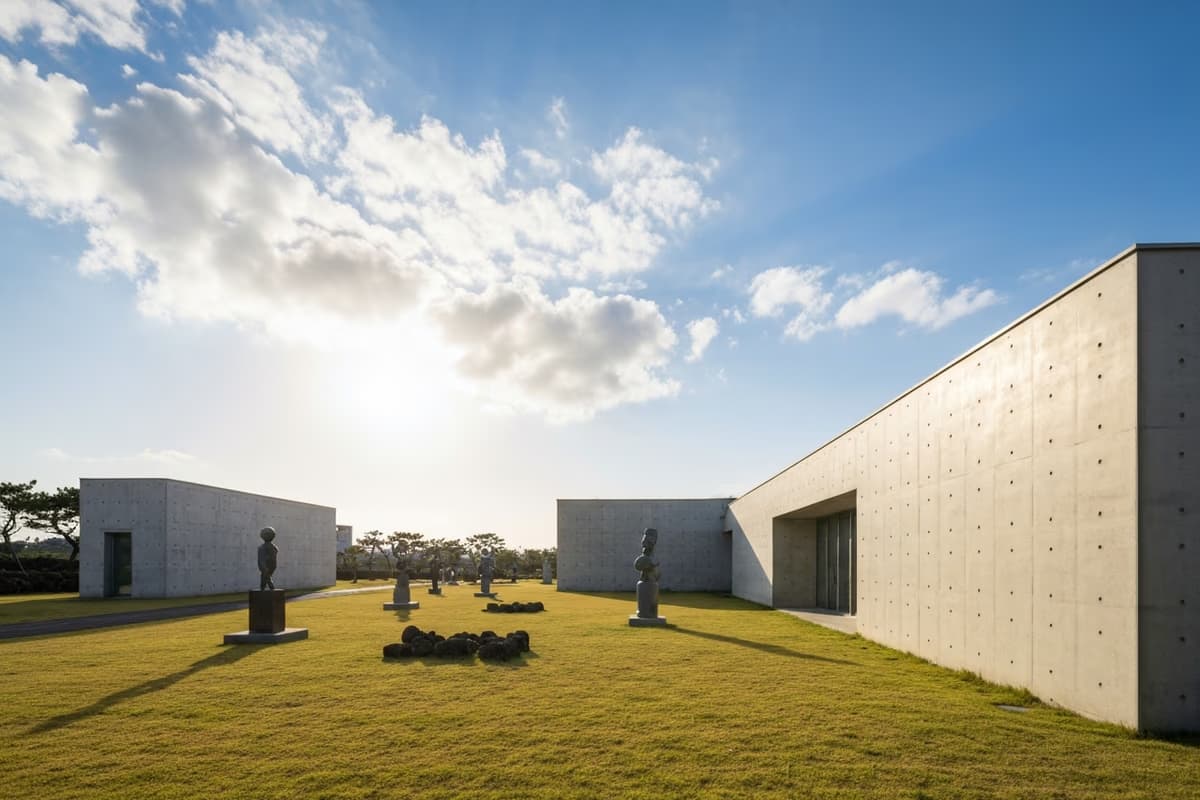
A museum doesn't obviously belong on a Jeju itinerary. The blue sea, the black basalt, the grass tops of the oreum already fill the visual field, and standing in front of a single canvas tends to get squeezed out. Yet in the middle of Hangyeong-myeon, on the lower slope of Hallasan, a small village has set aside exactly that kind of room. Jeoji Arts Village.
Administratively the site sits in Jeoji-ri, Hangyeong-myeon, Jeju City. The first museum buildings arrived in 1999, when the municipal government opened a long-running artist-in-residence program here. One artist at a time, one museum at a time, the cluster grew. About 25 years later, roughly 14 museums, craft studios, and artist studios are scattered across the village. For Western visitors familiar with the artist-village pattern of Saint-Paul-de-Vence in southern France or Marfa, Texas, Jeoji reads as the East Asian peer — a small inland community built around contemporary art, with a slow walking rhythm that rewards extended visits.
Fourteen Quiet Frames Across the Hamlet
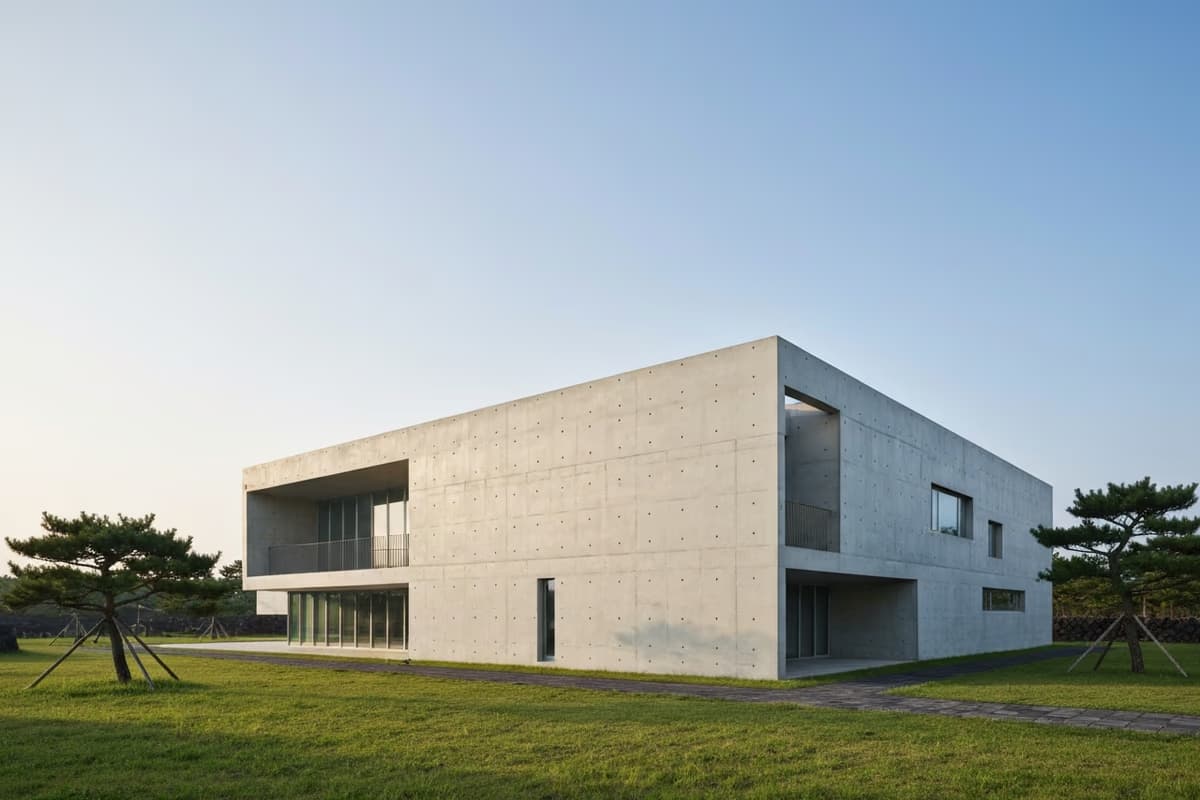
"Museum complex" undersells the layout. The cluster reads less as a single campus than as a series of small museums scattered through a level rural village. The footprint runs about a square kilometre, but the actual walking route loops in 1 to 2 hours at an easy pace.
The two anchors are the Jeju Museum of Contemporary Art and the Kim Tschang-yeul Museum, sitting opposite each other at the cluster's centre. The route connecting them lets you meet two distinct artistic textures within a single visit. Around them sit a small history museum, a photography gallery, ceramics and glass studios, and a handful of individual artist studios along the path. Seasonal opening varies; checking with the Hangyeong-myeon information desk or Visit Jeju in English before the visit saves a wasted detour.
Entry fees and operating hours vary by venue. Some sites are free; others charge a separate entrance. An integrated pass is issued seasonally, so asking at the first stop is the efficient call.
The Jeju Museum of Contemporary Art and the Kim Tschang-yeul Museum
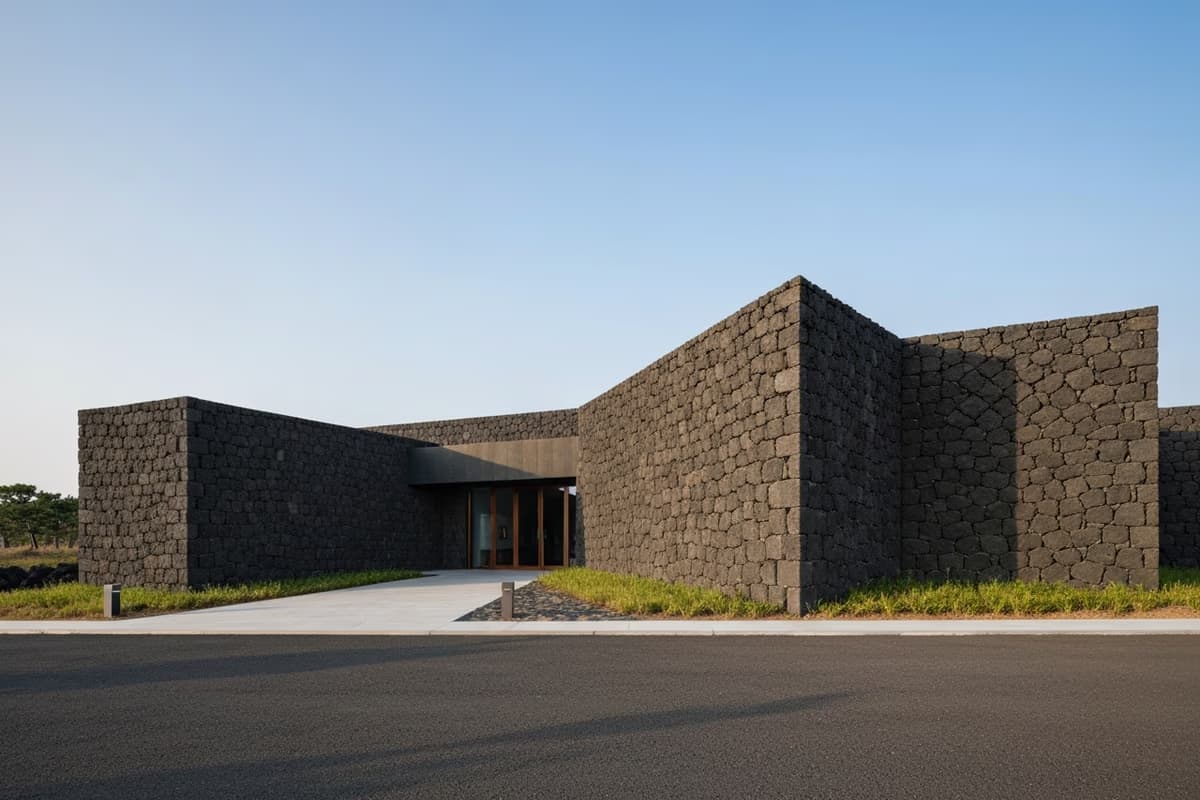
The Jeju Museum of Contemporary Art is one of the cluster's primary spaces. The collection centres on artists from Jeju and frames Korean contemporary art more broadly, with rotating curated exhibitions each season. The exposed-concrete exterior reads quietly against the grass slope behind it.
Across the path sits the Kim Tschang-yeul Museum, which carries a different register. Kim Tschang-yeul is widely known in Korean art history as "the water-drop painter" — a six-decade practice centred on a single subject, the precise rendering of a water droplet on a flat surface. The museum holds a permanent collection that lets you see his major works and the gradual evolution of his approach across decades. The architecture echoes the work: matte black basalt walls, plain and weighty on the outside, with the white canvases and quiet droplets opening up only when you step inside.
The two museums sit five minutes apart on foot. Time in front of the work is not short, so visiting them in sequence quietly fills a half day.
The Paths, the Studios, the Texture Between
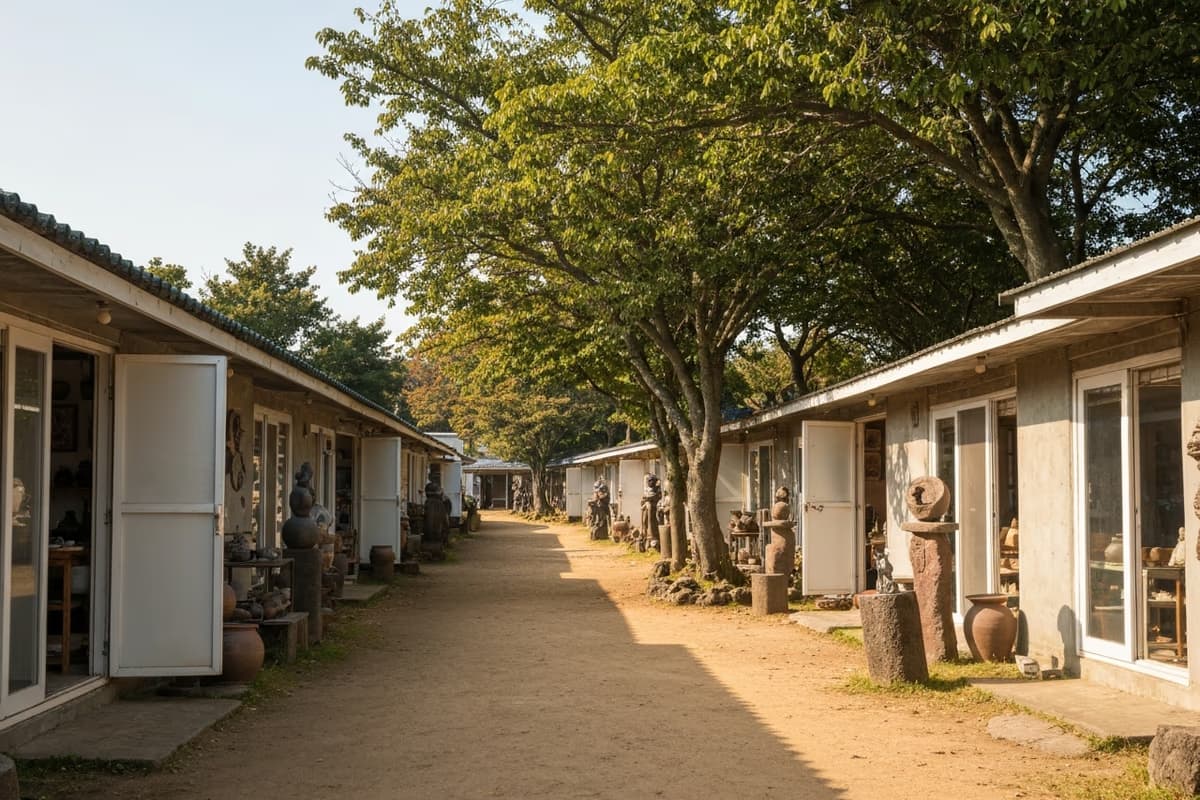
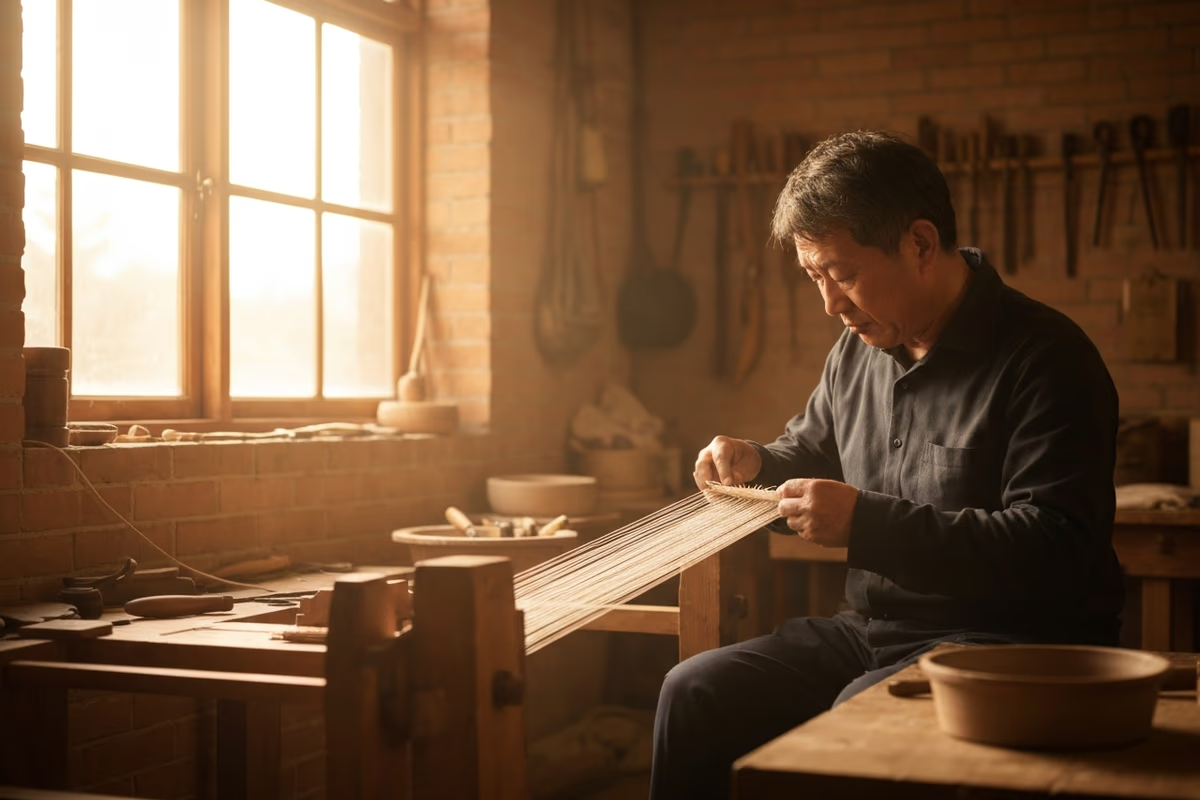
Past the two anchors, deeper inside the cluster, individual artist studios and craft workshops line the paths. The ceramics studios occasionally run short hands-on classes by season; the glass studio sells work the artist made on-site. A standing photography exhibit at one of the studios documents Jeju landscape work by an artist who has been recording the island for decades.
The paths are mostly level earthen track with short boardwalk segments — accessible enough for families with children or visitors travelling with older companions. Benches and small rest areas sit along the route, and a small cafe inside the cluster works well for a break in the middle of a longer walk.
Artist studios sometimes operate short hours or on reservation only. Confirming the day's opening in advance helps. Photography inside the studios is often restricted; respecting the working space — keeping voices low — makes a single visit deeper.
Pairing With Jeoji Oreum
Right beside Jeoji Arts Village sits Jeoji Oreum. The summit is 239 metres above sea level, the trail roughly 1 km long, and reaching the top takes about 30 minutes at an easy pace. The crater rim is still well defined at the summit, and the view opens across the Hangyeong plain to the sea on the horizon.
Stacking a short oreum climb after the museum loop puts both human-shaped and nature-shaped textures into the same half-day route. The usual rhythm: arrive at Jeoji around 10–11 a.m., loop the two anchor museums and a couple of studios, take a late lunch at a small village restaurant, and climb the oreum around 1–2 p.m. for a brief panoramic view. From there it's time to leave Hangyeong-myeon and shift east.
35 Minutes East — From the Village to the Coast
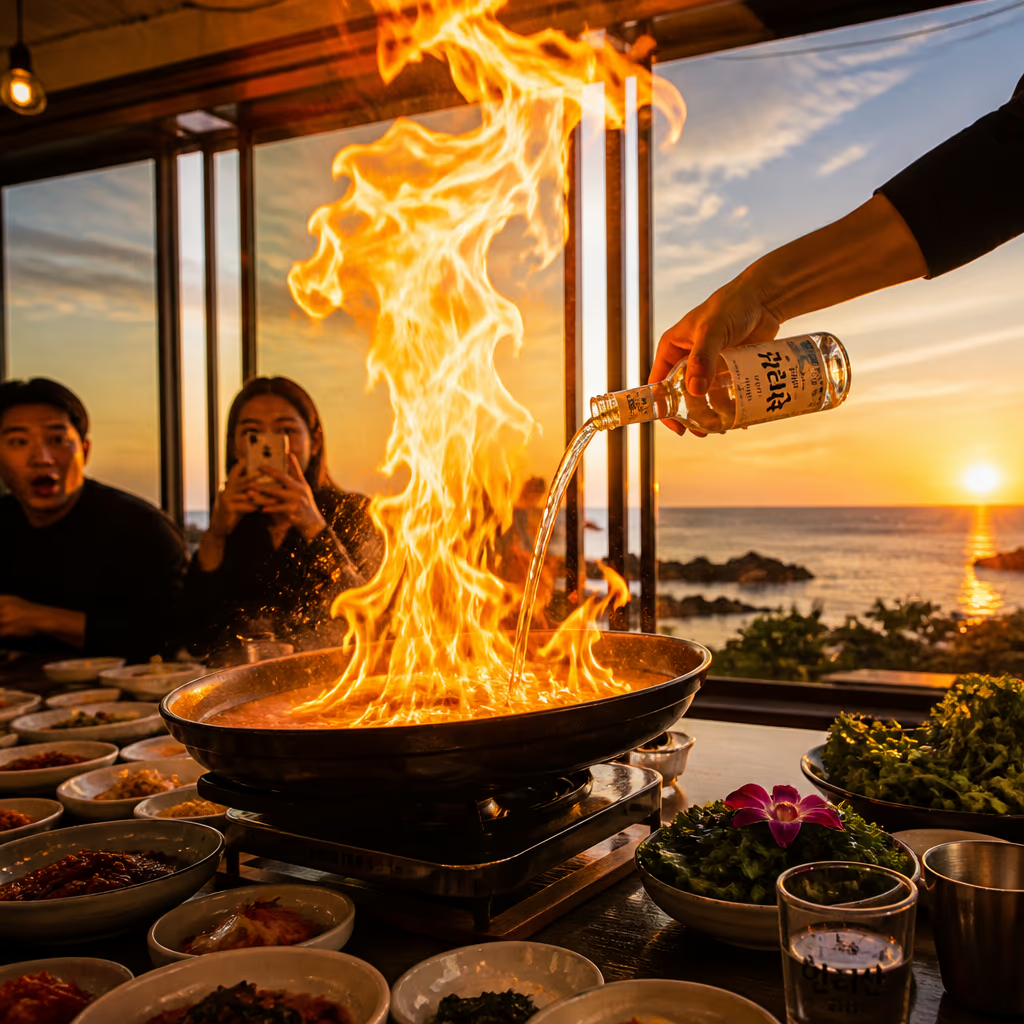
From the Jeoji Arts Village car park, Route 1132 (Iljuseo-ro) connects with Route 1135 (Pyeonghwa-ro), putting Galchibada Aewol → about 35 minutes east. The texture artists have built over 25 years and the texture of bones tweezered out at dawn meet in a single bowl — a meeting at the end of the walk.
Museums and restaurants are not the same kind of room, but they share one thing: a measured place that takes time, hands, and care, and welcomes one visitor at a time. A whole silver hairtail flaking along its natural grain in front of the ocean carries that day's village walk into a single dish.
Getting There and Practical Notes
The address is Jeoji-ri, Hangyeong-myeon, Jeju City. From Jeju International Airport, the drive runs about an hour; from the Jeju Intercity Bus Terminal, the Hangyeong-bound bus puts you in roughly 1 hour 30 minutes. Real-time bus information sits at Jeju Bus Information System, and seasonal exhibition updates are listed on the Visit Jeju English portal.
Parking is easiest at the public lot near the village information centre. The site is large, but the lots sit close to the two anchor museums, so leaving the car in one place and walking the loop is the efficient pattern.
A short packing note. Shade is limited along some stretches — a hat and sunscreen help in midday visits. The path is level but not short, so closed shoes work better than sandals. Photography is restricted inside many of the museums; checking the entrance notice on arrival is the safe call. When visiting artist studios, keep the conversation quiet — the studios are working spaces, not galleries.
The unusual thing about Jeoji is that on an island defined by landscape, this is a route shaped by human hands. Fourteen museums and studios grown over 25 years inside a small village, with a small oreum standing beside them carrying the same view at a different angle. Thirty-five minutes east at the end of that walk, another room shaped by hands every dawn opens onto a plate facing the sea. One careful place meeting another careful place — a rare itinerary on the same island.
Frequently Asked Questions
- What museums are at Jeoji Arts Village?
- The Jeju Museum of Contemporary Art and the Kim Tschang-yeul Museum sit opposite each other at the cluster's centre. Around them are a small history museum, photography gallery, ceramics and glass studios, and individual artist studios — about 14 sites in total. Opening varies by season; checking with the Hangyeong-myeon information desk before the visit saves a wasted detour.
- How long does the village loop take?
- The level walking path loops in about 1 to 2 hours at an easy pace. Taking the two anchor museums slowly and adding a studio or two fills a half day naturally.
- What are the entrance fees?
- Fees vary by venue and operator. Some sites are free; others charge a separate entrance. An integrated pass is issued seasonally — asking at the information centre first is the efficient call.
- Can I pair Jeoji Arts Village with Jeoji Oreum?
- Jeoji Oreum sits right beside the village. The summit is about 1 km away and takes 30 minutes at an easy pace, with a view across the Hangyeong plain to the sea on the horizon. Adding a short oreum climb after the museum loop is the standard pairing.
- How long is the drive to Galchibada Aewol?
- Route 1132 (Iljuseo-ro) and Route 1135 (Pyeonghwa-ro) put Galchibada Aewol about 35 minutes east. The standard pattern is to close the museum walk with a late afternoon at the floor-to-ceiling ocean-view seating over braised or grilled wild silver hairtail.
- Is Jeoji Arts Village suitable for families with children?
- The level paths suit family visits well, and some ceramics and glass studios run short hands-on classes by season. Inside the museums, keeping voices low is the standard etiquette for protecting the works.
After walking 14 museums, a 35-minute drive to the table
From the texture carefully built up to a table set with the same care
When the last frame of the museum walk has settled and a short fatigue starts to gather in the legs, it is time to shift. Thirty-five minutes east on Iljuseo-ro and Pyeonghwa-ro, a different table — built by another set of careful hands — opens through floor-to-ceiling glass onto the sea. The texture grown over 25 years in the village meets the texture tweezered at dawn, on a single plate.
About 35 minutes from Jeoji Arts Village to Galchibada Aewol →