A Son's Promise — How Galchibada Began in Aewol, Jeju
Eighty Bones, One Fish, One Mother — The Director's Cut of a Restaurant That Started With a Single Handwritten Line
Galchibada in Aewol began as a private promise a son made to his mother. After a single small bone scared her away from a fish she had loved for seventy years, he started waking before dawn to debone hairtail by hand — roughly eighty bones per fish, lifted out one by one with tweezers. The restaurant grew out of that practice. This article is the director's cut of how a written line in a notebook became a kitchen on the Aewol coast, told slowly enough to keep the bones invisible and the meat intact.
[HERO_CAROUSEL:/images/jeju-mother-promise-flashback-cottage.avif|/images/jeju-mother-promise-flashback-village.avif|/images/jeju-mother-promise-flashback-flowergarden.avif|/images/jeju-mother-promise-flashback-fields.avif|/images/jeju-mother-promise-flashback-boat.avif|/images/jeju-mother-promise-flashback-kitchen.avif|/images/jeju-mother-promise-old-photo.avif|/images/jeju-mother-promise-mother-side.avif|/images/jeju-mother-promise-mother-hand-old.avif|/images/jeju-mother-promise-silence.avif|/images/jeju-mother-promise-promise.avif|/images/jeju-mother-promise-handwritten.avif|/images/jeju-mother-promise-hero.avif|/images/jeju-mother-promise-knife-board-wide.avif|/images/jeju-mother-promise-galchi-deep.avif|/images/jeju-mother-promise-galchi-anatomy.avif|/images/jeju-mother-promise-galchi-bones.avif|/images/jeju-mother-promise-aewol-boat.avif|/images/jeju-mother-promise-ice-galchi.avif|/images/jeju-mother-promise-clock-430.avif|/images/jeju-mother-promise-dawn.avif|/images/jeju-mother-promise-dawn-wide.avif|/images/jeju-mother-promise-knife-blade.avif|/images/jeju-mother-promise-callus.avif|/images/jeju-mother-promise-tweezers.avif|/images/jeju-mother-promise-work-hands.avif|/images/jeju-mother-promise-table.avif|/images/jeju-mother-promise-jorim-close.avif|/images/jeju-mother-promise-mother-tears.avif|/images/jeju-mother-promise-allmothers.avif|/images/jeju-mother-promise-restaurant-ext.avif|/images/jeju-mother-promise-interior.avif|/images/jeju-mother-promise-ocean-glass.avif|/images/jeju-mother-promise-market.avif|/images/jeju-mother-promise-son-mother.avif|/images/jeju-mother-promise-empty-table-dawn.avif|/images/jeju-mother-promise-feast-wide.avif]
<video autoplay muted loop playsinline preload="metadata" poster="/images/mother-promise-poster.jpg" style="width:100%;height:auto;border-radius:14px;margin:32px 0;display:block;box-shadow:0 18px 60px rgba(244,114,182,0.12),0 8px 28px rgba(96,165,250,0.10);"><source src="/videos/mother-promise-story.webm" type="video/webm"><source src="/videos/mother-promise-story.mp4" type="video/mp4">A son's promise to his mother — thirty-two seconds at four-thirty in the morning</video>
Some vows are written not in the mouth but in the hands.
There are corners of a person you only see after long watching, and there are textures of a craft you only understand after long touching. What follows is about both of those things — how a private line a son wrote for his mother grew further than its first reader, and what happened in the dawns and the small bones and the calluses between.
1. Silence
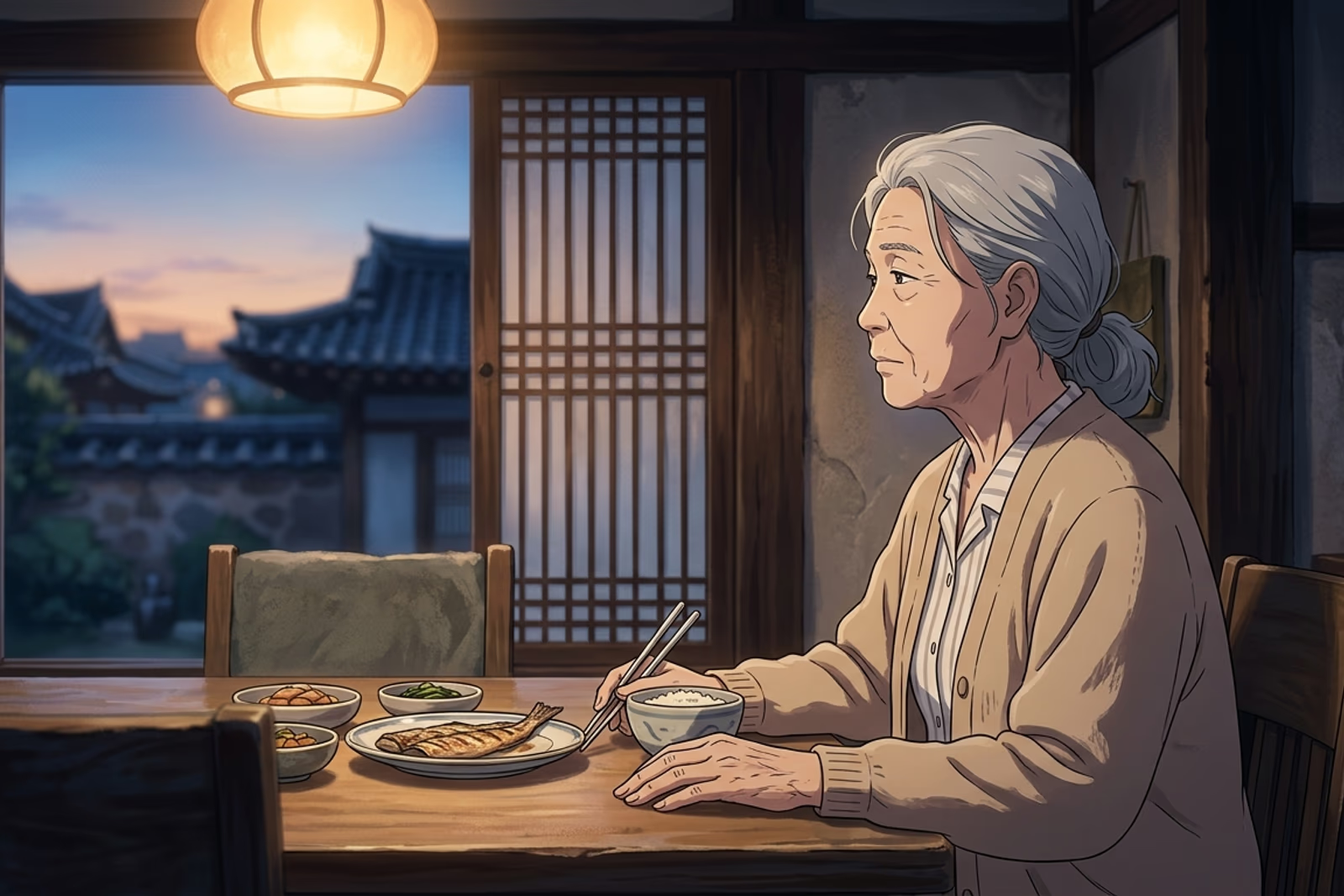
The first evening she declined, the fish on the table looked the way it always had — grilled to the right gold, set down without ceremony. She studied it for a while, then quietly set her chopsticks back down.
"Tonight I'll just have rice and a little kimchi."
That was all. No complaint. No request. Her sentences had always been like that — only as long as the next breath required, and never longer. Seventy years of living had taught her to ask for nothing aloud. Behind the short phrases, though, a whole life was sitting still.
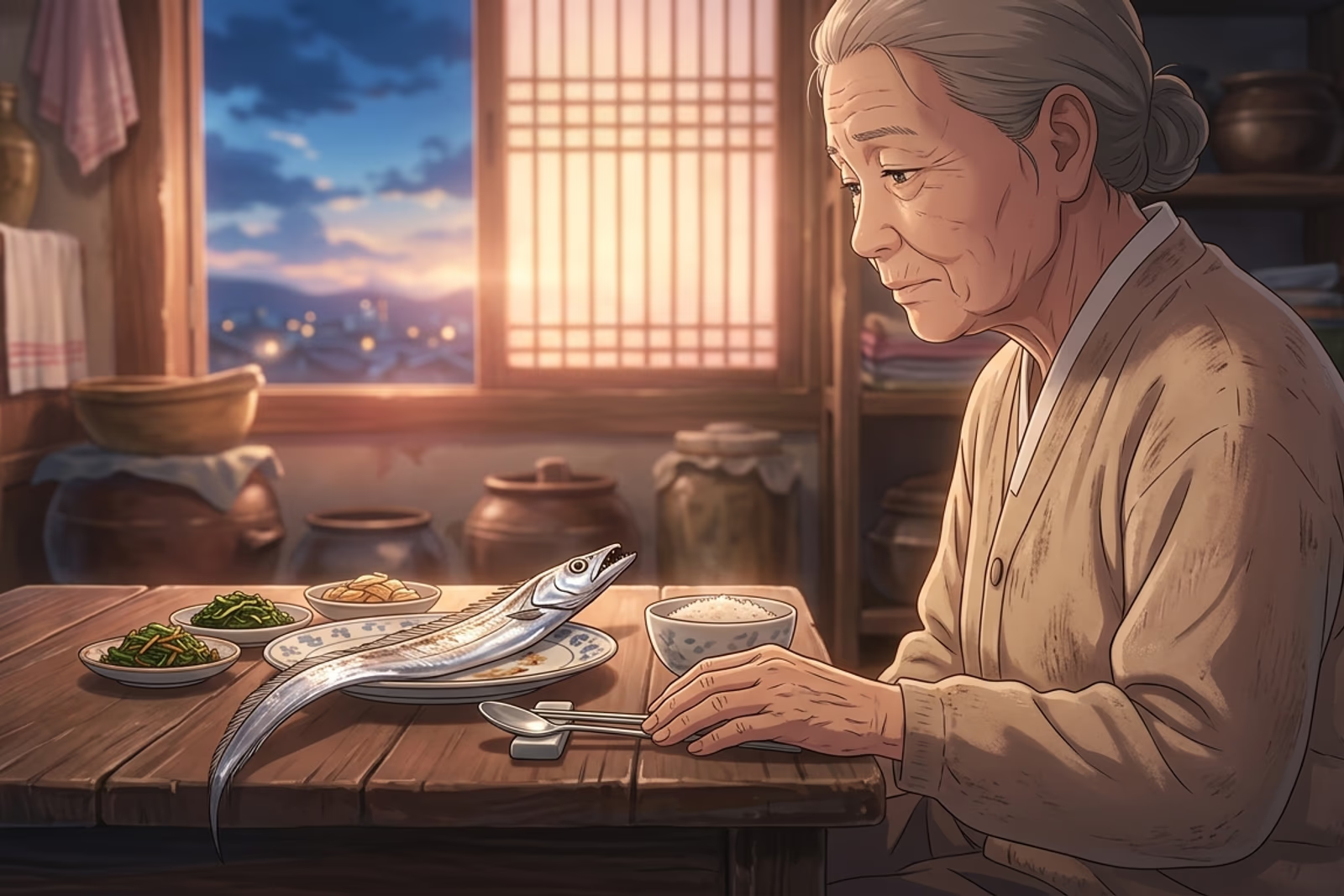
So that's what silence means, I thought. I learned the word that night.
Later I would find out — about a year before, a single thread of bone had lodged somewhere in her throat. She had endured several days on rice gruel without telling anyone. After that, she had quietly removed a dish she had loved all her life from her own table.
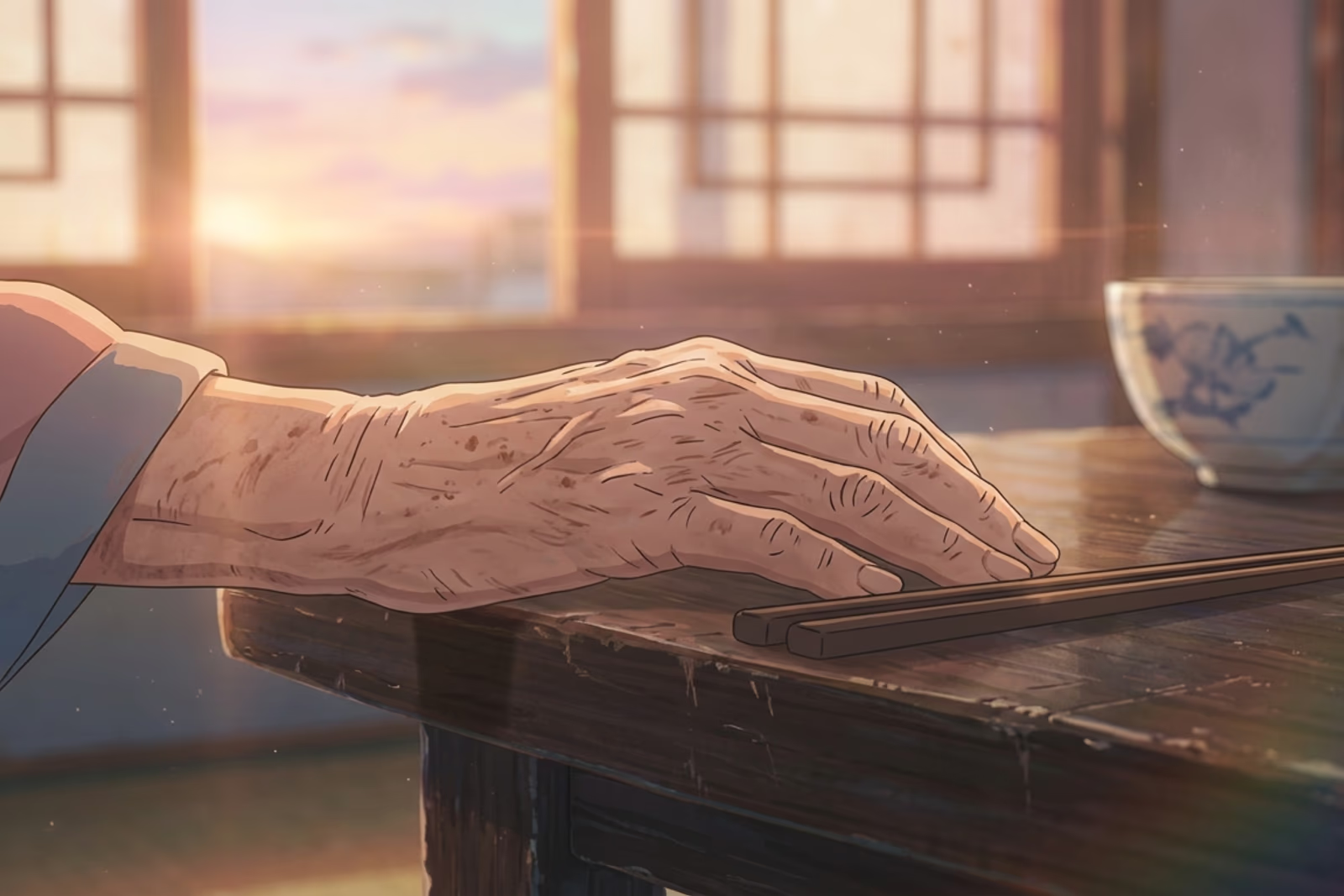
I looked at her hand that night for the first time in many years. The veins on the back resembled small rivers. The knuckles had thickened like the rings of a tree. That hand had set every meal of my childhood. To the market at first light, to the stove by five, to a lunchbox by seven. It had never once cooked for its own owner.
After that evening I started listing, line by line, the things her plate had shed. Dried anchovy heads — gone about ten years ago. Shrimp shells — earlier than that. The cubes of pickled radish at last winter's kimjang she had asked to be cut smaller. It had not been a change in taste. It had been a long, quiet farewell to one food after another, an aging set of teeth and a tiring throat acknowledged without complaint.
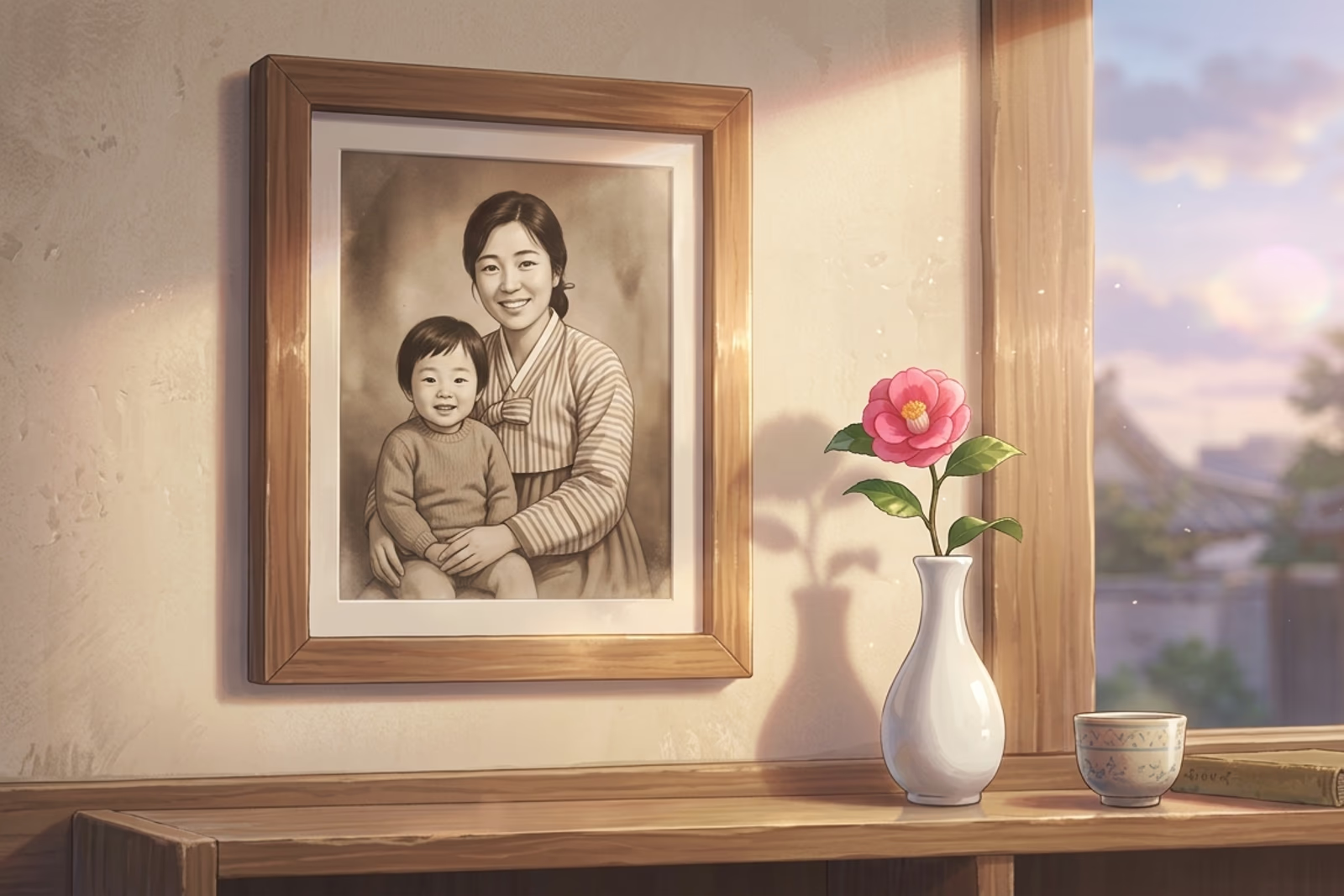
A framed photograph hung on the wall behind her. Early thirties, holding me a few weeks old, smiling without effort. In that decade a bowl of braised hairtail had been the centerpiece of holiday tables — the first dish she thought of when guests were coming. An ordinary meal is not ordinary to everyone. The wall had been telling me so for decades; I had not been listening.

She had grown up in a small village in Hangyeong-myeon, on the western side of Jeju. I had never been there, but the place stayed alive in the stories she told. Rapeseed in the spring courtyard, balsam and portulaca and hydrangea in the summer, cosmos overflowing the basalt wall into autumn. On some afternoons, chickens loose among the flowers; white cotton laundry rippling on the clothesline.

The yellow fields, she said, ran almost all the way to the lower slope of Hallasan. The basalt walls divided the sea from the fields from the village — and at the same time stitched them together. That landscape was where her child's foot first met soil, and the pattern that soil pressed into her step seemed, even seventy years later, to be somewhere still inside her walking.
The understanding that an ordinary meal is not ordinary to everyone — that understanding, in the end, traced its way back to the courtyard of someone's childhood. I started, very slowly, to walk that path backwards.
2. The Promise
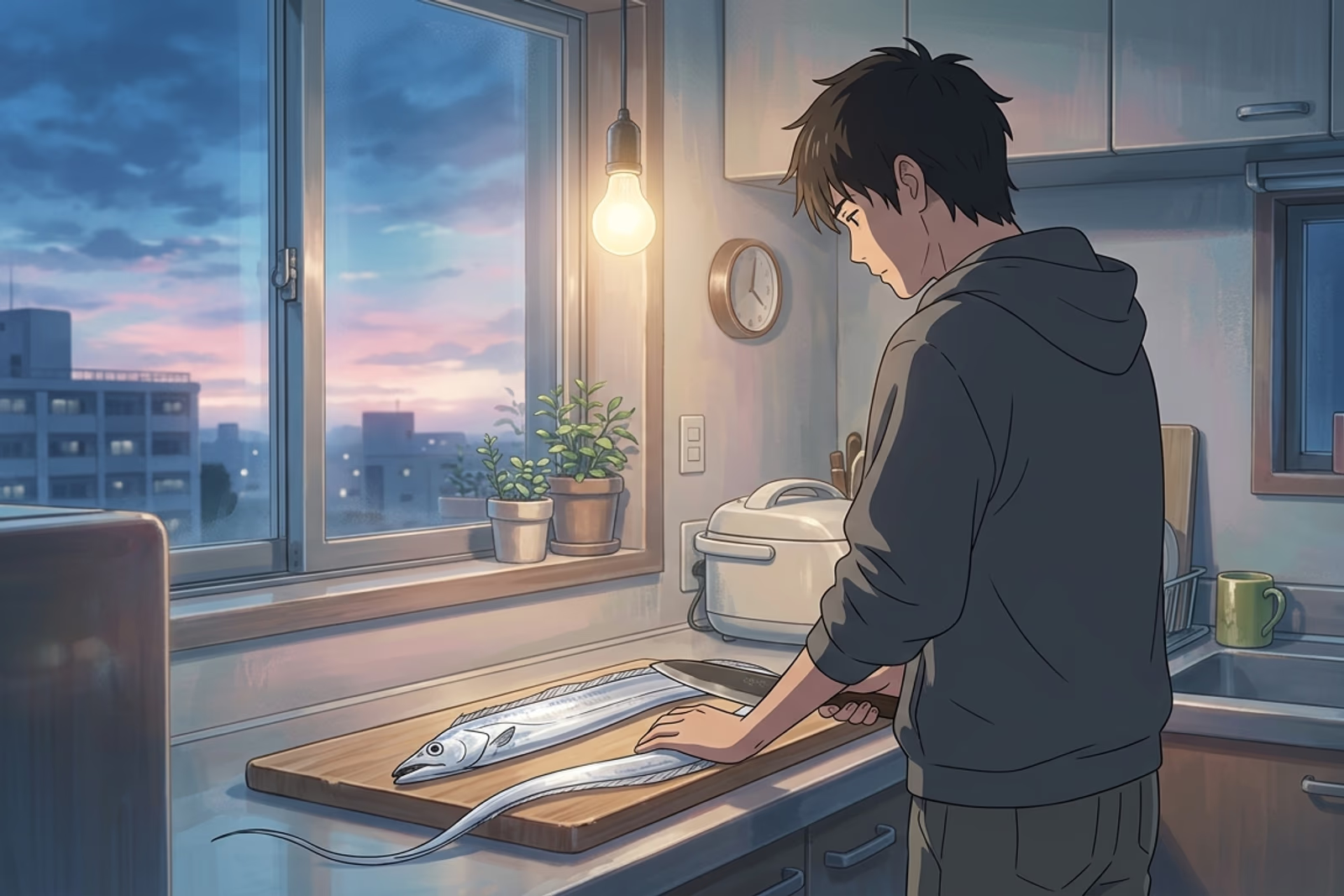
That night I could not sleep. I tried to write a list of how her table had shrunk and put the pen down halfway. A person's plate resembles the road they have walked. Some are able to expand it. Some have no choice but to fold it inward. She was the second kind. But was that really how it had to be — was there truly no help for it — that question would not leave the chest until the sky began to turn blue.
When the first wash of blue reached the veranda, I wrote one line carefully into the chest's keeping.
> From today, I will be responsible for my mother's table.
It was not a promise made to anyone. No one could countersign it. At that hour, it was the only thing in my hand that felt solid.
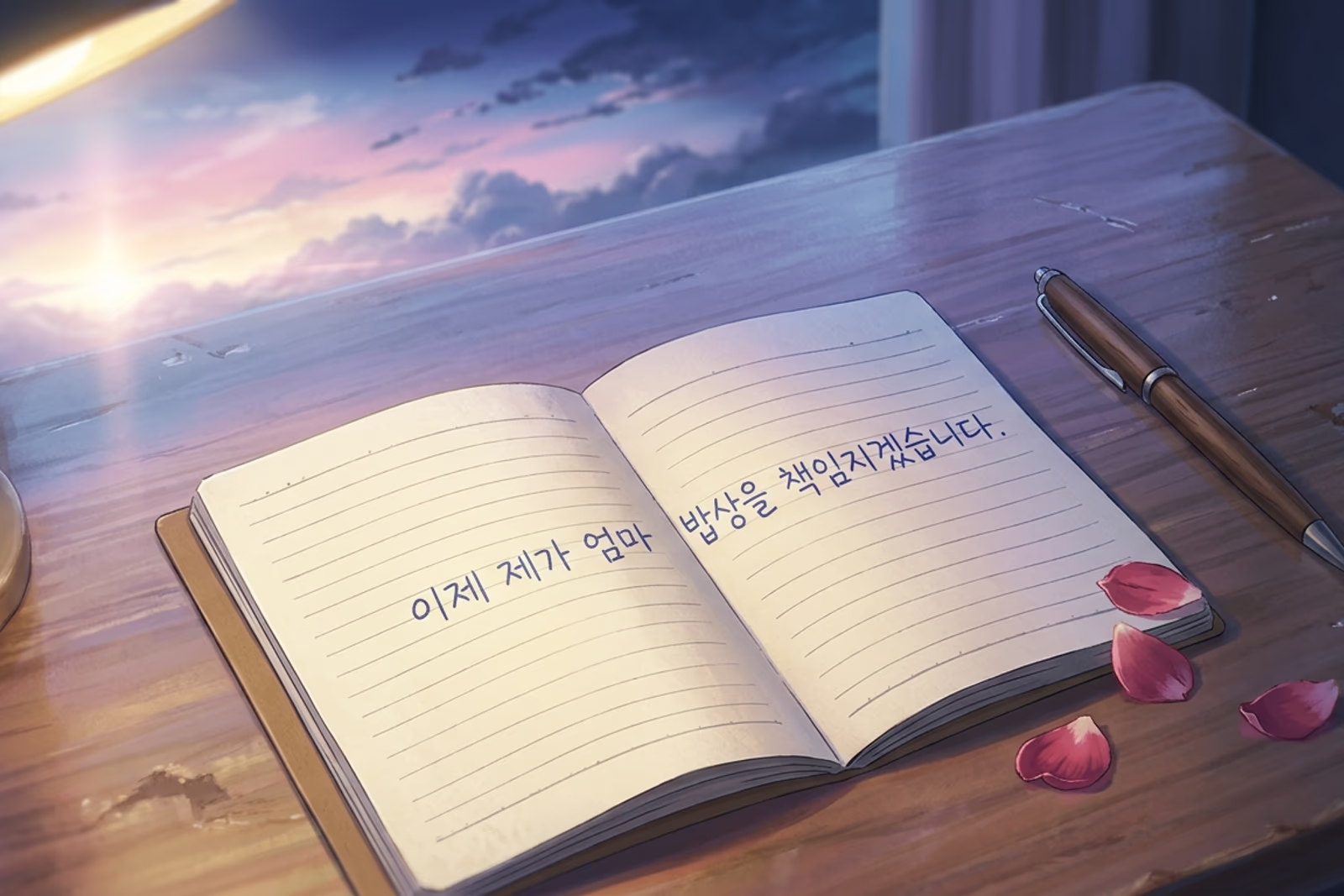
I wrote the sentence on the empty page of a brown notebook. The handwriting came out awkward. The pen was unfamiliar. But when I closed the cover I understood that awkward handwriting does not undo the meaning inside it. When the heart goes deep first, the hand learns to follow.
The next morning, before dawn, I picked one up for the first time.
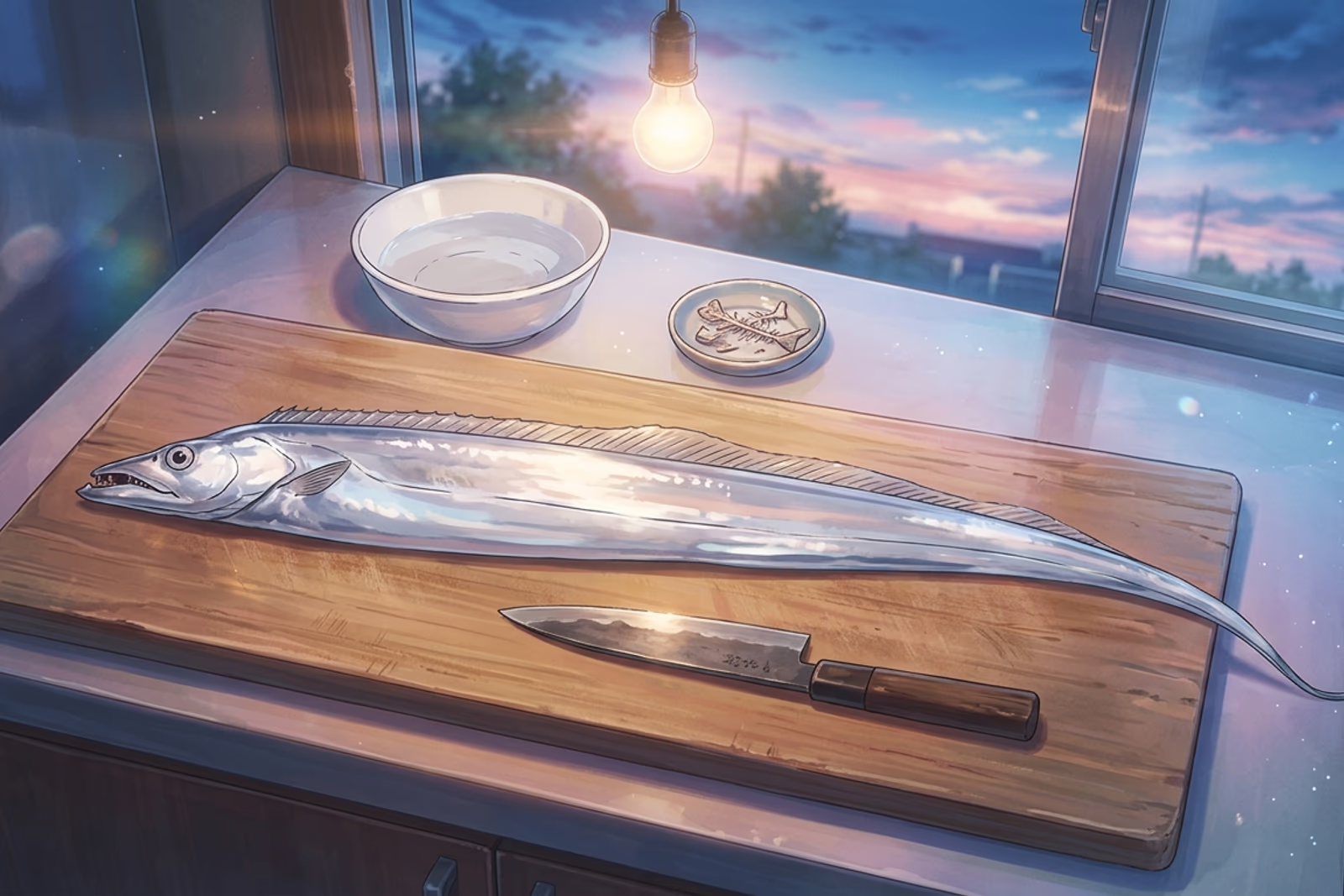
The long body on the board glinted like a small blade. The first time I really looked at it — its sleek length, its mirror skin — I caught for an instant the weight of what my mother had been setting down on our table for half a century. Cooking is the work of writing time into a raw thing, and time is the vessel into which care is poured. She had done that simple work for seventy years without once mentioning it. That was the size of the practice in whose shadow I was now learning to stand.
3. The Fish, Properly Introduced
Before going further, this story needs to pause and bow to its subject. To understand what it means to vow that not a single small bone will remain, one has to know first what the thing carrying those bones is. The day after the promise, the actual work was not with the knife yet — it was a slow re-introduction to a species I thought I had grown up beside.
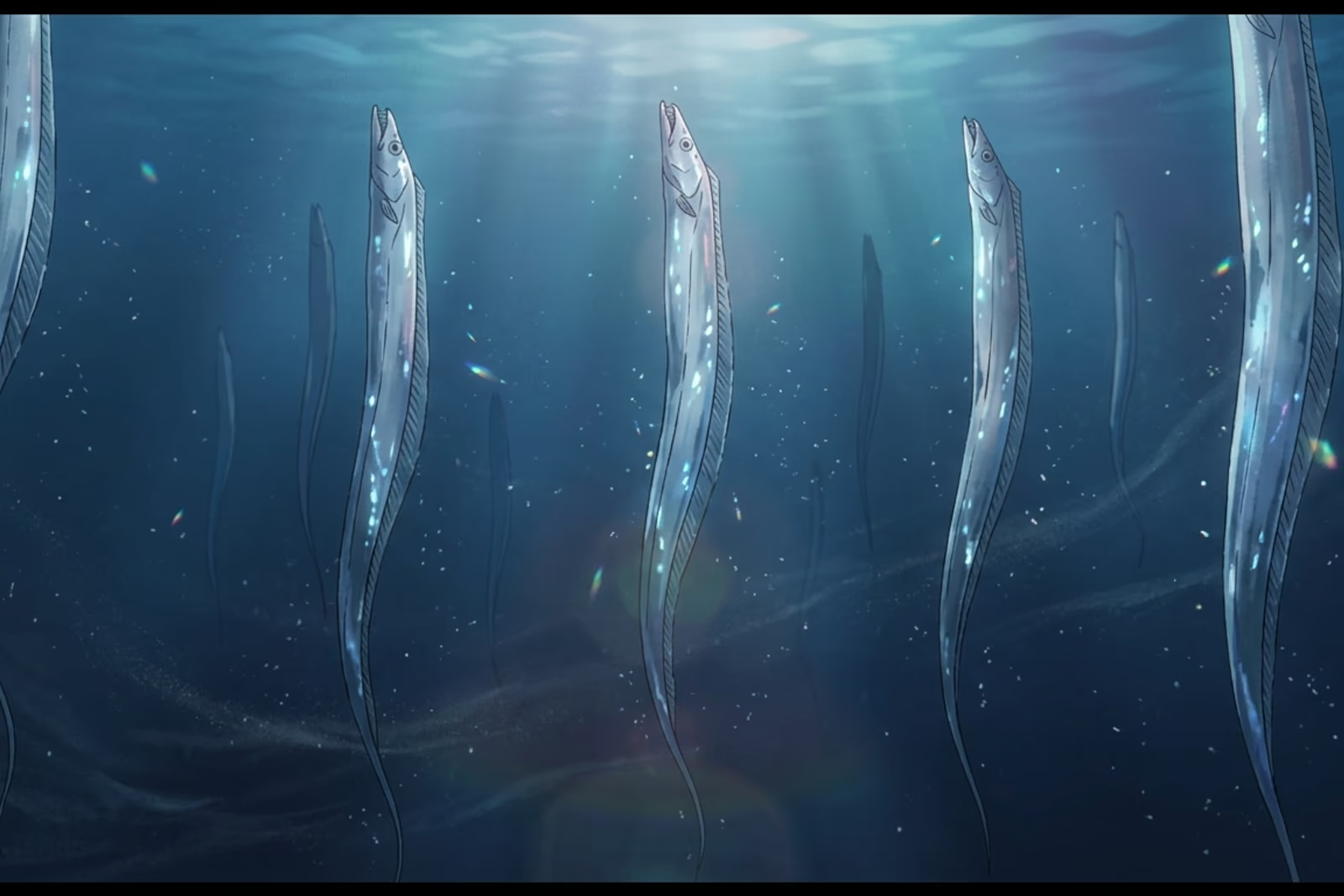
The scientific name is Trichiurus lepturus. Marine biologists classify it within the order Perciformes, family Trichiuridae. It lives at depths between roughly 100 and 400 meters, in dim midwater. Its most striking habit is its posture: it does not lie on its side like most other fish. It orients its head toward the surface and holds its long, slender body nearly vertical, hovering almost upright. Imagine, in a column of dark water, hundreds of silver bands standing parallel — that is close to the truth. They look like very slow knives.
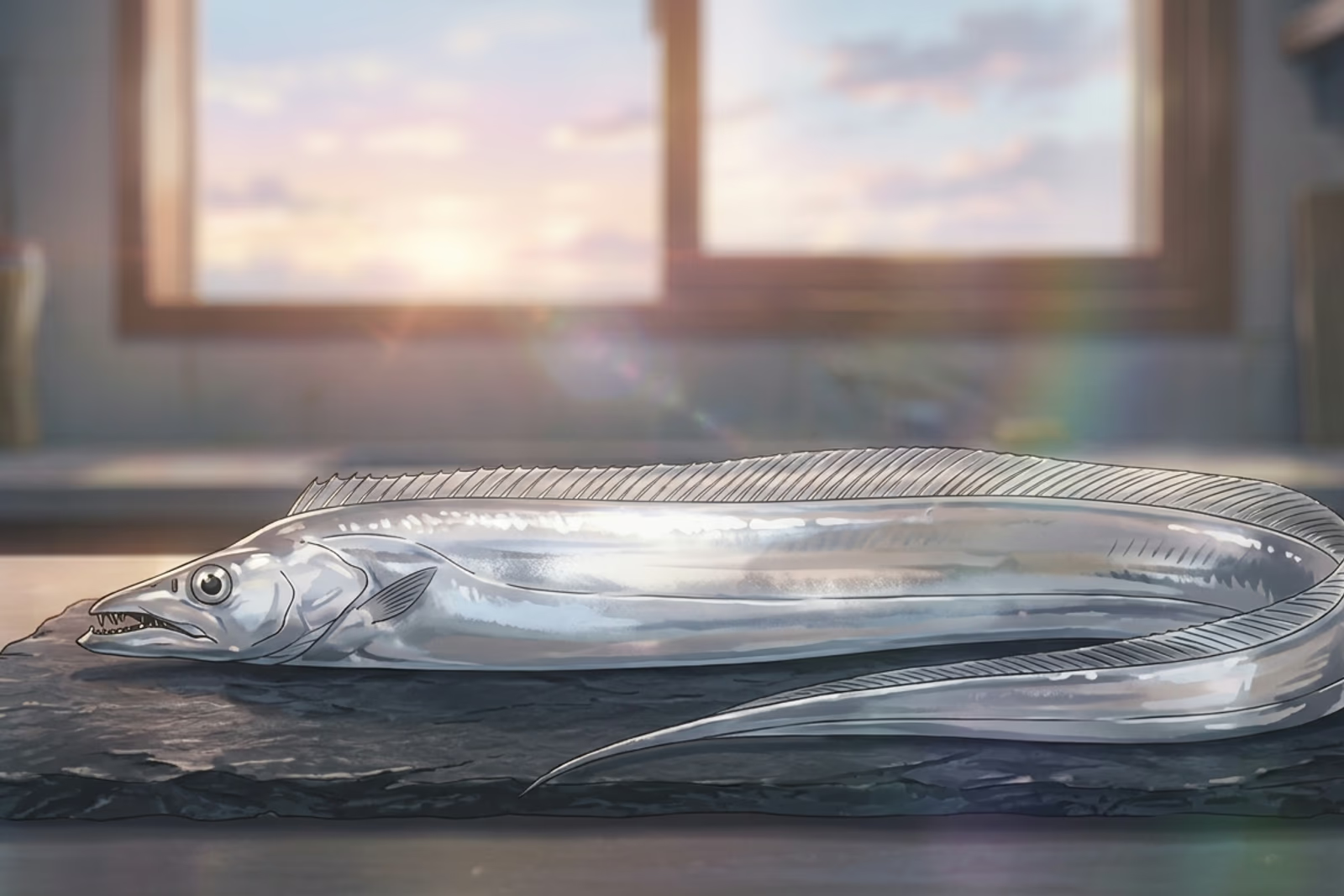
Its English names — *hairtail*, *cutlassfish* — point at the same shape. The Korean name *galchi* places "knife" inside the word itself. The skin has no scales and shines like polished mirror. A single dorsal fin runs in one unbroken line from the head almost to the tail. There are no pelvic fins at all. The tail tapers off into something closer to a whip than a fin. From snout to tip, it is built like a sword.
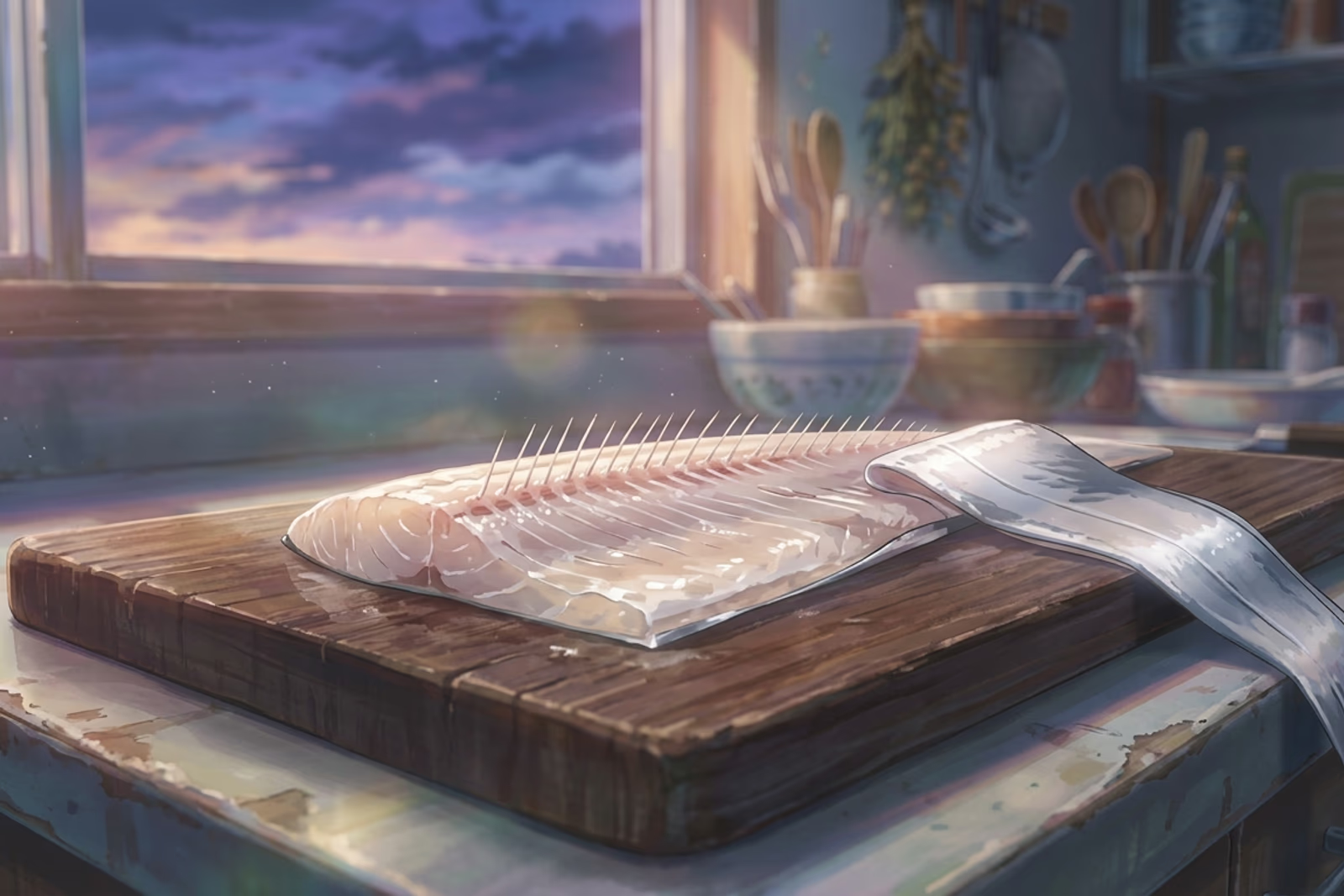
The problem is the row of small bones running tightly along the back of that sword. Each fish carries an average of roughly eighty small bones — give or take, depending on the cut and the individual. The exact number is not a clean statistic; it sits between roughly seventy and a hundred on most days at the board. Most live in two parallel lines along the spine, with a smaller cluster hidden beneath the dorsal fin.
They are small. So small that the eye cannot reliably find them, and the fingertips have to memorize where they are. The thread that lodged in my mother's throat had been, almost certainly, one of these. The weight of a single one of them is heavy enough to take days out of a person's life. Once you know that, it stops being just an inedible bit attached to flesh.

Where to source the fish was a separate question. Under the same Korean name, very different things are sold in markets, depending on where they were caught, how they were handled in the first hours after catching, and how cold they were kept on the way to shore.
Galchibada works only with wild silver hairtail. Not farmed. And specifically with what is locally called *seon-dong* — fish brought down to low temperature on the deck of the boat itself within the first hours of catching. From near-shore waters off Aewol, the morning's catch is iced immediately on board.
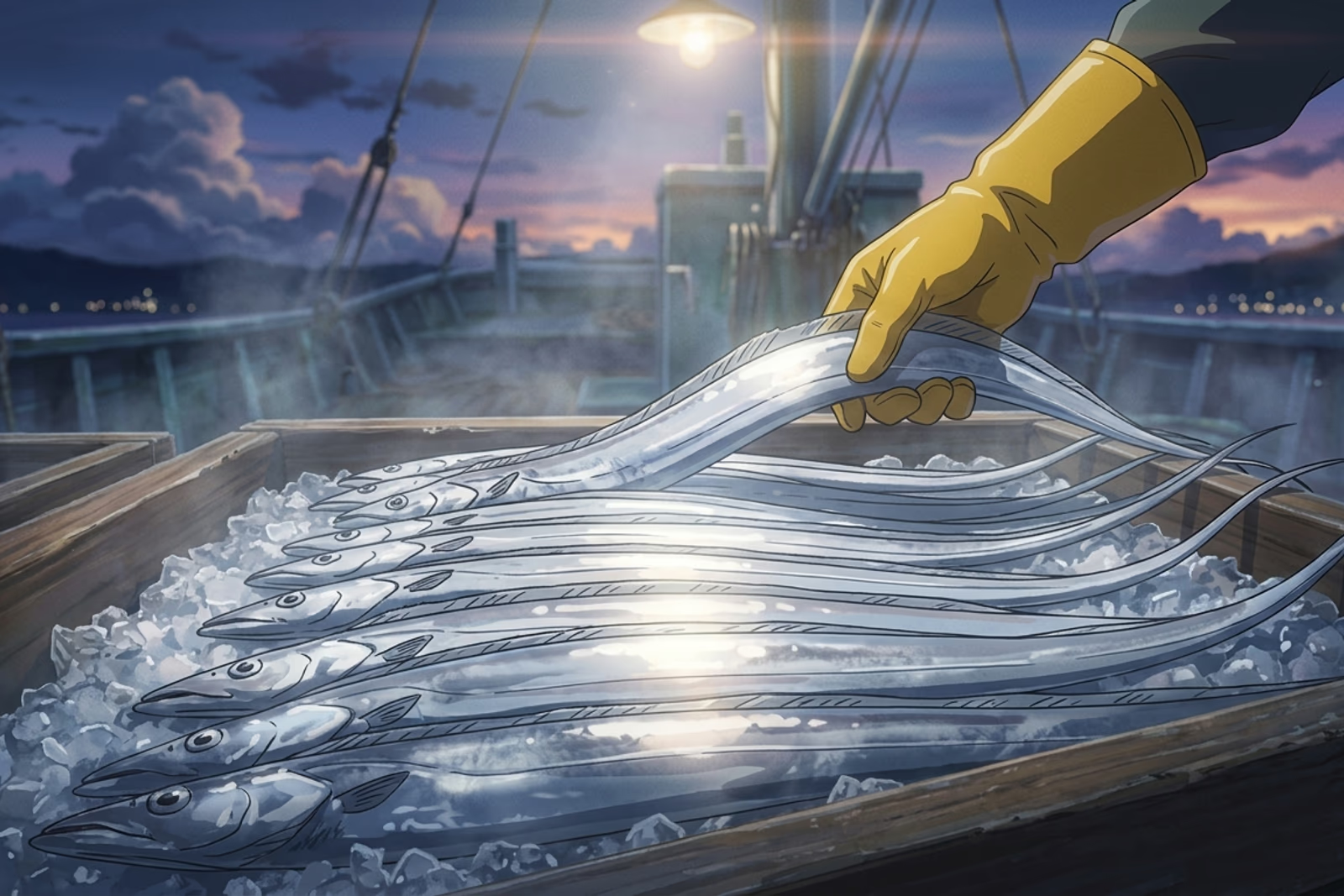
The reason on-board chilling matters is simple. Hairtail holds the cleanest line of natural sweetness for roughly the first hour after the catch, and the sweetness opens up — diffuses, loosens — quickly after that. Icing on the deck holds that first sweetness in place. By the time the fish reaches the market, by the time it reaches the board, the original first taste is still where it was. If a person is going to set down the fear of small bones and eat again, the sweetness has to be defended along with the meat.
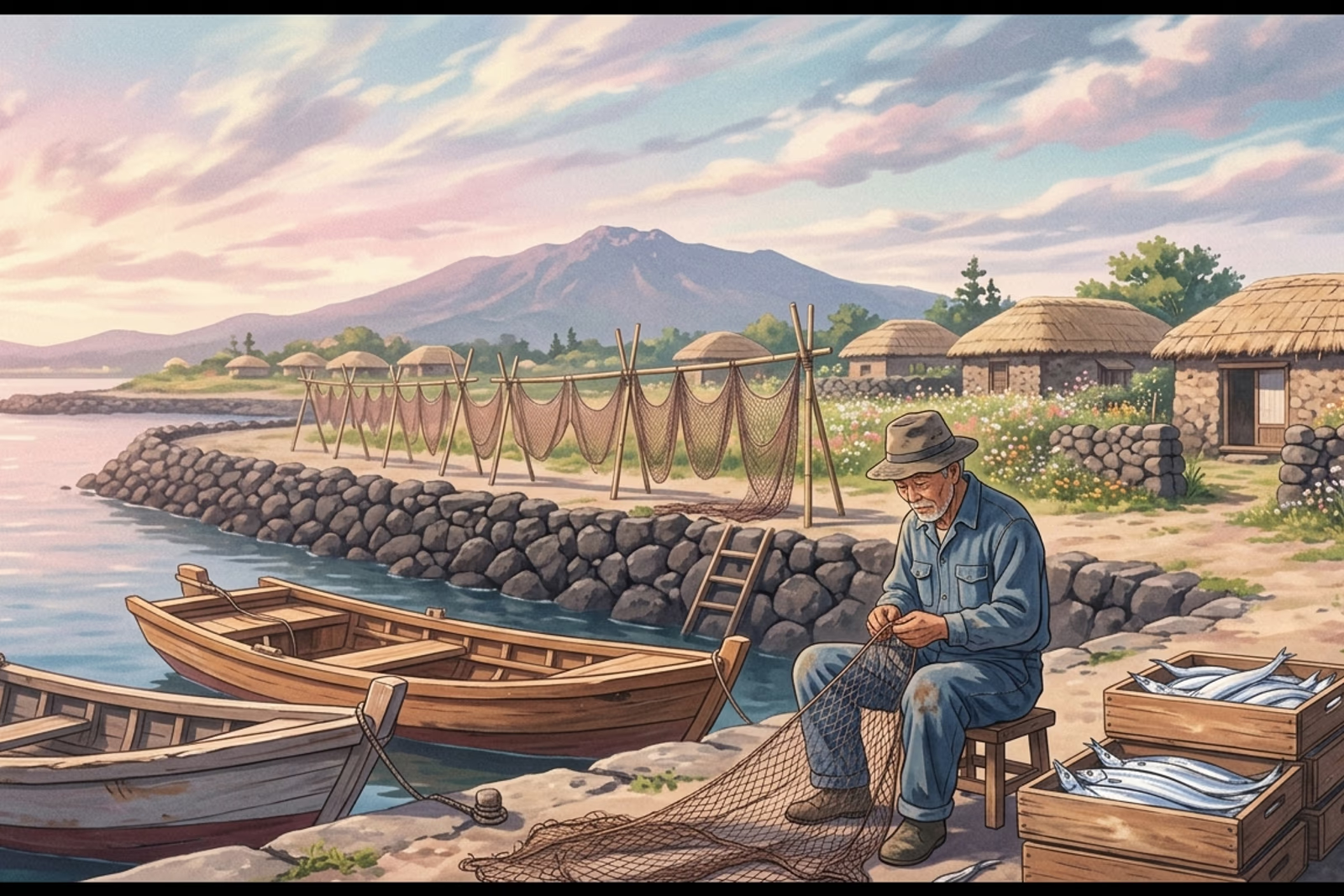
My mother's grandfather, I was told, had owned a small wooden boat in that same era. He mended nets in a low harbor at first light and took the boat out to nearby water. What he brought back went straight into the day's kitchen. The distance between a hull and a table back then was less than a single tide. The first sweetness my mother's child mouth ever tasted may well have been a sweetness her grandfather had pulled from the water that same morning.
What we now call on-board icing is, in another sense, an attempt to put that half-day back onto a single meal. Tastes that the body has known once tend to remain where the body left them. Only the road to reach them has grown longer; what we do is shorten that road, by short fractions, until it reaches the guest.
4. The Clumsy Months
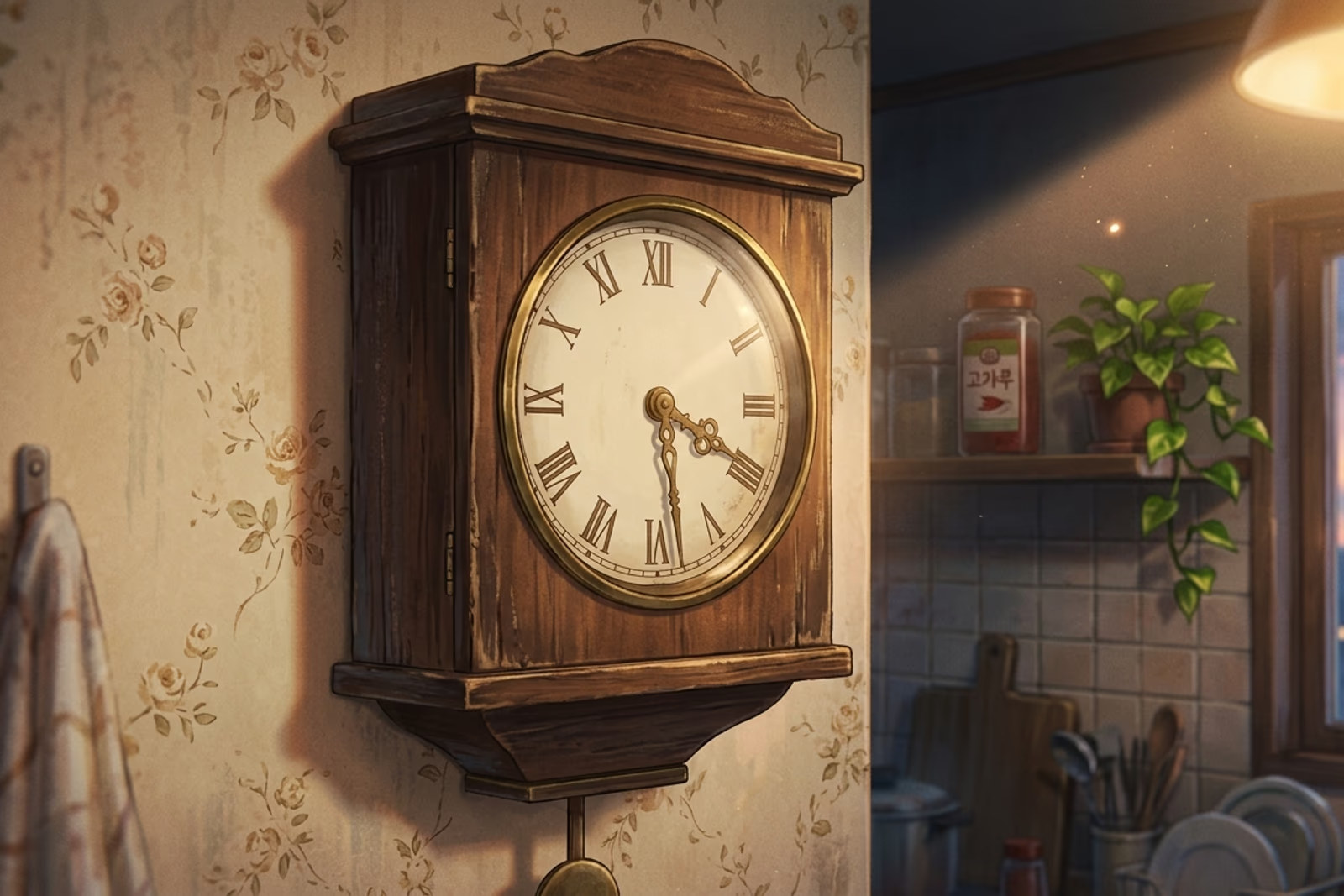
The dawn kitchen was the smallest theater I have ever stood in. No audience. On the stage, one cutting board, one knife, one clumsy person. On that first morning the clumsy person did not really know what he was doing. He only knew that the single line written the night before was still glowing behind his back like a small lamp.
For the first weeks, the steel did not know the hand and the hand did not know the steel. They knocked against each other like strangers at a doorway. I taped my fingers and went back to the board. The next day another finger needed tape. After a week it was hard to find a place on either hand that had not been cut.
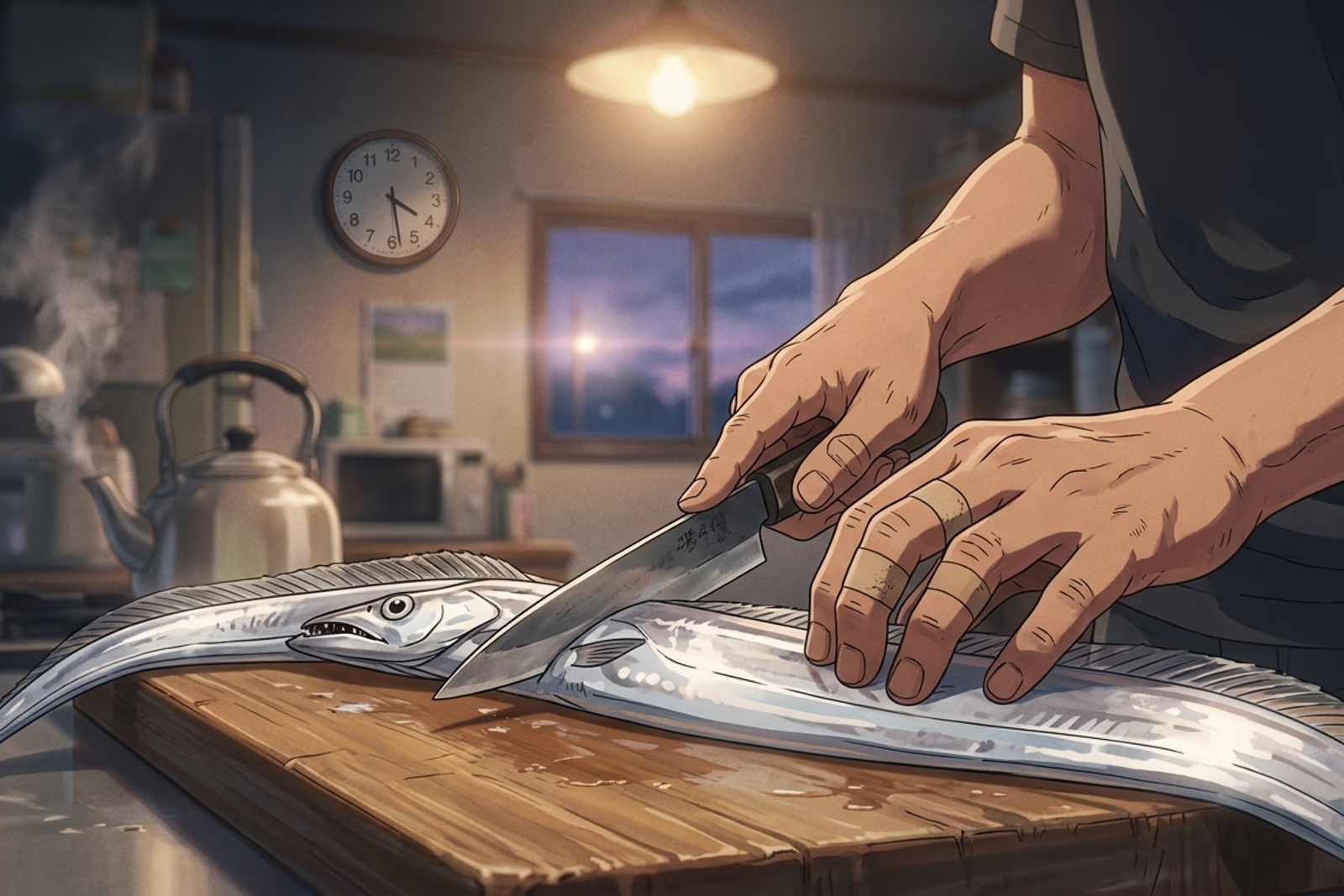
The bones were small. Too small.
Some were buried under flesh and impossible to see. Some were visible but refused to come out. Until the fingertips learned that small grain, time had to pass. You cannot finish learning a thing in the hands by reading about it. What you learn from a page lives in the head. What you learn in the hand lives in the body. What the head learns can be forgotten. What the body learns does not leave.
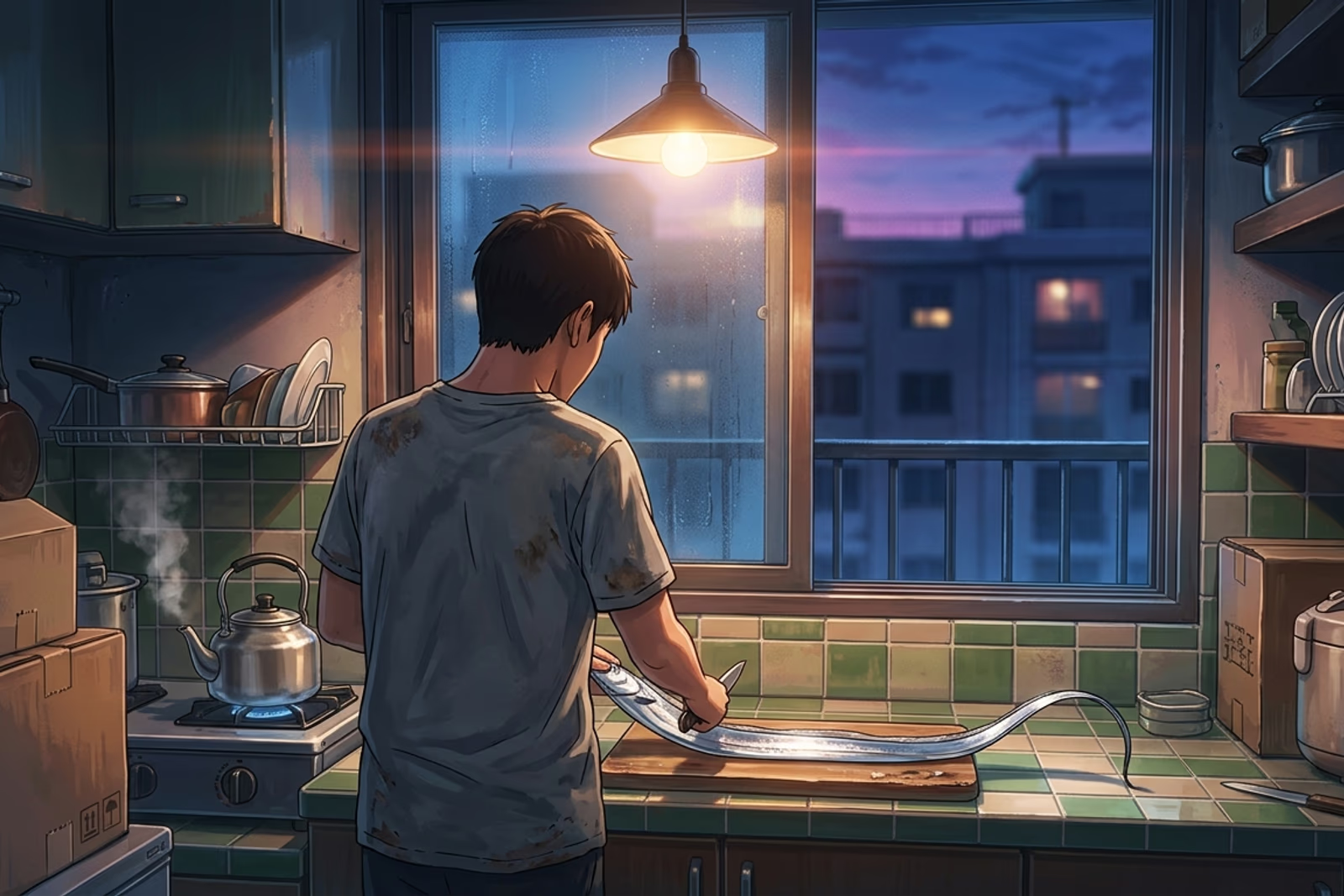
A session that began at four-thirty ended around eight. Each fish averaged about eighty bones. Two hundred fish meant roughly sixteen thousand bones, lifted one by one with a fingertip and a pair of tweezers. At first the number frightened me. After a while it stopped being a number. One, then one, then one. Most work, in the end, finishes that way.
What I thought of most often during those clumsy months was that my mother must have lived her whole life like this. Wake before light, set one meal, then another, then another. The repetition tires a person, and it also makes a person into someone else, slowly. She had been made over a long time. I was only at the beginning.
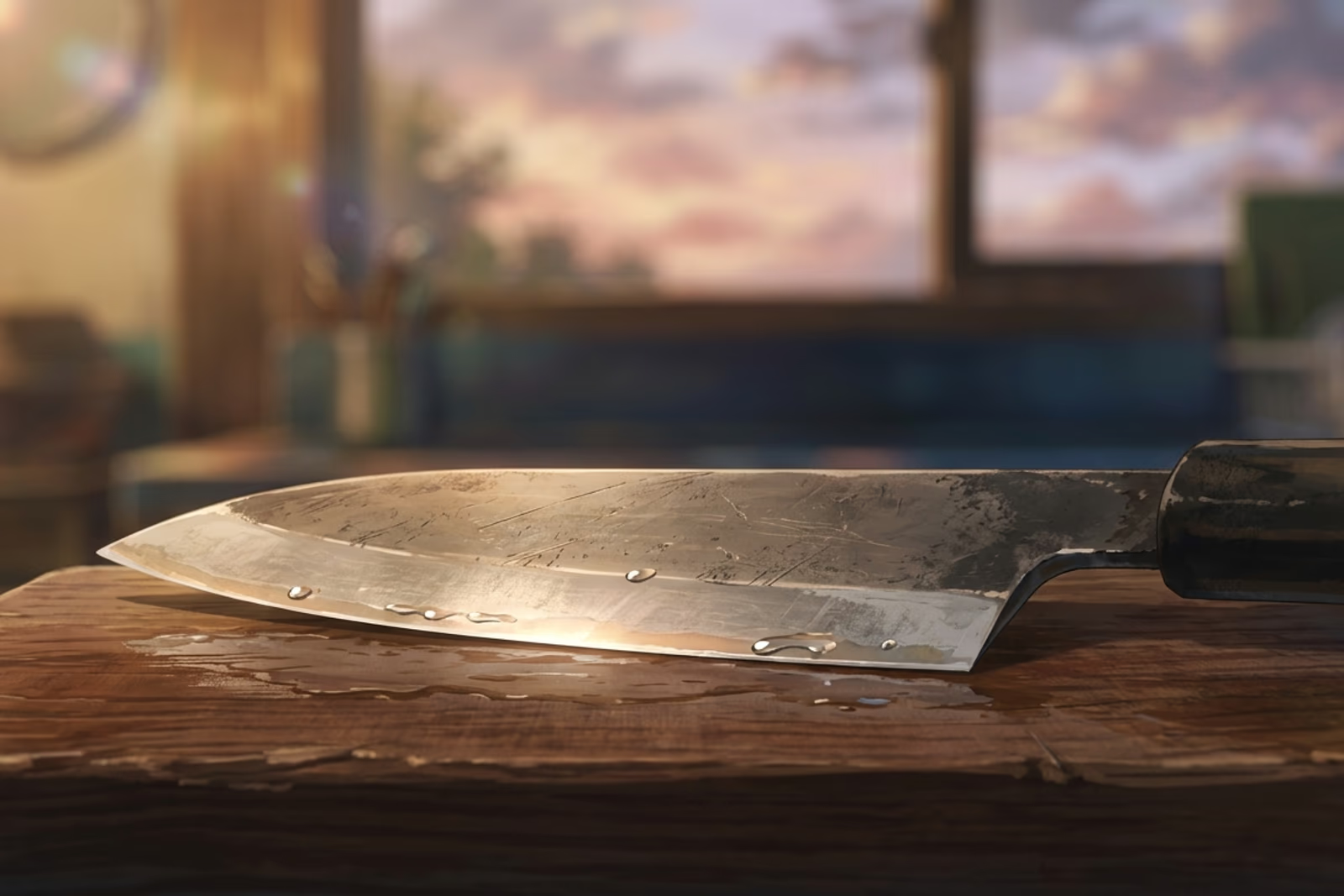
What I held was not really a tool but something closer to a companion. A sharp edge passes through flesh softly. A dull edge tears it. For my mother, the meat had to come away soft. So sharpening became as important as deboning. Each night, after the work was done, the ten minutes on the whetstone began to feel like a small meditation. The phrase about a tool taking on the shape of its user's mind — those ten minutes, over weeks, taught me what it meant.
At first the number frightened me. After a while it stopped being a number. One, then one, then one.
5. Callus
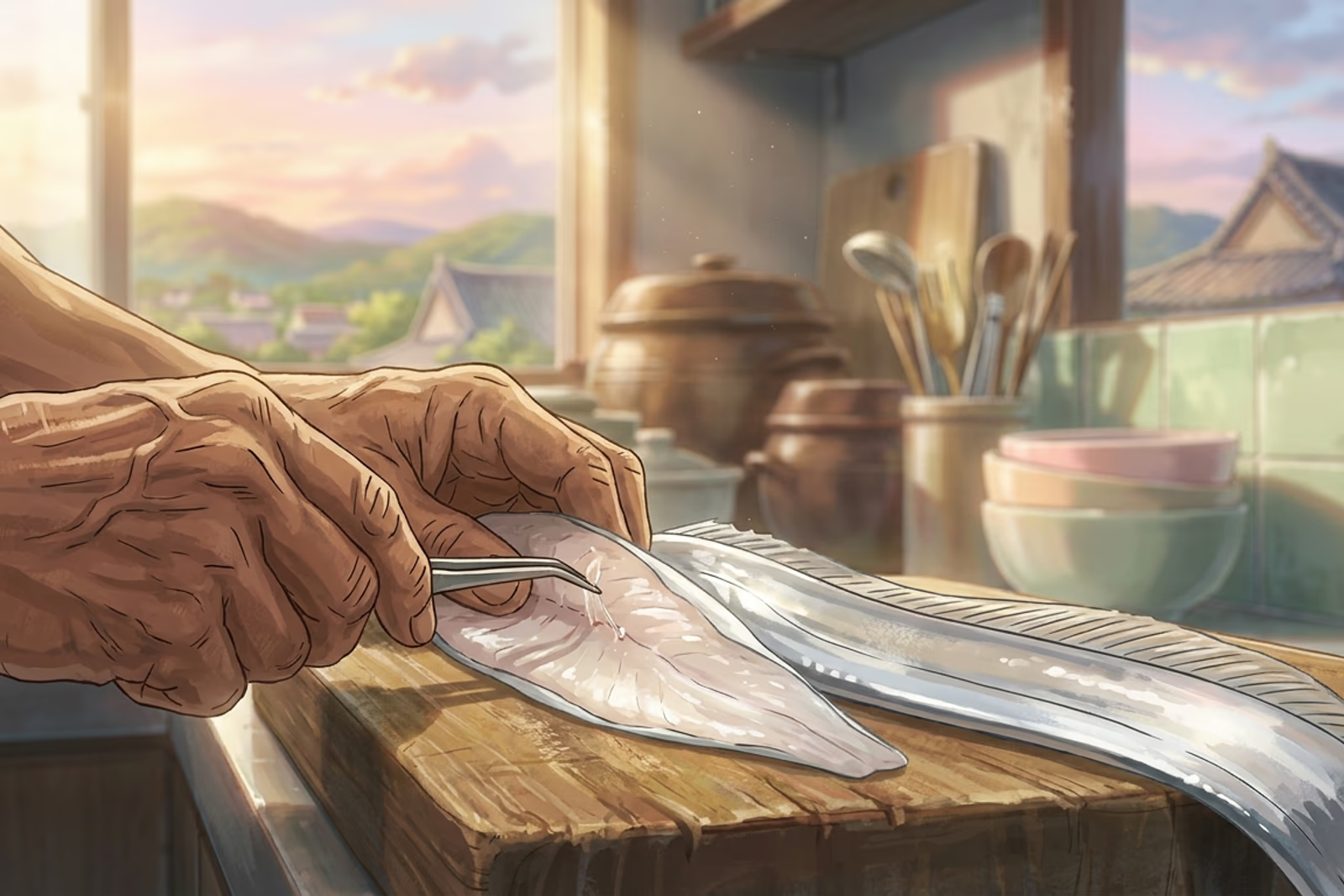
A winter passed. The taped places on my fingers were replaced by hardened skin. The callus was a trace — a pattern left by time.
One morning, at the board, I looked down at the back of my hand for a long time. The skin was rough and unlovely, but it was the one gift I had wanted to be able to give my mother. The most honest possible token of the labor that makes a boneless mouthful possible.
> She is the one who will eat this.
> Not one bone may remain.
Those two sentences rang in the kitchen most mornings. Nobody else heard them, but the knife heard, and the board heard, and most importantly the hand heard. What a hand hears is not the same as what a head hears. What a hand hears does not vanish.
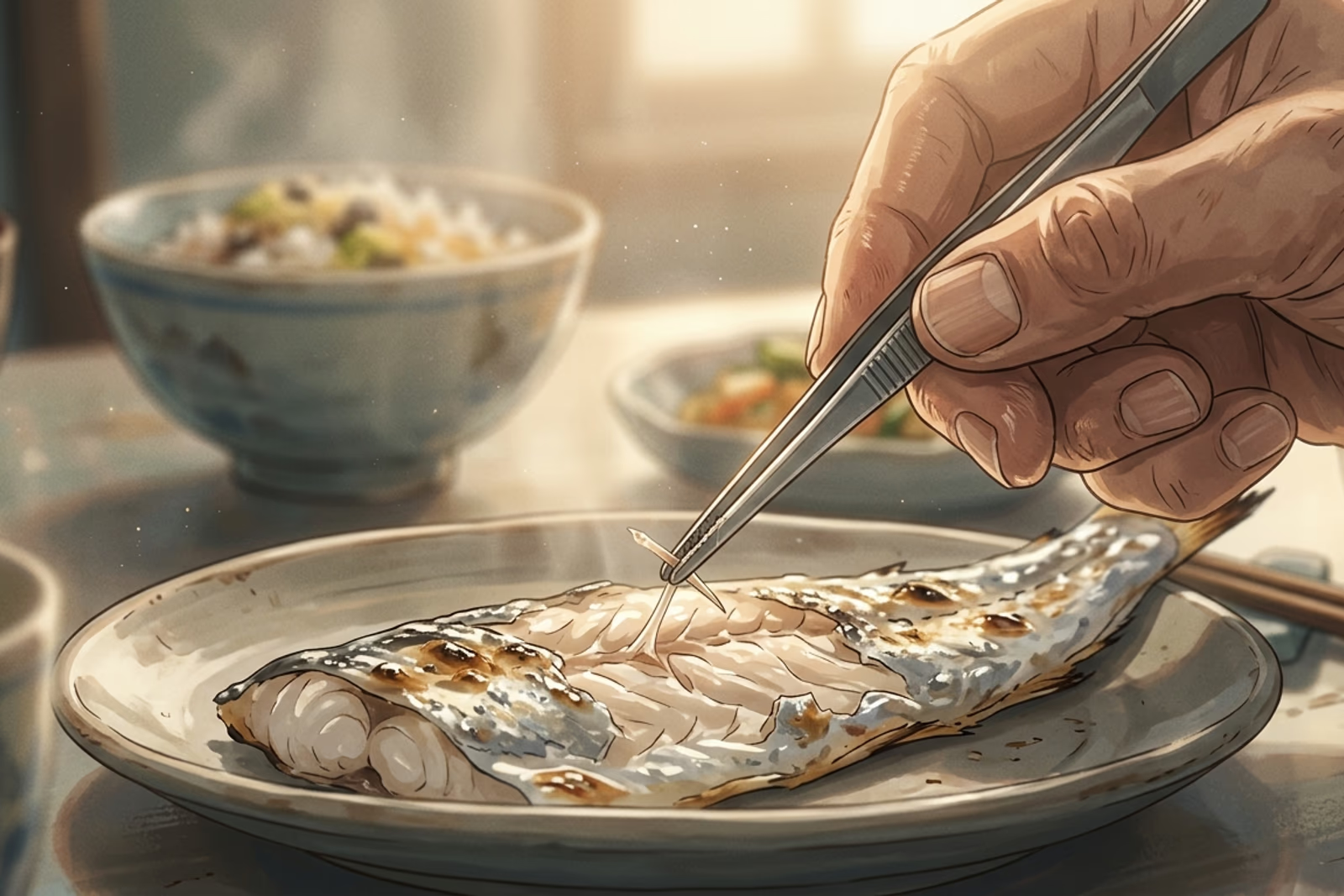
Holding tweezers turned out to be closer to suturing than to cooking. Pinch too deep and the meat tears; pinch too shallow and the bone breaks under flesh and stays inside. Lifting one out cleanly demands collecting the small tremors of the fingers into a single point and aiming that point. Repeat that aim across many dawns, and the cook, without noticing, becomes something like a meditator.
What changed first, as the callus settled in, was the sense of time. At the beginning, an hour felt like an hour. After a while, the same amount of work fit into a smaller piece of clock. Once the hand had memorized the work, the head began to empty out. Old images of my mother flowed into the empty space. Hours alongside her, in that sense, multiplied.
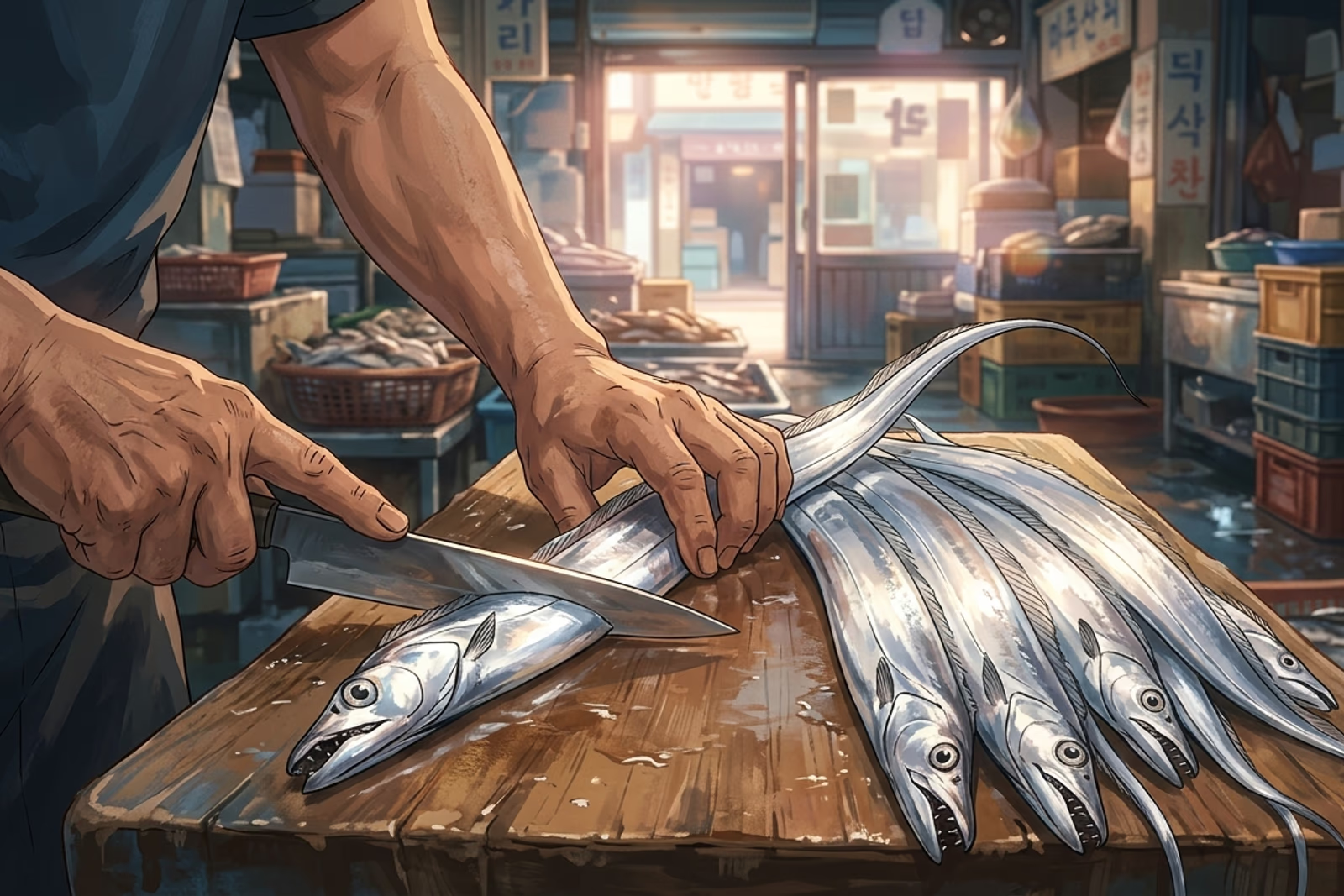
The two hands also learned each other's work in that period. The left learned to hold the head firmly and gently at once. The right learned the angle of the blade by feel. The picture of two hands meeting around the same body, both halves of one person agreeing across a small fish, looked finally like a person reaching internal agreement with a private vow.
6. The First Meal
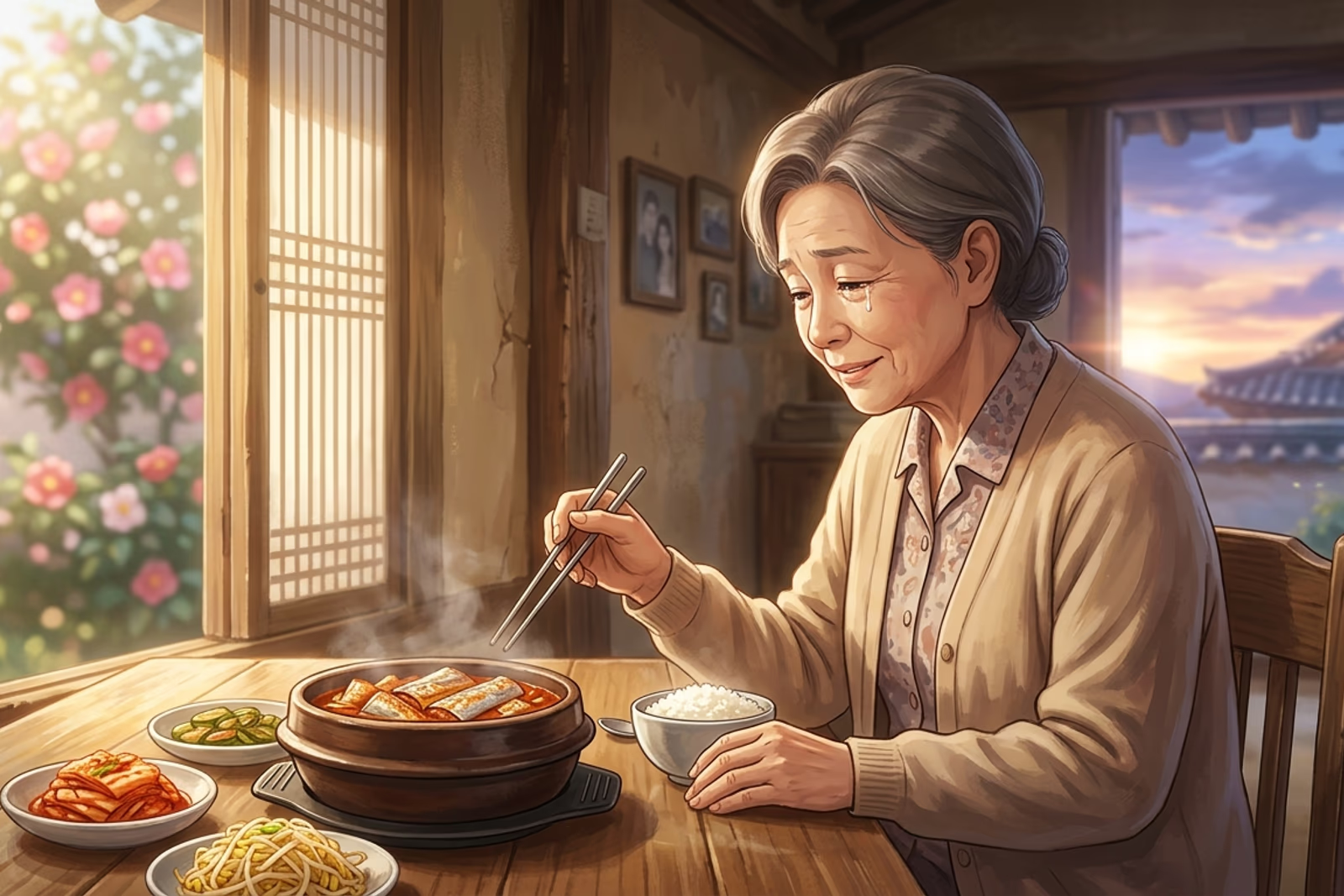
After three hundred and sixty-five dawns, on a spring afternoon, I set a bowl of boneless braised hairtail in front of her for the first time.
"Mom, try this."
She hesitated. The instinct of someone who had once been wounded. She studied the dish for a long moment, then took a small spoonful and brought it to her mouth.
The room went quiet. The only sound was meat coming apart softly between her teeth.

The word *sun-sal galchi-jorim* — boneless braised hairtail — carries two promises inside it. The first: not a single bone will remain. The second: the natural sweetness and grain of the meat will stay intact. The chili-soy reduction covers the meat in glaze, but the grain has to survive the sauce. On her first mouthful, both promises arrived at her tongue at once.
"… There really aren't any."
The edges of her eyes turned pink at that small sentence. And so did mine.
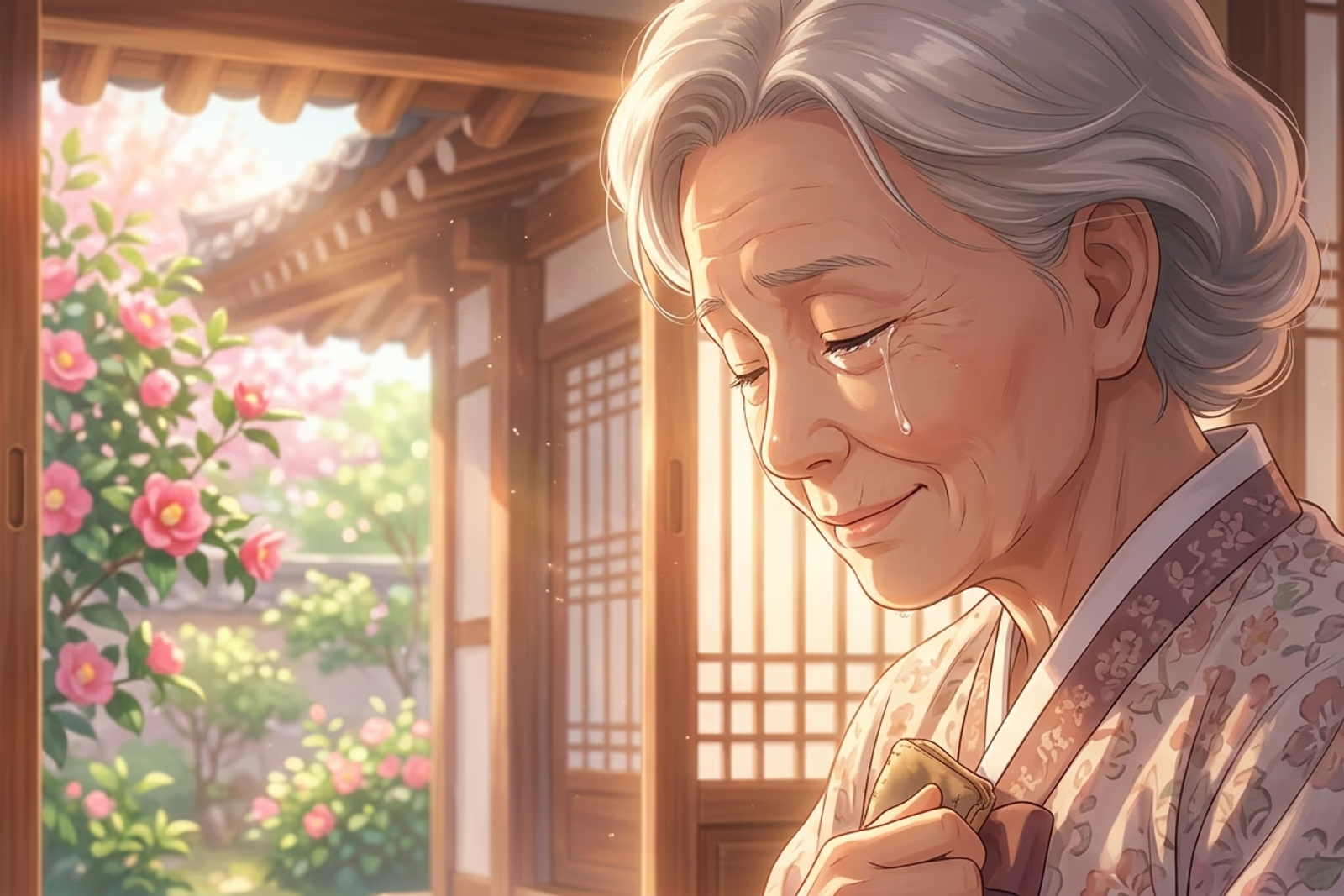
That tear was not for the flavor of food. It was for the ordinary fact that she had been allowed, again, to eat something she loved without fear.
How long does it take for one food to vanish from a person's mouth? Not a year, not two — that spring afternoon taught me the timeline is much longer. If you trace, in reverse, the moment a beloved dish first begins to disappear from someone's life, the start of the disappearance turns out to be much farther back than seems possible. From the mouth of a person who in seventy years had never once cooked for her own pleasure, the loss of one dish she could still call her favorite had not been the work of a year or two; it had taken almost her whole life to write.
Seventy years of saying *I like that* a little less each season. Seventy years of quietly walking food after food out of her own pantry while no one noticed. What we usually call growing is a process of accumulation, of increase; in the time of one mother, growing had been a process of continuously laying things down. Nothing added. One more thing taken away from herself. Across seventy springs she had been quietly making herself lighter, one dish at a time. Every time she got lighter, the space made room for someone else's table.
That single line of tear, then, was more than salt. The names of every dish she had quietly retired from her own mouth across seven decades flowed through it. And at the very end of that line, a single bowl had returned to her side. Permission to say *I like this* aloud again landed on her aging lip like the first raindrop of spring. All of that weight rode the one tear down her cheek.
To be allowed to like what one likes, aloud, again. The smallest sentence in the room that afternoon taught me, for the first time, how much that allowance can carry inside a life. The truly heavy things in a person's life are not the loud events but the small accumulations — the taste a mouth quietly loses or quietly recovers. How much weight a single bowl can hold, when it comes back to its old place.
An ordinary meal is not ordinary to everyone.
That spring afternoon, I learned it.
The meal that day was unusually long. After many years she emptied the bowl, and when it was empty she sat looking at it for a long time, as if something more were still inside. What was still inside was not food. It was a long stretch of missing, a long stretch of relief, and perhaps the first signal that an everyday had begun again.
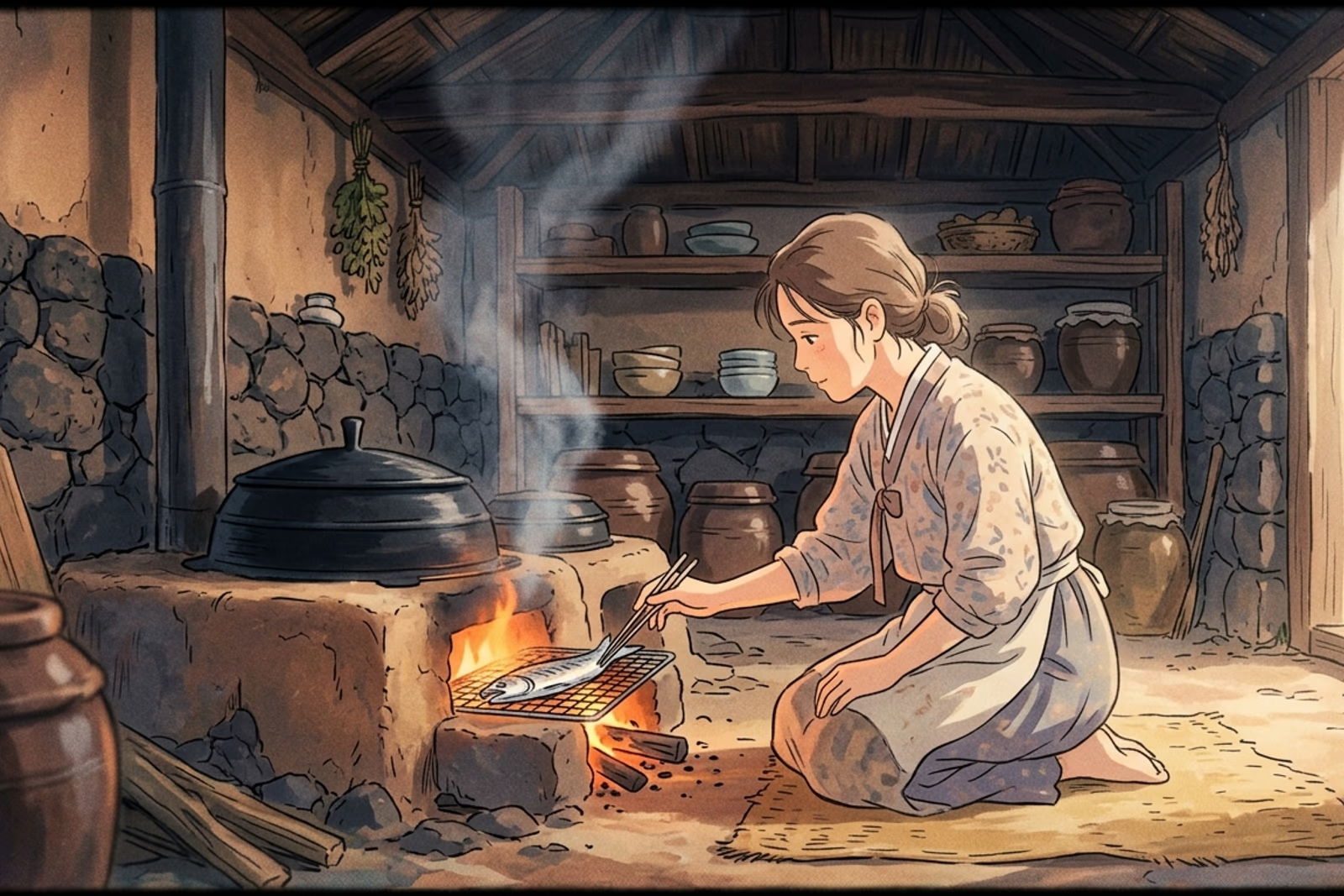
When she was small, my grandmother cooked in a corner of an earthen-floored kitchen, over a cast-iron pot set above a hearth. The orange light from the wood fire would fall against my grandmother's cheek. My mother carried that single scene with her all her life. The smell of smoke rising from the firebox, the sound of sauce reducing under the lid, the perfume of spring grass coming in from the courtyard — all of them inside one kitchen at the same time. The single dish my grandmother carried out of that kitchen may have been the prototype of every meal my mother set in her seventy years.

Beside that kitchen, the courtyard held a clothesline of white cotton and a riot of small flowers — balsam, portulaca, zinnia, four-o-clocks. She ran among them as a small child. One spring afternoon, my grandmother walked out of the kitchen with a single bowl just simmered in the cast-iron pot and called to the small child running through the garden. That was the oldest memory she carried. The first sweetness was not, really, the sweetness of food. It was the sweetness of being called by name.
That, then, is what it means today when she empties one bowl at our table. It is not only the restoration of a meal. It is the return of a very old picture into our company. Inside that picture sit my grandmother, a small child, the courtyard flowers, and the white of laundry on a line.
7. Every Mother's Table
Some days later, my mother said something quietly.
"That craft is too much for just me to keep. Imagine how many people in the world cannot eat what they love anymore."
That sentence became the seed. If these hands and these dawns reached only one person, the promise was still incomplete. For everyone whose plate had grown smaller because of a single bone, the line had to travel further.

Choosing Aewol was not arbitrary. Hairtail develops its deepest natural sweetness in cooler water, and the temperature and currents off the Jeju coast support that range well. The most consistent wild catch falls between late autumn and early spring, but with on-board icing the practical window stretches across the whole year. Working with the local fleet off Aewol turned out to be the same road as serving the cleanest possible mouthful.
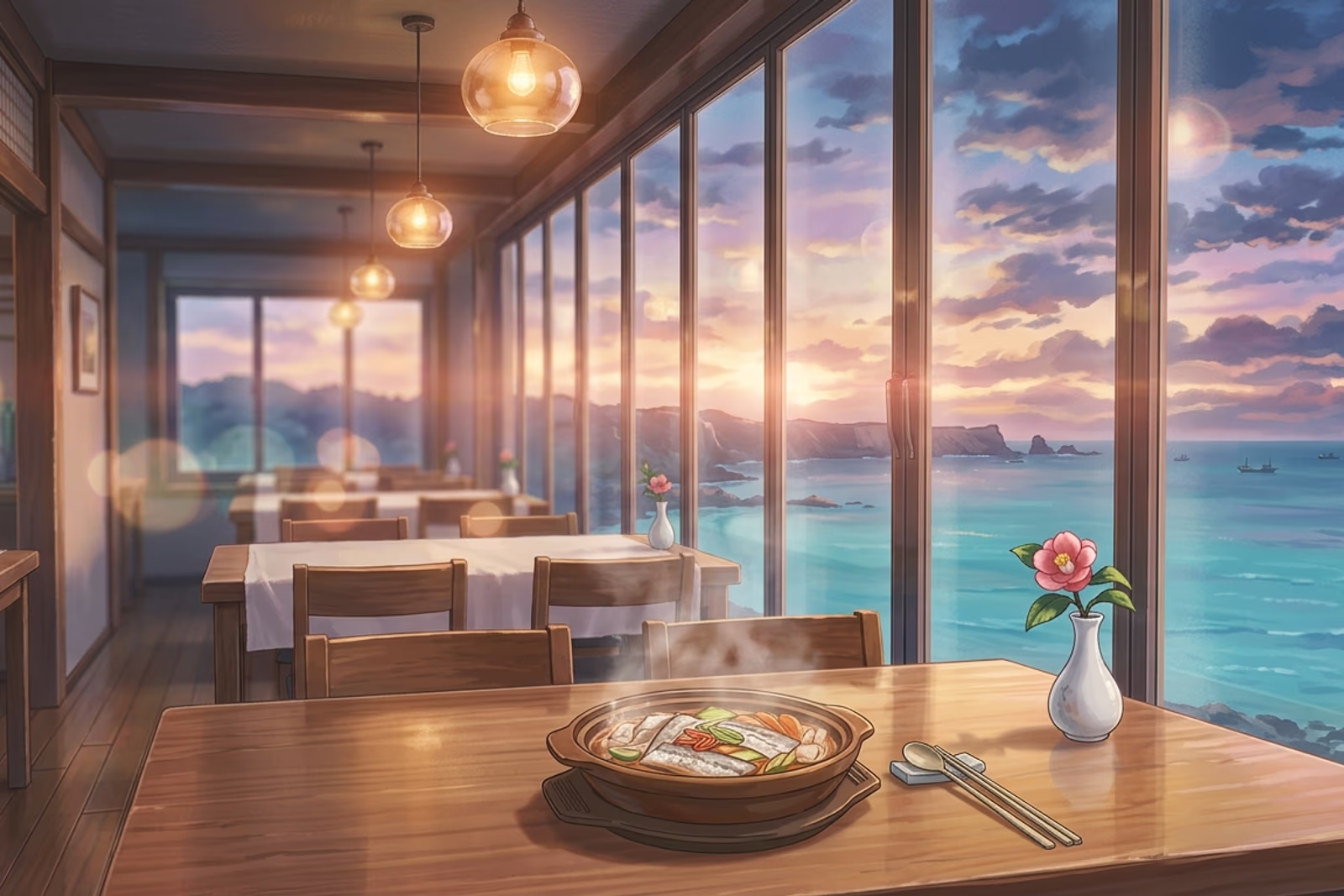
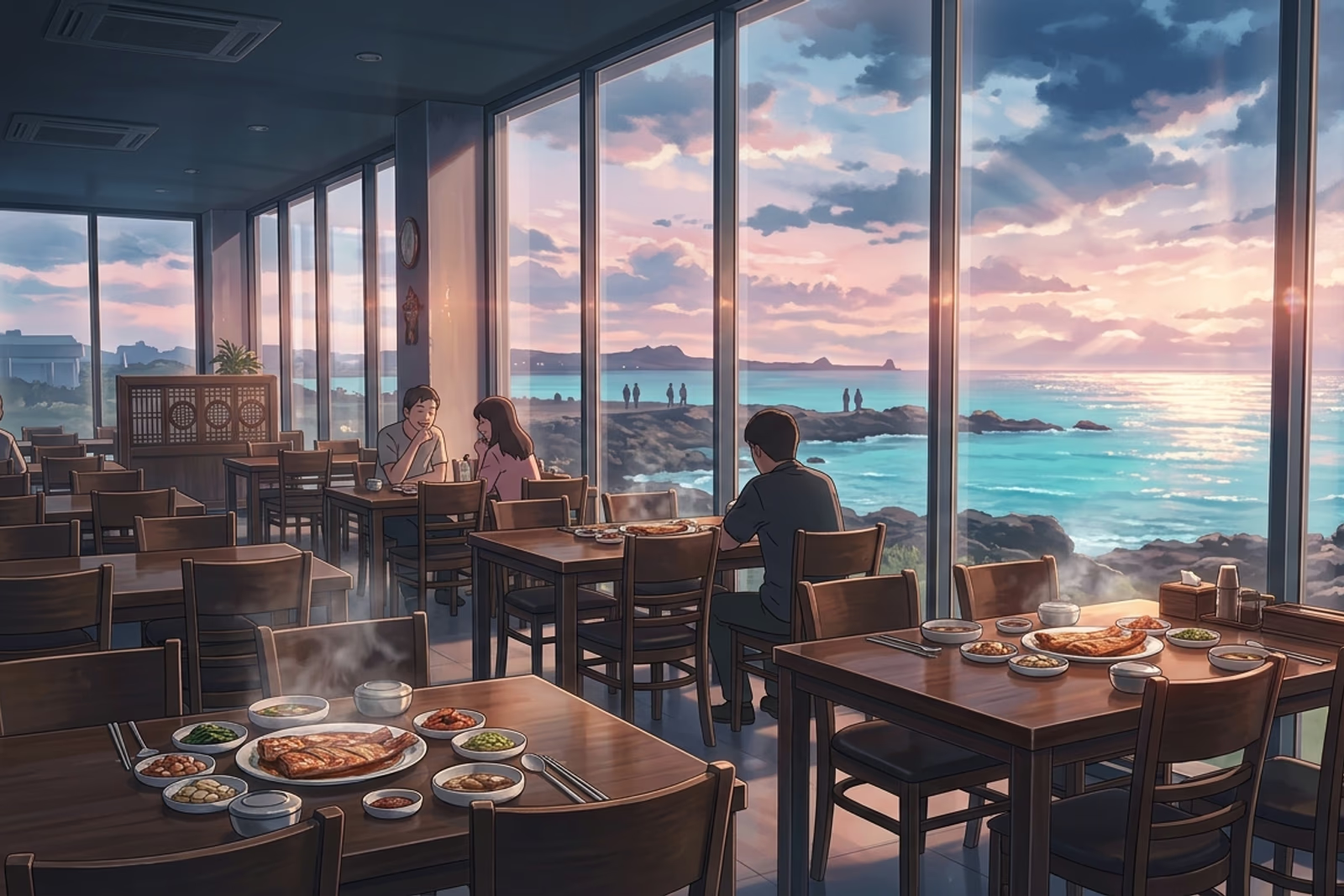
Every measurement inside the restaurant was sized, in the end, by the shape of my mother's kitchen made slightly larger. The tables are not too high. The chairs are not too low. The light is not too bright. The music sits below the conversation. We do not, internally, refer to people as customers. They are someone's mother, someone's father, someone's family. Saying it that way changes the posture of the heart. The angle at which the knife divides a grain of meat shifts when that posture shifts.

The view through the floor-to-ceiling glass is not something we can choose. It arrives in a new color every day. Some days it is jade. Some days it is the gray of an old coin. Some days it is something between pink and orange. What we can place on a table in front of that view is one meal, eaten without fear of a single small thread.
When the doors first opened, a meaningful share of the earliest guests were older. A father-in-law led in by his son-in-law. A grandmother out of the house for the first time in months. A grandfather brought along by his grandchildren. One older guest, when she sat down, asked very quietly, "Are there really none in here?" The question was not really aimed at an answer — it was a person checking inside herself whether a single beloved bowl was allowed back at her own table. "There really aren't any." The scenes that follow that one short sentence renew, every day, the first line of this work.
A guest walked up to the counter one evening after finishing his meal. "I just finished an entire plate for the first time in a very long while." His voice was a little uneven; his eyes were faintly pink. That single sentence paid back the whole dawn.
8. Still, at Five in the Morning
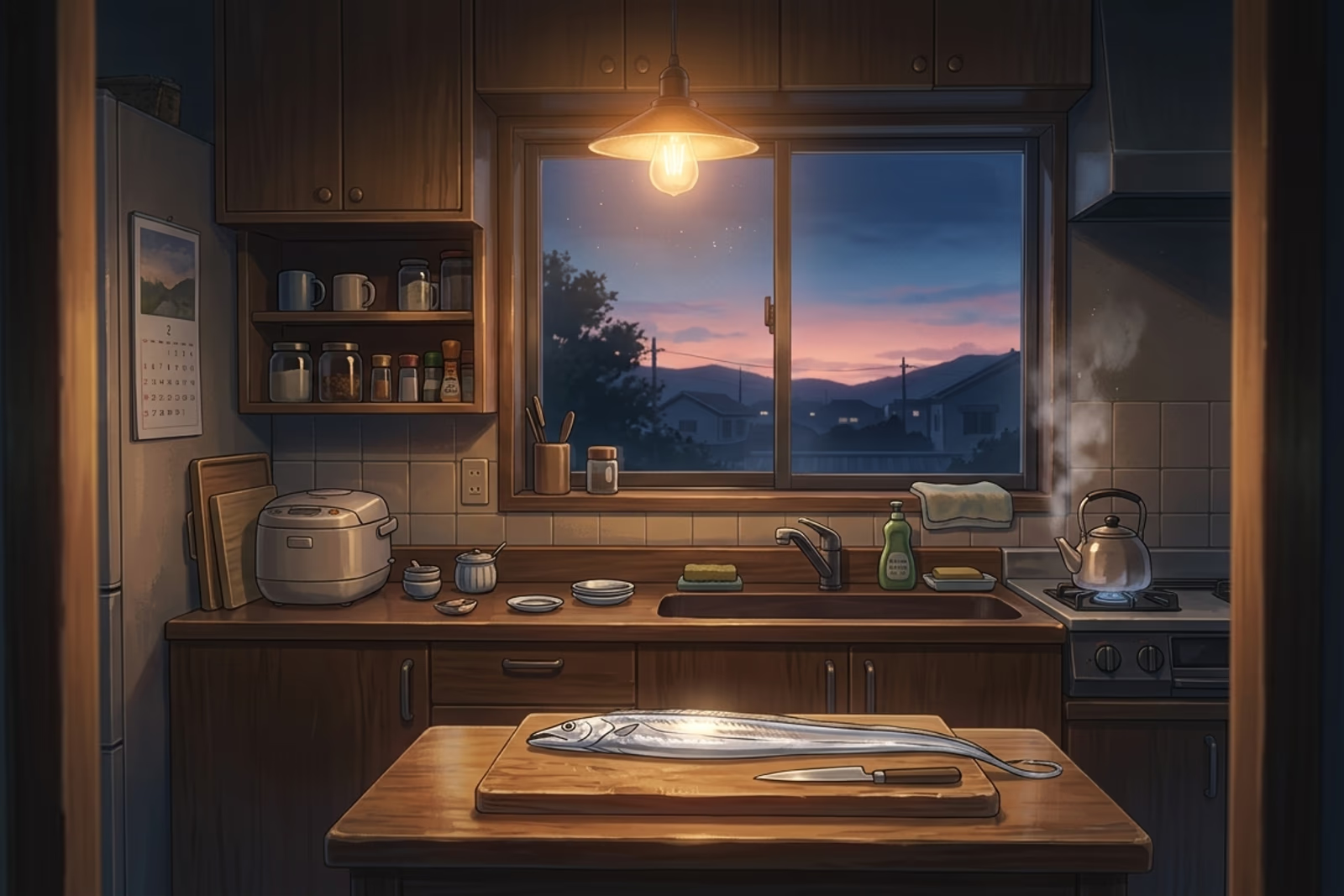
Today, again, the kitchen light goes on at five. The light is exactly the same one as the day this practice first began. The difference is that the callus on the back of the hand has thickened, and now more than one face surfaces in the empty mind once the hand begins to work.
A single piece of meat.
Inside it now lives one promise that has grown into many.
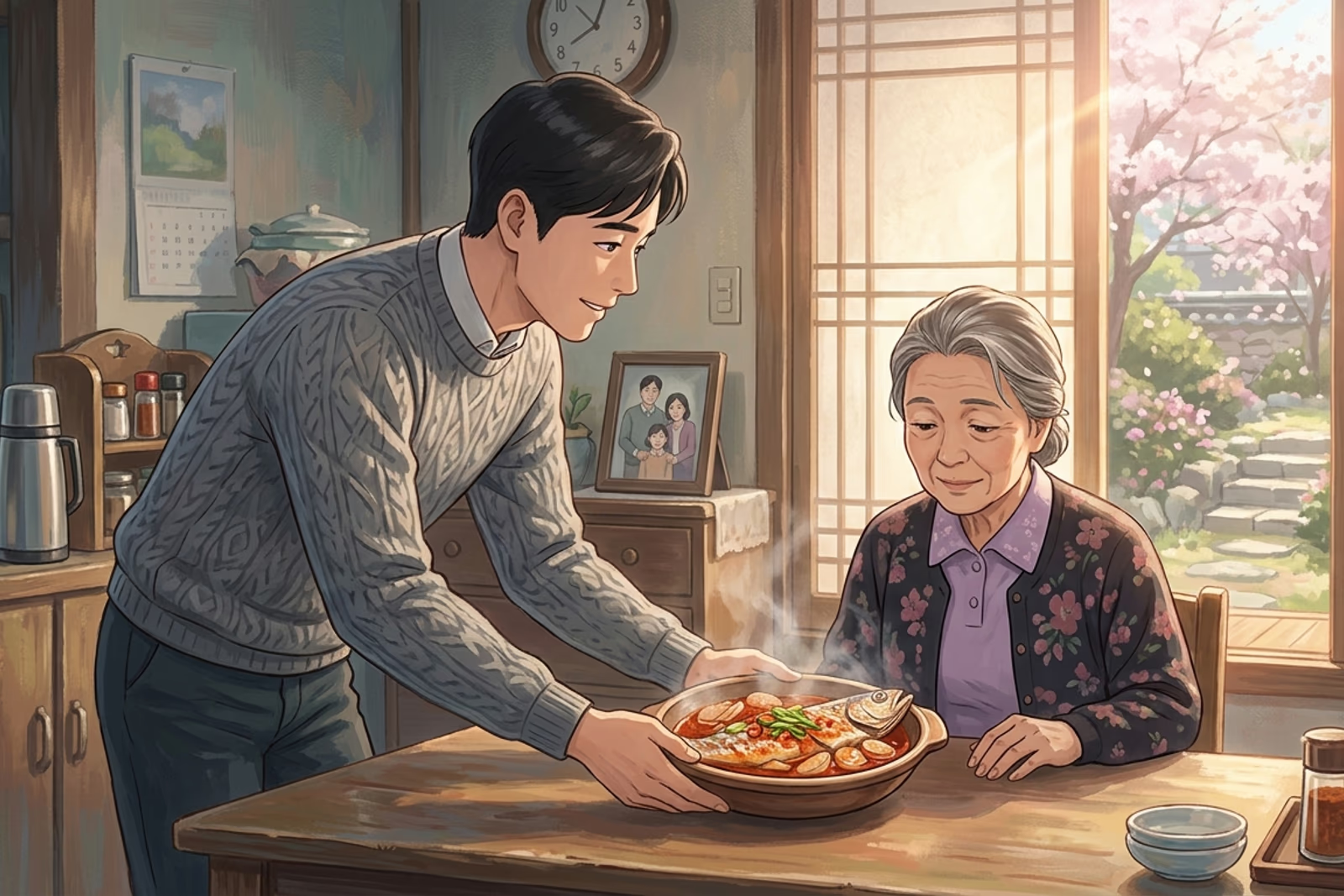
My mother visits the restaurant from time to time. Weekday afternoons, when the room is not busy, she takes a seat near the window and watches the sea for about an hour. Some days she eats a bowl; some days she only has a cup of tea. She rarely speaks during that hour, but the silence is no longer heavy. It is the silence of someone reassured. The silence of a person whose old favorite has come back to its place.
> A table set with care, the way a mother's table was.
That short pair of lines is etched on a small plaque at the entrance. Many people read it as a marketing line. In truth, it is the closing half of the private line a son once wrote for his mother. Every private vow grows solid only on the shoulders of the person who keeps it. Every morning the door opens, those shoulders solidify a little further.
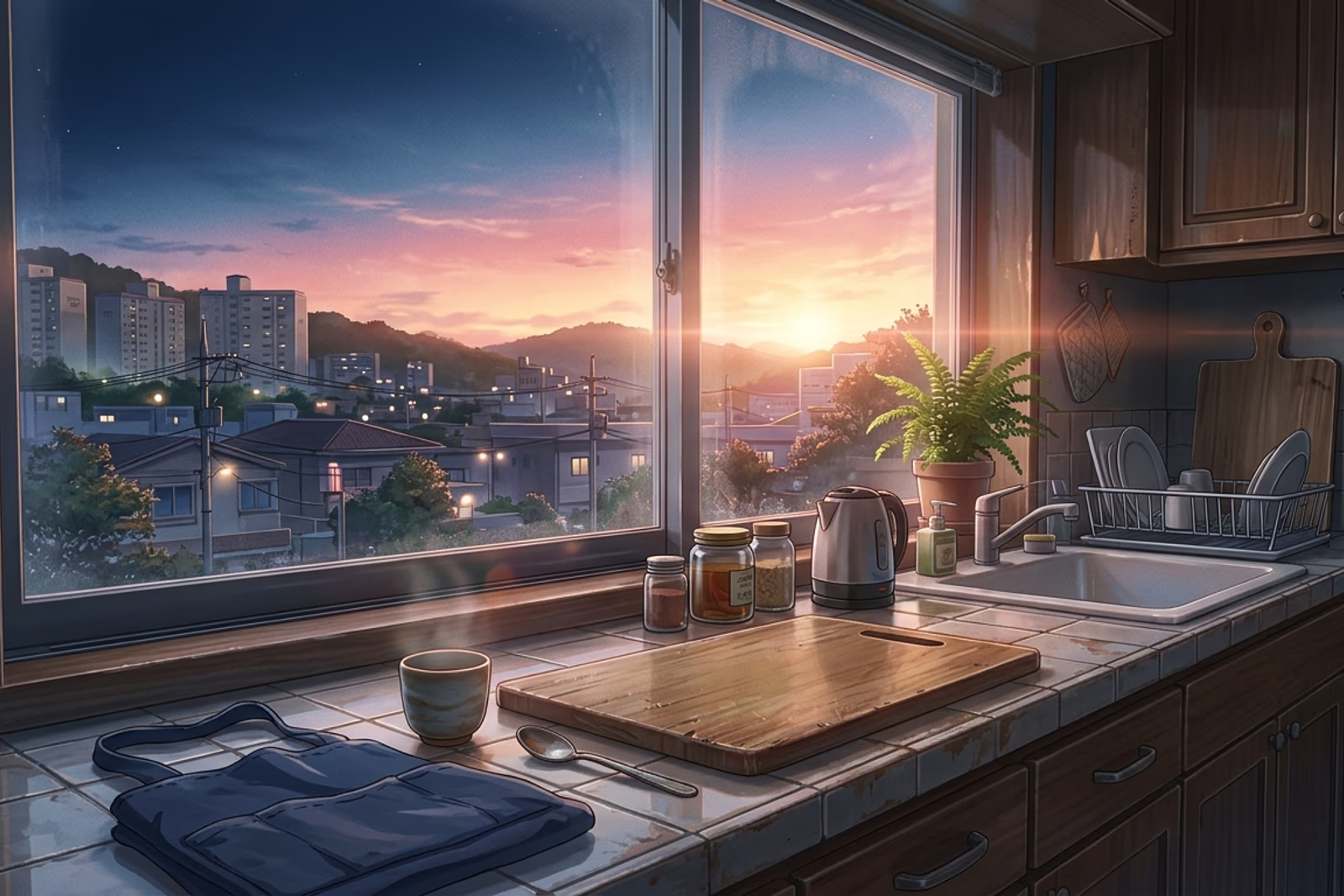
One piece of meat in front of one guest sounds like a small thing. Only someone who has watched a person breathe out, in safety, in front of that small thing — only that person knows how big the small thing actually is.
Beyond the floor-to-ceiling glass of Aewol, the sea moves again today. In front of that movement, one mouth after another grows fuller. At the very beginning of the whole sequence, a single person still stands. My mother. And all the shoulders that resemble hers. We will never set every one of those tables in a single day. But fish after fish, deboned in the dawn, eventually turn one bowl into two, then ten — that arithmetic shows itself every working day.
A vow written into the hands does not erase. Spoken promises lose mass over time; what the hands have memorized stays in the body like callus. Whoever takes the work up each morning reads the line in the first notebook again. The line that began as a wish for one mother's plate to grow fuller now rewrites itself, daily, at the entrance of many more tables.
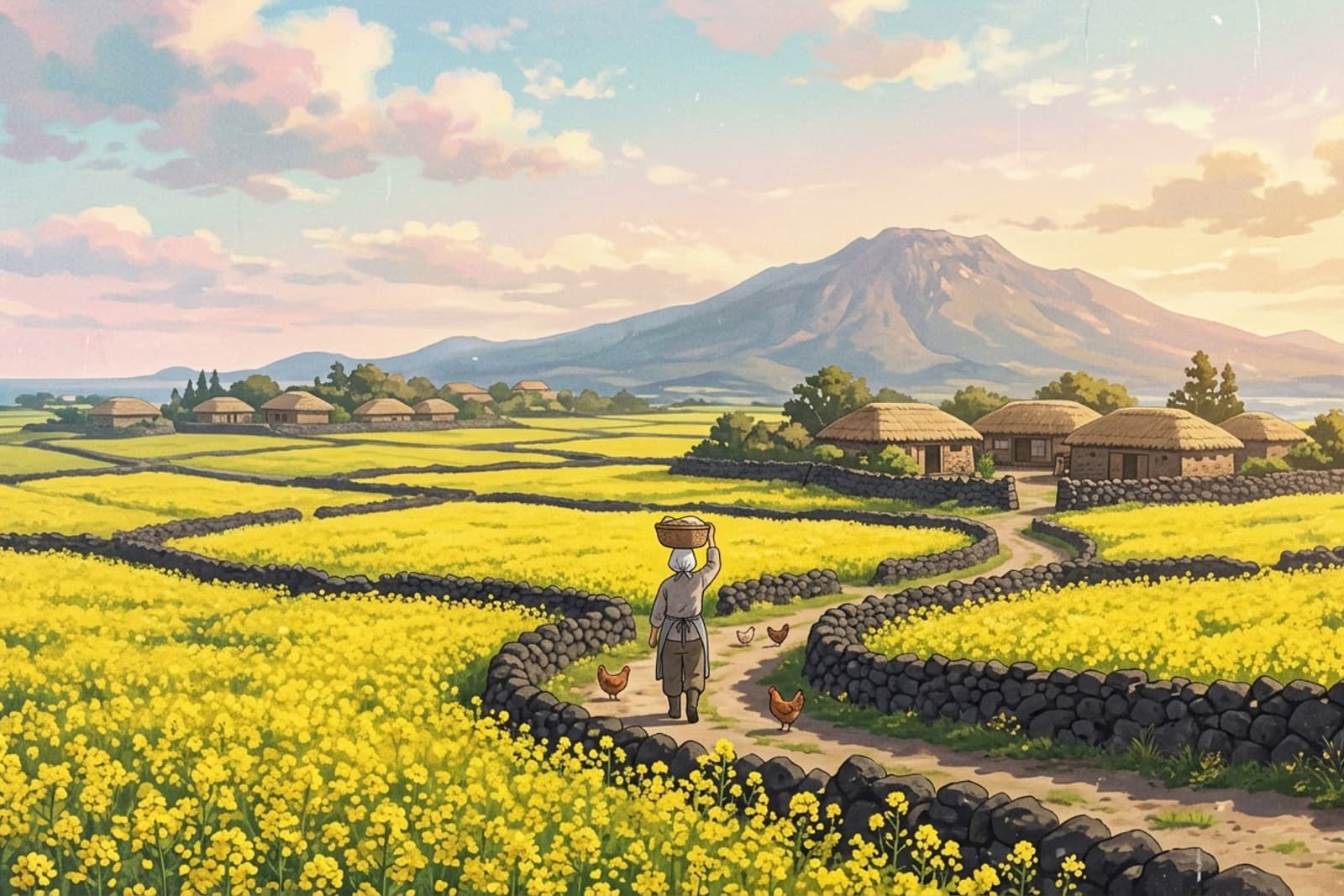
Sometimes, very early on the road to the harbor, the landscape she described as a child seems to flash past the window of the car. Yellow fields. Black walls. The distant ridgeline of Hallasan. A woman with a basket on her head walking slowly along the path. That back has never been shown to us in person, and yet it has always been written deep inside every one of her meals. The bowl we set out every day is a distant descendant of the bowl that started inside that basket.
Frequently Asked Questions
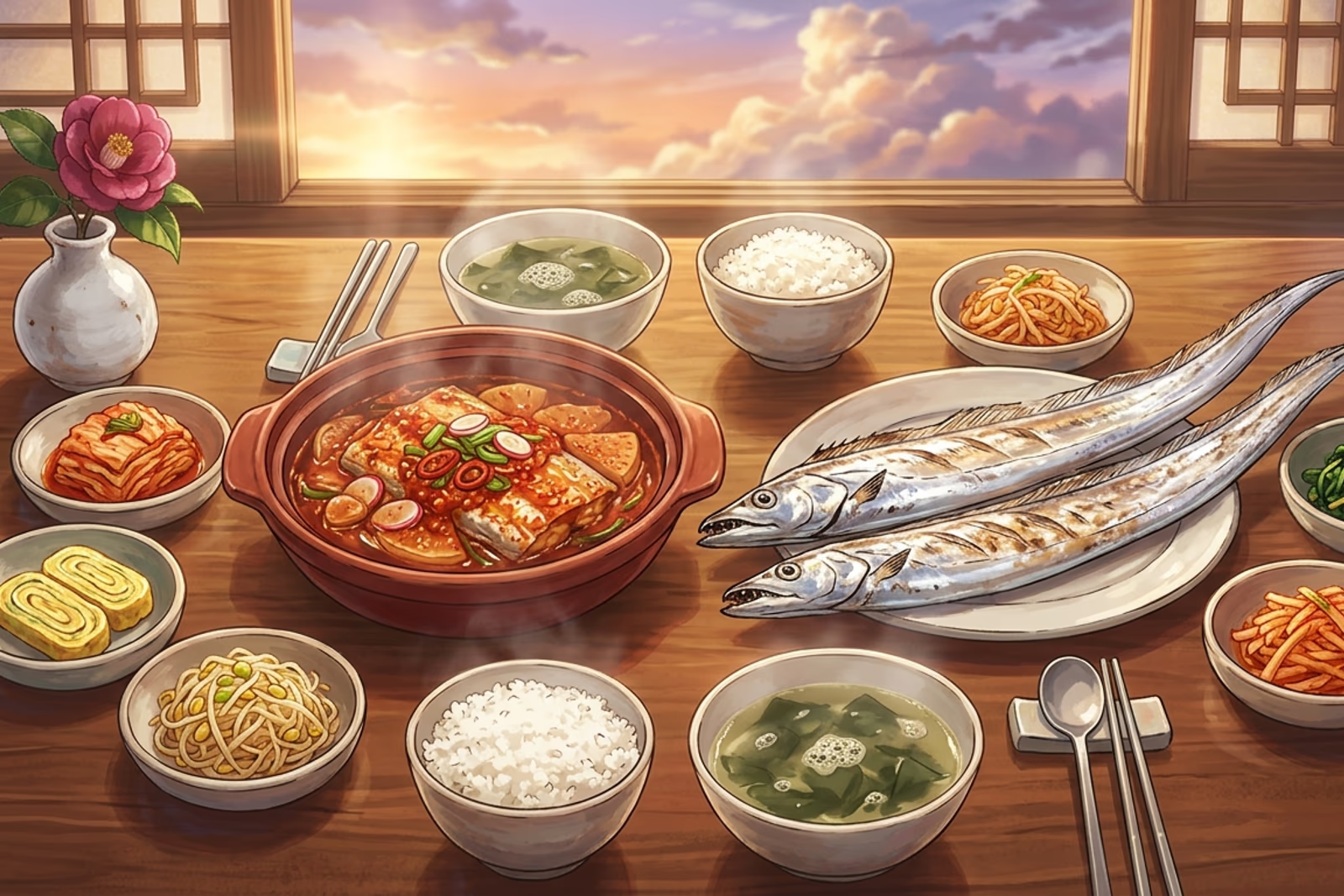
Six questions arrive most often from readers meeting the Galchibada story for the first time. Anything else, please come by the Galchibada home page →.
Frequently Asked Questions
- How did Galchibada actually begin?
- It began with a private vow a son made to his mother after she quietly stopped eating a fish she had loved her entire life — because of a single small bone that had once injured her throat. From the next dawn onward he stood at a cutting board, lifting roughly eighty small bones out of each hairtail by hand with tweezers. That practice eventually grew into the kitchen now operating in Aewol on the Jeju coast.
- Are the bones really removed completely, by hand?
- Yes. Every hairtail is deboned by hand at dawn, with the smaller intramuscular bones lifted out one by one with tweezers. Each fish carries an average of around eighty small bones, and on a working day more than two hundred fish go through that process. The original principle — that a guest should be able to eat without a single moment of fear about a small bone — has been kept since the first morning.
- Does the mother still eat hairtail today?
- Yes. Since the spring afternoon of that first boneless bowl, she has returned to eating it as something she enjoys. She visits the restaurant from time to time on quiet weekday afternoons, sits near the window for about an hour, and either has a meal or simply a cup of tea. The menu is built so that the form of every dish would be comfortable for her to eat first; anything she cannot eat is not placed on a guest table either.
- What do you recommend ordering at Galchibada in Aewol?
- The boneless braised hairtail is the dish that started everything and remains the first recommendation. A larger set that includes whole grilled hairtail, grilled abalone, and a seaweed soup tends to work well for families dining together. All hairtail served is wild silver hairtail brought up in the nearby waters off Aewol that same morning.
- Is it comfortable to come with an older parent or grandparent?
- The restaurant was designed from the beginning around an older guest. Table height, chair posture, ambient light level, and music volume were all selected to keep the dining experience easy for an elder, and the deboning is hand-finished from start to end. Weekday lunch hours are the most relaxed.
- A relative of mine has been avoiding hairtail because of the bones. Would Galchibada be a good idea?
- This restaurant exists exactly for that situation. Anyone who has been hurt once by a small bone, anyone whose appetite has narrowed, anyone who hesitates in front of a plate — putting a fearless mouthful in front of those guests is the work the kitchen was started for. Please bring them in without worry.
A mother's table, set in front of the Aewol sea
Galchibada in Aewol — a boneless meal is waiting for you
A pair of hands that began this work for one person can reach a table that became smaller for the same reason elsewhere. In Aewol, where the sea shifts beyond a floor-to-ceiling window, the meal those hands prepare is waiting. The hairtail your own elder used to love — without a single thread of bone to worry about.
Wild silver hairtail · Hand-deboned at dawn · Every seat with an ocean view →