Osulloc Tea Museum — An Emerald Afternoon in the Seogwang Green Tea Fields
Forty Years of Tea Cultivation in Jeju's Mid-Mountain Belt, an East Asian Peer to Uji and Hangzhou Longjing
The Osulloc Tea Museum, opened in 2001, sits inside the Seogwang tea fields that Amorepacific has cultivated since 1983. About 3.3 km² of tea fields surround a tea-culture exhibition, a tea ceremony program, a matcha dessert cafe, and the Innisfree Jeju House within a three-minute walk. From Osulloc, Aewol on Jeju's western coast is about 35 minutes by car — a clean handoff from a green-tea afternoon to an ocean-side dinner.
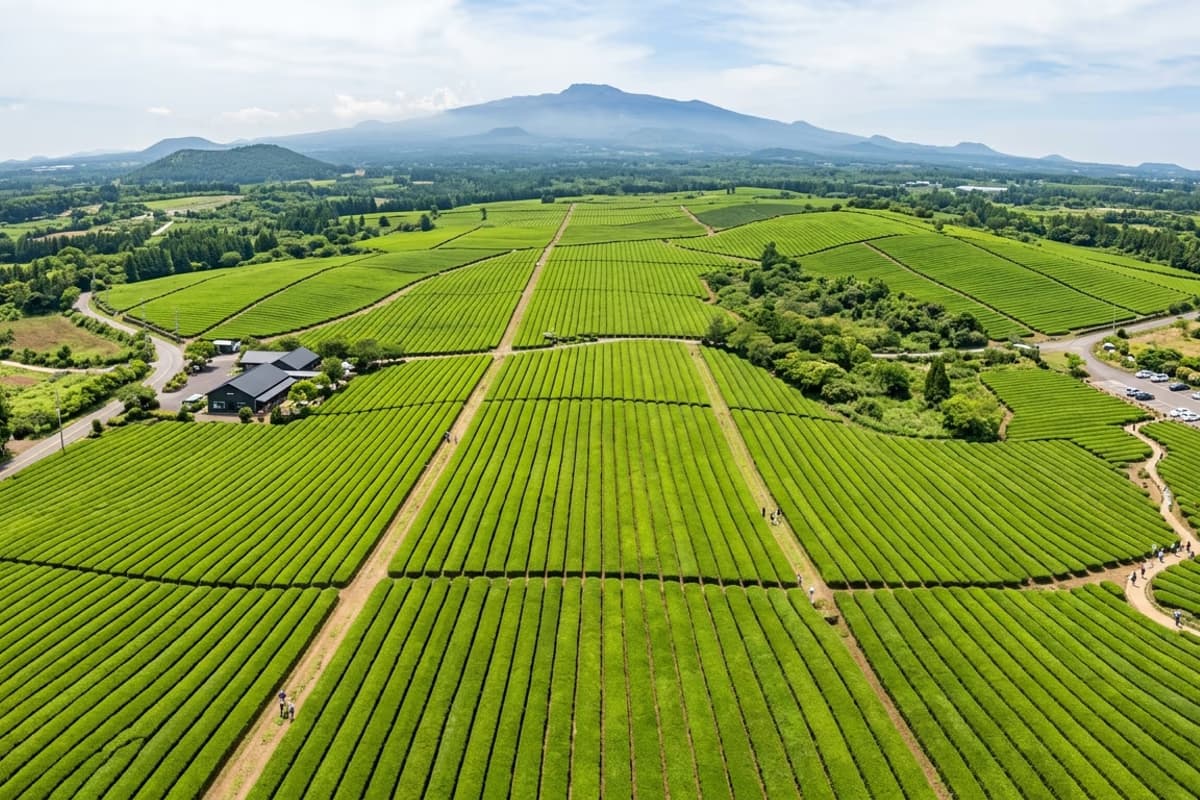
In western Jeju, there is a stretch of land where emerald rows run as far as the eye reaches. In Seogwang-ri, Andeok-myeon, on the gentle mid-mountain slopes of Hallasan, the Seogwang Tea Fields have been cultivated by Amorepacific for more than 40 years since 1983. At the centre sits the Osulloc Tea Museum, opened in 2001 — Korea's first museum dedicated to tea, and one of western Jeju's reliable cultural anchors.
The most natural rhythm here reads straightforwardly: walk the rows, breathe in the rising leaf scent, drift inside the museum to read the cultural texture of tea, and close the afternoon with a matcha latte at the cafe overlooking the same fields you just walked. For Western tea enthusiasts already familiar with the terraces of Uji in Japan or the Longjing fields above Hangzhou's West Lake, Osulloc reads as the East Asian peer at lower latitude — set in a maritime volcanic climate, with a tea profile slightly closer to Taiwanese high-mountain greens than to inland mainland varieties.
Walking the Rows — A Green Tunnel Between the Ridges
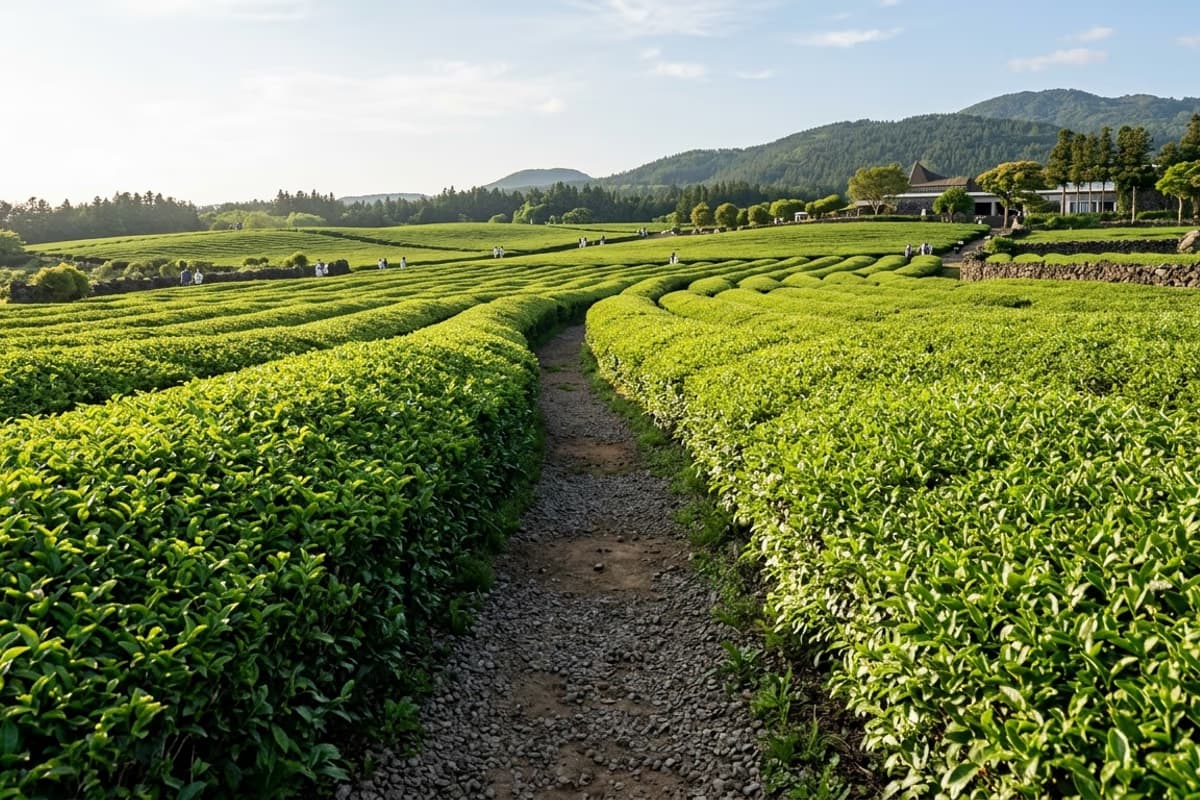
Step out behind the museum and roughly 3.3 km² of Seogwang Tea Fields opens up. The tea bushes are planted at uniform spacing, forming ridge-and-furrow rows; the walking paths cut between them at waist height, and walking through feels like passing through a low green tunnel. From mid-April through early May the first-flush harvest (sejak) is in progress, and a green, fresh-cut leaf scent rises strongest from the fields — the time of year when both eye and nose are simultaneously rewarded.
On a clear morning, Hallasan's silhouette lifts above the row tops in a composition that lays out cleanly on a phone screen. After 3 p.m., the angled afternoon light deepens the shadows between the rows, and the texture of the leaves reads sharper — a different photograph from the same standing position, a few hours apart.
Inside the Museum — Reading the Texture of Tea Culture
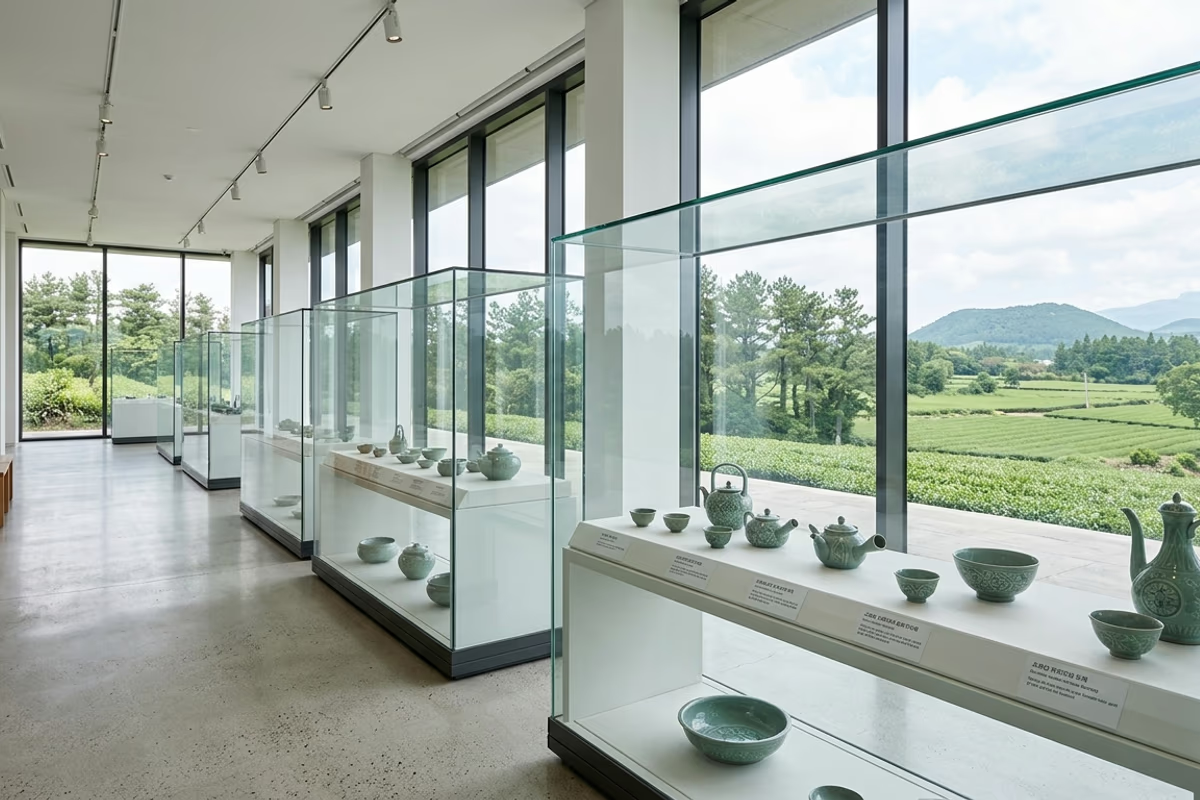
The first-floor exhibition is laid out chronologically, tracing Korean tea culture from the Three Kingdoms period through the present. Pieces in the glass cases run from Goryeo celadon tea ware to work by contemporary Korean ceramicists. A light pass takes about 20 minutes; reading the panels closely runs roughly 40 minutes.
The second floor hosts a tea-tasting program where a tea master guides participants through steeping premium-grade leaf teas. Varieties like sejak (the first flush) and ungro (a higher-altitude cultivar) appear seasonally. The experience runs longer than a typical museum visit but rewards visitors who want to understand the texture of what they will later drink at the cafe. Bookings are first-come, first-served on the day.
The Matcha Dessert Cafe and Limited-Run Menu
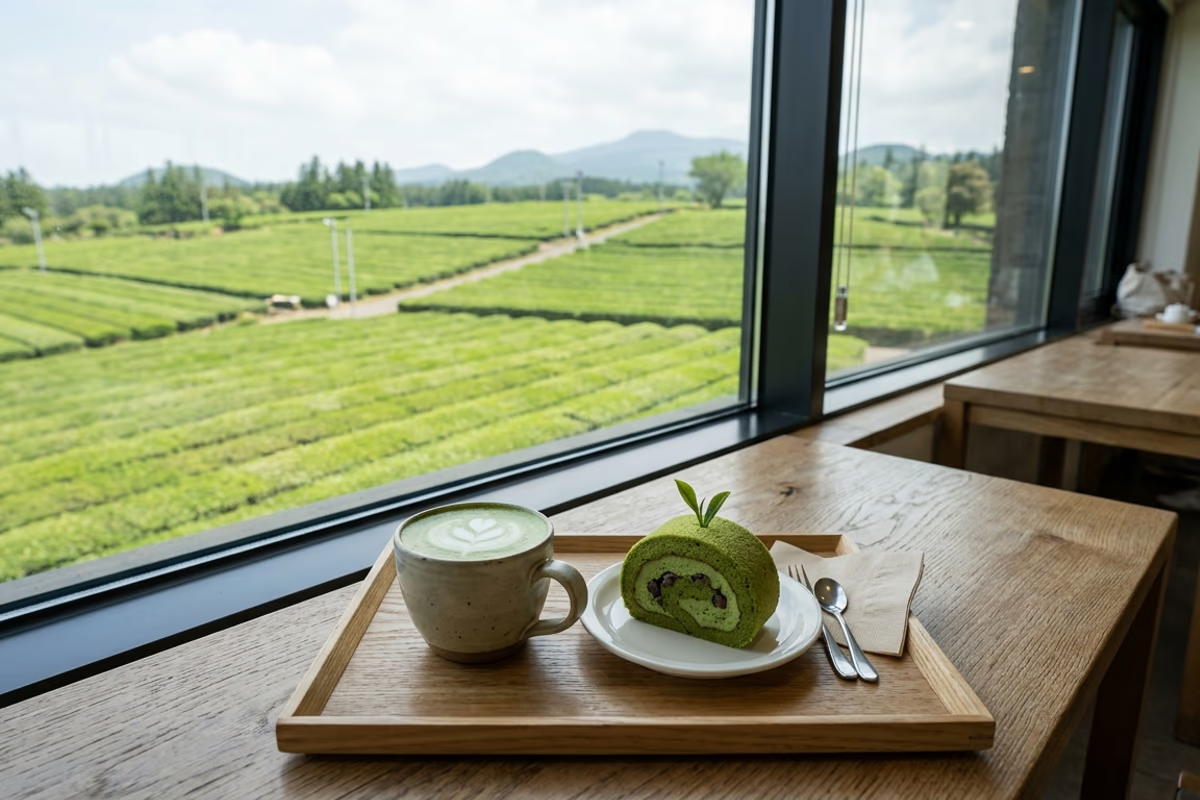
The cafe occupying one side of the museum's first floor is, in honest assessment, the highlight of the visit. The signature green tea roll cake is baked with first-flush matcha powder from the Seogwang fields directly outside — soft exterior, a quiet matcha note rising from the inner cream. The matcha ice cream and matcha latte are perennial sellers, and seasonal desserts rotate each quarter.
Window seats line up against the fields outside, framing the rows through floor-to-ceiling glass. Before 11 a.m. on weekdays is the quietest window; on weekend afternoons the queue can run 30 minutes or longer.
Innisfree Jeju House and the Wider Loop
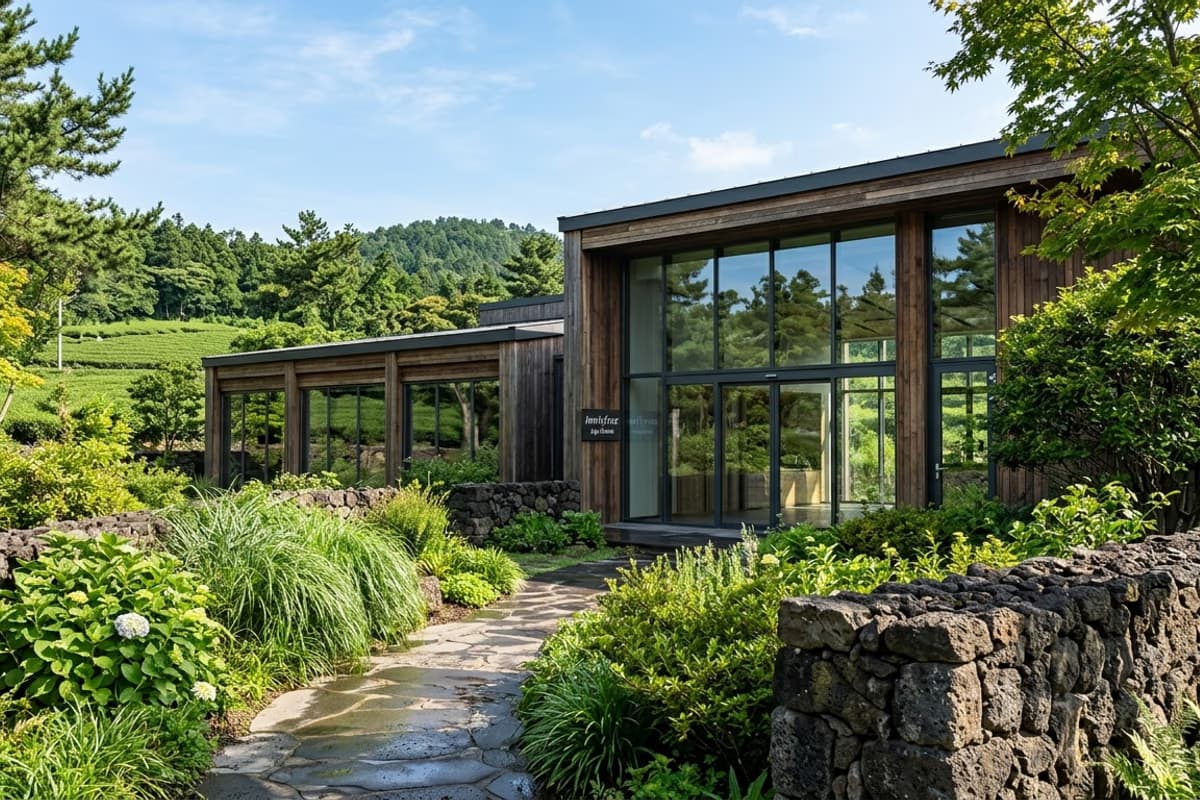
Three minutes on foot from Osulloc sits Innisfree Jeju House — a brand experience hub from the same parent group that built Osulloc. DIY skincare made with Jeju green tea, volcanic clay, and tangerine extract is the headline draw, and several Jeju-exclusive products are available only here. Together the two sites read comfortably in about two hours.
From Osulloc, heading south toward the coast connects to Visit Jeju in English-recommended sites including Sanbangsan and Yongmeori Coast in southwestern Jeju. Heading north along the coast carries you to Hallim and Aewol in roughly 35 minutes — closing the green-tea afternoon with sunset over the western sea and dinner on the coastal road.
Frequently Asked Questions
- How much does it cost to enter Osulloc Tea Museum?
- Admission is free, with no reservation required during opening hours. Only the cafe purchases and tea-ceremony program carry separate fees.
- What are Osulloc's opening hours and closed days?
- Open year-round from 9 a.m. to 6 p.m. (last cafe orders are accepted up to 30 minutes before closing). Only Korean New Year and Chuseok holidays may run shortened hours.
- Is parking free?
- A dedicated free parking lot accommodates roughly 300 vehicles. On weekends and holidays the lot can fill up by mid-morning, so arriving before 10 a.m. is the conservative call.
- Can I walk into the rows for photographs?
- Entering the rows themselves is restricted to protect the tea bushes. The maintained perimeter walking path delivers strong compositions with the rows as the foreground, and standing at the edge of a row already produces a generous, photographable backdrop.
- How long is the drive from Osulloc to Aewol?
- About 35 minutes via Pyeonghwa-ro and the western coastal road (Route 1132). Taking the Hallim coastal road instead runs about 40 minutes and rewards a sunset window with a clean drive along the western sea.
After a green-tea afternoon, a 35-minute drive to a sunset table
Carry the emerald of the rows to a window seat facing the sea
When the emerald of the tea rows still rests behind the eye, a 35-minute drive west drops you in front of a floor-to-ceiling window where the emerald of the sea takes over. At the table facing that view, the afternoon's green and the evening's first bite meet in a single seat.
About 35 minutes from Osulloc Tea Museum to Galchibada Aewol →