Saryeoni Forest Path — Jeju's UNESCO Cedar Sanctuary
A Quiet Hour Among 50-Year-Old Cedar Trunks the Coach Tours Have Not Quite Figured Out How to Hurry
Saryeoni Forest Path runs about 15 km through Jeju's mid-mountain belt, with the popular loop reaching a viewing deck around 1.5 km in for a comfortable hour out and back. The first 500 m is a barrier-free deck for wheelchairs and strollers. Free entry, 9 a.m.–5 p.m. (last admission 4 p.m.). Sneakers and a light rain layer recommended. Coastal Aewol and dinner at Galchibada sit about 50 minutes (roughly 30 miles) west.
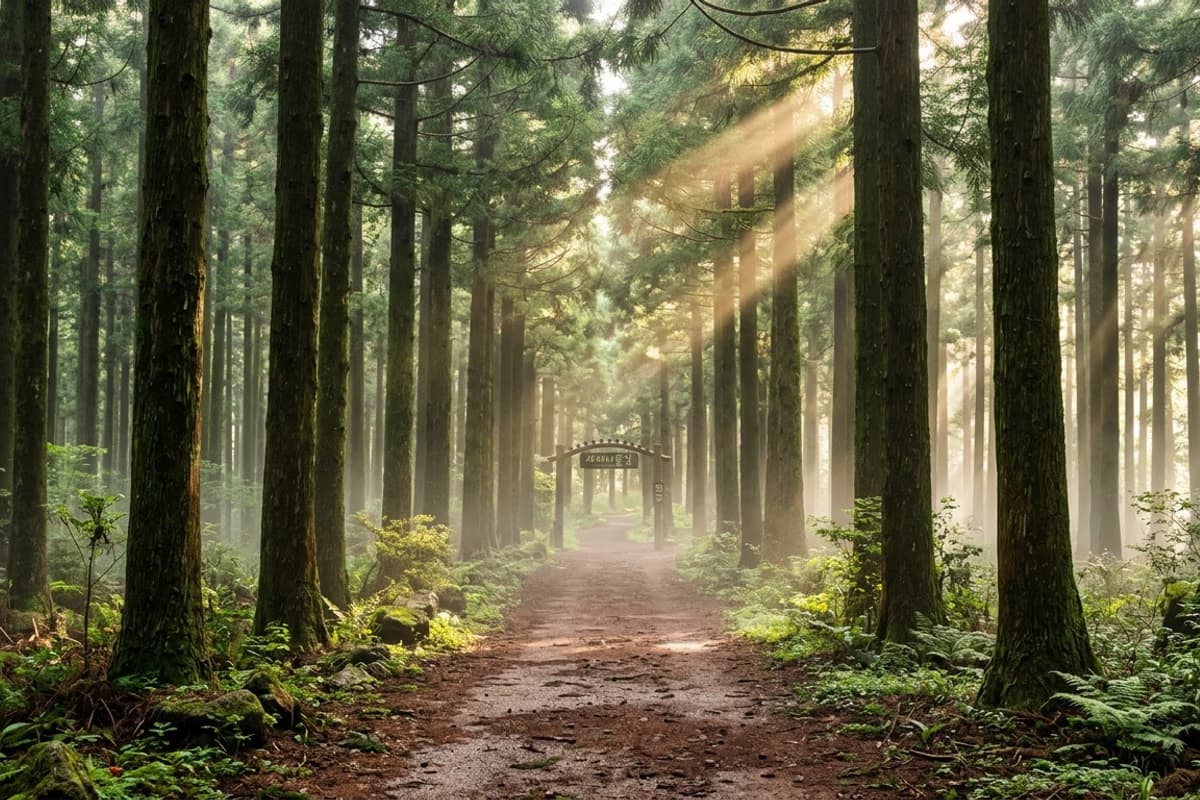
There are forests where the trees do the talking before you do. Saryeoni Forest Path — opened off Bijarim-ro at roughly 550 metres (1,800 ft) above sea level — is the easiest place on Jeju to stop hearing yourself think. Cedars and Japanese cypress grow shoulder to shoulder in dense vertical lines, the soft earth track slips between them, and by the time you are 200 metres in the city you left thirty minutes ago has fully fallen off the radar. Designated a UNESCO Biosphere Reserve in 2002, this corridor holds the most intact vertical ecology of Jeju's mid-mountain belt.
The full route runs about 15 km (9.3 miles), but the loop most travellers actually walk reaches a small viewing deck about 1.5 km in. Out and back, that's roughly an hour of forest — about the same elapsed time as the queue for Sanbangsan on a busy Saturday, only with twenty times the quiet.
The Trail in Plain English
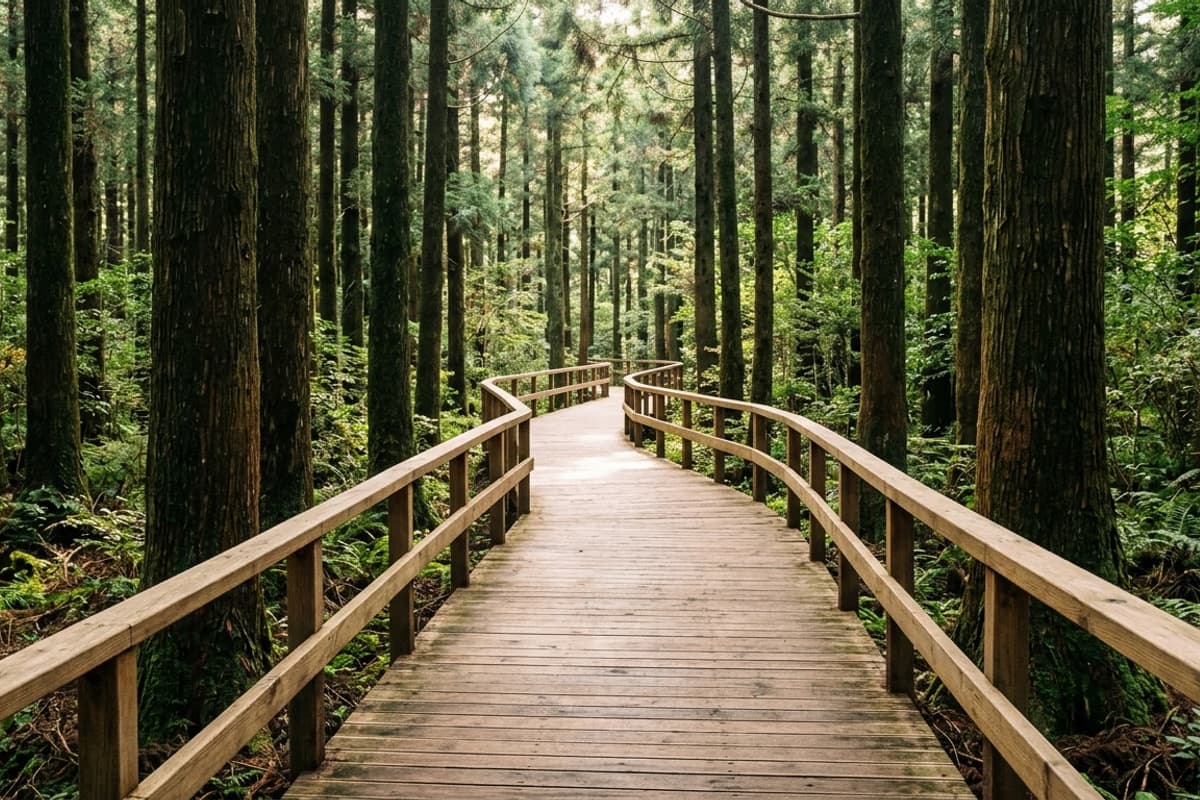
The walk starts at the Saryeoni-supgil information centre on Bijarim-ro. The first 500 m (a third of a mile) is a barrier-free deck — flat, wide, friendly for wheelchairs and strollers. After that the earth track takes over and starts gently rolling uphill and down through the cedars. At the 1.5 km mark a small platform looks out over the ridgeline toward Mulchat-oreum, and unless you have packed a proper lunch and a second pair of socks, that's the natural turnaround.
Two or three benches and a clean toilet block sit along the way. Pushing on to Mulchat-oreum adds another 5 km out, and from there a full traverse to Saryeoni-oreum is the kind of thing you commit to with daylight in the bank and good shoes on. Korea Tourism Organization lists the full traverse as moderate; the loop most readers will want is honestly easy.
What Is Actually Growing Here
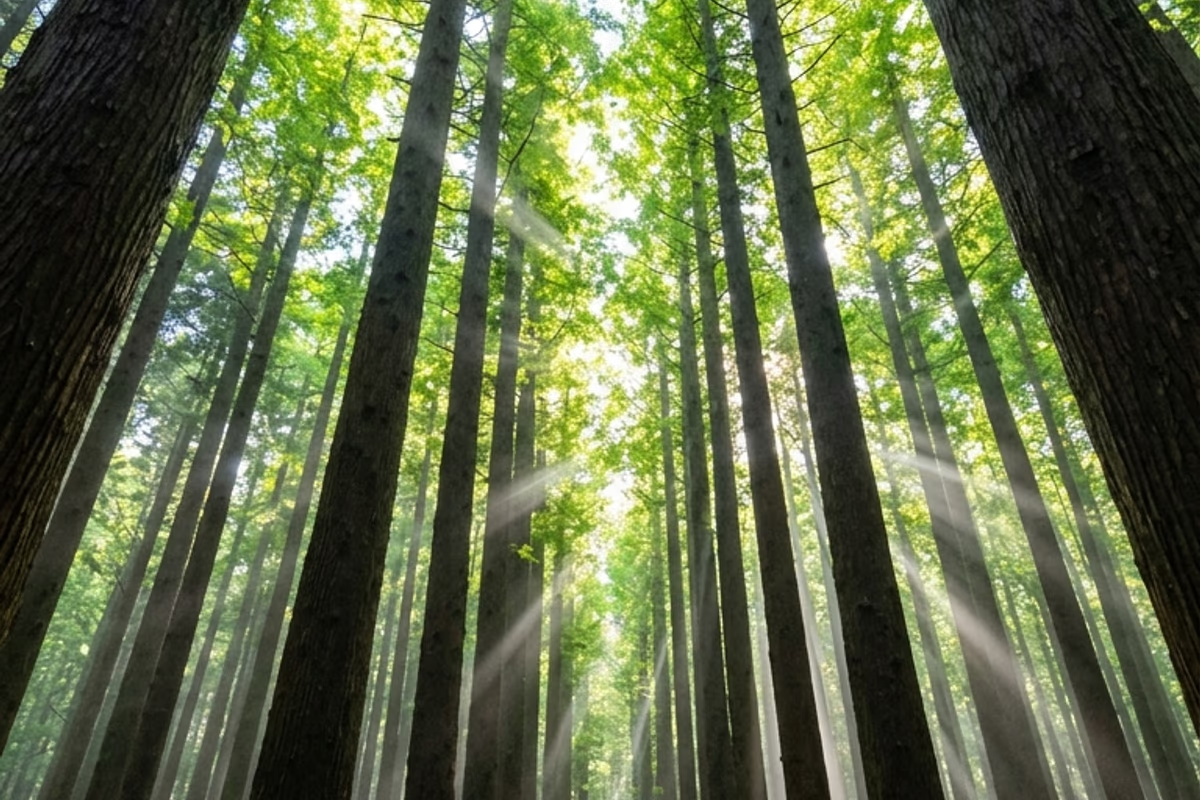
The first thing you register is the cedar (Cryptomeria japonica). Almost everything you see was planted in the early 1970s under a Jeju reforestation programme — roughly 800,000 seedlings — which means most of these trunks are about 50 years old, 20 metres (65 ft) tall, and laid out in eerily regular spacing. That spacing is part of why walking here feels so rhythmic, like a metronome you cannot quite hear.
About a third of the way in the planting shifts to Japanese cypress (Hinoki). If you have spent any time in onsen towns in Japan, the smell is familiar — and not by accident. Cypress emits roughly double the phytoncide of cedar, and this stretch is the one local doctors quietly send patients to. Spring and summer drop sunlight through the canopy in dappled patches; autumn brings the underplanted hornbeam and maple into orange and red. Cedar and cypress hold their green through winter, so this is genuinely a four-season walk.
The Best Hour to Be Here
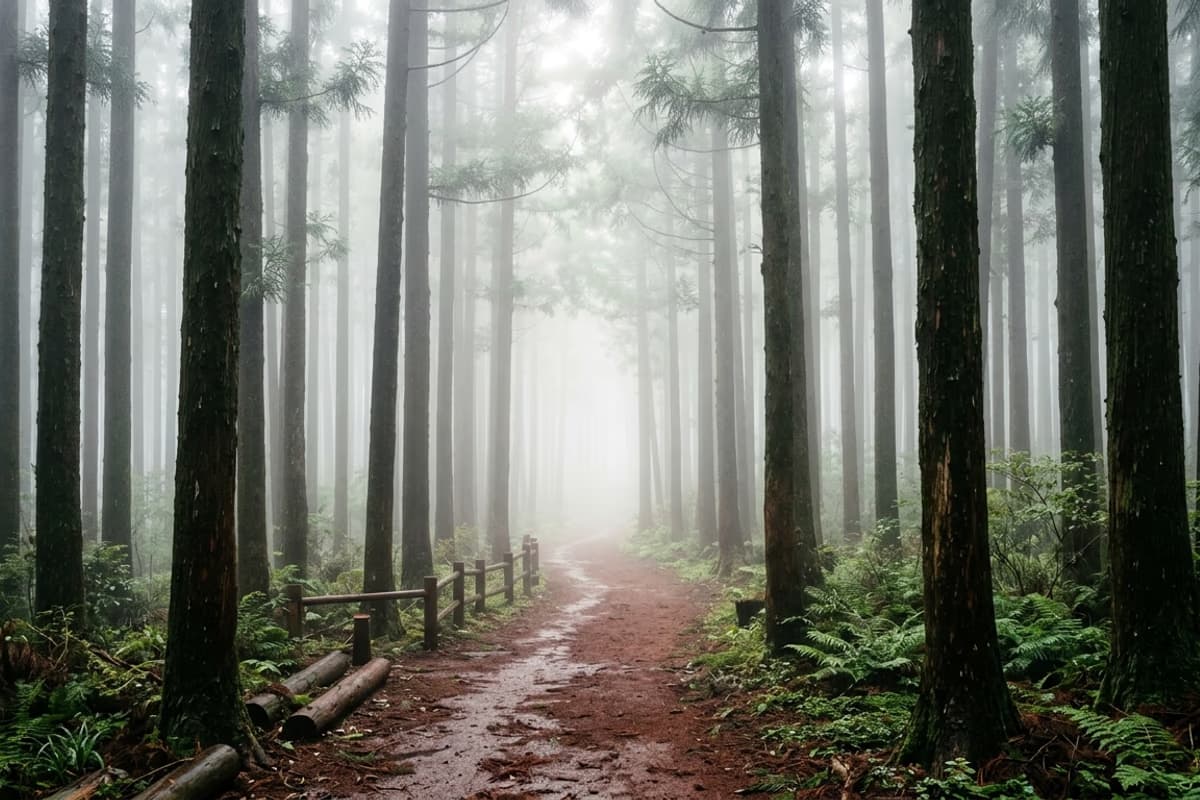
Aim for between 7 and 9 in the morning. Early mist sits in low horizontal bands between the trunks, and when sunlight cuts through it the forest takes on a quality most travellers reach for the word "cathedral" to describe. Equally important — the coach tours do not arrive before about 10. If you can be on the trail by 7:30 you will probably have the first kilometre to yourself.
Afternoons after 3 p.m. work too: the western light comes in sideways, picks out the grain of every trunk, and gives photographers the cleanest portraits of the day. Rainy days have their own merit — drops fall through the canopy onto leaves with a soft percussive layer, and the damp earth releases a deeper note of forest smell. Trail status sits at the Hallasan Dulle-gil official page; check it the night before in poor weather.
Fifty Years of Planted History
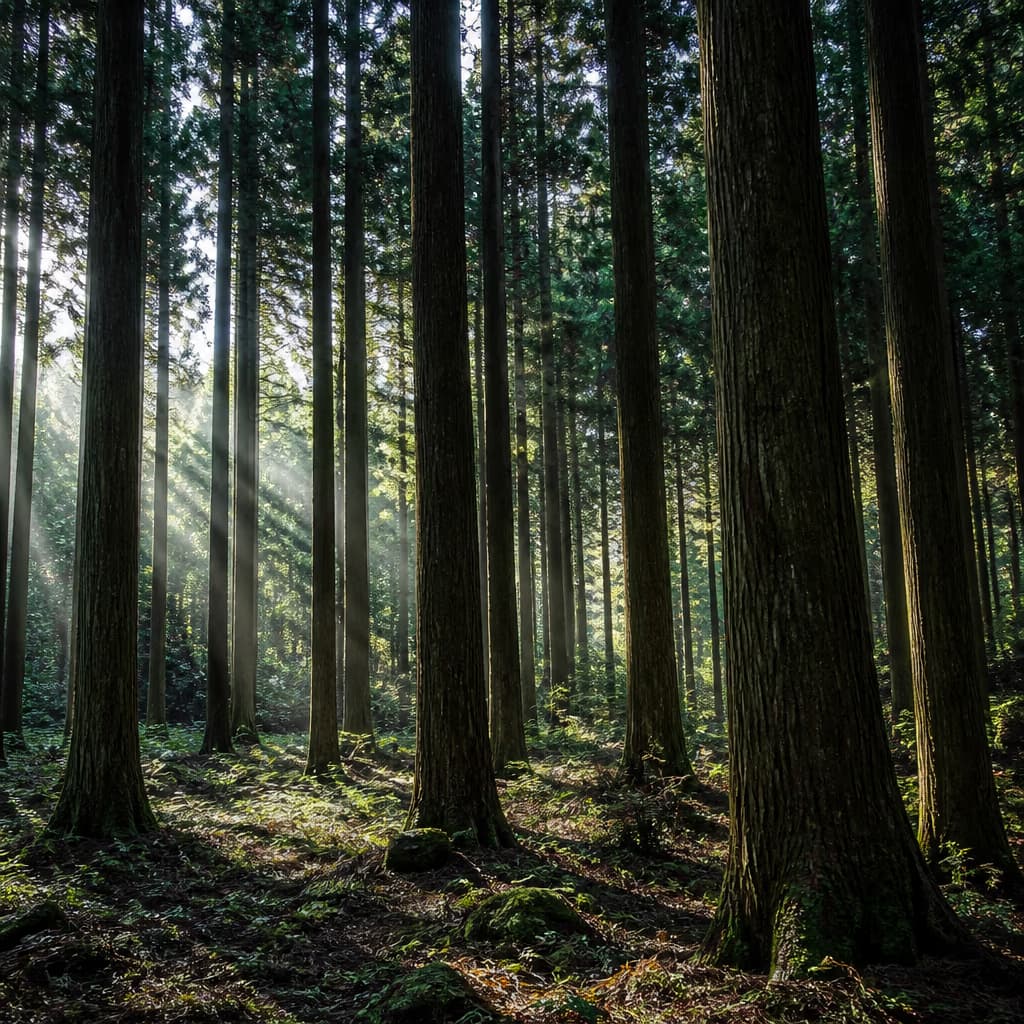
The straightness of these trunks is not natural — it is planted time. In the early 1970s, as part of Jeju's reforestation drive, roughly <strong>800,000 cedar seedlings</strong> imported from Japan went into the soil along Bijarim-ro. Half a century later they are the vertical grove you walk through. The original goal was a timber resource. By the time the trees were tall enough to harvest, the ecological and therapeutic value of the canopy had outgrown the lumber value, and in 2002 the area landed inside the UNESCO Biosphere Reserve boundary.
In the half-century since planting, native broadleaves — hornbeam, maple, dogwood — have moved in between the cedar rows of their own accord. The result today reads closer to a mixed forest than a pure conifer plantation, and the wildlife reflects it. Bird and small-mammal diversity in this stretch is noticeably higher than in the younger plantations elsewhere on the island.
Wildlife & Understory at a Glance
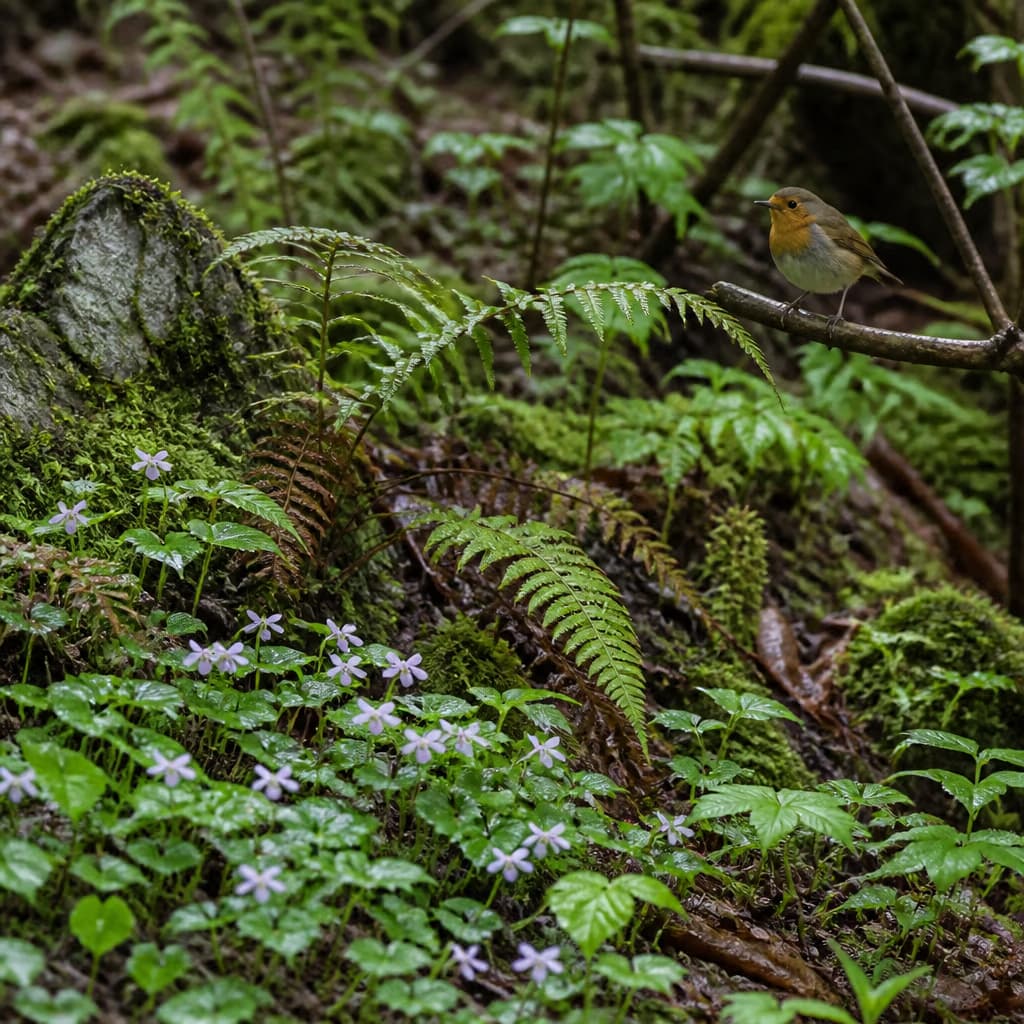
Walk quietly and a Jeju roe deer or two will sometimes cross the path ahead. Saryeoni is one of their main strongholds, and they move most at dawn and dusk. Pheasant, varied tit, great tit, white-backed woodpecker — the bird soundtrack shifts with the calendar. In spring the bright call of varied tits around the camellias; in midsummer cicada full chorus; in autumn the steady tap of woodpeckers.
The floor is carpeted with mosses and ferns. In spring you will spot adonis and liverleaf; early summer brings mountain hydrangea into bloom in waves of pale blue-violet from late May into early June. Picking anything is strictly off-limits — leave only footprints, take only photographs is the standing courtesy.
Forest Bathing for the Sceptical Traveller
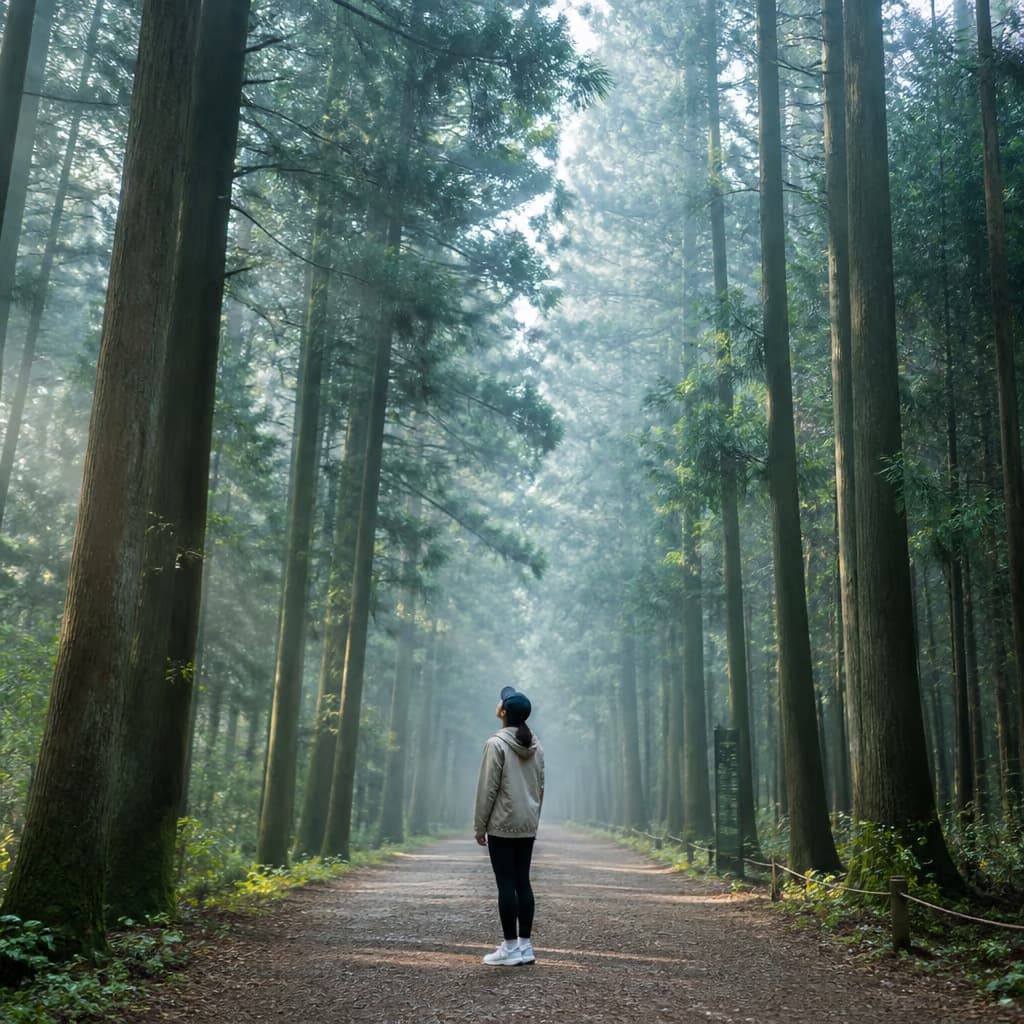
If the term "forest bathing" sounds like wellness marketing, the underlying numbers are surprisingly defensible. Cypress emits phytoncide concentrations measured at tens of times the ambient level in a typical city centre, and Korea Forest Service research documents an average ~15% drop in salivary cortisol after a 30-minute walk in a stand like this. Heart rate variability tends to normalise in parallel.
To actually get the effect, slow your pace, turn the phone notifications off, and breathe through the nose. Walking briskly as if doing intervals undercuts the point — the benefit lives in a slow 30 to 40 minutes. Pack a light layer for autumn and winter (it is noticeably cooler under the canopy than in town), long sleeves and a hat for summer (mosquitos and ticks both turn up later in the day).
Getting There & What to Pair It With
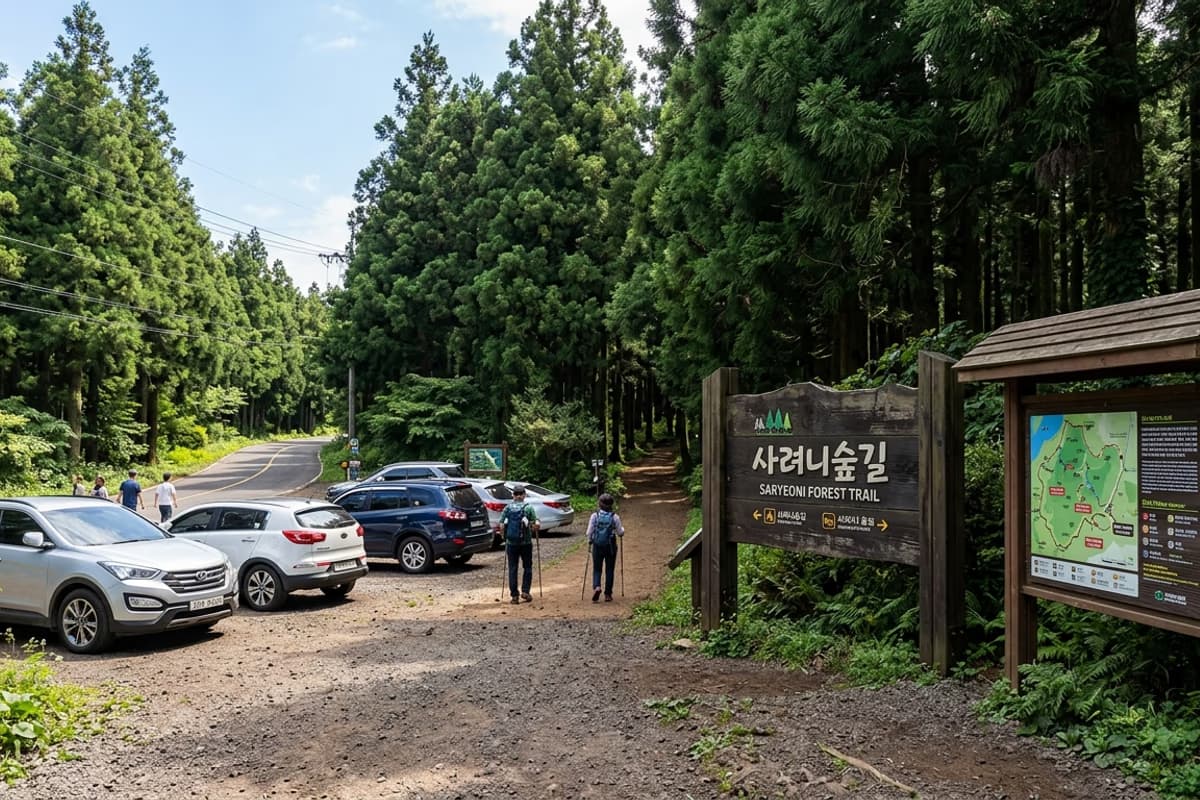
Free car park for about 50 vehicles at the Saryeoni information centre. From Jeju City along Bijarim-ro is roughly 30 minutes by car (about 19 miles); from Seogwipo it is closer to 40. On a peak-season Saturday the lot fills by 9, so an early start is its own reward. Bijarim-ro shoulder parking is tolerated but tight, and best avoided.
Heading west afterwards drops you naturally into the mid-mountain trail belt — Gyorae Samdasu Forest, Jeolmul Recreation Forest. Heading toward the coast, you will roll through Jeju City and reach Aewol in about <strong>50 minutes</strong> by car (around 30 miles). A morning of cedar quiet followed by an evening of coastal sunset is one of those Jeju itineraries that feels engineered for the day-after journal entry.
Trail Manners & Light Safety
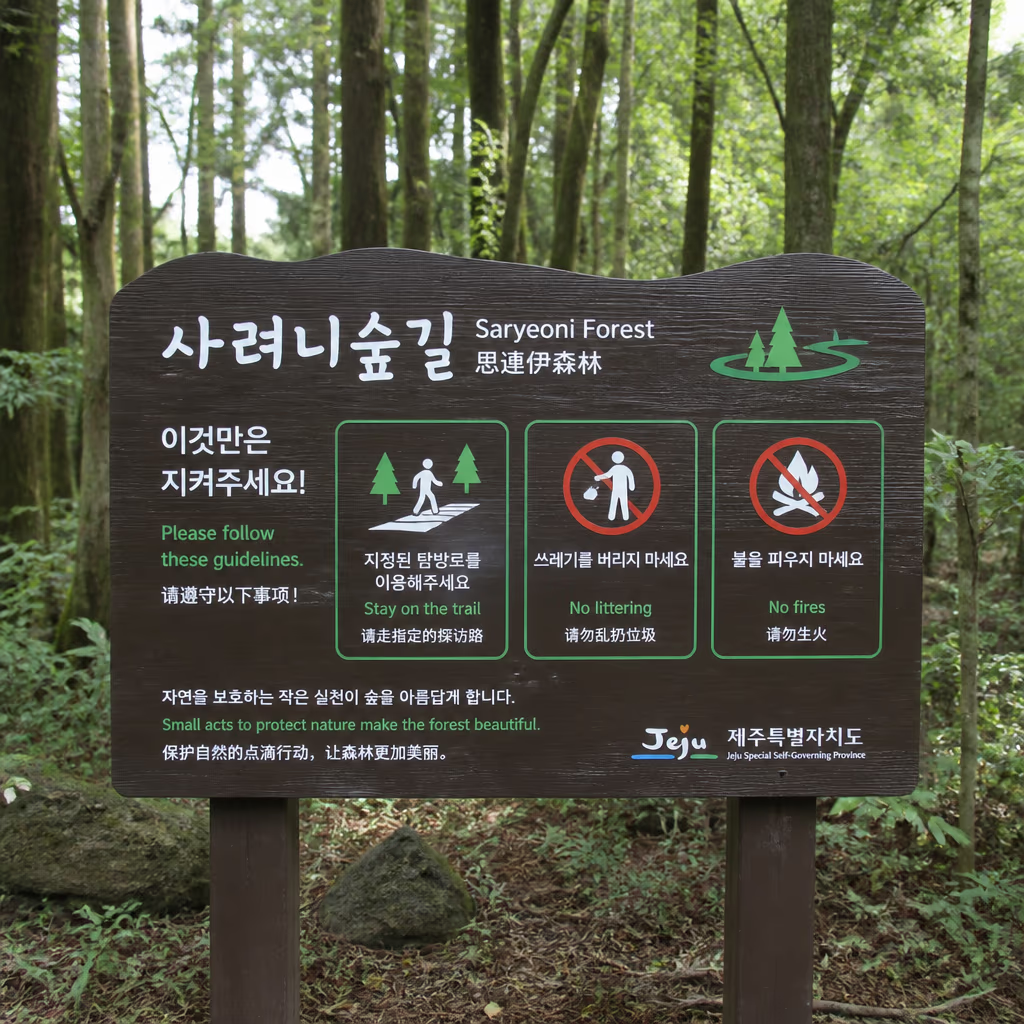
Pack out everything you pack in. No flowers, no moss, no insects — collecting is forbidden. Stepping off the earth track cumulatively damages soil and root systems, so stay on the main line. Loud conversation and Bluetooth-speaker music both belong somewhere else; the rest of the forest came here for quiet.
Summer and autumn bring ticks and mosquitoes — long sleeves, repellent, and a check at the end of the walk. Midsummer canopy temperatures sit around 25°C / 77°F, several degrees below town, so a light over-layer is worth tossing in the day pack. If a sudden squall rolls through, the cedar canopy buffers a lot of it, but the earth track turns slippery — non-slip soles, not flip-flops.
A Forest That Changes Face With the Calendar
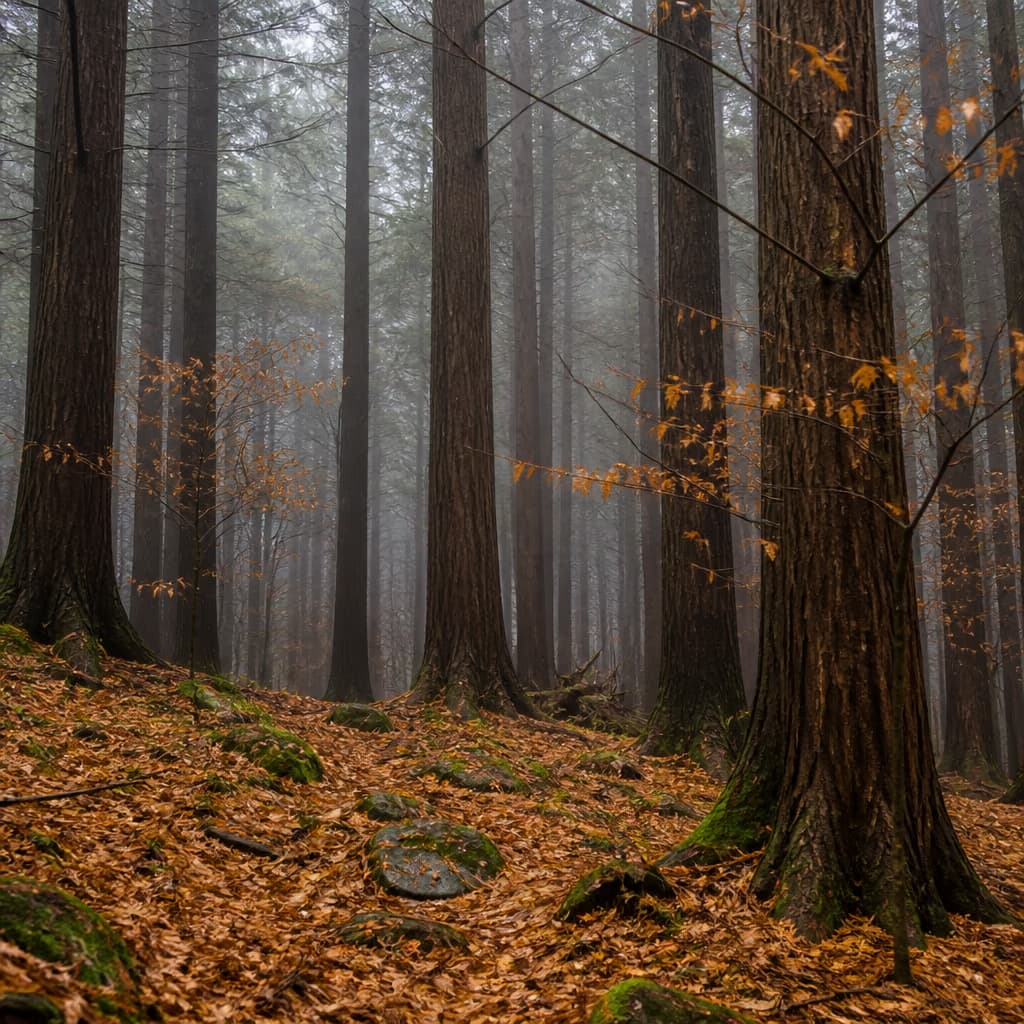
Late March through early April brings the first pinks of azalea and cornelian cherry into the understory. May lights up with mountain hydrangea. June carries Solomon's seal and astilbe. July and August are pure cicada chorus, and the wet-leaf smell of a midsummer rainy walk here is something photographs cannot transmit. September and October put hornbeam and maple into oranges and yellows against the cedar's permanent green — colour contrast that landscape photographers stalk on weekday mornings.
November lays a brown leaf carpet onto the earth track. December through February reduces the palette to evergreen cedar and cypress, and the day after a fresh snowfall the loaded branches bend and creak in a way that turns the whole grove into one slow instrument. It is, candidly, the quietest hour of the year.
Three Photo Compositions Worth Catching
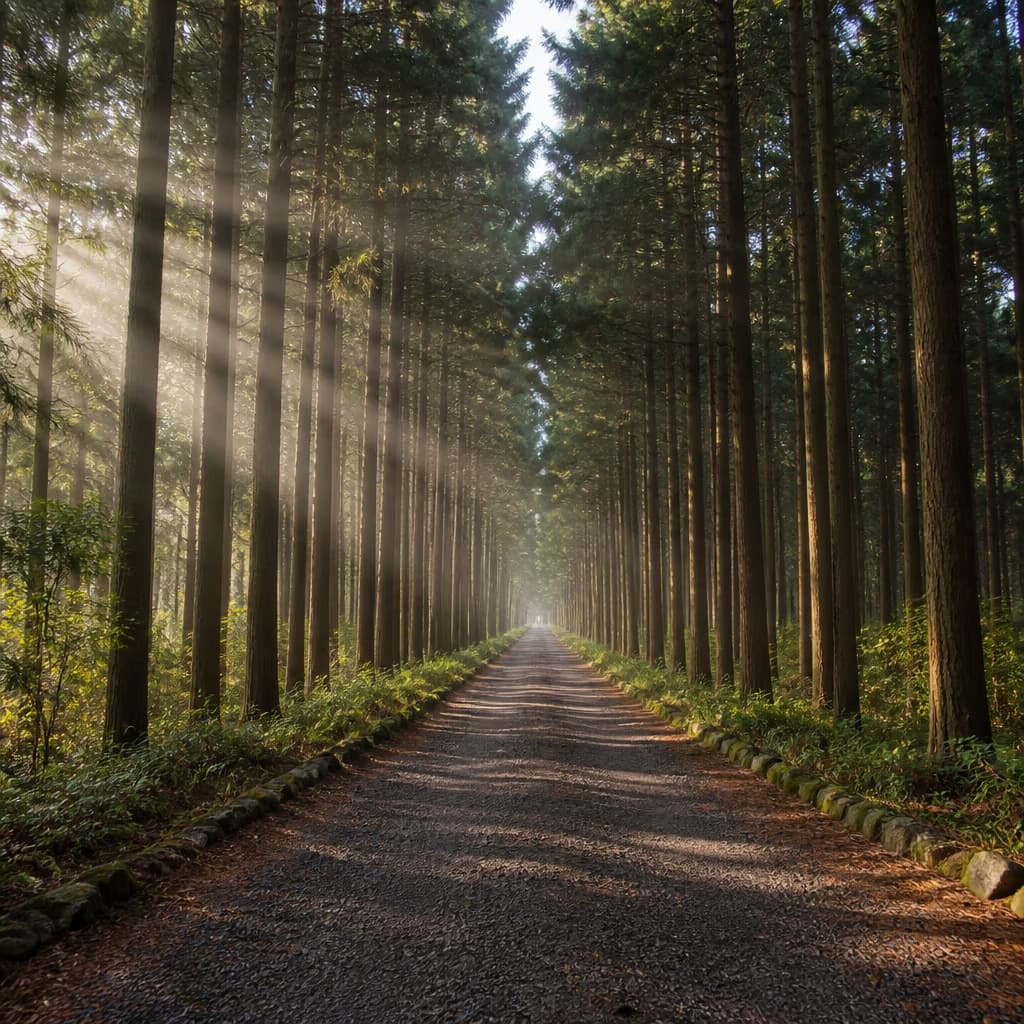
The most photographed line sits about 300 m from the entrance, just where the barrier-free deck ends and the earth begins. Stand centred, face forward — the verticals converge cleanly toward the vanishing point. The second composition is the <strong>cypress sidelight section</strong> around the 800 m mark, ideally between 3 and 4 p.m. when the light enters from the side and lays sharp shadows across every trunk; black-and-white treatments here read beautifully. The third is the <strong>mossy earth section</strong> just before the 1.5 km viewing deck — the morning after rain, when the moss saturates into a deep, almost theatrical green.
For portraits, stand your subject mid-path with the sun behind, and the natural backlight gives you a soft silhouette without any reflector. Around a 35 mm focal length keeps the proportions of the grove honest — wider distorts the trunks, longer compresses them into wallpaper. Either way, three exposures is usually enough; the forest is more patient than you are.
Frequently Asked Questions
- How much does Saryeoni Forest Path cost, and what are the hours?
- Admission is free. The trail is open year-round from 9 a.m. to 5 p.m. with last entry at 4 p.m. Winter hours may close 30 minutes earlier depending on daylight.
- Is Saryeoni accessible for wheelchairs, strollers, or older walkers?
- Yes for the first 500 m, which is a fully barrier-free wooden deck. The earth track beyond it is mostly gentle and packed, but it is uneven in places — most older walkers manage it comfortably; manual wheelchairs and strollers should turn back at the end of the deck.
- Is it worth visiting Saryeoni in the rain?
- Often yes. The dense canopy blocks much of the rain, the forest scent deepens, and crowds thin out. Slip-resistant shoes are essential — the earth track gets slick — and a light waterproof shell is enough for most rain.
- How long does it take to drive from Saryeoni to Galchibada in Aewol?
- About 50 minutes by car along the route through Jeju City, roughly 30 miles. The alternative through the 5·16 Road and Route 1100 takes a similar time and is more scenic but slower in fog.
From the cedar hush to a coastal table — 50 minutes west
Carry the forest quiet down to the ocean and let the table take over
When the hush between the cedar trunks is still in your ears, point the car west off Bijarim-ro and roll fifty minutes down to the coast. Beyond the floor-to-ceiling glass the waves take over for the silence, and a single steaming bowl on the table quietly resets the temperature of the day.
About 50 minutes from Saryeoni Forest Path to Galchibada in Aewol →