Tapdong Summer Night Arts Festival, Free Seaside Opera and Rock on a 2,500-Seat Waterfront Stage
A Week of Opera, Rock, Folk, and Korean Classical Crossover With the Sea Facing 2,500 Free Open-Air Seats
The Tapdong Summer Night Arts Festival is a free open-air performance festival at Tapdong Seaside Performance Hall in Samdo 2-dong, Jeju City. In 2026 the festival runs July 23 through July 29 (seven nights). Shows begin at 7:30 p.m. and end at 9:00 p.m. (90 minutes), with doors open at 6:30 p.m. Seating is 2,500 open-air fan-shaped seats facing the sea directly; there is no reservation system and admission is free on a first-come basis. First held in 1996, the festival is one of Jeju's longest-running summer stages, rotating opera, rock, folk, and Korean-classical crossover genres by night. About 80 percent of the performers are Jeju-based artists. From Galchibada in Aewol the drive runs about 30 minutes via Iljuseoro (Route 1132).
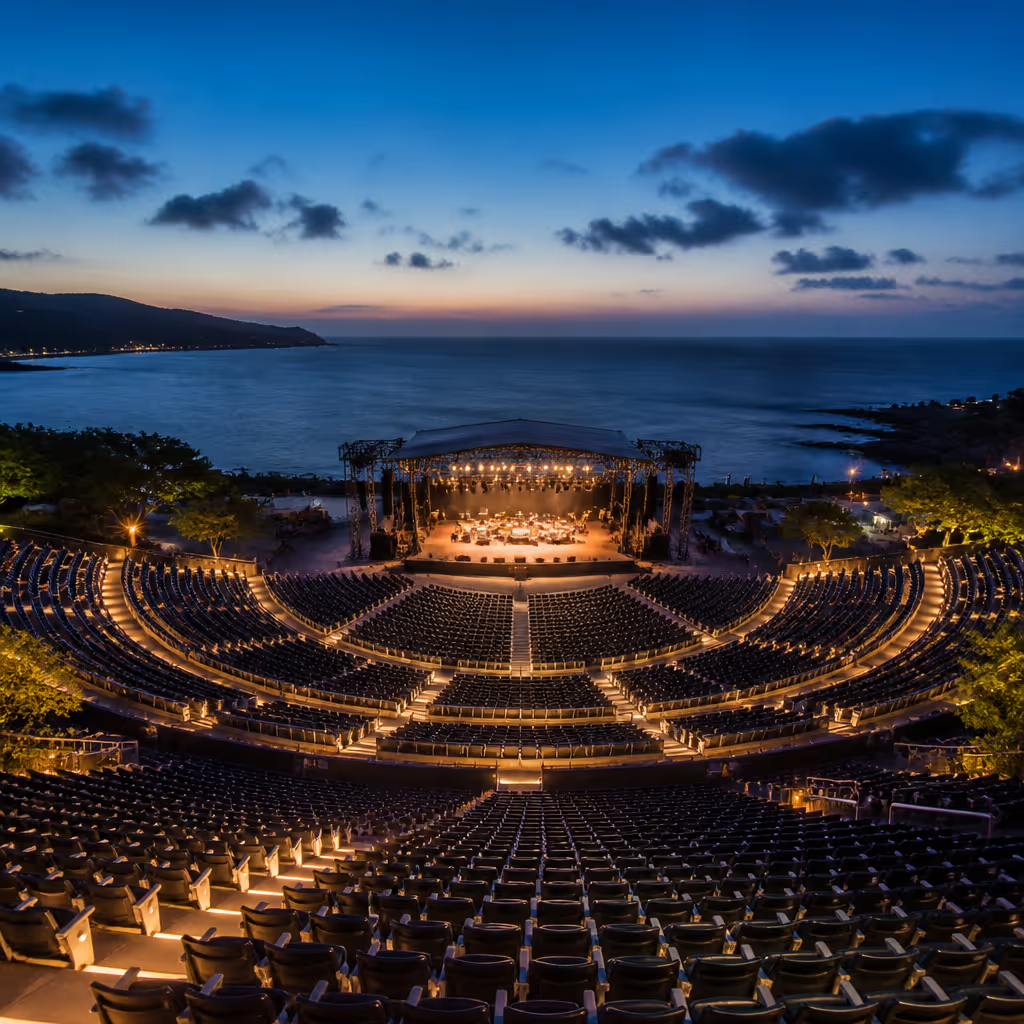
Roughly 2,500 open-air seats face the open sea in downtown Jeju City, and for one week each late July they hold a free performance every night: opera on some evenings, rock on others, folk on some, and a Korean-classical crossover on the middle night. The Tapdong Summer Night Arts Festival has run at the same seaside venue since 1996, and the register is unlike anything on the American open-air circuit; if Tanglewood carries the eastern classical prestige and Red Rocks carries the geological drama, Tapdong pairs the acoustic clarity of a small municipal orchestra hall with the visual openness of the Pacific facing an urban port.
Since 1996 the festival has run every summer without a single skipped year. Doors open at 6:30 p.m., shows run 7:30 p.m. to 9:00 p.m., and the seat count remains 2,500 across all seven evenings. From Galchibada in Aewol on the western coast, the drive runs a straightforward 30 minutes east along Iljuseoro (Route 1132), which puts this festival inside a same-day round-trip window with an early return by 9:30 p.m.
A Free Open-Air Stage Since 1996, Nearly Thirty Years On
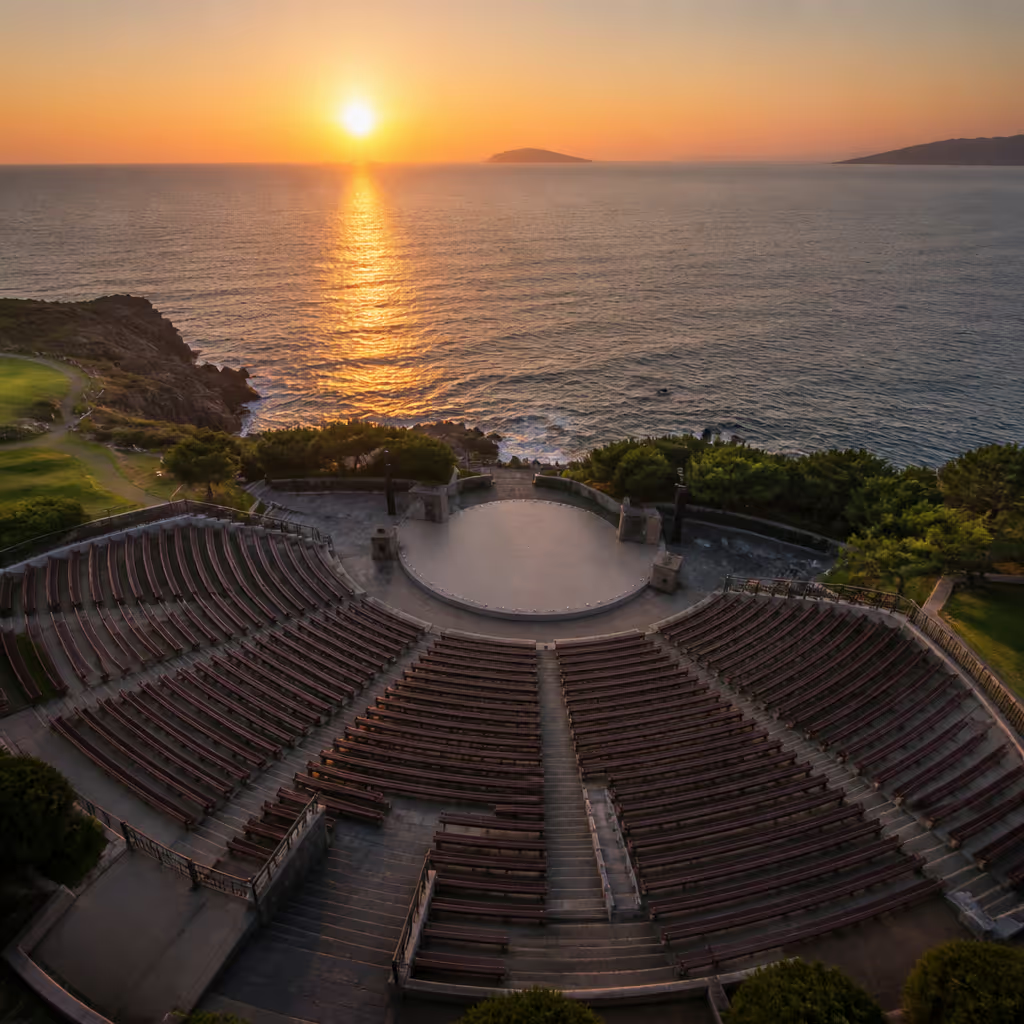
The festival launched in 1996 as a summer outdoor showcase for the Jeju Provincial Arts Company and has continued at the same venue for nearly three decades. That kind of uninterrupted continuity is rare on the Korean summer festival circuit, especially for a program that has never charged admission. The operator is a consortium centered on the Jeju Provincial Arts Company, and roughly 80 percent of the performers each summer are Jeju-based artists or active on the island. For historical context in Korean on the summer beach festival tradition, the Digital Jeju Cultural Encyclopedia summer beach festival entry covers the origin and the shift over decades.
Seating is fan-shaped and faces the sea directly. Behind the stage sits roughly 50 meters (160 feet) of sand and then open water, which occupies about a third of the visual field from every seat. During the 30 minutes before the 7:30 p.m. show, golden light rakes across the water. At the 30-minute mark of the performance, the blue hour after sunset overlaps with the stage lights, and the visual backdrop shifts in stages across the full 90 minutes; this staged shift in ambient color is what makes the evening visually distinctive from an indoor concert hall.
One Week in Late July, Four Genres in Rotation
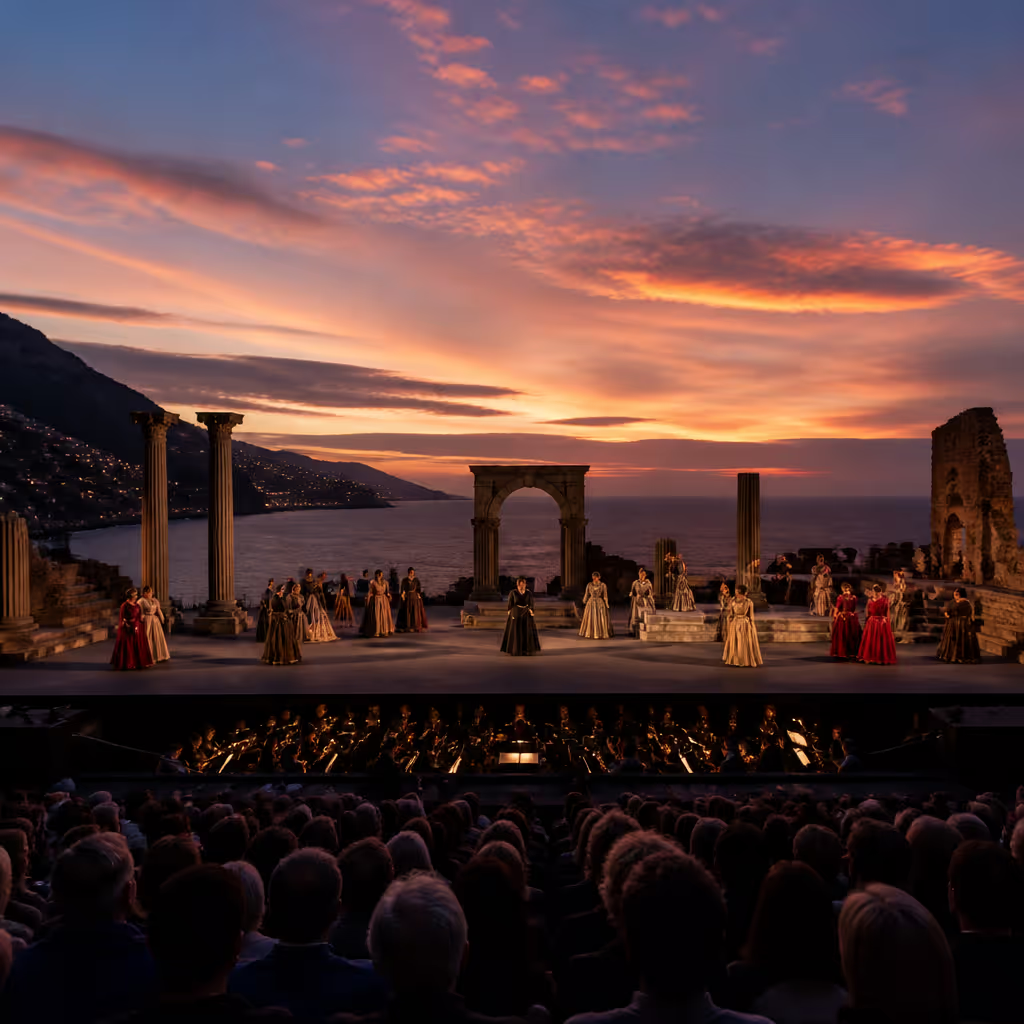
The festival runs one week around July 24 each year, with 2026 falling from July 23 through July 29 (seven nights). Each evening runs the same 6:30 p.m. door / 7:30 p.m. show / 9:00 p.m. close pattern. Four genres rotate on the following pattern: nights 1 and 5 (July 23 and 27) are opera; nights 2 and 6 (July 24 and 28) are rock; nights 3 and 7 (July 25 and 29) are folk; and night 4 (July 26) is a Korean-classical and Western-classical crossover.
Opera nights feature the Jeju Provincial Opera Company performing about eight famous arias by Verdi and Puccini across the 90-minute program. Rock nights feature three Korean indie rock bands, each with 30-minute sets, with select shows including one collaboration piece with the provincial orchestra. Folk nights feature three solo acoustic artists sharing the 90 minutes with guitar and voice. The Korean-classical crossover night pairs gayageum and haegeum with violin and cello on the same stage, a program shape that reads familiar to visitors who have caught a Silk Road Ensemble concert stateside.
Seating, Entry, and What to Bring
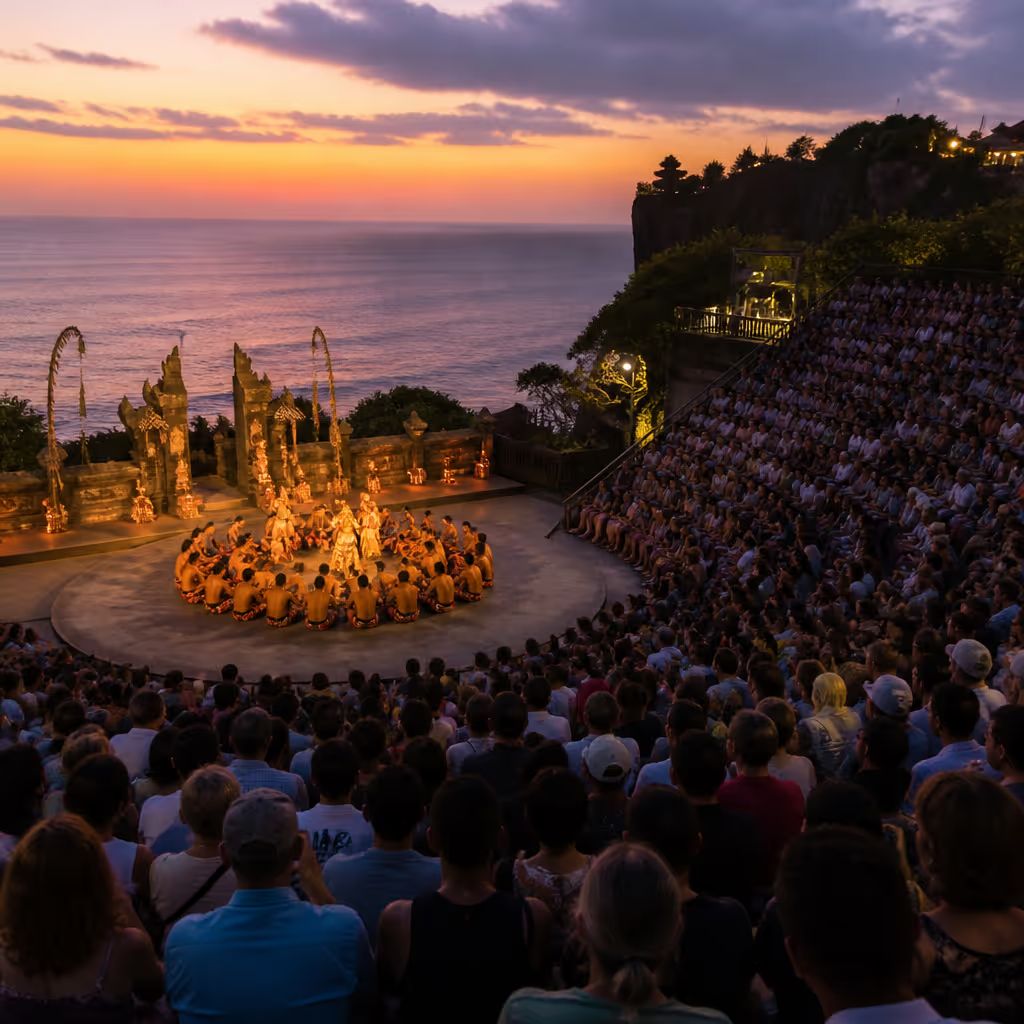
All 2,500 seats are first-come without reservation. The front-facing 700 seats are the most popular position; on weekday evenings, 70 percent fill by the 6:30 p.m. door open, and weekend evenings require 5:30 p.m. arrival for a front-facing seat. Opera and rock nights draw about 20 percent thicker crowds than folk and crossover nights, so those two require earliest arrival.
Since the seating is open-air and faces the sea, umbrellas and cushions are permitted. Late-July seat surfaces retain daytime heat, so a thin cushion is genuinely useful over 90 minutes. Bug spray and a light long-sleeve are standard summer prep for an outdoor evening. Drinks and light snacks are permitted; alcohol is not. Sunset in the fourth week of July falls around 7:30 p.m. locally; the exact daily time by coordinate is at the Korea Astronomy and Space Science Institute sunrise-sunset table.
Tapdong Waterfront, Pre-Show and Post-Show Options
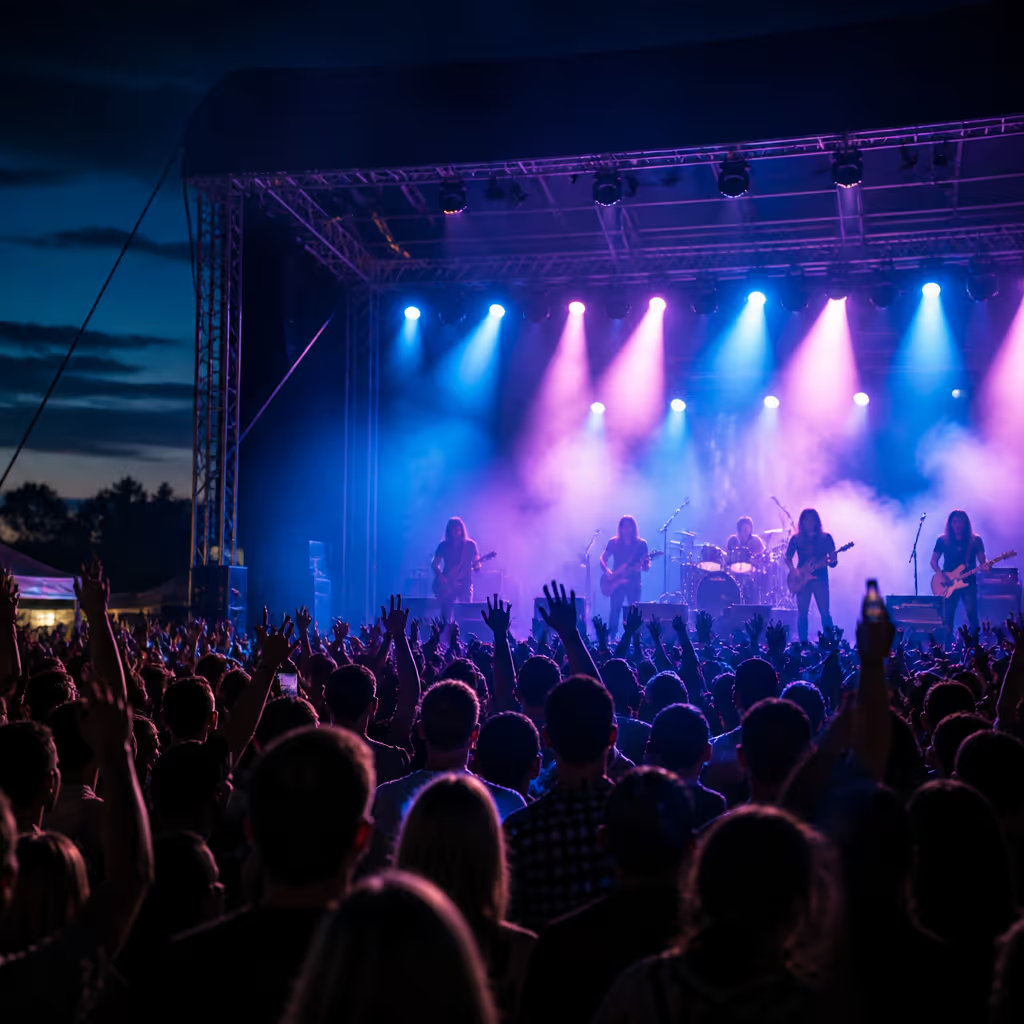
The natural pre-show walk runs about 500 meters east along the Tapdong reclaimed waterfront, where a coastal promenade sits above the sea wall. This is the stretch where midday heat leaves the pavement and the sea breeze arrives, so it makes a good 30-minute buffer before the 6:30 p.m. door open. At the end of the promenade sit a small fountain and outdoor sculpture, and about 8 seasonal food trucks near the venue's front gate pour hallabong ade, matcha lattes, and grilled corn with butter through the summer.
Post-show, downtown night register extends the evening cleanly. Dongmun Market's night bazaar sits a 10-minute walk from the venue and runs 6:00 p.m. to midnight; a cup of street food and a downtown lamp walk closes the evening on foot. For a contrasting parallel night, the JJAN Festival → craft beer plaza runs the same week on the eastern coast; on any Wednesday or Friday the two festivals don't overlap on the same night, so a two-festival week is a viable itinerary.
Tapdong to Galchibada, A 30-Minute Western Line
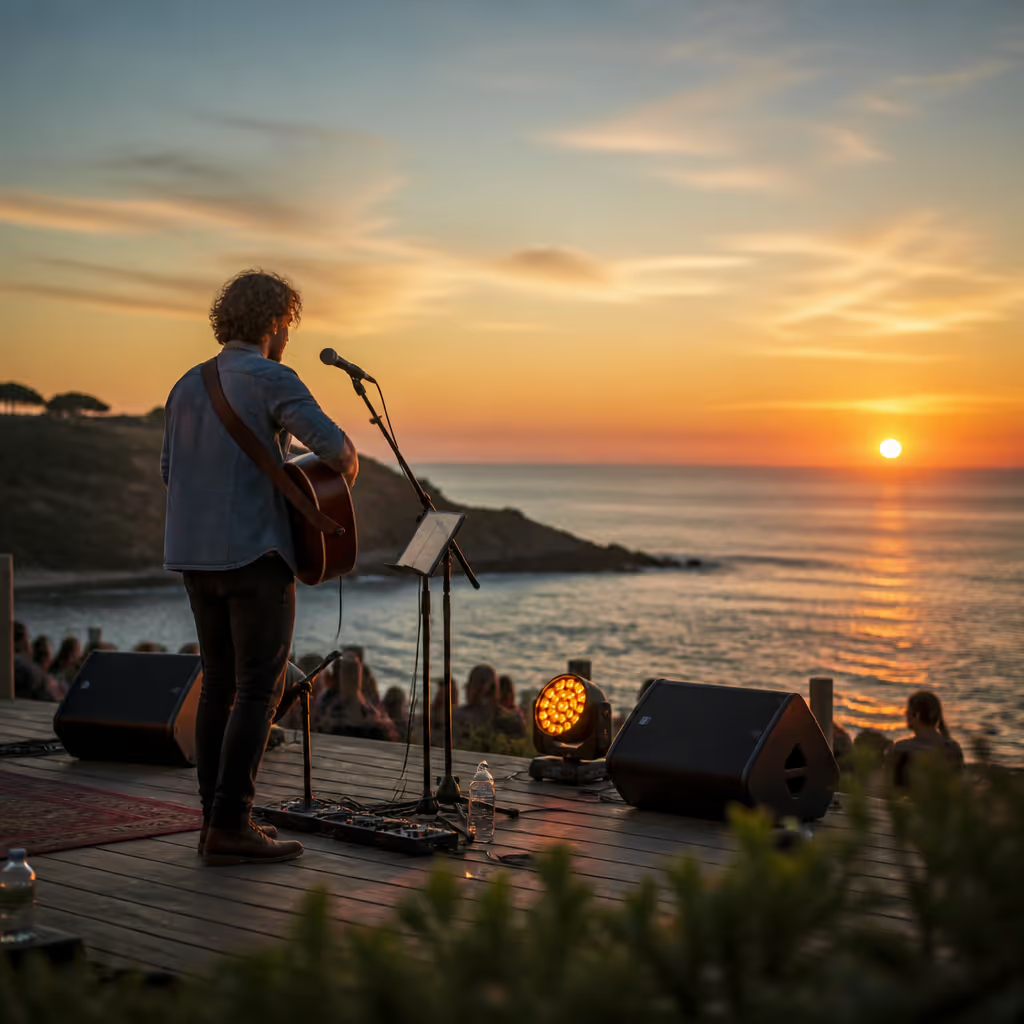
After the 9:00 p.m. show close, the drive to Galchibada in Aewol runs a straightforward 30 minutes along Iljuseoro (Route 1132). Evening traffic on Iljuseoro is thin, and the 30 minutes lands you at the full-height window by roughly 9:35 p.m. The window reframes the sea in a darker register, and the 90-minute music program's residual echo settles beside a first bite from the plate.
The venue address is 1 Tapdong-ro, Jeju City. From Jeju International Airport the drive is about 15 minutes. Free on-site parking accommodates about 300 vehicles but fills by 6:00 p.m., so the local shuttle bus or public transport is the safer option. Bus 365 from the airport reaches Tapdong Entrance in about 12 minutes; from the stop the venue is a 3-minute walk. Real-time schedules run at the Jeju Bus Information System, and the seven-night performer lineup posts each year in early July at the Visit Jeju official page.
Frequently Asked Questions
- When does the Tapdong Summer Night Arts Festival run?
- Roughly one week each late July, with 2026 running July 23 through 29 (seven nights). Each evening runs 7:30 p.m. show and 9:00 p.m. close (90 minutes), with doors open at 6:30 p.m.
- How much is admission and can I reserve a seat?
- Admission is free and all 2,500 seats are first-come without reservation. The front-facing 700 seats are the most popular; weekday evenings require 6:00 p.m. arrival for a front-facing seat, and weekend evenings require 5:30 p.m. arrival.
- How are the four genres rotated across the week?
- Nights 1 and 5 are opera, nights 2 and 6 are rock, nights 3 and 7 are folk, and night 4 is a Korean-classical and Western-classical crossover. About 80 percent of the performers are Jeju-based artists or active on the island.
- What should I bring for the outdoor seating?
- A thin cushion, bug spray, and a light long-sleeve cover the essentials. Umbrellas, cushions, drinks, and light snacks are permitted; alcohol is not. Sunset in the fourth week of July falls around 7:30 p.m. locally.
- How do parking and public transport work?
- Free on-site parking accommodates about 300 vehicles but fills by 6:00 p.m. Bus 365 from Jeju International Airport reaches Tapdong Entrance in about 12 minutes; from the stop the venue is a 3-minute walk.
- How long is the drive to Galchibada in Aewol?
- About 30 minutes along Iljuseoro (Route 1132). Evening traffic is thin, and the 30 minutes lands you at the full-height window by roughly 9:35 p.m.
From a 2,500-seat seaside stage to a full-height window 30 minutes west
After the last note over the open sea, a hairtail dinner behind the glass
Carry the last note from a sea-facing open-air stage and the stage-light residue westward for 30 minutes. The full-height window in Aewol reframes the sea in a darker register, and the 9:35 p.m. plate lets 90 minutes of music settle into one quiet bowl on the western coast.
About 30 minutes from Tapdong Seaside Performance Hall to Galchibada in Aewol →