Woljeongri Beach Summer Surf and Cafe Guide, Beginner Longboard Sessions on Emerald Water With Eight Ocean-View Cafes for a Full-Day Coastal Loop
A 550-Meter White-Sand Arc Where the Southwest Wind Delivers Shoulder-High Waves for Learner Longboards, With a Cafe Strip Behind the Beach Framing the Emerald Bay
Woljeongri Beach in Gujwa-eup on Jeju's northeastern coast is a 550-meter (1,800-foot) white-sand beach with water depth under 1 meter (3 feet) close to shore, comfortable for both beginner surfing and families with children. Summer southwest winds (late June through late August) deliver regular shoulder-height waves in two sessions per day (9 to 11 a.m. and 3 to 5 p.m.), and the beach reads as the beginner longboard equivalent of California's Malibu First Point or Hawaii's Waikiki Canoes for the Korean surf scene. Behind the beach on Woljeongri-ro sits an ocean-view cafe strip of about eight full-glass venues over 250 meters. Free admission, year-round, with two public parking lots (180 vehicles total). Peak-season 11 a.m. to 3 p.m. crowd density fills the lots. From Galchibada in Aewol to Woljeongri the drive runs about 55 minutes via the western ring road, so a post-surf afternoon folds directly into a coastal evening dinner in Aewol.
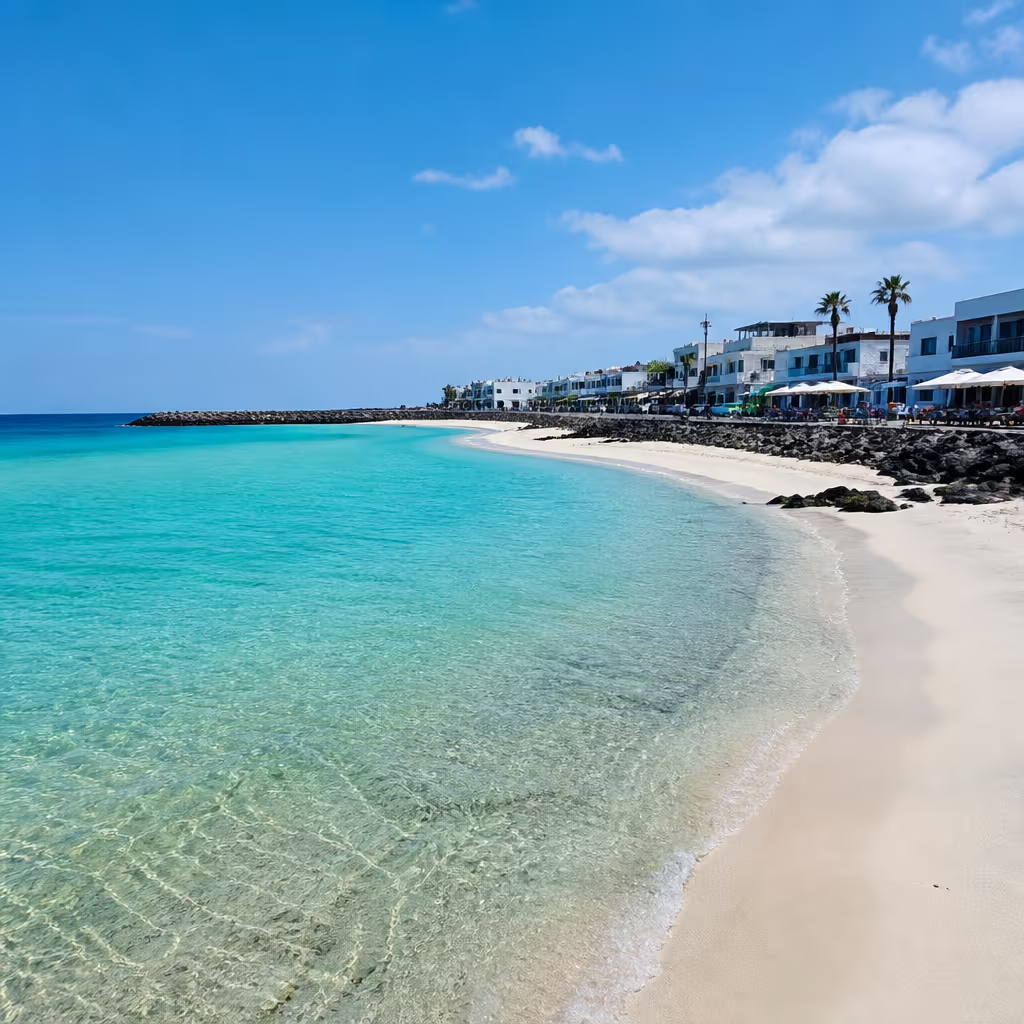
On Jeju's northeastern coast in Gujwa-eup, Woljeongri (literally, "where the moon rests") sits with its shallow, emerald bay along a 550-meter (1,800-foot) low arc of white sand. Water depth stays under 1 meter (3 feet) from the water line to 30 meters (100 feet) out, so a beginner surf lesson and a family swim with young children share the same water safely. Summer southwest winds hold two regular sessions per day (9 to 11 a.m. and 3 to 5 p.m.) of shoulder-height waves, and behind the beach a strip of about eight ocean-view cafes with full-height glass windows sits along 250 meters of road, holding the afternoon in one gentle register. For Western readers, the closest comparison is the beginner-friendly waves of Malibu First Point in California or Waikiki Canoes in Hawaii, both of which offer the same predictable summer surf that makes learner longboarding accessible. Location coordinates and free admission info are at the Visit Jeju official page. From Galchibada in Aewol the drive runs about 55 minutes, so a post-surf afternoon folds naturally into a coastal evening dinner in Aewol.
The 550-Meter White Sand Arc and Beginner-Friendly Shallows
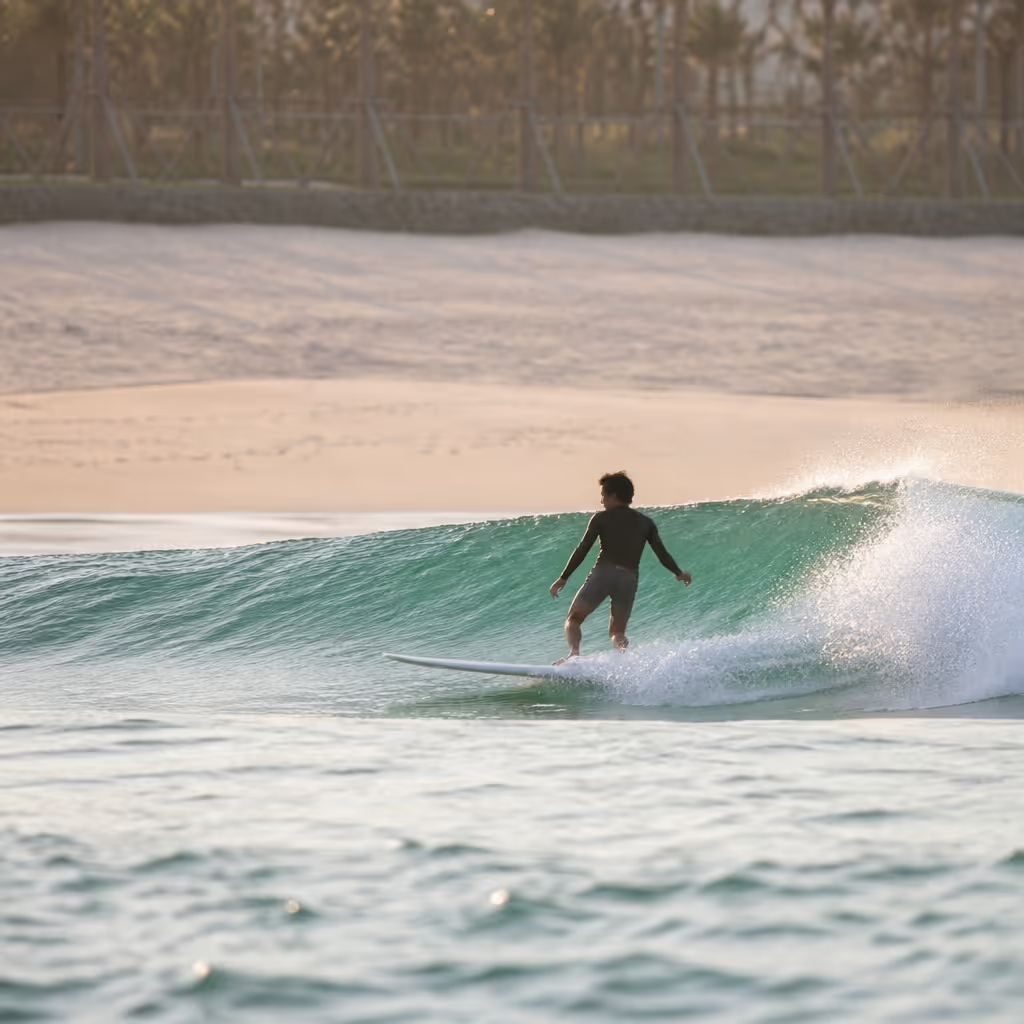
Woljeongri's reputation as a beginner surf destination comes from the geometry of the shallow bay and the softness of the summer wave. The water depth remains under 1 meter (3 feet) from the shore to 30 meters (100 feet) out, and beyond that it gradually deepens to adult chest height (1.3 meters, 4.5 feet) in a slow, visible gradient. This makes the safety line of where waves break easy to read visually. During the summer southwest wind season (late June through late August), two regular sessions per day deliver shoulder-height waves: 9 to 11 a.m. is the stable morning window, and 3 to 5 p.m. is the busy afternoon window for lessons.
Behind the beach sit about 12 licensed surf schools, with 2-hour group lessons priced KRW 55,000 to KRW 70,000 (about USD 40 to USD 52). Most schools include the board, wetsuit, and leash (ankle safety strap) with the lesson fee. Class size averages 4 students per instructor, so individual posture correction still occurs. During the peak season (late July through early August), booking 24 hours in advance online is comfortable, and schools with instructors registered under the Korea Surf Association are strongly recommended for beginner safety. Real-time wave conditions are at the Korea Meteorological Administration marine forecast for the northeastern Jeju coast.
The Ocean-View Cafe Strip, Eight Venues Along 250 Meters
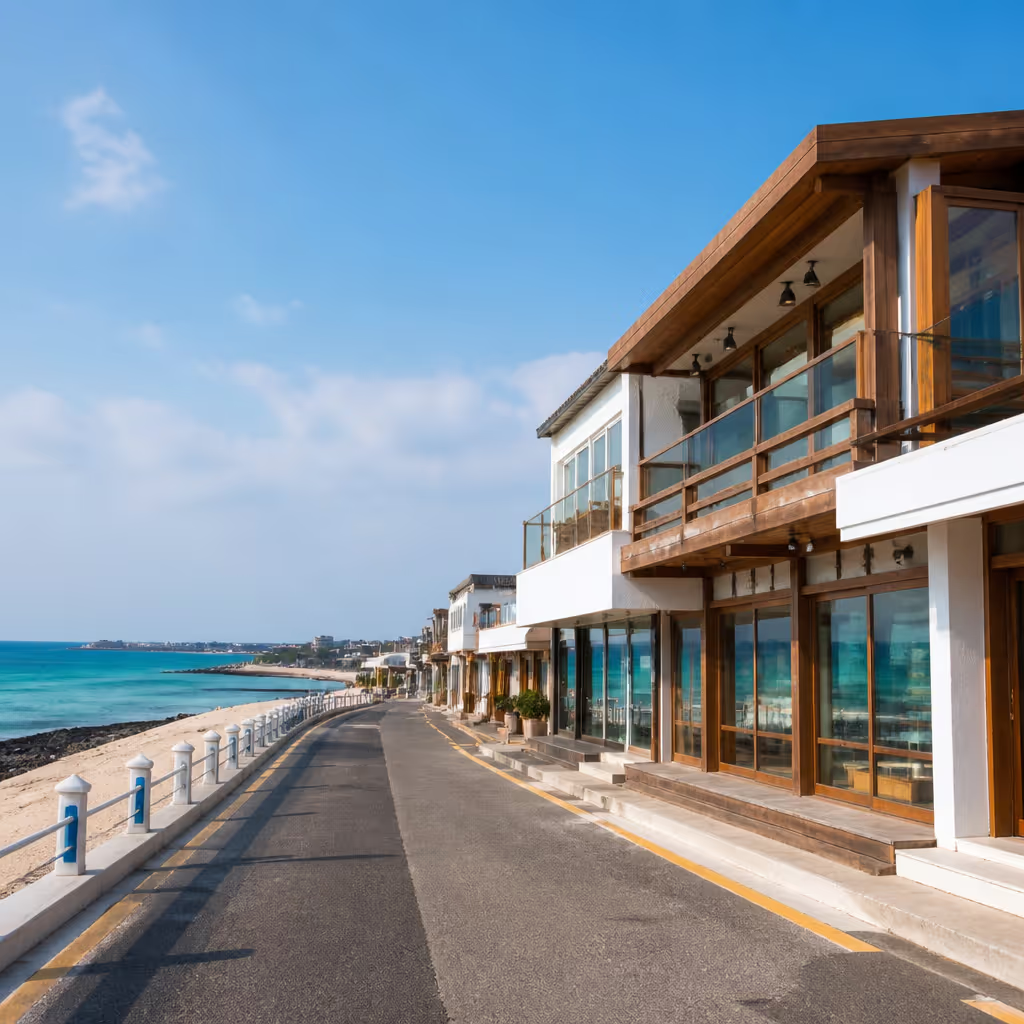
Behind the beach along Woljeongri-ro, an ocean-view cafe strip stretches about 250 meters with roughly eight full-glass venues. The distinctive feature of this strip is that only a low white wooden fence separates the road from the beach, so the full-height glass windows of the cafes frame the sand and shallow bay directly in one line of sight. Many buildings run two stories, and the second-floor window seats open the arc of the bay in one panoramic frame. The 2 to 5 p.m. afternoon window is when the western side light reaches deep into the wooden interior, and that is the strip's peak sitting time.
The eight cafes each carry a distinct register, so a natural loop covers two or three across a day. The two western venues focus on specialty coffee and single-origin roasting. The three center venues run brunch and dessert. The three eastern venues run craft beer and early evening seats. During the peak-season 2 to 4 p.m. window, second-floor window seats can run 20 to 40 minutes of wait time, so ordering the day as morning surf → noon cafe brunch → afternoon surf → evening westward drive to Aewol releases the bottleneck naturally.
Cafe Interior Registers, Window Seats in the Afternoon
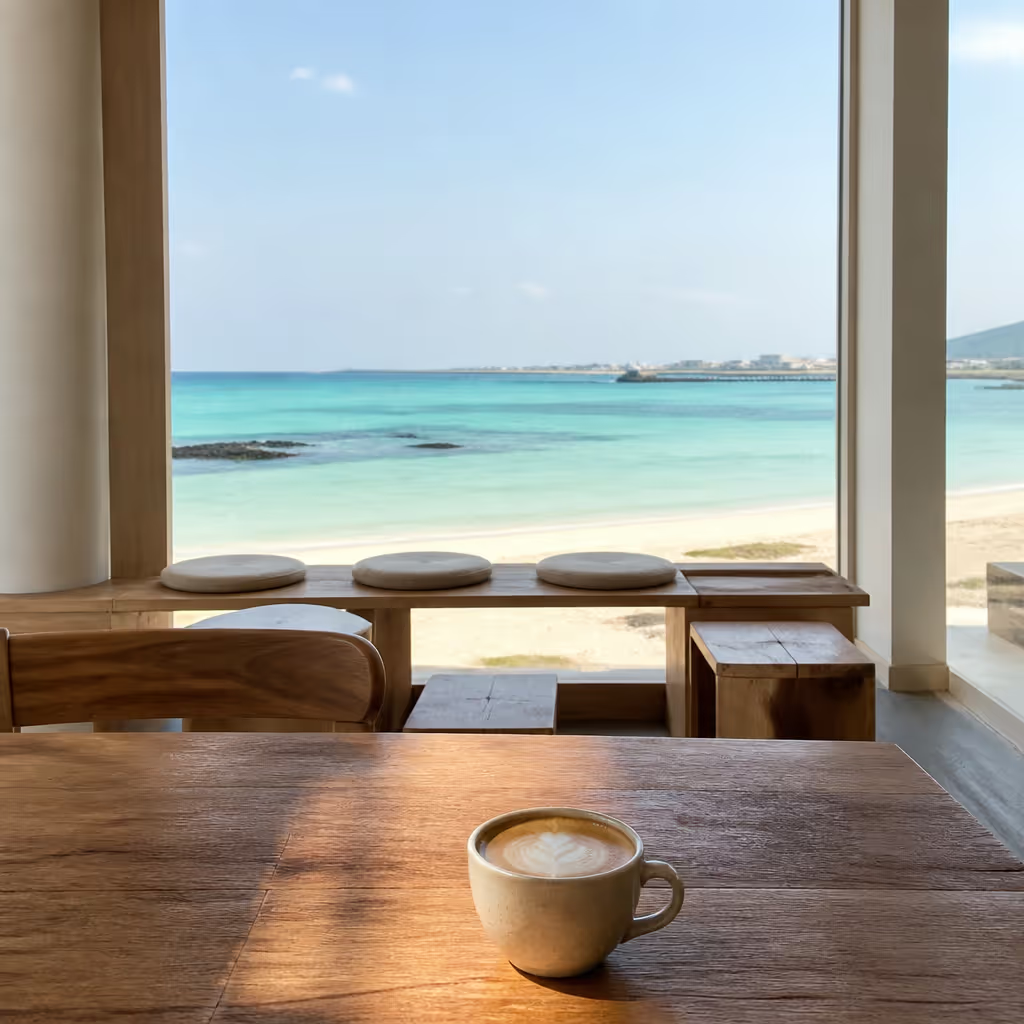
Most of the eight cafes share a shared interior register: minimal white and natural wood tones. Low wooden counter seats along the full-height glass typically hold 6 to 8 seats each, aligned on the sightline that hits the low arc of the bay directly. The 2 to 4 p.m. afternoon side light lands softly on the wooden tabletops, and a thin layer of light rests on the milk foam of the latte, making this hour the strip's signature angle. For a Western comparison, the atmosphere sits between a Big Sur coastal cafe and a Byron Bay surf town cafe, with the geometry closer to Byron's low-arc bay orientation.
Menu prices at these cafes typically run: Americano KRW 5,500 to KRW 7,000 (about USD 4 to USD 5.20), latte KRW 6,500 to KRW 8,500 (about USD 4.80 to USD 6.30), brunch KRW 12,000 to KRW 18,000 (about USD 8.90 to USD 13.30). Peak-season weekend afternoons may require a minimum one drink per person for second-floor window seats. Laptop use varies: three of the eight strip cafes do not permit study-cafe seating, while the other five permit laptop use until 5 p.m. Pre-visit information for individual cafes is at the Visit Jeju official page under the Woljeongri cafe tag.
The White Wooden Swing, A Summer Afternoon Signature Angle
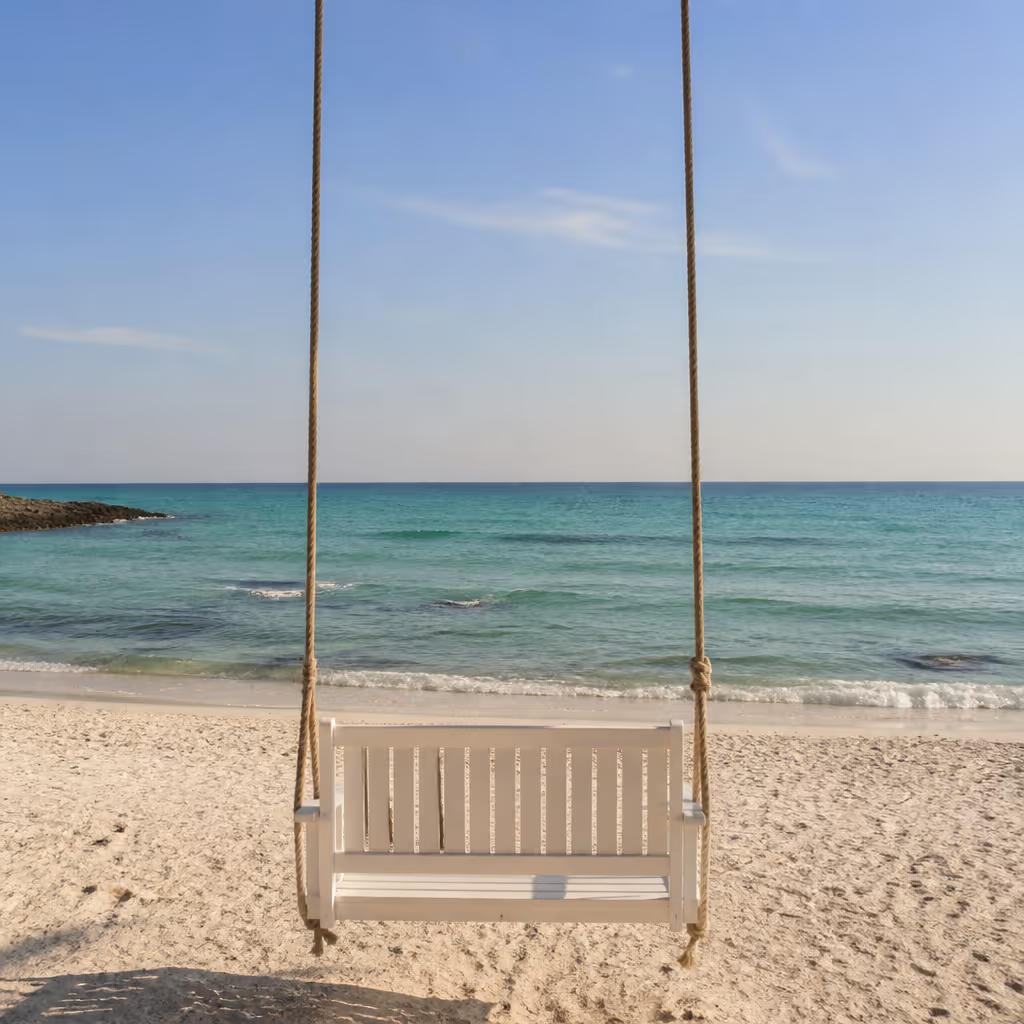
The signature spot at Woljeongri after the cafe strip is a set of six white wooden swings placed on the central sand. Hung from two white ropes and topped with a wooden seat, the swings face the horizon at a height where seated feet just touch the sand. The two central swings hold the widest camera angle, and during the noon-to-4 p.m. window the wait time for photos runs 5 to 15 minutes.
The compositional key of the swing angle is that the horizon line hits the top third of the swing seat when photographed from about 3 meters (10 feet) in front from a low angle. This frames white swing, white sand, and emerald water in three even layers. By 5 p.m., the western side light lands softly on the swing seat, and the shadow of the swing stretches across the sand, opening the strip's most naturally photographic single frame of the day.
The 5 p.m. Sunset Register, Reaching West
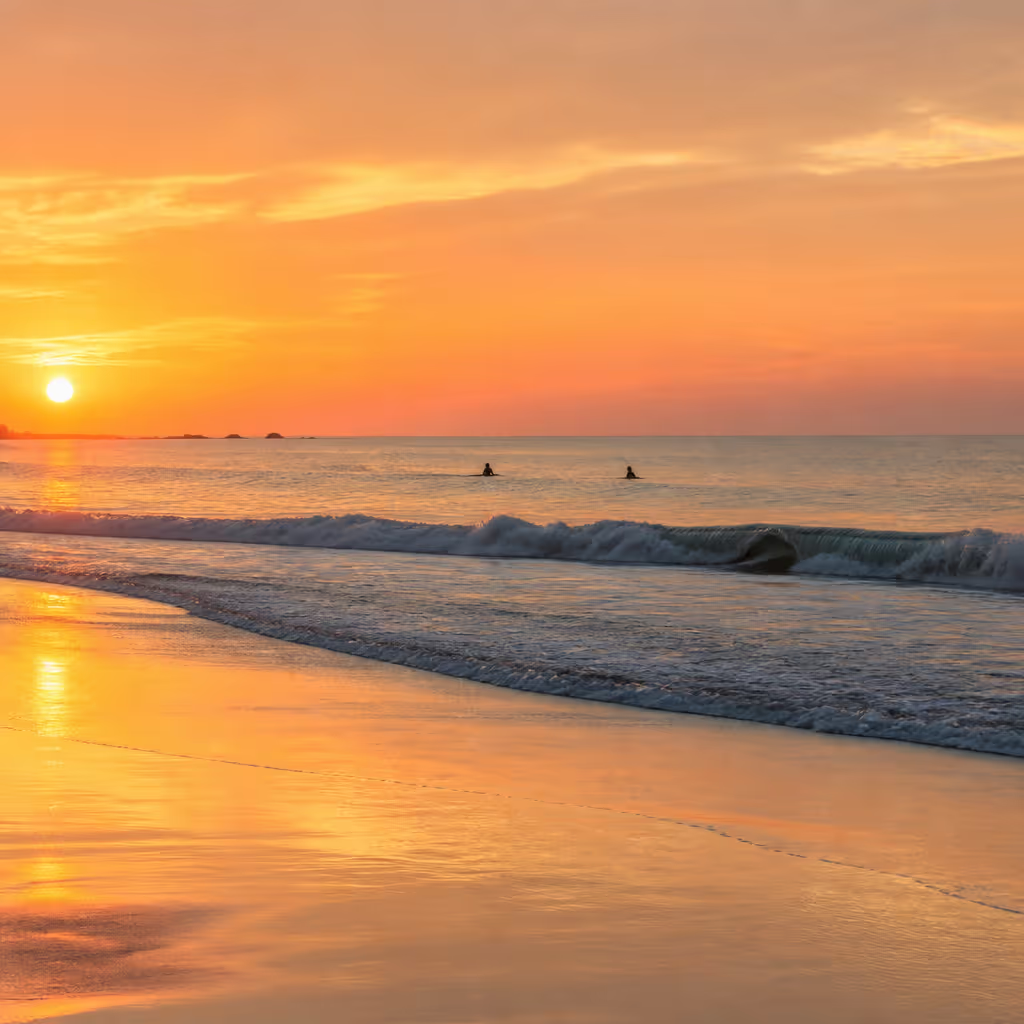
Woljeongri sits geographically on Jeju's northeastern edge, so the sunset opens to the right side of the beach (west). Summer sunset falls around 7:30 to 7:45 p.m., and 90 minutes before sunset, around 6:00 p.m., a low orange begins to settle on the western sky. At this time, the two afternoon surf sessions have ended and the surface reads calm again, with two or three distant surfer silhouettes lifting from the reflected sunset light on the wet sand.
This sunset register is one of the highest-value single frames of a Woljeongri summer visit. But to fold the westward drive into an Aewol evening dinner, departing west by 6:00 p.m. reads as the most natural flow. With a 55-minute drive from Woljeongri to Aewol, a 6:00 p.m. departure lands at Aewol around 6:55 p.m. This matches exactly the time when the Aewol western sky settles into a low sunset. The morning emerald register at Woljeongri and the evening sunset register at Aewol place two different sea registers into one day, and that is the singular register of this day loop.
Practical Information for Admission, Parking, and Access
Woljeongri Beach charges no admission or parking fee, open year-round. There is no visitor center or reservation system, so entry is unrestricted, but during peak season (July 15 through August 20) the beach operates roughly 9 a.m. to 6 p.m. with safety guards and emergency crews on watch during those hours. Nighttime swimming is discouraged for safety, and returning to land 30 minutes before sunset is the safer plan.
Two public parking lots sit behind the beach with 180 total vehicle capacity. The western lot (120 vehicles) sits closer to the cafe strip entrance, and the eastern lot (60 vehicles) sits next to the surf-school cluster. During the peak-season 11 a.m. to 3 p.m. window, both lots run 20 to 40 minutes of wait, so pre-9 a.m. or post-3 p.m. entry avoids the wait. Public transport runs Rapid Bus 101 (Jeju Airport to Seongsan Ilchulbong) from Jeju Intercity Bus Terminal to Woljeongri Stop, then a 3-minute walk to the beach. Bus schedules are at the Jeju Bus Information System.
Woljeongri to Aewol, A 55-Minute Sunset Line
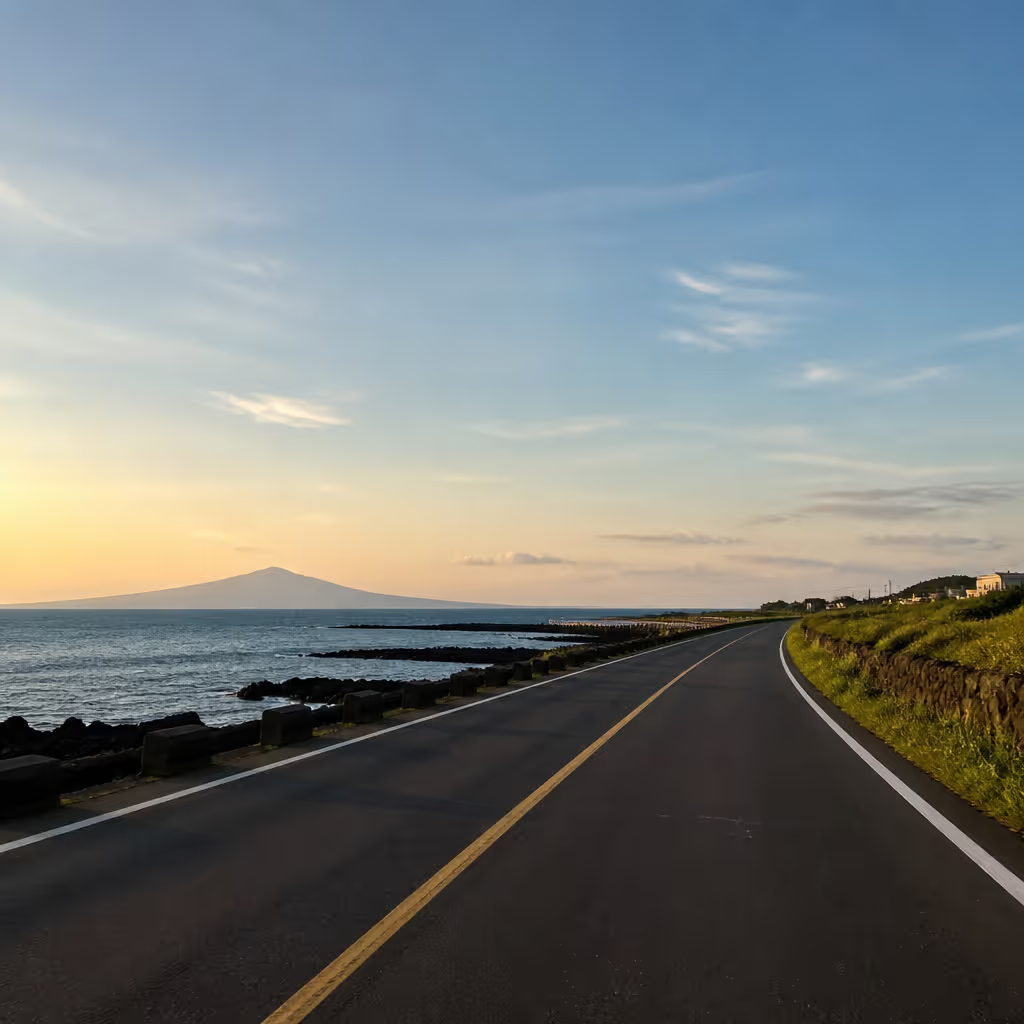
After the two surf sessions and the cafe strip loop, departing Woljeongri around 6:00 p.m. reaches Galchibada in Aewol in about 55 minutes via the western ring road. Arrival at about 6:55 p.m. matches exactly the time when the western sky at Aewol begins to settle into a low sunset, folding the evening seat behind the full-height window into a natural continuation. The daytime emerald register of Woljeongri and the evening sunset register of Aewol place two different sea registers into one day loop.
The reverse order also works: morning Aewol then afternoon Woljeongri. An early Aewol lunch, departing at noon, lands at Woljeongri around 1:00 p.m. and fits the 3:00 p.m. afternoon surf session preparation window. Either direction, the day places the shallow emerald at Woljeongri and the ocean-view dinner at Aewol into one 12-hour loop, spanning the northeastern coast and the western coast of the same island. Real-time traffic on the western ring road route is at Jeju ITS traffic information. Peak-season weekend 6 p.m. traffic typically runs under 10 minutes of congestion.
Frequently Asked Questions
- How do I reach Woljeongri Beach by public transport?
- Take Rapid Bus 101 (Jeju Airport to Seongsan Ilchulbong) from Jeju Intercity Bus Terminal to Woljeongri Stop, then walk 3 minutes to the beach. Departures run every 20 to 30 minutes, with a one-way travel time of about 55 minutes. From Jeju International Airport, board Bus 101 directly at the airport stop for a comfortable connection.
- Where do I park, and what is the peak-season wait?
- Two public parking lots sit behind the beach (western 120 vehicles, eastern 60 vehicles, 180 total, free). The western lot is closer to the cafe strip, the eastern lot to the surf schools. Peak-season 11 a.m. to 3 p.m. runs 20 to 40 minutes of wait; entry before 9 a.m. or after 3 p.m. avoids the wait.
- Can beginners take surf lessons? What are the prices?
- Woljeongri's bay holds water under 1 meter (3 feet) for 30 meters (100 feet) out with regular shoulder-height waves, ideal for beginner longboards. About 12 licensed schools run 2-hour group lessons at KRW 55,000 to KRW 70,000 (about USD 40 to USD 52), with board, wetsuit, and leash included. Booking 24 hours in advance is comfortable during peak season.
- Which ocean-view cafes are recommended?
- About eight full-glass cafes stretch 250 meters behind the beach. Two western venues focus on specialty coffee and roasting, three center venues on brunch and dessert, three eastern venues on craft beer and early evening seats. Second-floor window seats during the 2 to 4 p.m. afternoon side-light hour are the signature angle, with 20 to 40 minutes of wait time.
- How do I avoid the peak-season crowds?
- Woljeongri's summer crowd concentrates between noon and 3 p.m. Ordering the day as morning surf (9 to 11 a.m.) → cafe brunch (noon to 2 p.m.) → afternoon surf (3 to 5 p.m.) → westward drive to Aewol at 6 p.m. releases the bottleneck naturally. The white wooden swing angle is most stable around 5 p.m., when wait time is low and the light is best.
- How long is the drive to Galchibada in Aewol?
- From Woljeongri to Galchibada in Aewol runs about 55 minutes via the western ring road. A 6:00 p.m. departure from Woljeongri arrives at Aewol around 6:55 p.m., matching the western sunset settling behind the full-height glass. The daytime emerald register at Woljeongri and the evening sunset register at Aewol form one day loop across two different seas on the same island.
From Woljeongri emerald surf to a full-height window 55 minutes west
After the shallow bay and the wooden swing, a hairtail dinner behind the glass
Carry the shallow emerald of the 550-meter arc and two shoulder-height sessions westward for 55 minutes. The 6:00 p.m. departure lands at the Aewol full-height window at 6:55 p.m. exactly when the western sky settles into a low sunset, and one summer day holds two different sea registers on the same island in one loop.
About 55 minutes from Woljeongri Beach to Galchibada in Aewol →