Saebyeol Oreum at Sunset — 20-Minute Climb Through Silvergrass
A Trekker's Guide to Jeju's Most Photographed Volcanic Scoria Cone
Saebyeol Oreum is a 519-meter (1,703-ft) scoria cone in Bongseong-ri, inland Aewol on Jeju Island. The summit is reached in 20-30 minutes via an 800-meter (half-mile) soft trail — a low-effort climb opening a 360-degree panorama from Biyangdo to Hallasan. Silvergrass season runs September to late October; the annual Jeju Fire Festival is held here every March. Free admission, 24-hour access, free parking. 15 minutes by car from Galchibada in Aewol.
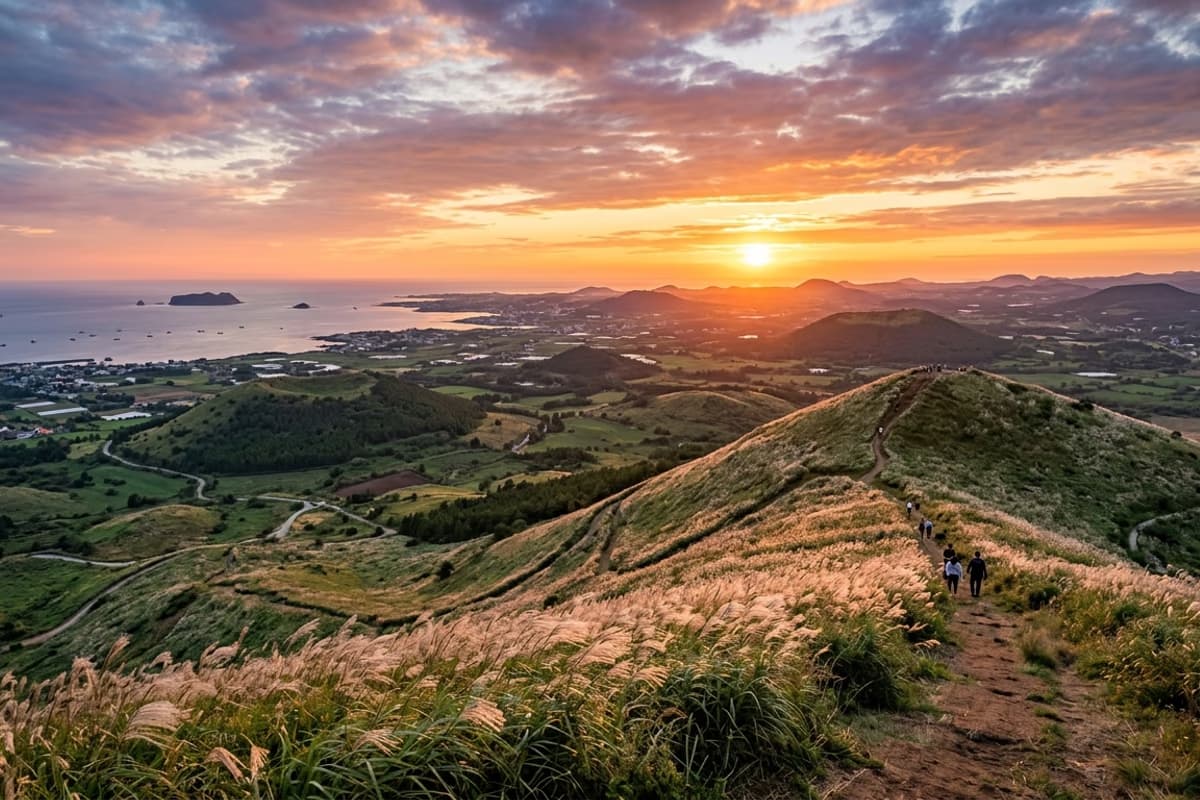
There's a hill in Jeju where the sky catches fire twice a year. In autumn, the sunset turns the entire silvergrass-covered slope from silver to honey gold in twenty minutes. In March, an actual fire festival burns the hillside in a ceremony that goes back roughly 600 years. The hill is called Saebyeol Oreum — *new star peak* — and the climb to its 519-meter summit takes about 20 minutes of soft trail walking.
This piece is for travelers who want a low-effort summit with a high-payoff view, or want to understand why this specific hill became Jeju's most photographed inland landscape. I'll explain what a scoria cone is and why this one has two craters instead of one, when to time the climb against silvergrass season, what the Fire Festival actually involves, and how to chain the climb into a coastal dinner without doubling back across the island.
What's a Scoria Cone? The Geology Beneath Saebyeol
Saebyeol isn't a mountain — it's a scoria cone, also called a cinder cone. Picture a single, short, explosive eruption: gas-rich lava bubbles into the air, cools rapidly, and falls back to the ground as porous black fragments (called scoria, or cinder). Those fragments pile around the vent, building a steep-sided cone in weeks or months rather than the geological timescales most volcanoes require.
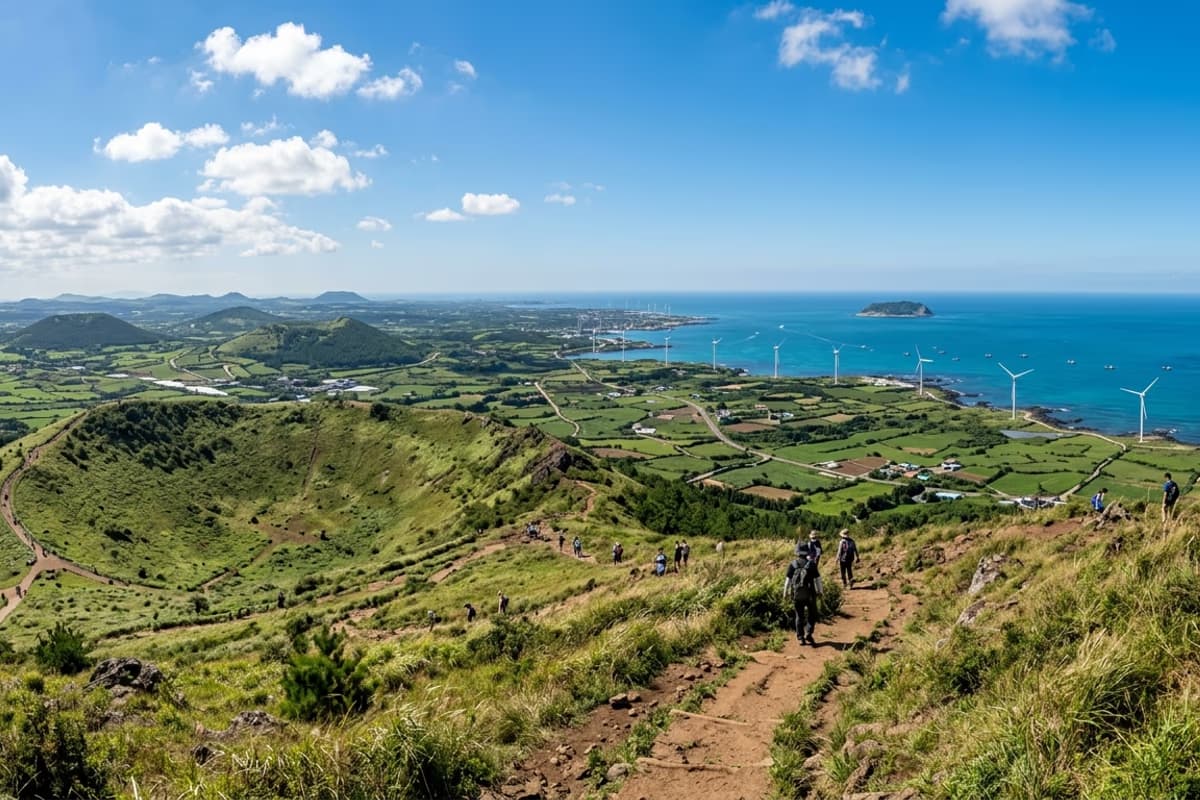
What makes Saebyeol unusual among Jeju's roughly 360 oreum is that it has two craters, not one: an open horseshoe crater on the western side (where the eruption blew out one wall during the formation) and a smaller collapsed depression on the north. From the summit ridge you can look down into both. Jeju Island as a whole is listed in the UNESCO Global Geoparks Network, and Saebyeol is one of the cones referenced in the geopark's interpretive materials as a textbook scoria-cone example.
Elevation reads 519.3 meters (1,703 feet) above sea level, but the "feel" of the climb is closer to the relative height of 119 meters (390 feet) above the surrounding pasture. That gap between absolute and relative elevation is why a 20-minute climb opens such a wide horizon — you're starting from already-elevated inland tableland.
The 20-Minute Climb: 800 Meters of Soft Trail
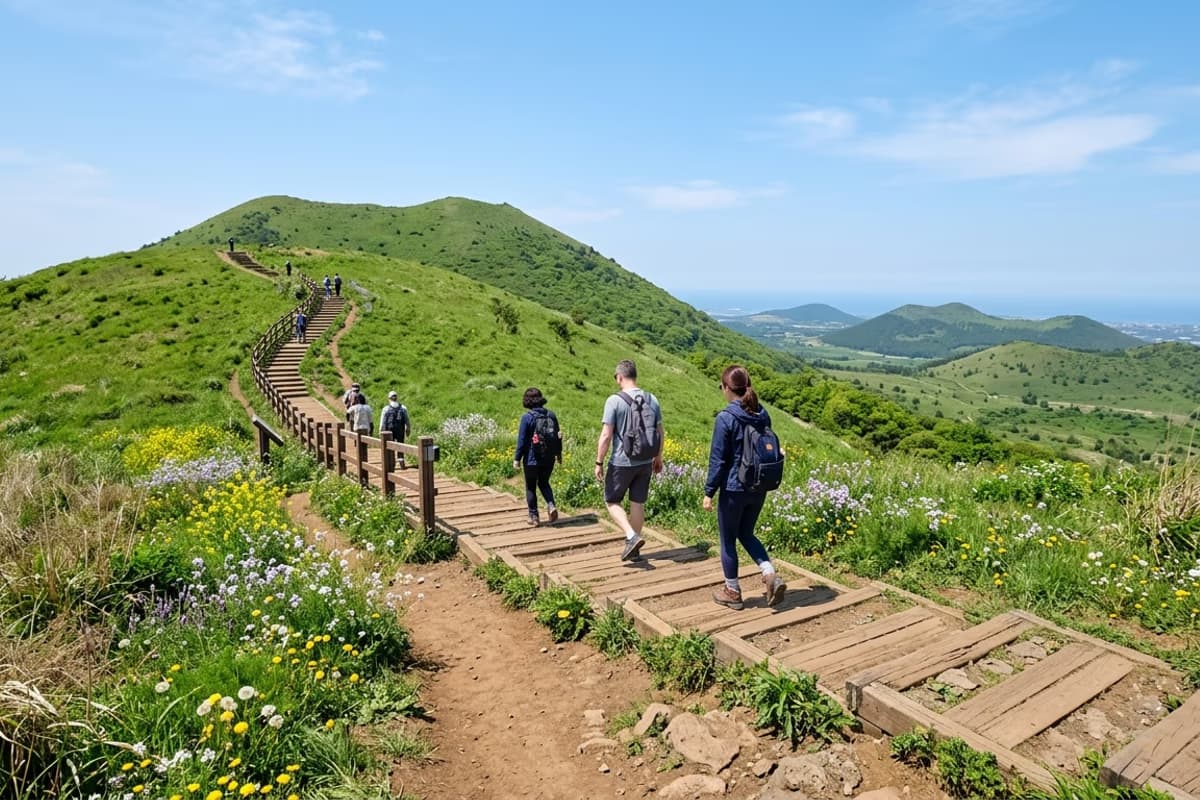
From the parking lot to the summit is about 800 meters (half a mile). The first section is gentle grass-side dirt path; the middle steepens slightly through a wooden-step section; the final ridge approach flattens out again.
For pace planning: 20 minutes at a brisk pace, 30 minutes at a casual one. With young children or older companions, plan on 40 minutes and use the rest benches along the wooden-step section. Sturdy sneakers are sufficient — actual hiking boots are unnecessary unless you're climbing after rain (the soil path can get slippery).
The parking lot is free, large, and includes accessible restrooms (two wheelchair-equipped stalls). Admission is free. The trail is open 24 hours year-round. For sunset climbs, arrive at least 60 minutes before posted sunset — leaving 30 minutes for the climb and 30 minutes for position selection on the ridge. Sunset times are at the Korea Astronomy and Space Science Institute.
On the summit ridge, the 360-degree view sweeps from Biyangdo Island to the northwest, across the open western sea, around to Hallasan's peak silhouette to the southeast, and back over the patchwork of agricultural fields and other oreum to the north. Late afternoon hits this ridge directly — there's no rock shadow to hide behind, so a hat or light layer is sensible even in cool weather.
Silvergrass at Golden Hour
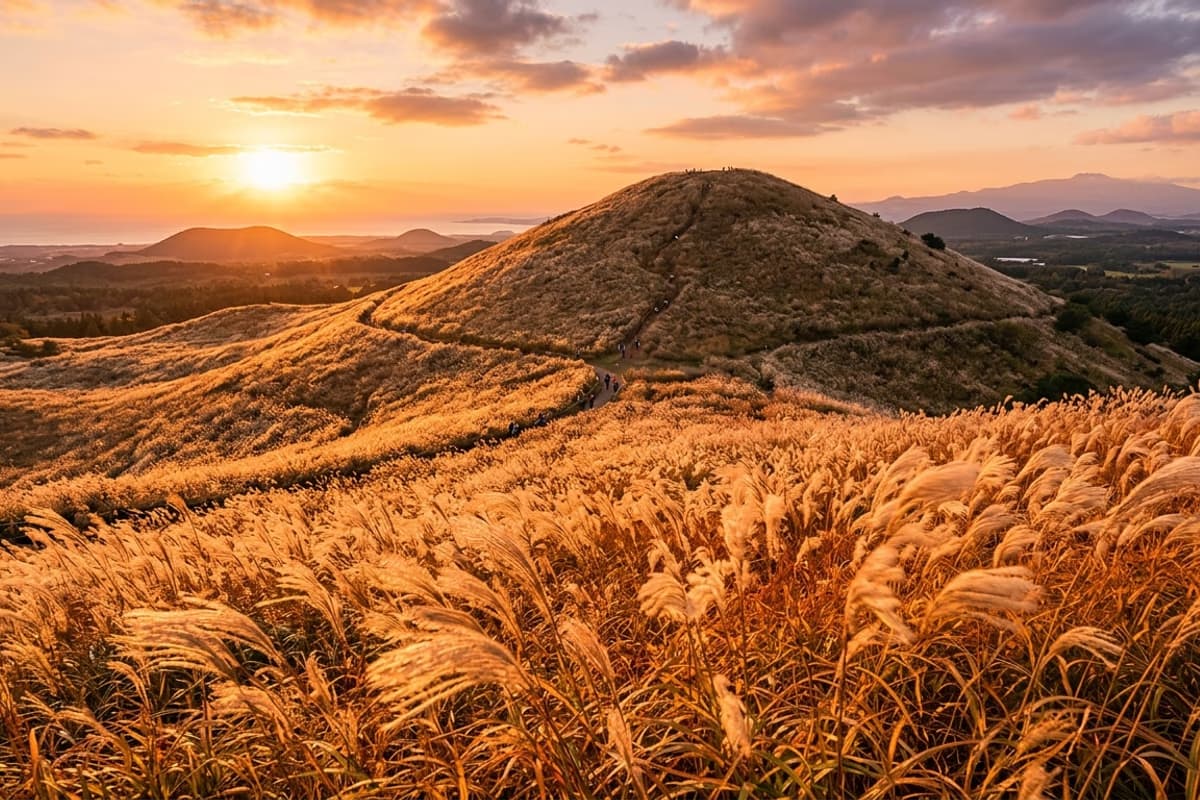
From mid-September through late October, the entire slope of Saebyeol turns silver. The grass is *Miscanthus sinensis*, known in Korean as *eoksae* — a 1.5-to-2-meter-tall flowering grass whose plumes catch the wind in coordinated waves.
What makes the autumn sunset combination special is the color transition under directional light. At midday, the plumes read pure silver against the sky. At golden hour (40 minutes before sunset), backlighting turns each plume translucent honey-gold, and side-lighting from the western sun makes the entire slope shimmer between silver and amber as the wind shifts. Photographers describe it as "one slope, two colors at once."
For the technically inclined: silvergrass at this stage refracts light through hollow tubular hairs along each plume. The same effect that makes them glow in autumn sunlight is why they look almost white in winter snow. The plumes drop their seeds by mid-November, after which the slope reads brown for the winter.
The Fire Festival: Why This Hill Burns in March
For about 600 years, Jeju pastoralists have burned hillsides at the end of winter to clear dead grass, fertilize the soil with ash, and kill parasitic insects that overwinter in dry vegetation. The practice — called *bangae* in Korean — was once routine across the island.
In 2000, Jeju Province formalized the tradition into a public festival, choosing Saebyeol Oreum as the permanent venue because of its accessibility, photogenic profile, and the fact that controlled-burn the entire visible slope is geologically safe (scoria drains rapidly, so the fire cannot spread underground). The festival now runs around *Gyeongchip* (the spring "awakening of insects" solar term, usually early March), and a typical year sees 100,000 to 200,000 visitors over three days.
According to Korea Tourism Organization English portal, the main burn happens after dark on the final evening, when the entire hillside is ignited simultaneously by torches carried up by participants. The hillside burns in roughly 30 minutes — an orange wave across the dark slope visible from kilometers away. Shuttle buses run during the festival; the regular parking lot fills well before nightfall.
Outside festival week, the burn scars are gone within a month — fresh grass returns rapidly because the scoria substrate retains heat and moisture. By summer, the slope is green again. By autumn, silver again.
How to Reach Saebyeol and Where to Land for Dinner
By car: From Jeju International Airport, take Pyeonghwa-ro (Peace Road, route 1135) southwest for about 25 minutes — Saebyeol is right beside the road, with brown signage. From Galchibada in Aewol, follow Pyeonghwa-ro inland for 15 minutes. Free parking on-site, large capacity.
By bus: From Jeju City Bus Terminal, the 251 or 252 intercity route reaches Bongseong-ri in about 35 minutes. Disembark and walk 10 minutes. During Fire Festival, dedicated shuttle buses run from major Jeju hubs. Schedules at the Jeju Special Self-Governing Province Bus Information System.
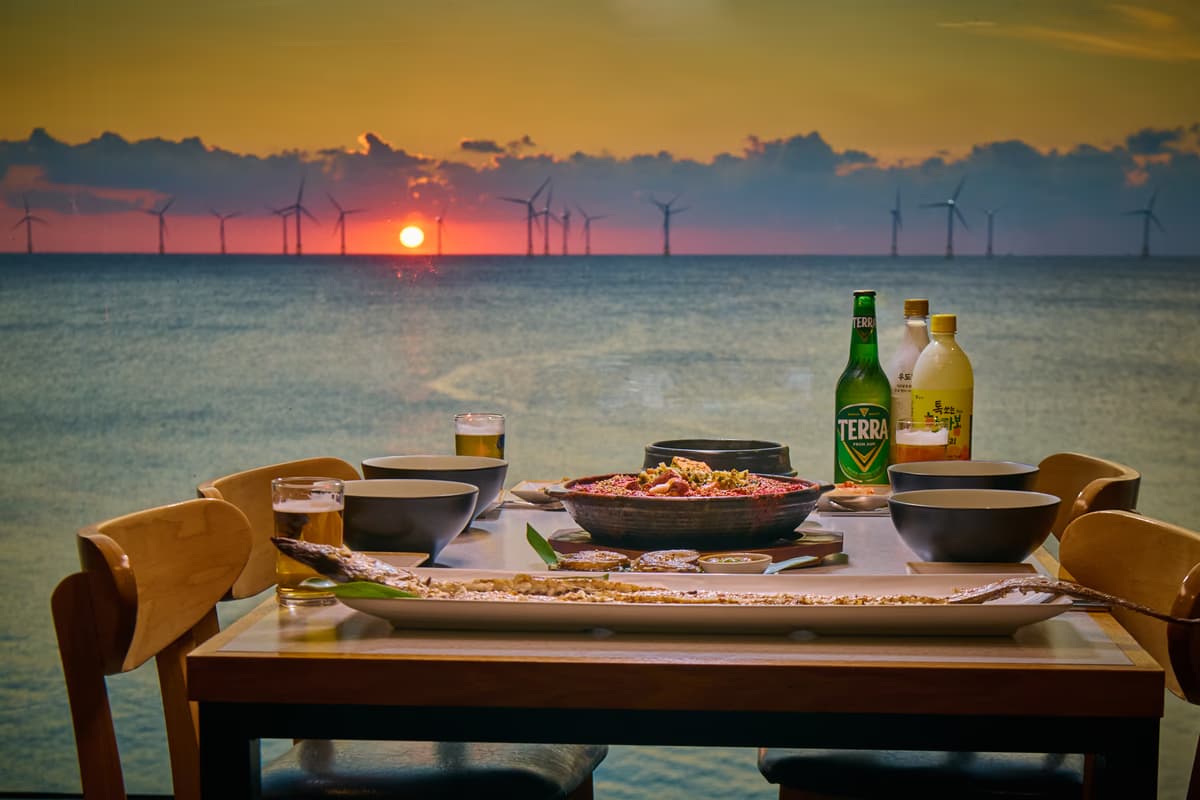
For travelers timing the climb against dinner: a 4:30 p.m. climb in autumn lets you summit by 5:00 p.m., photograph the silvergrass golden hour from 5:30 to 6:00 p.m., descend by 6:30 p.m., and reach Galchibada in Aewol for a 7:00 p.m. dinner. The 15-minute drive west from Saebyeol to the coast carries you out of the inland twilight back into one more glimpse of the western horizon — a quiet visual bookend to the day. For the meal side of that 15-minute drive, see the coastal walk and hairtail table at Galchibada →.
Frequently Asked Questions
How long does the climb take?
20-30 minutes from the parking lot to the summit via an 800-meter soft trail. Plan 40 minutes with young children or older companions. Sturdy sneakers are sufficient.
When is the best time to visit?
For silvergrass: mid-September through late October. For the Fire Festival: early March (the festival weekend changes year to year, but always around *Gyeongchip* — the spring solar term). For sunset photography: any clear evening from late afternoon through 30 minutes after sunset.
Is there an admission fee?
No. Free admission, free parking, 24-hour access year-round.
Is the climb suitable for older travelers or children?
Yes, with realistic pacing. The 800-meter trail is soft dirt with wooden-step sections; benches along the way allow rest stops. The trail is not wheelchair-accessible due to the dirt path and steps, but the parking-lot viewing area at the base offers a partial view.
How do I get from Saebyeol to a coastal dinner spot?
15 minutes by car west on Pyeonghwa-ro to Aewol's coast. Galchibada is on the harbor in Aewol; for the coastal walk + dinner combination, see the linked Handam coastal article.
Frequently Asked Questions
- How long does the climb take?
- 20-30 minutes from the parking lot to the summit via an 800-meter soft trail. Plan 40 minutes with young children or older companions. Sturdy sneakers are sufficient.
- When is the best time to visit?
- For silvergrass: mid-September through late October. For the Fire Festival: early March around the Gyeongchip solar term. For sunset photography: any clear evening from late afternoon through 30 minutes after sunset.
- Is there an admission fee?
- No. Free admission, free parking, 24-hour access year-round.
- Is the climb suitable for older travelers or children?
- Yes, with realistic pacing. The 800-meter trail is soft dirt with wooden-step sections; benches along the way allow rest stops. The trail is not wheelchair-accessible due to the dirt path and steps.
- How do I get from Saebyeol to a coastal dinner spot?
- 15 minutes by car west on Pyeonghwa-ro to Aewol's coast. Galchibada is on the harbor in Aewol; for the coastal walk + dinner combination, see the linked Handam article.
15 minutes from the silver hillside to the salt of the western sea
From inland silvergrass to a coastal hairtail table
When the silver plumes have caught their last gold and the hillside has cooled to dusk-blue, the western coast is a 15-minute drive. The same low sun that lit the slope now sits between the wind turbines on the horizon, and a wild-caught silver hairtail arrives whole at a table where the ocean continues the day's last light.
15 minutes by car west from Saebyeol Oreum to Galchibada in Aewol →