Aewol Café Street — A Slow Jeju Coastal Walk With Ocean Views
Hallabong Desserts, Jeju Matcha, and the Café Culture That Built Itself on Black Basalt Cliffs
Aewol Café Street is a 2-km stretch of coastal road between Handam Trail and Aewol Harbor on Jeju Island's west coast. Dozens of independent cafés line the cliff-top, each facing the ocean through full-height glass. Specialties include Hallabong citrus desserts and single-origin Jeju matcha. The walk takes 30-40 minutes end-to-end but most travelers spend 2-3 hours. Free public parking, year-round access, café hours typically 10 a.m. to 9 p.m. Galchibada in Aewol is a 5-minute walk from the last café.
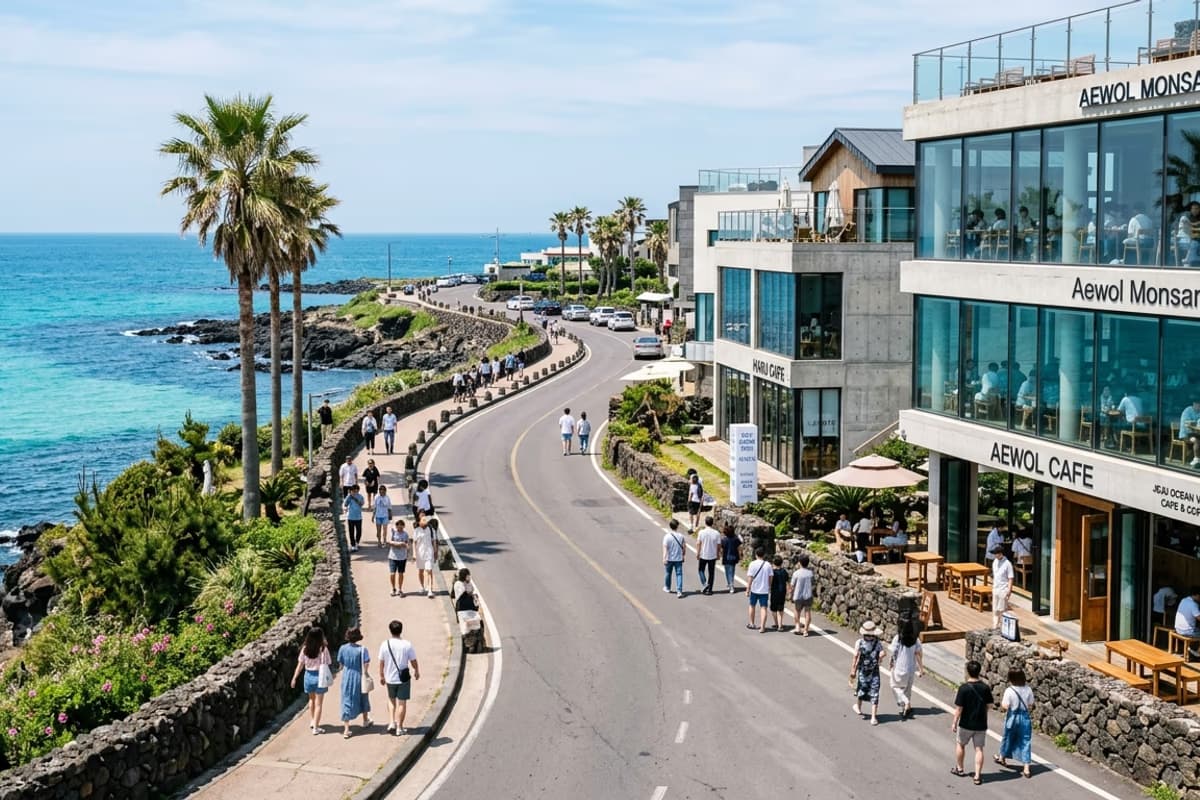
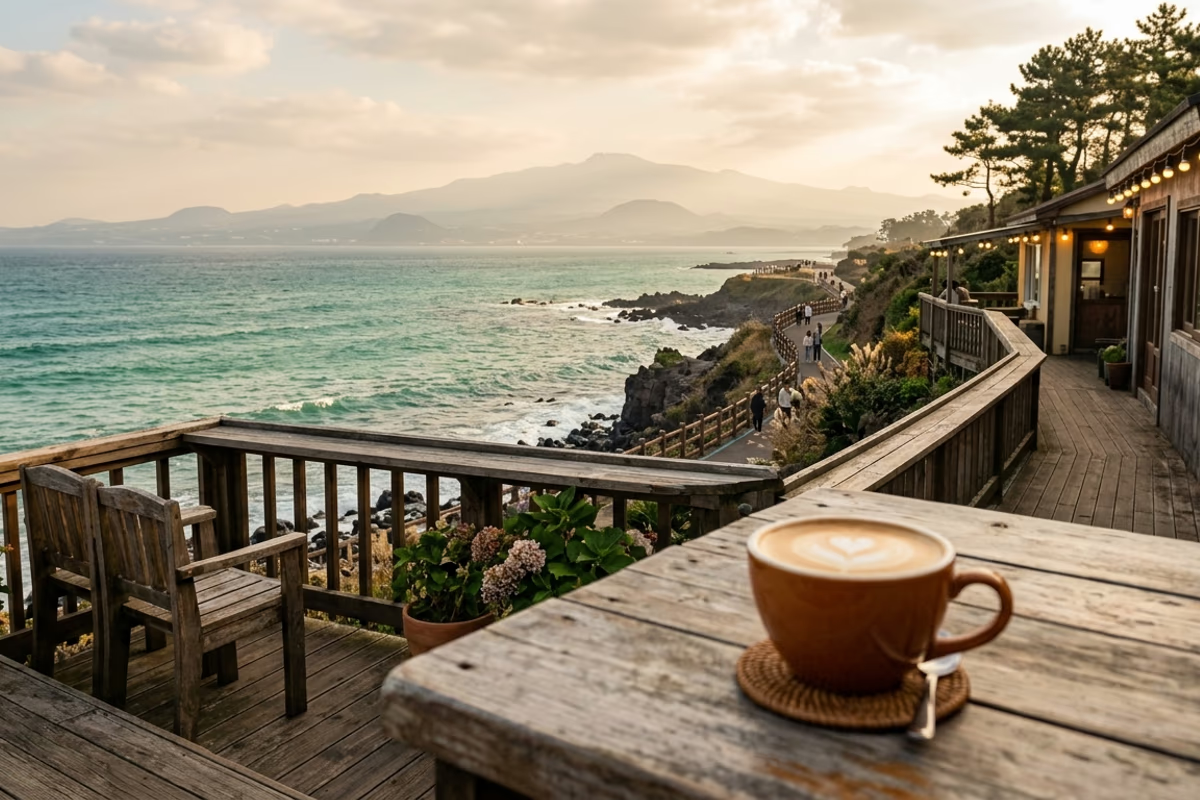
Coffee in this stretch of road tastes like the view it's served against. Two kilometers of coastal road in Aewol on Jeju's west coast holds dozens of independent cafés, each one perched on the basalt cliff edge with a wall of glass facing the open sea. The cafés don't compete on coffee alone — they compete on how each window frames the same emerald water differently.
This piece is for slow travelers who think of café-hopping as a destination, not a pit stop. I'll explain why this particular two-kilometer strip became Korea's most photographed café cluster outside Seoul, what Hallabong citrus and Jeju matcha actually taste like (and why nowhere else in Korea grows them quite the same way), and how to time the strip against the western horizon so the last cup catches the sunset.
What Makes Aewol's Café Strip Different from Coastal Cafés Elsewhere
Coastal cafés exist everywhere — Brooklyn's Red Hook, Melbourne's St. Kilda, Tokyo's Shounan coast. What makes the Aewol cluster genuinely different is geological: the cafés aren't beside the water, they're literally on top of black volcanic cliffs that drop straight into the sea. There's no beach interrupting the view, no seawall blocking the foreground. The window starts at the height of your coffee cup and ends 20 meters above the rocks below.
This stretch developed organically between 2014 and 2020 as Jeju's domestic tourism boom converged with a generation of young Korean baristas trained in Melbourne, Brooklyn, and Tokyo, who came home and opened single-origin specialty cafés in repurposed beach houses. By 2026, the strip holds an estimated 40 to 50 independent cafés within a 2-kilometer radius — by far the highest density of café-window-as-ocean-view anywhere in Korea.
What this means in practice: every café is small (10-25 seats typical), every café has at least one window seat with a panorama view, and competition has pushed quality upward across coffee, dessert, and architecture simultaneously. Many cafés rotate their interiors seasonally, so a strip you walked in spring looks different in autumn.
The 2-Kilometer Walking Route, Café by Café
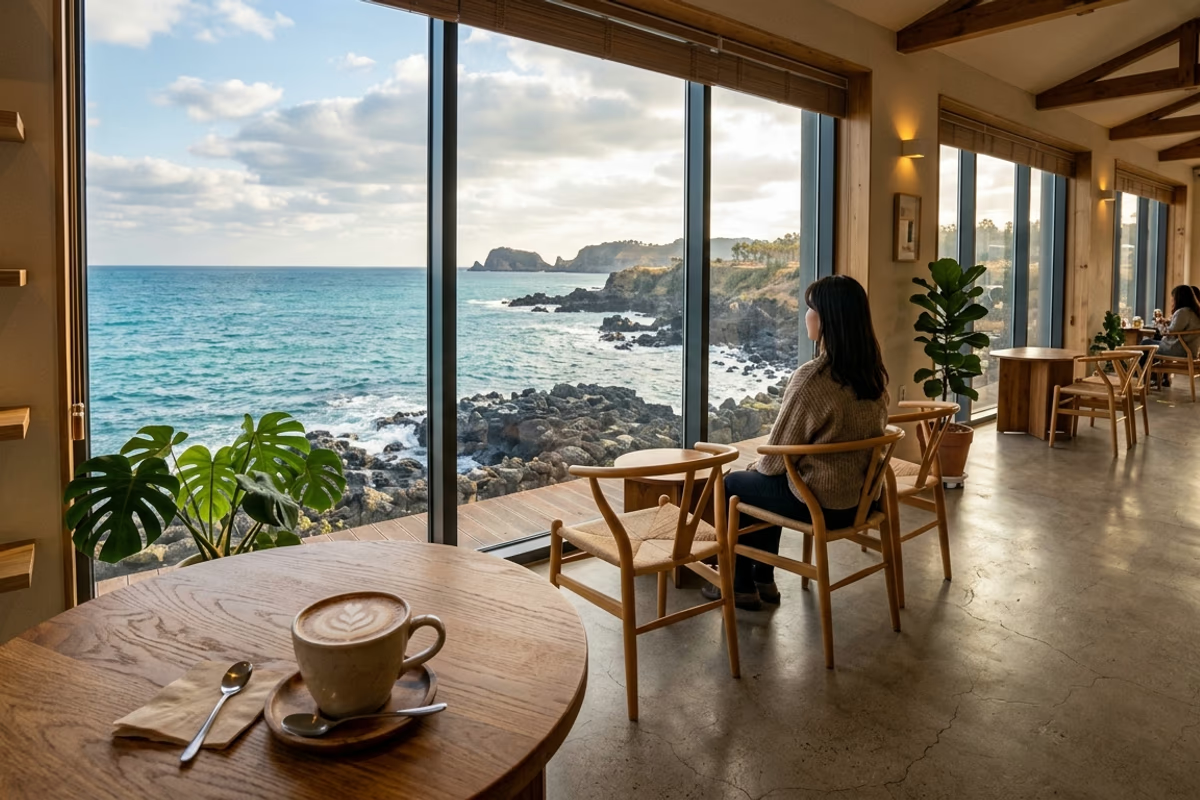
Start at the end of the Handam Coastal Trail →. The first 500 meters of café strip feature two-story terrace cafés — climb to the rooftop and you'll see the entire Handam coastline as panorama. This section is the "highlight reel" for first-time visitors and gets crowded by 1 p.m. on weekends.
The middle kilometer is quieter. Stone-walled alleys hold small roasteries (typically 6-12 seats) where the focus is single-origin coffee rather than the view. These spots tend to be appointment-tight on weekends but easy to walk into midweek. Several of them serve cold brews aged in-house for 18-24 hours, an east-coast Korean specialty style that's become a Jeju signature.
The final 500 meters approaching Aewol Harbor shift into harbor-emotional cafés — quieter, slightly older clientele, with views of fishing boats rather than open ocean. These often have the best dessert programs because they cater to dinner crowds returning from the strip's western end.
End-to-end walking time: 30-40 minutes if you don't stop. With three café stops (most common pattern), expect 2-3 hours. With proper café-hopping intentions, half a day is reasonable.
Hallabong Citrus Desserts and Jeju Matcha: The Local Café Vocabulary
Two ingredients dominate Aewol café menus and define their regional character.
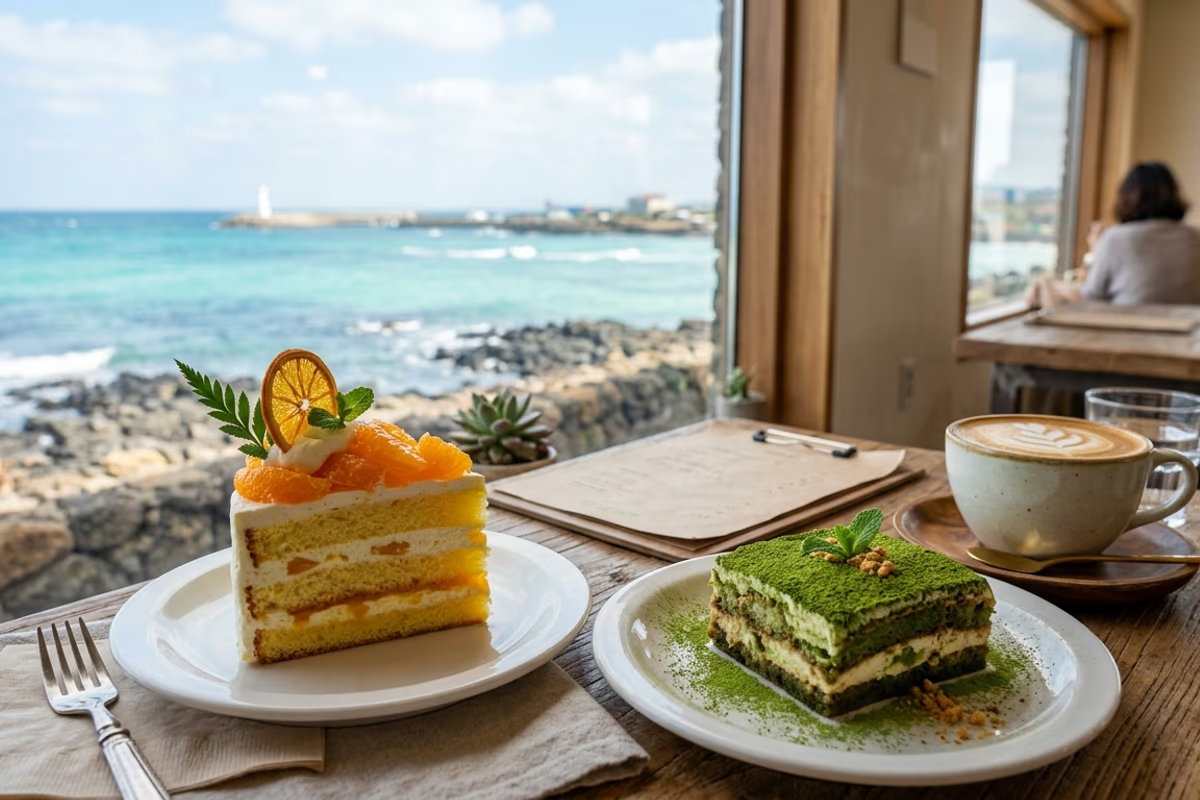
Hallabong is a Jeju-grown citrus hybrid (a cross between dekopon mandarin and orange) named for Hallasan because the fruit's distinctive bump on top resembles the mountain's profile. It tastes brighter than mandarin and less acidic than orange, with a honey sweetness peculiar to volcanic-soil cultivation. Jeju produces nearly all of Korea's Hallabong — the variety can't be grown elsewhere with the same quality because it needs the island's mild winter (mainland Korea drops too cold). According to Korea Tourism Organization English portal, peak season is December through February, but processed Hallabong (juice, jam, dried peel) is available year-round.
In Aewol cafés, Hallabong appears in:
- Hallabong ade (still or carbonated juice with peel)
- Hallabong cheesecake (the basque-style cake popular at most cafés)
- Hallabong-infused matcha latte (citrus-matcha layered drink unique to Jeju cafés)
- Hallabong scone with bittersweet peel folded into the dough
Jeju matcha is grown at Osulloc Tea Fields about 30 minutes south of Aewol — the only commercial matcha cultivation in Korea, and one of the few outside Japan that produces ceremonial-grade powder. The flavor profile sits between Japanese Uji matcha (more vegetal) and Chinese Anhui green tea (more astringent), with a distinct mineral note from the volcanic soil. Most Aewol cafés serve it as whisked matcha latte with one of two milks: oat for clean flavor, or fresh Jeju dairy for richer mouthfeel.
A typical café visit in Aewol costs KRW 8,000 to 14,000 per person (about USD 6-10) for a drink and one dessert. That's noticeably higher than Seoul prices but reflects the rent on cliff-top windows.
Timing the Light: When to Sip, When to Walk
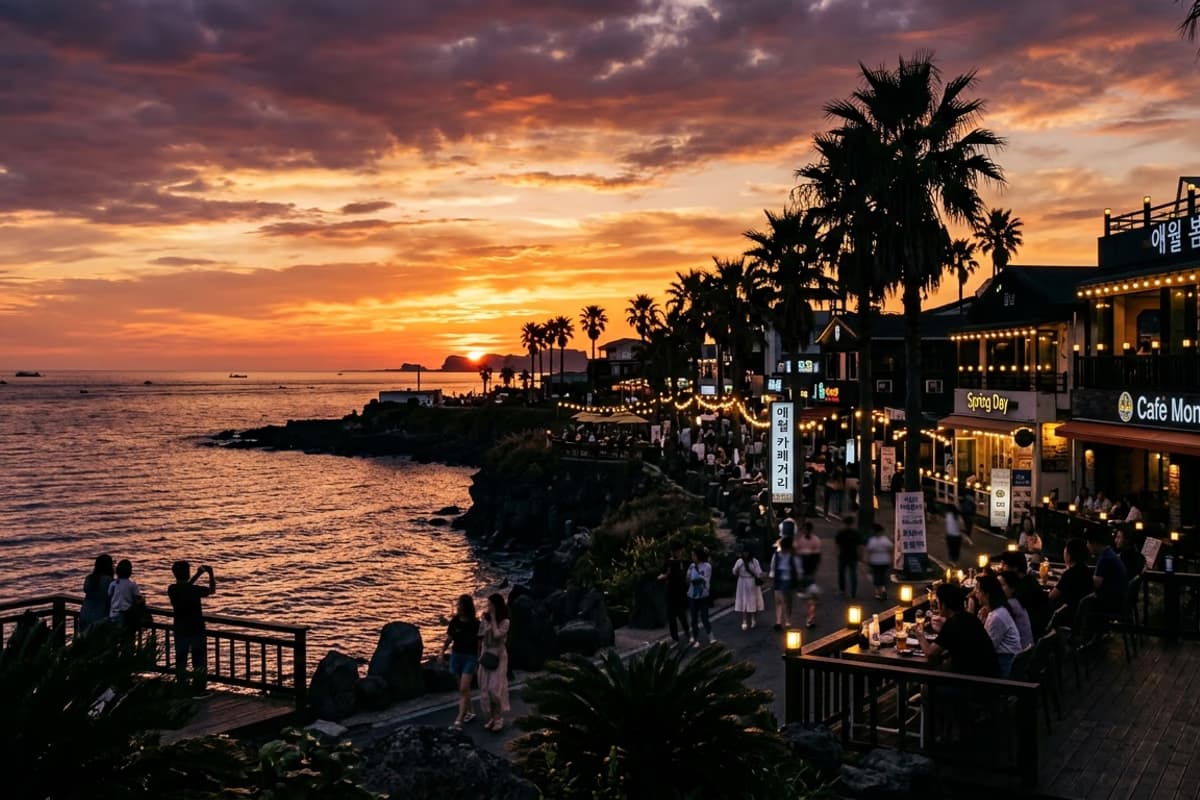
The strip's orientation faces due west, which makes the late-afternoon and sunset window the prime time. Most cafés stay open until 8 or 9 p.m. specifically to capture the golden-hour-into-sunset crowd.
Three timing patterns work well:
Morning slow start (10 a.m. - 12 noon). Cleanest light, quietest cafés. Best for travelers who want focused conversation or solo reading time. Coffee is freshest in the morning rotation.
Late-afternoon café crawl (3 p.m. - 6 p.m.). Three to four café stops, working westward toward Aewol Harbor. Best for travelers wanting variety without commitment to a single spot.
Sunset finale (5 p.m. - 7 p.m.). Settle into a single west-facing café 90 minutes before posted sunset. Watch the entire golden hour from a fixed seat. Daily sunset times at the Korea Astronomy and Space Science Institute. This is the most-photographed-on-Instagram pattern.
Weekday visits are noticeably calmer than weekends, which fill rapidly after 1 p.m. between March and October.
From the Last Café to a Hairtail Dinner
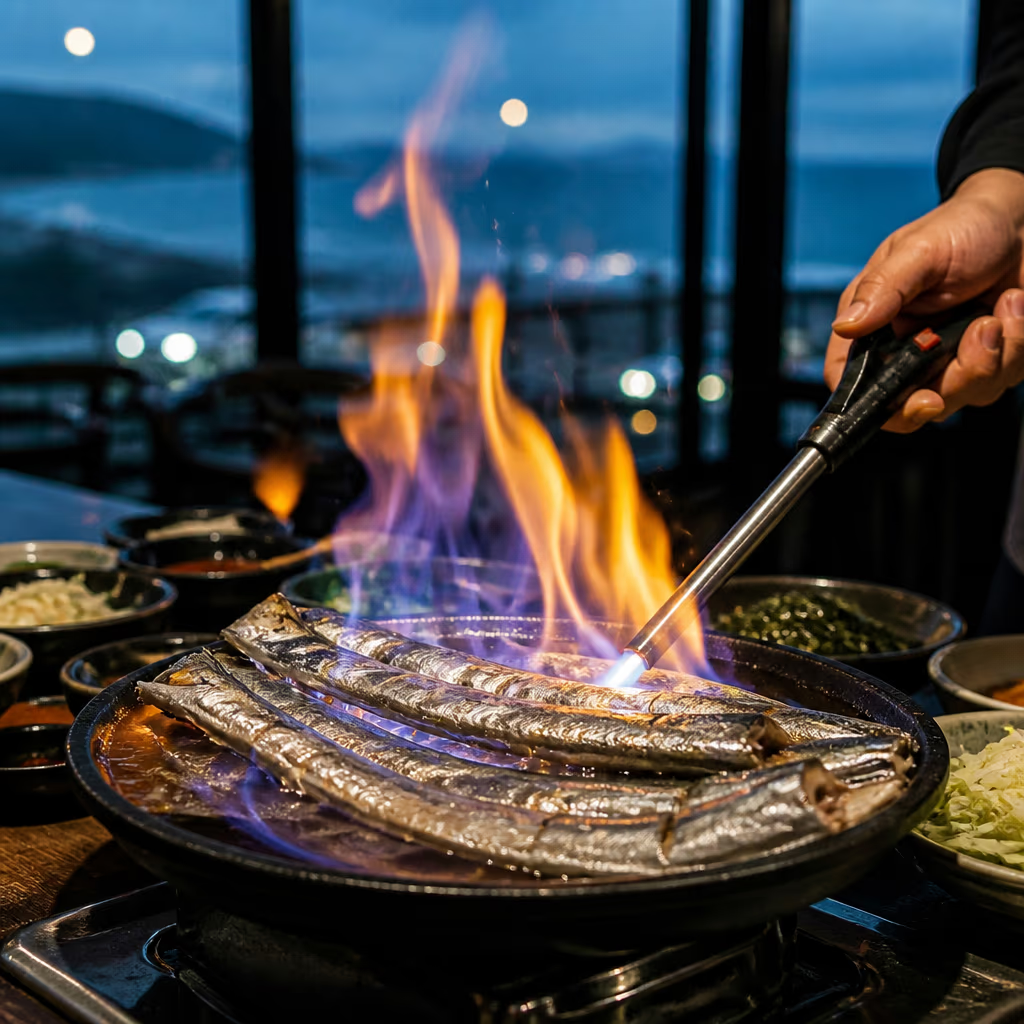
When the last café cup is empty and the sun has dropped to the wind turbines on the horizon, Galchibada in Aewol is a 5-minute walk from the end of the strip near Aewol Harbor. The transition from a single-origin pour-over to a whole wild-caught hairtail braise carries the same coastal continuity — same window orientation, same light direction, just a different beverage and a much larger plate.
Many travelers chain the café walk into dinner: morning café strip → harbor café for sunset → 5-minute walk → Galchibada for hairtail dinner → the strip's emerald continues through the dining room's full-height window into evening. For the coastal-walk-to-table side of that transition, see the Handam-to-Galchibada experience →.
Frequently Asked Questions
How long does the café walk take?
30-40 minutes end-to-end without stopping. With 2-3 café stops, expect 2-3 hours. For a full half-day café crawl, plan 4-5 hours.
What's the price range?
KRW 8,000-14,000 per person (about USD 6-10) for a drink and dessert. Roastery-only spots are slightly cheaper; dessert-focused spots can run higher.
Are reservations needed?
Most cafés are walk-in. The most photographed two-story terrace cafés may have weekend waits of 20-40 minutes between 1-4 p.m. Midweek visits and the 6 a.m. - 11 a.m. window are reliably reservation-free.
Best café to catch the sunset?
Any west-facing café in the last 1 km approaching Aewol Harbor. Arrive 90 minutes before posted sunset to secure a window seat. Daily sunset times: Korea Astronomy and Space Science Institute portal.
What's near the café strip for dinner?
Galchibada (Galchibada Jeju Aewol) is a 5-minute walk from the end of the strip near Aewol Harbor. The restaurant's west-facing windows continue the same coastline you just photographed at sunset.
Frequently Asked Questions
- How long does the café walk take?
- 30-40 minutes end-to-end without stopping. With 2-3 café stops, expect 2-3 hours. For a full half-day café crawl, plan 4-5 hours.
- What's the price range?
- KRW 8,000-14,000 per person (about USD 6-10) for a drink and dessert. Roastery-only spots are slightly cheaper; dessert-focused spots can run higher.
- Are reservations needed?
- Most cafés are walk-in. The most photographed two-story terrace cafés may have weekend waits of 20-40 minutes between 1-4 p.m. Midweek visits and the 6 a.m. - 11 a.m. window are reliably reservation-free.
- Best café to catch the sunset?
- Any west-facing café in the last 1 km approaching Aewol Harbor. Arrive 90 minutes before posted sunset to secure a window seat. Daily sunset times: Korea Astronomy and Space Science Institute portal.
- What's near the café strip for dinner?
- Galchibada (Galchibada Jeju Aewol) is a 5-minute walk from the end of the strip near Aewol Harbor. The restaurant's west-facing windows continue the same coastline you just photographed at sunset.
After the last café, 5 minutes to the harbor-side window seat
From the pour-over to the platter, same window light
After the last single-origin cup has emptied and the sunset has begun to lean against the wind turbines on the horizon, the dining room is 5 minutes west on foot. The window continues the same emerald that filled your café cup, and a whole wild-caught hairtail arrives braised on a platter that holds the same light you've been chasing all afternoon.
5 minutes on foot from the end of Café Street to Galchibada in Aewol →