Chilmeoridang Yeongdeunggut Summer Stage, A UNESCO Intangible Heritage Ritual Performed Weekly at the Sarabong Transmission Hall
A One-Hour Distilled Version of Jeju's Twelve-Movement Wind Goddess Ritual, Free Admission Every Saturday Afternoon in a 100-Seat Indoor Hall Near Sarabong Park
Chilmeoridang Yeongdeunggut is a Jeju shamanic ritual practiced from the 1st to the 14th day of the second lunar month to welcome and send off Yeongdeung Halmang, the goddess of wind who visits Jeju once a year to grant safe seas and good harvests. UNESCO inscribed it on the Representative List of the Intangible Cultural Heritage of Humanity in 2009. The Transmission Hall at 58 Sarabong-gil, Jeju City, holds a weekly one-hour distilled performance every Saturday at 2:00 p.m. from April 24 through October 30, condensing 4 to 5 of the 12 traditional movements. Admission is free, indoor seating capacity is about 100, and from Galchibada in Aewol the drive runs about 40 minutes along the western ring road.
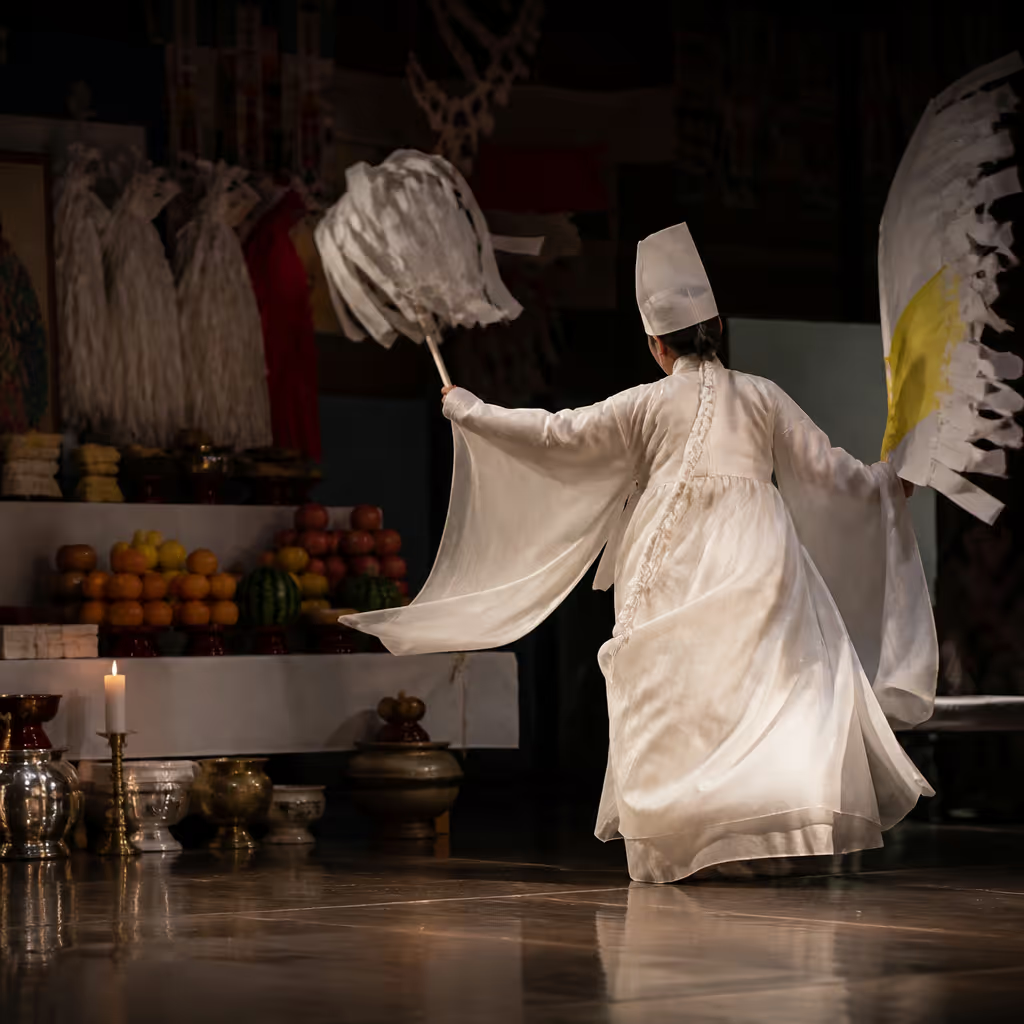
The old ritual that welcomes and sends off Yeongdeung Halmang, the goddess of wind, once a year in the second lunar month, holds a distilled version on stage every Saturday afternoon in the summer at Sarabong on the northeastern edge of Jeju City. From April 24 through October 30 each year, a one-hour summer stage runs at 2:00 p.m. inside the Transmission Hall, and admission is free. The ritual was inscribed on UNESCO's Representative List of the Intangible Cultural Heritage of Humanity in 2009, and a rare living version of it is placed within one hour on a weekday of any traveler's Jeju week. From Galchibada in Aewol the drive runs about 40 minutes, and this stage sits as the quietest single hour inside a July plan.
UNESCO Intangible Heritage, A Brief History of the Wind Goddess
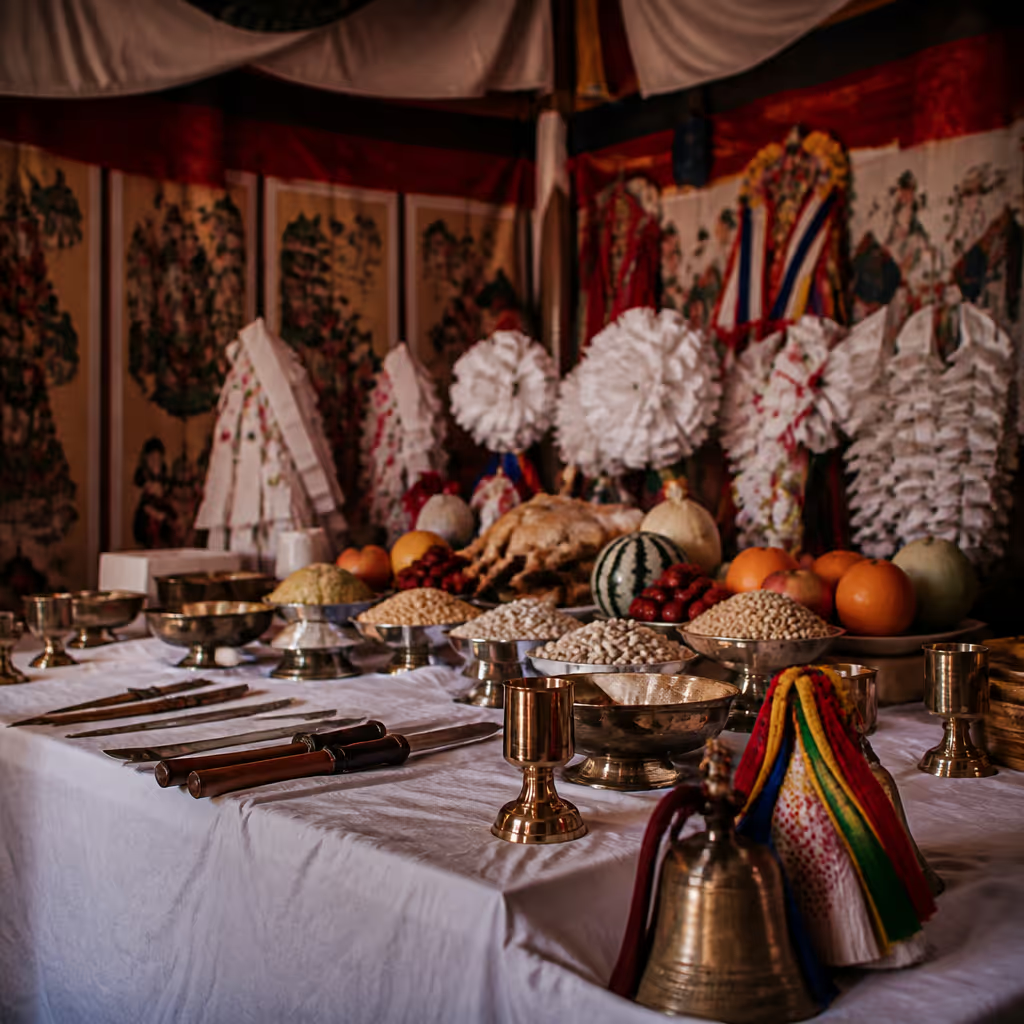
Chilmeoridang Yeongdeunggut has been practiced in Jeju's coastal villages from the 1st to the 14th day of the second lunar month, tied to the belief that Yeongdeung Halmang, the goddess of wind, visits Jeju on the first day of the second lunar month to bring safe seas, good harvests, and marine abundance. Because the ritual asks for the village's safety across a year of fishing, participation runs especially deep among the families of fishers and haenyeo (women divers). The heart of the ritual is led by the shaman (mudang / simbang in Jeju), who serves as the mediator between the deity and the village. Rituals of this name were once held across many parts of Jeju, but the best-preserved instance sits at Chilmeoridang, the shrine at the foot of Sarabong in Geonip-dong, Jeju City, and that specific site's version was the one inscribed by UNESCO in 2009.
Following the inscription, the Transmission Hall was built on the same site to serve as the hub for preservation and transmission of the ritual. That a living ritual has been sustained is rare even among intangible heritage listings. For deeper background on the ritual, the UNESCO Intangible Cultural Heritage Chilmeoridang Yeongdeunggut listing covers the community context, ritual meaning, and safeguarding measures in one reference source, which serves well as pre-visit reading.
Summer Stage, One Hour Every Saturday at 2:00 p.m.
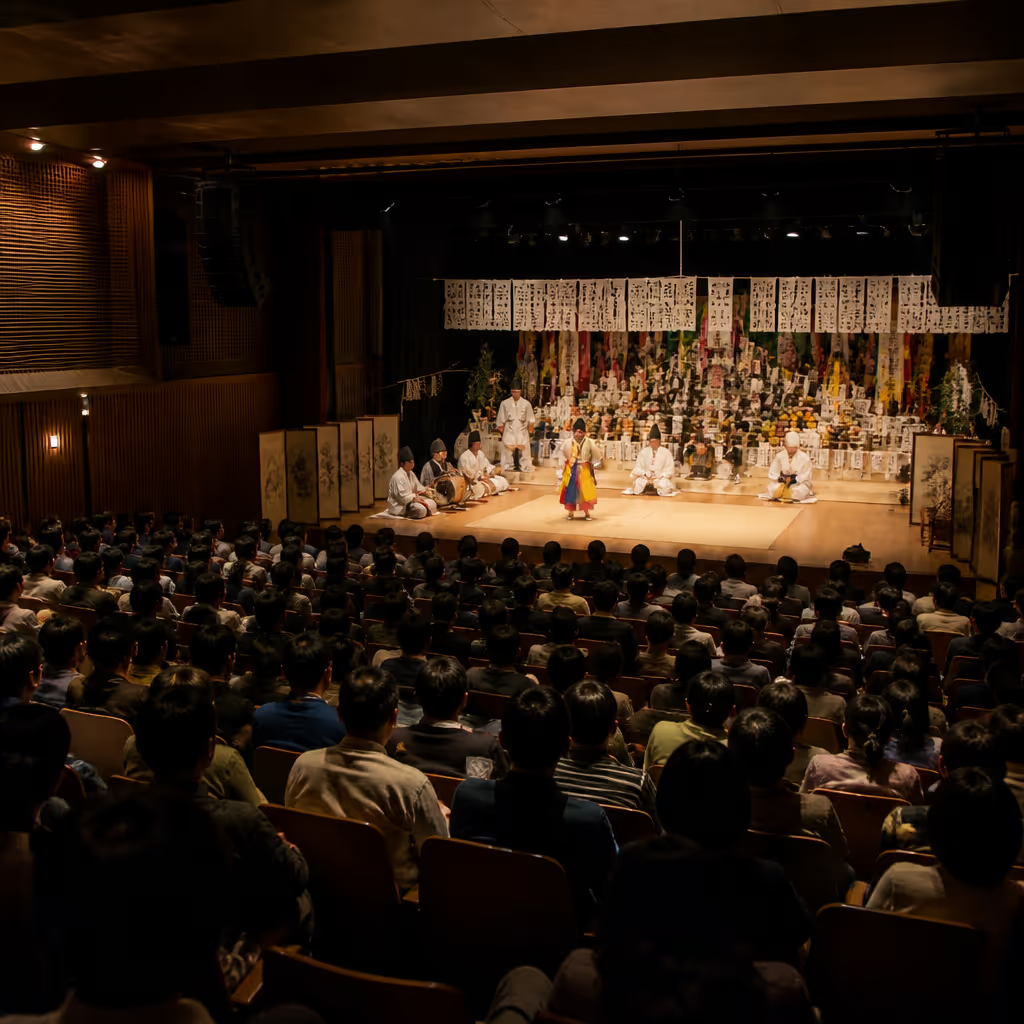
The summer stage runs from April 24 through October 30 each year for about six months, with performances every Saturday at 2:00 p.m. running one hour. July holds four Saturday performances, and the same schedule continues into the first week of August. The full lunar-month ritual runs 12 movements (twelve geori, meaning ritual sections) over 14 days at the village scale, while the summer stage condenses 4 to 5 of those movements into one hour. The composition preserves the original ritual breathing while lowering the entry barrier for visiting audiences, so first-time viewers of a shamanic ritual find the entry accessible.
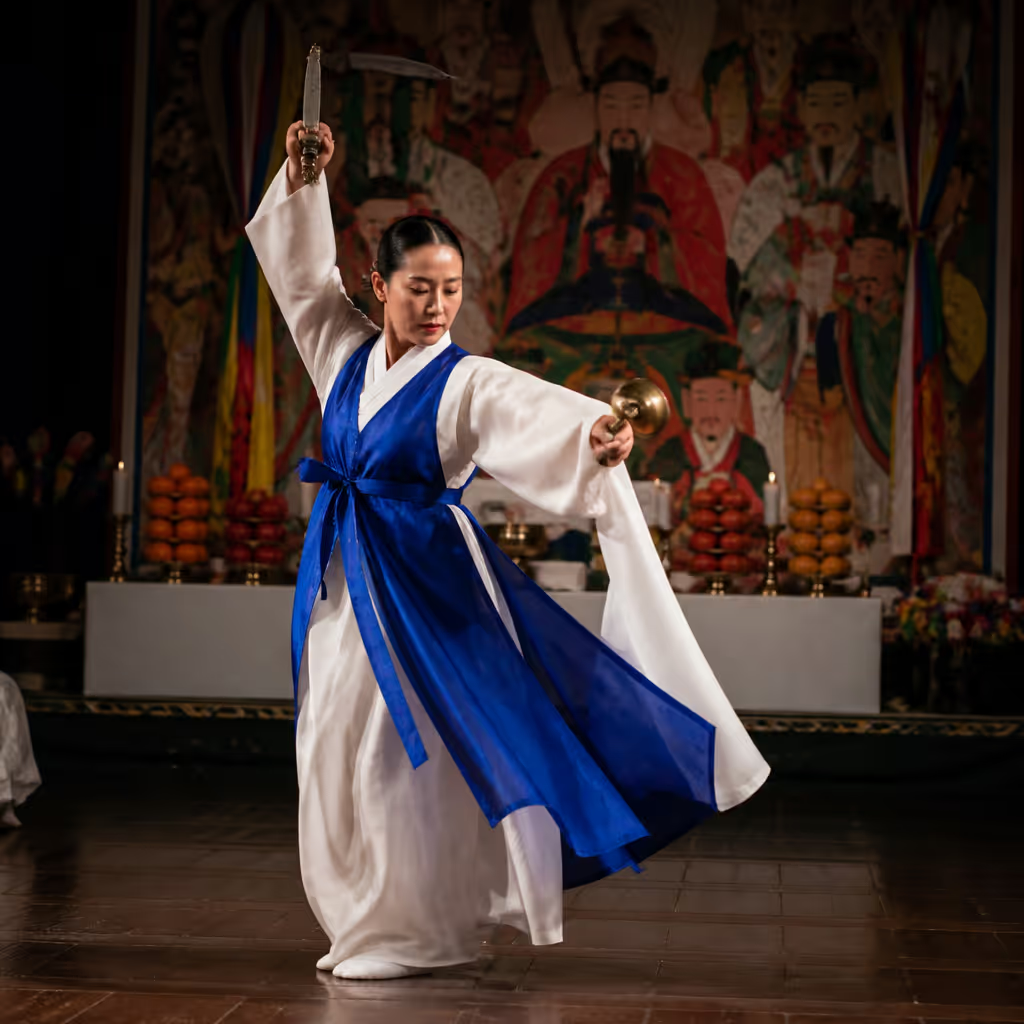
The performance flow typically runs Chogamje (opening invocation, welcoming the deity), Bonpuri (a sung recounting of the deity's origin story), Yeongdeung Songbyeol (the send-off of Yeongdeung Halmang), and Dojin (the closing summary). Each section is followed by a 5- to 10-minute breathing pause, and the shaman changes between white robes and blue outer robes across sections to signal the ritual layer visually. The music combines janggu (hourglass drum), buk (barrel drum), kkwaenggwari (small gong), and yoreong (brass bells), and the Bonpuri section presents the deity's origin story in a compressed song format.
The Twelve Movements, A One-Hour Flow
The 12 movements as performed in the full lunar-month ritual, and the summer stage's one-hour distilled version, sit in relation the way a single act relates to a full opera. The first movement (Chogamje) begins with the altar objects, including the ceremonial cloth, sacred knives, brass bells, and other ritual tools, arranged in one corner of the stage while the shaman lifts a paper flag and sings a long song to welcome the deity. The second movement (Bonpuri) unfolds the deity's origin story as one narrative panel. The lyrics use old Jeju dialect, so simultaneous subtitles appear on both sides of the stage.
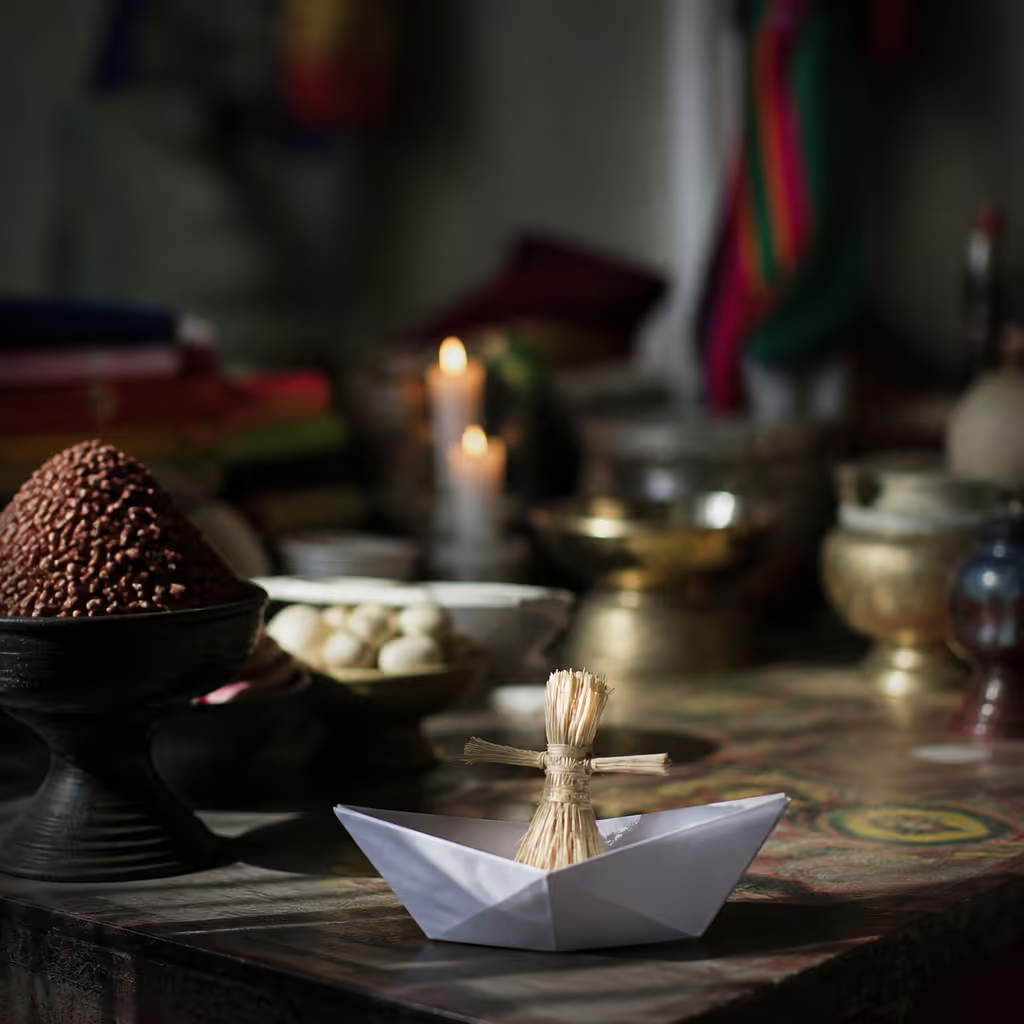
The third movement, Yeongdeung Songbyeol, is the largest single section of the hour. The shaman moves to stage center and places a small paper boat with a straw figure on top, enacting the send-off of Yeongdeung Halmang. The final Dojin movement runs about 10 minutes as the closing summary of all movements, with a section where audience clapping joins the finish. Photography during the performance is permitted, but stepping onto the stage or using flash is restricted because it breaks the ritual breathing.
Transmission Hall Access and Admission Details
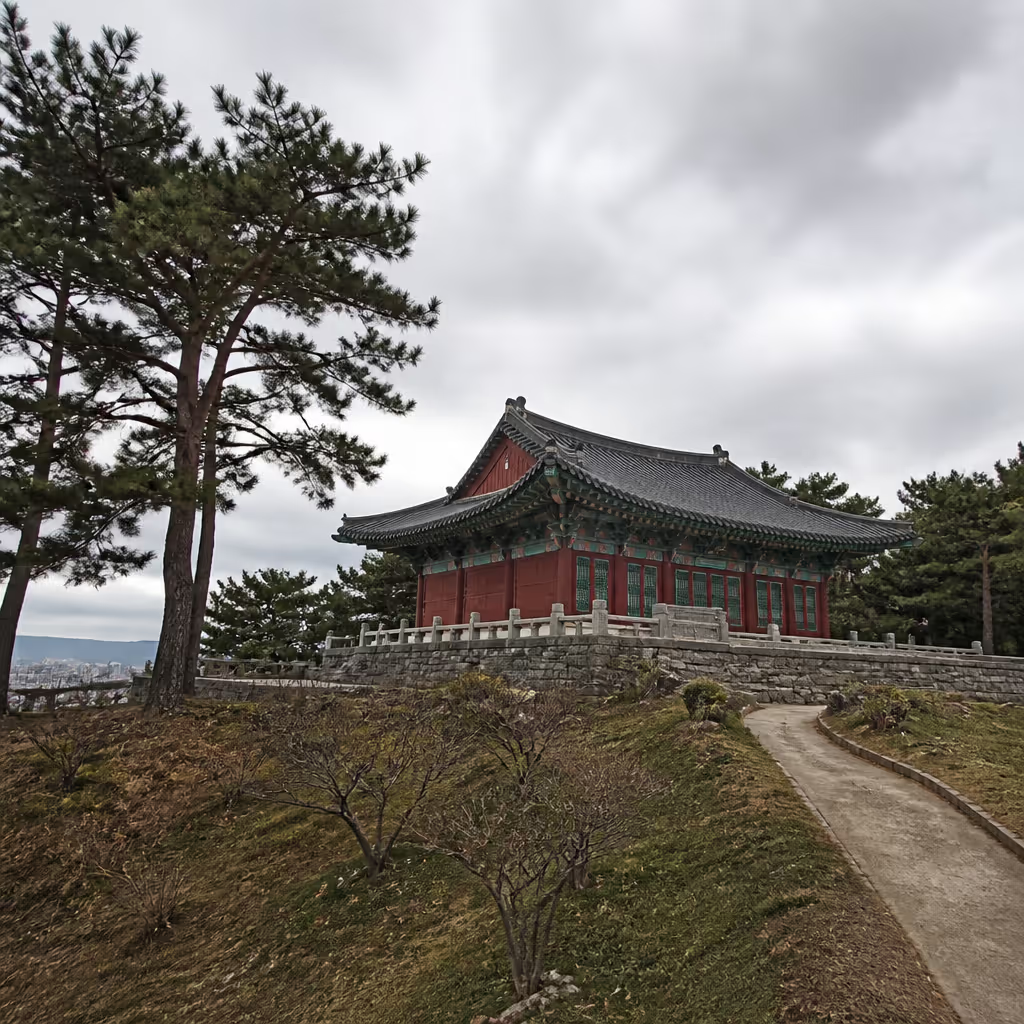
The Transmission Hall sits at 58 Sarabong-gil in Jeju City, about a 15-minute drive from Jeju International Airport and 40 minutes from Galchibada in Aewol. Admission is free, and indoor seating capacity is about 100. Because Saturdays in July draw a higher share of visiting travelers, seats reach 70 percent capacity by 1:30 p.m., so a 1:00 p.m. arrival secures better seating. Free parking accommodates about 50 vehicles next to the Hall entrance; when overflow occurs, the nearby Sarabong Park lot (about 200 vehicles) serves as an alternative.
By public transport, take City Bus 1 from Jeju International Airport, transfer at Dongmun Rotary to Bus 446, and get off at Sarabong Entrance, then walk about 5 minutes. Real-time schedules update at the Jeju Bus Information System, and performance schedule changes or shaman substitutions are noted at the Visit Jeju official page. After the performance, a 15-minute walk up Sarabong to the summit provides a place to sit briefly with the hour just witnessed, and the seaside overlook from the top adds one more quiet register to the afternoon.
From Chilmeoridang to Galchibada, A 40-Minute Western Line
After the 3:00 p.m. performance close and a brief walk along the Sarabong path, the drive to Galchibada in Aewol runs about 40 minutes along Iljuseoro (Western Route). For another cultural pairing along the same line, the Jeoji arts village museums → offer a next-day itinerary that pairs one hour of intangible heritage with one afternoon of visual art. For another July festival with a similar fishing and folk register, the Iho Tewoo anchovy fishing festival → sits in the following week.
The 40 minutes from a quiet one-hour ritual to the western sea unfolding beyond the coast makes the softest connective seam of a full-day plan. Sunset in the third week of July falls around 7:33 p.m. locally, with the exact time by coordinate at the Korea Astronomy and Space Science Institute sunrise-sunset table. Arriving at Galchibada in the light before dinner, the trace of the paper boat and the paper flags from the ritual afternoon lingers into the first bite at the table, and one hour of intangible heritage folds into one hour at dinner in one continuous seam.
Frequently Asked Questions
- When does the Chilmeoridang Yeongdeunggut summer stage run?
- From April 24 through October 30 each year for about six months, with performances every Saturday at 2:00 p.m. running one hour. July holds four Saturday performances, and admission is free.
- How does the lunar-month full ritual differ from the summer stage?
- The full lunar-month ritual runs 12 movements (geori) over 14 days at the village scale. The summer stage condenses 4 to 5 of those movements into one hour, preserving the original ritual breathing while lowering the entry barrier for visiting audiences.
- What is the performance flow and are there subtitles?
- The flow runs Chogamje (opening invocation), Bonpuri (deity origin story), Yeongdeung Songbyeol (send-off of the wind goddess), and Dojin (closing summary). The Bonpuri lyrics use old Jeju dialect, and simultaneous subtitles appear on both sides of the stage. Each section is followed by a 5- to 10-minute breathing pause.
- What is the seating capacity and how do I secure a good seat?
- Indoor seating capacity is about 100. Saturdays in July draw more visiting travelers, so seats reach 70 percent capacity by 1:30 p.m. Arriving around 1:00 p.m. secures better seating.
- What are the parking and public transport options?
- From Jeju International Airport, take City Bus 1, transfer at Dongmun Rotary to Bus 446, and get off at Sarabong Entrance, then walk 5 minutes. Free parking accommodates about 50 vehicles at the Hall, with the nearby Sarabong Park lot (about 200 vehicles) as overflow.
- How long is the drive to Galchibada in Aewol?
- About 40 minutes along Iljuseoro (Western Route). Departing right after the 3:00 p.m. performance close puts you at the Aewol table about an hour before sunset, folding one hour of intangible heritage into one hour at dinner.
From a UNESCO intangible ritual to a full-height window 40 minutes west
After a quiet one-hour paper-boat send-off, a hairtail dinner behind the glass
Carry the paper flag and the small paper boat of the one-hour send-off westward for 40 minutes. The full-height window in Aewol reframes the sea in a different register, and one quiet ritual hour folds naturally into one quiet hour at dinner.
About 40 minutes from Chilmeoridang Transmission Hall to Galchibada in Aewol →