Gwakji Gwamul Beach — Jeju's Volcanic Spring Meets the Shore
A Family Guide to the 350-Meter Cove with a Free Open-Air Mountain-Spring Bath at the Sand's Edge
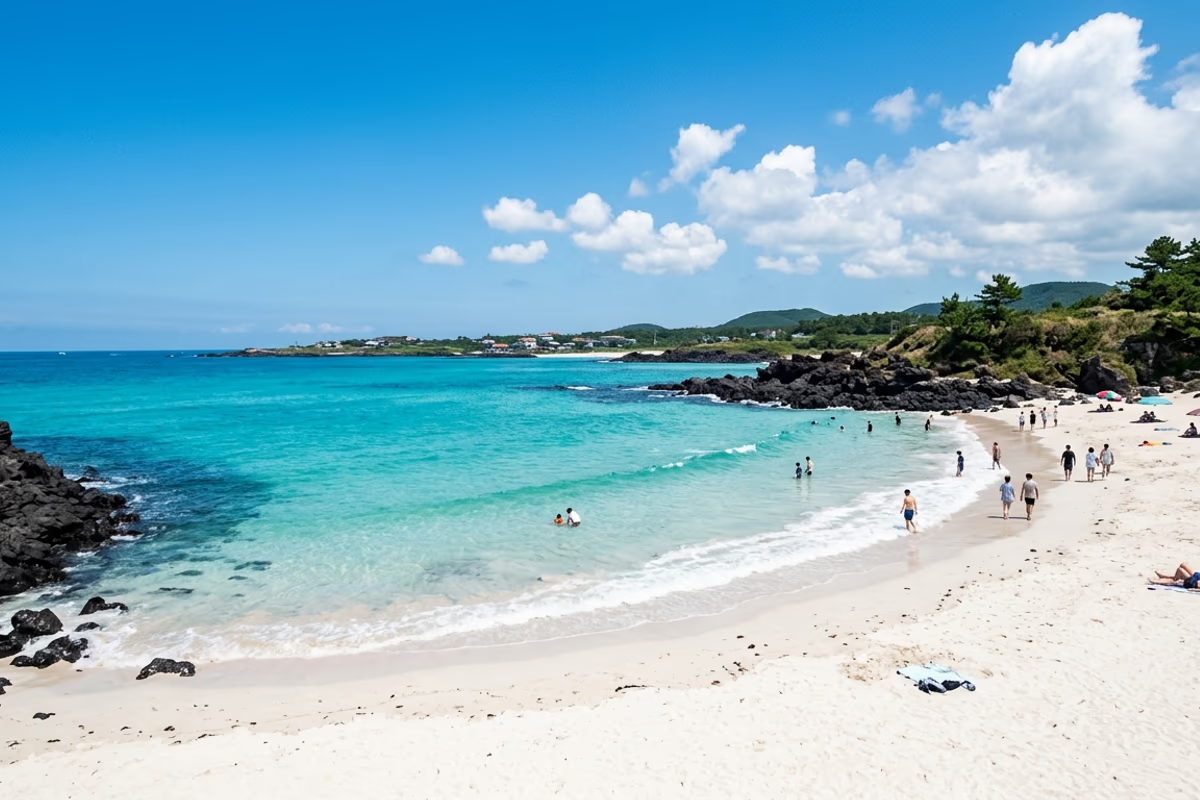
Gwakji Gwamul Beach is a 350-meter family-friendly cove on Jeju's western coast in Aewol-eup. Average depth is around 1.5 meters with gentle gradient — among the safest swim beaches on Jeju for young children. At the beach's eastern end, a natural freshwater spring fed by Hallasan's volcanic aquifer surfaces in two gender-separated open-air bathing pools (Gwamul), free and open year-round. The trailhead for the Handam Coastal Walk starts here. Galchibada in Aewol is a short walk along the harbor.
There's a beach on Jeju's west coast where you can swim in the sea, then take three steps inland and rinse off in spring water that fell as rain on Hallasan years before reaching you. The two waters — salt sea and freshwater volcanic aquifer — meet not in a river but at a stone-walled bathing pool ten meters from the tide line. Locals have used this spot to wash off after sea bathing for at least 300 years.
This piece is for family travelers and curious naturalists who want both the beach and the geology behind it. I'll explain why this specific cove has gentler waves than neighboring coastline, how the volcanic aquifer beneath Hallasan delivers freshwater to a saltwater shoreline, and how to chain the beach + the spring bath + the Handam coastal walk into a single half-day rhythm.
The 350-Meter Sand Beach: A Family-Friendly Bathing Cove
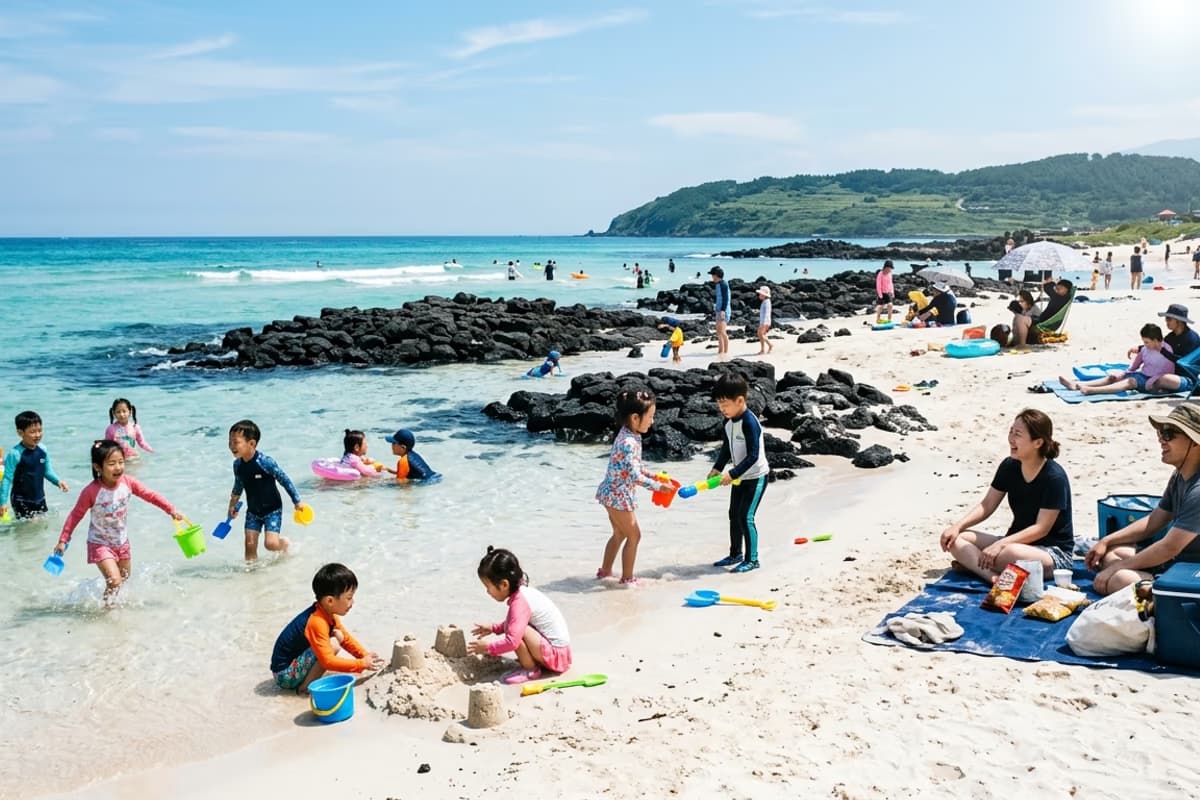
Gwakji Gwamul Beach is 350 meters of fine white sand at the western end of Aewol-eup, sheltered by two basalt headlands that block direct ocean swells. The result is shallow water (average depth around 1.5 meters across the swim zone), gentle gradient, and small breaking waves — among the safest swim beaches on Jeju for children and elderly swimmers.
Practical numbers:
- Sand length: 350 meters
- Swim zone depth: 0.5-2 meters within 20 meters of shore
- Lifeguards: stationed during the official summer season (July-August)
- Showers and changing rooms: free public facilities at the eastern end
- Parking: free lot capacity ~80 vehicles, fills early on summer weekends
- Admission: free, year-round access
The sand itself comes from weathered basalt fragments and shell debris — finer than Hyeopjae Beach to the west (which has crushed-coral sand) but coarser than mainland Korean beaches. Color reads pale beige rather than tropical white. Underfoot, the texture is comfortable for barefoot walking even in midday summer sun.
Currents are weak in summer but can pick up during winter storms; check daily flag status at the lifeguard station before swimming. According to Korea National Park Service English portal, Jeju's western coast generally has lower wave heights than the eastern or southern coasts due to the prevailing northwesterly winds being broken by Hallasan's mass.
Where Mountain Water Meets Sea: The Volcanic Spring System
What makes Gwakji genuinely unusual among coastal beaches is the spring water that emerges directly at the shoreline. Hallasan — Jeju's 1,947-meter central volcano — is a massive freshwater aquifer. Rain that falls on the upper slopes percolates down through porous basalt over years, eventually surfacing at lower elevations where the rock permeability changes.
Gwakji is one of those surface points. The freshwater emerges at the eastern edge of the beach at a relatively constant temperature of around 14-16°C (57-61°F) year-round — cold enough to be refreshing in summer, milder than the sea in winter. The flow is modest but reliable; the spring has run continuously for as long as written records exist.
The phenomenon is called *yongcheonsu* (湧泉水) in Korean — literally "springing-spring-water." Jeju has roughly 800 documented yongcheonsu sites around its coastline, and Gwakji's is one of the few that has been formalized into a public bathing facility. The water emerges low-mineral (the basalt is geologically young and hasn't dissolved significant mineral content), so it doesn't carry the egg-smell of mainland Korean hot springs or the mineral feel of European spa waters. It feels almost like distilled water on the skin.
The Open-Air Spring Bath (Gwamul): Free, Public, and Open Year-Round
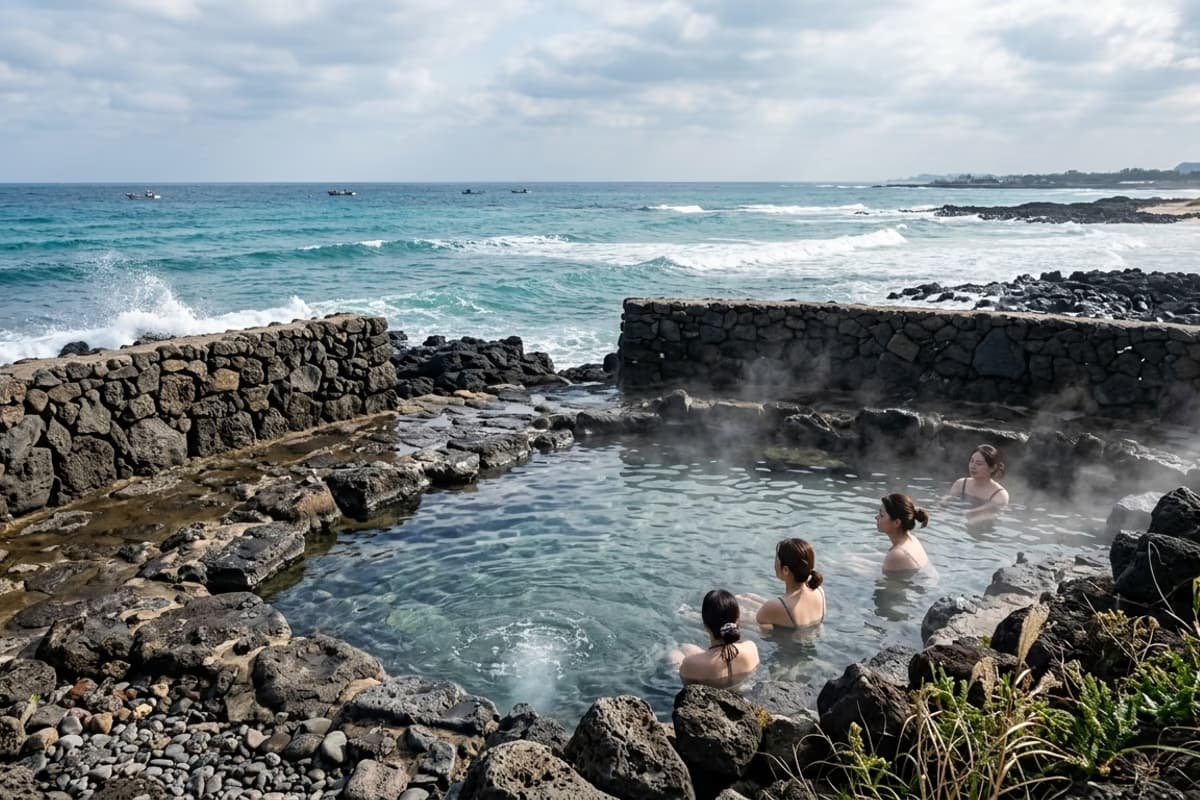
At the eastern end of the beach, the spring has been channeled into two stone-walled outdoor bathing pools — gender-separated (men's and women's), open-air, with low stone walls for privacy. They are called the Gwamul-noctangtang (과물노천탕) — literally "spring-water open-air bath."
Important to know:
- Free admission, year-round, 24-hour access in principle (though most people use them in daylight)
- Gender-separated with stone-walled enclosures (no roof — open to the sky)
- No facilities: no soap, no shampoo, no towels. Bring your own. This is rinse-bathing, not full bathing.
- Water temperature: 14-16°C — cold for unwarmed bathing. Most users dip in for 1-3 minutes, not soaking sessions.
- No food or drink allowed inside the bathing enclosure
- Swimwear recommended (the pools function more like outdoor showers than traditional spas)
The traditional use is to wash off after sea bathing. Salt and sand from the beach come off quickly in fresh spring water. The cold temperature is part of the experience — locals say it tightens the skin and clears the heat of the summer sun in a way that hot-water showers don't.
In winter, the pools are still accessible and the water still flows, though usage drops to nearly zero. The contrast between cold air and slightly-less-cold water creates a brief warming sensation when you dip — a quirk that local fishermen sometimes use to warm their hands after morning work.
How to Combine the Beach, the Spring, and the Coastal Walk in One Day
Most travelers undersell their visit by treating Gwakji as just a beach stop. The full rhythm is:
Mid-morning (10:00-12:00): arrive at the beach, swim or wade. Sand is still cool, water is calm.
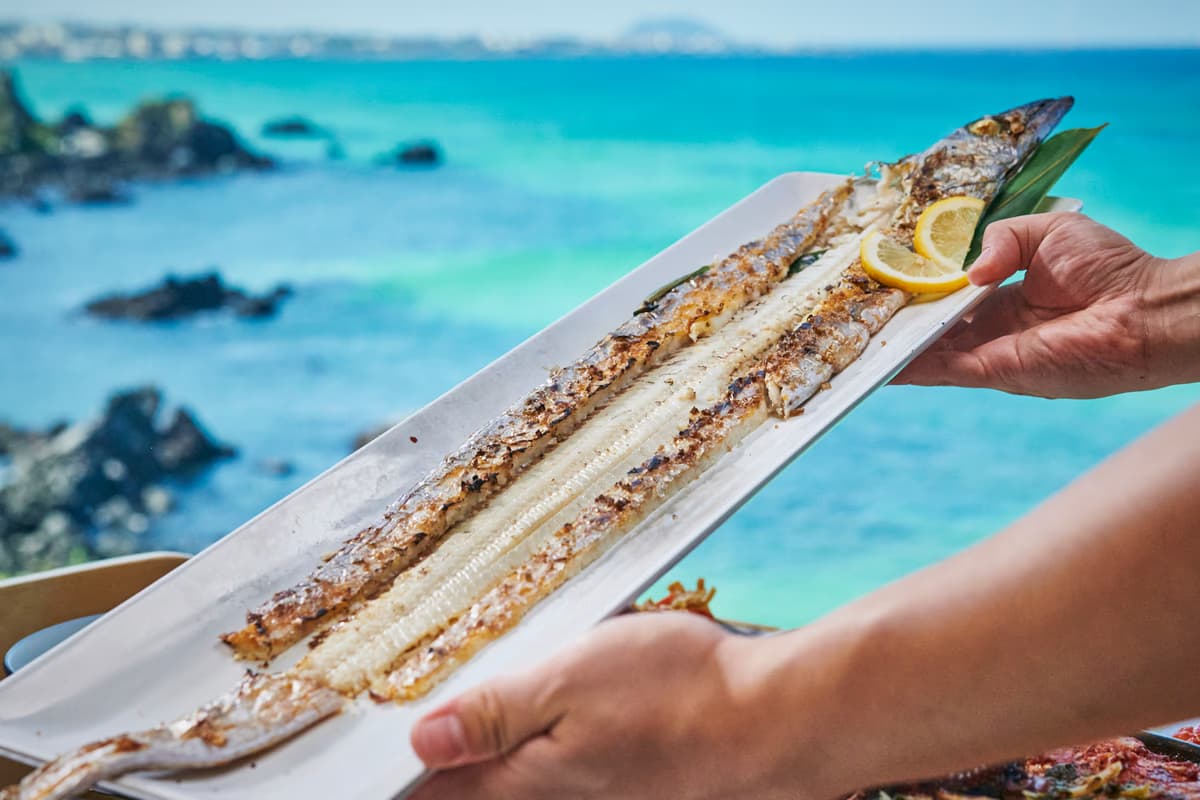
Late morning (12:00-13:00): dip in the spring bath to rinse, then lunch at one of the small seafood restaurants along the eastern edge of the beach. Look for hand-cut sashimi (*hoe*) or grilled mackerel.
Early afternoon (13:00-15:00): walk east into the Handam Coastal Trail →, which starts directly from the beach's eastern parking lot. The 1.2-km coastal walk takes 20-30 minutes one way and ends near Aewol Harbor.
Mid-afternoon (15:00-17:00): café crawl along Aewol Café Street →, 2 km of cliff-top cafés between Handam and Aewol Harbor.
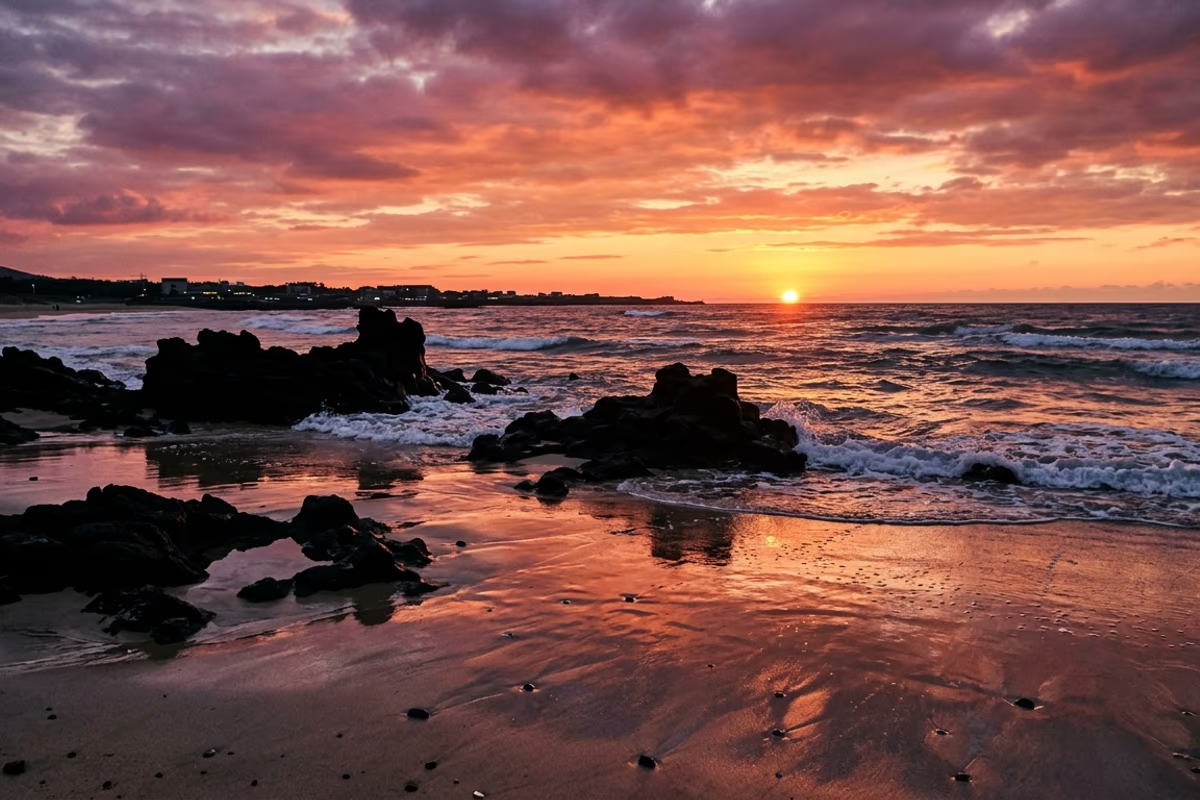
Sunset and dinner (17:00 onwards): end at Galchibada in Aewol for hairtail dinner facing the western sea — a 1-minute walk from the strip's western end.
The full sequence covers swim → spring rinse → lunch → coastal walk → café → sunset → dinner, all within a 2-km radius. No driving required between segments.
Frequently Asked Questions
Is Gwakji Beach safe for children?
Yes — shallow gradient (under 2 meters within 20 meters of shore), weak currents in summer, lifeguard-staffed during peak season. Among the safer swim beaches on Jeju for young children.
Is the open-air spring bath really free?
Yes. Free year-round, no admission, no time limit. Bring your own towel and swimwear.
How cold is the spring water?
14-16°C (57-61°F) year-round. Cold for unwarmed bathing — most users dip in for 1-3 minutes rather than soaking. The temperature is the experience.
Are men's and women's baths separated?
Yes. Two separate stone-walled enclosures, gender-marked, with no shared interior.
What's nearby for lunch and afternoon?
Small seafood restaurants at the eastern edge of the beach. After lunch, the Handam Coastal Trail and Aewol Café Street are walking distance. Galchibada in Aewol is a 30-minute coastal walk east for sunset dinner.
Frequently Asked Questions
- Is Gwakji Beach safe for children?
- Yes — shallow gradient (under 2 meters within 20 meters of shore), weak currents in summer, lifeguard-staffed during peak season. Among the safer swim beaches on Jeju for young children.
- Is the open-air spring bath really free?
- Yes. Free year-round, no admission, no time limit. Bring your own towel and swimwear.
- How cold is the spring water?
- 14-16°C (57-61°F) year-round. Cold for unwarmed bathing — most users dip in for 1-3 minutes rather than soaking. The temperature is the experience.
- Are men's and women's baths separated?
- Yes. Two separate stone-walled enclosures, gender-marked, with no shared interior.
- What's nearby for lunch and afternoon?
- Small seafood restaurants at the eastern edge of the beach. After lunch, the Handam Coastal Trail and Aewol Café Street are walking distance. Galchibada in Aewol is a 30-minute coastal walk east for sunset dinner.
From the cold spring rinse to the warm window-side platter
Swim, rinse in Hallasan water, walk east to dinner
After the sea and the volcanic spring have rinsed the day's heat away, the same coastline continues east into a dining room where a hairtail braise meets a bowl of tot-bap on a window-side table. The aquifer water that cleaned your skin and the seawater that fed the fish belong to the same Jeju system, separated only by the rock between them.
Coastal walk east from Gwakji Beach to Galchibada in Aewol →